How to Use Class 10 Maths Sample Papers If You Are Scoring Below 80
Many students review theory repeatedly without changing their practice strategy, expecting different results. Transitioning from basic revision to deliberate practice with class 10 maths sample papers changes how you process exam questions.
Moving your score past 80 requires a structured approach to analyzing paper patterns, identifying high-priority topics, and correcting execution errors.
Using class 10 maths sample papers effectively will turn board exam preparation into a measurable process where every attempt builds exam confidence.
Importance of Solving Class 10 Maths Sample Papers
Solving mock tests regularly bridges the gap between understanding a concept and reproducing it correctly under exam pressure. Many candidates lose marks not because they lack knowledge, but because they struggle to organize their solutions within the three-hour time limit.
-
Understanding Exam Patterns: Working through structured papers aligns your preparation with the official marking scheme, ensuring you know how questions are weighted.
-
Improving Speed and Time Allocation: Practicing under timed conditions prevents you from spending too much time on single questions, helping you improve maths marks on the final sheet.
-
Building Exam Stamina: Completing full-length tests builds the mental focus required to avoid late-exam fatigue and careless errors.
-
Pinpointing Weak Areas: Attempting full papers immediately exposes topics where formulas are forgotten or step logic breaks down.
Features of Class 10 Maths Sample Papers
A quality collection of practice resources offers tools that target specific learning needs rather than just providing a list of questions. Leveraging CBSE Class 10 Sample Papers and these specific components can help speed up mark recovery for students currently stuck in the 60 to 75 range.
-
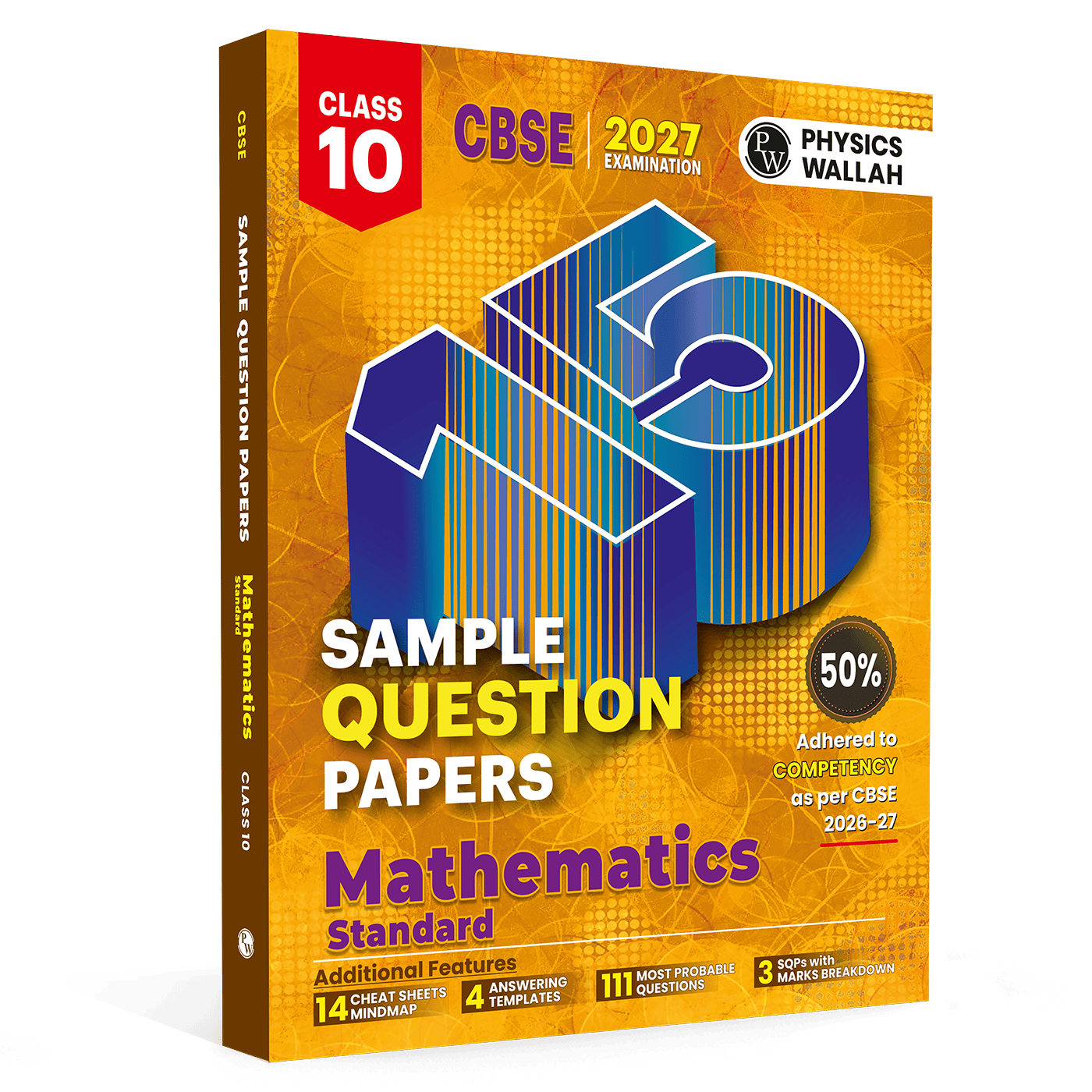
Board-Style Question sets: Includes 15 board-style practice tests mapped directly to the latest board evaluation frameworks.
-
Trend Analysis Tools: Features 5-year trend insights alongside solved papers from recent years to highlight recurring themes.
-
Quick Revision Guides: Contains 14 cheat sheets paired with 111 high-probability questions for swift formula recalls before test day.
-
Official Evaluation Templates: Provides step-wise solutions based on official evaluation guidelines, teaching you how to structure answers for partial credit.
-
Structured Assessment Aids: Equipped with dedicated answering templates, level-wise difficulty sets, and self-assessment marking stickers to track physical progress over time.
-
Error Prevention Insights: Incorporates "Mistake 101" notes and key takeaways to highlight classic traps and boost calculation accuracy.
-
Updated Framework Alignment: Adapted to reflect the latest two-exam policy updates, ensuring complete alignment with current testing standards.
How to Solve Class 10 Maths Sample Papers to Improve Step-Wise Marking?
In board examinations, final answers carry only a fraction of the total marks allocated to a question. A significant portion of marks is awarded for correct intermediate steps, clear assumptions, and logical progression.
|
Step Category |
Strategic Focus |
Marks Impact |
|
Given Data & Variables |
Explicitly state given values, construct diagrams where relevant, and define variables clearly. |
Secures base marks even if subsequent calculations go wrong. |
|
Formula Stating |
Write down the primary formula or theorem before substituting numerical values. |
Guarantees partial credit under official evaluation guidelines. |
|
Intermediate Calculation |
Show clear algebraic line-by-line transformations without skipping steps. |
Prevents loss of methodology marks during multi-step evaluations. |
|
Final Unit Units |
Highlight the final value clearly and attach correct units of measurement. |
Retains the final mark often lost to basic formatting omissions. |
When working through class 10 maths sample papers, pay attention to how answer keys structure multi-mark responses. Practice writing every single step out, even when the computation feels simple. Consistently applying this method secures partial marks across every section, helping you improve class 10 Maths score steadily.
When to Start Using Class 10 Maths Sample Papers During Chapter Revision?
Beginning practice tests at the wrong time can lower confidence or create false security. Integrating test papers into your study routine requires balancing topic coverage with exam practice.
-
Initial Chapter Phase: Complete basic textbook exercises, verifying that core concepts and formula definitions are fully understood.
-
Intermediate Sectional Phase: Once 50% of the syllabus is completed, begin solving subject-specific sections from your test resources to evaluate topic retention.
-
Advanced Revision Phase: Transition fully into full-length, timed mock tests 8 to 10 weeks before final examinations to fine-tune speed and paper management.
Study Plan to Score 80+ with Class 10 Maths Sample Papers
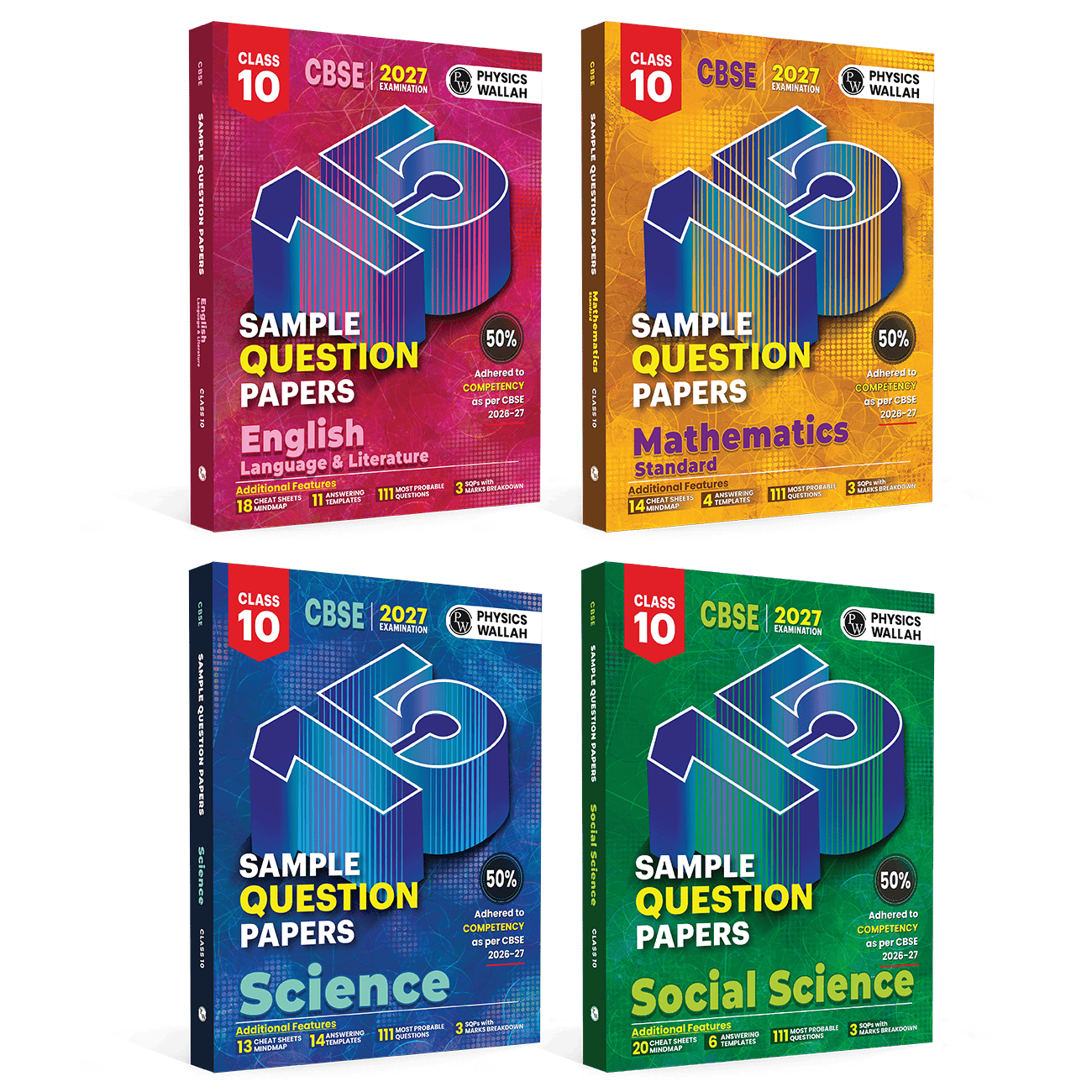
Moving your score past the 80-mark barrier requires an organized, multi-week execution plan centered around Maths sample paper practice. Using resources such as the CBSE Class 10 Sample Papers Combo of 4 Books 2027 can provide structured practice, improve time management, and help identify areas that need more revision.
Week 1 to Week 2: Diagnostic Testing and Analysis
Begin by taking two full-length tests without strict time limits. Grade your responses strictly using official marking guides. Categorize every error into three groups: conceptual gaps, formula memory slips, or execution mistakes. Use 14 revision cheat sheets to quickly reinforce any weak formulas uncovered during these diagnostic attempts.
Week 3 to Week 5: Focused Sectional Work
Shift your focus to resolving specific section weaknesses. If Section C or D questions regularly cost you marks, complete the 111 high-probability questions listed across those specific chapter areas. Use answering templates to practice setting up equations neatly. Tracking your progress with marking stickers helps monitor improvement across successive attempts.
Week 6 to Week 8: Timed Board Simulations
Attempt full-length tests strictly under standard 3-hour exam conditions. Recreate an exam environment by working without notes or digital devices. Focus heavily on time distribution: spend no more than 30 minutes on single-mark questions, leaving enough time for long-form geometric proofs and real-world case studies.
Tips to Overcome Calculation Errors in Class 10 Maths Sample Papers
Simple arithmetic and sign mistakes regularly prevent capable students from breaking into higher score brackets. Using CBSE Class 10 Books alongside deliberate daily practice can help students strengthen calculation accuracy, reinforce concepts, and reduce these avoidable errors.
-
Maintain a Rough Margin: Divide your answer sheet to keep rough calculations directly aligned with the main problem, making re-checking faster.
-
Double-Check Sign Changes: Pay close attention when transferring terms across equality signs or expanding negative terms within brackets.
-
Avoid Skipping Steps: Write down intermediate steps rather than calculating in your head, especially during multi-step algebraic operations.
-
Review Common Pitfalls: Read "Mistake 101" guidance notes before starting tests to keep frequent calculation traps fresh in your mind.
Common Mistakes Students Make While Attempting Class 10 Maths Sample Papers
Avoiding strategic mistakes during preparation is just as important as mastering mathematical formulas. Candidates scoring class 10 Maths below 80 often make consistent procedural errors during their revision months.
-
Reading Answer Keys Prematurely: Looking at solutions before completing an answer independently creates false confidence. Always finish the attempt fully before checking the mark scheme.
-
Ignoring the Timer: Completing papers without keeping time hides pacing issues, leading to unfinished papers on exam day.
-
Neglecting Detailed Corrections: Scoring a paper without reworking missed questions makes the effort ineffective. Spend at least one hour analyzing every mistake made on a class 10 maths mock test.
-
Overlooking Optional Questions: Failing to evaluate internal choices quickly wastes valuable time during the opening minutes of the examination.
CBSE Class 10 Maths Sample Papers FAQs
How many sample papers should I solve to score above 80 in Class 10 Maths?
Solving 10 to 15 fully structured practice papers using official evaluation schemes provides enough pattern exposure and confidence to break the 80-mark limit.
Can solving sample papers help if my concepts are weak?
Practice tests show you where your concept gaps are. Pair them with targeted revision guides and quick-reference formula sheets to rebuild weak areas fast.
What is the right way to analyze a completed test paper?
Compare your written steps against official step-by-step marking guidelines. Note where you lost marks—whether from formula errors, calculation mistakes, or missing steps.
Should I practice sample tests under timed conditions every time?
Initial diagnostic tests can be untimed to focus on step presentation. However, switch to strict 3-hour timing for your final 5 to 8 tests to master real exam pacing.
How do step-wise answer templates help improve final marks?
Answer templates train you to format givens, formulas, and working logical lines cleanly, securing maximum partial credit even if a final calculation goes wrong.