Metals and Non-Metals Questions Practice with CBSE Class 10 Sample Papers
Preparing the Metals and Non-Metals chapter becomes easier when students understand the properties, reactions, and uses of different elements. This chapter includes topics such as the reactivity series, ionic compounds, extraction of metals, and corrosion.
Students often find it difficult to remember reactions or apply the reactivity series to new questions. Regular practice with Class 10 Metals and Non-Metals questions and CBSE Class 10 Sample Papers helps students improve their understanding and reduce mistakes. Solving textbook exercises, previous year questions, and sample papers also gives practice with different question formats that may appear in the board exam.
Why Are Class 10 Metals and Non-Metals Questions Important?
Class 10 metals and non-metals questions are important because they help students understand key topics such as physical and chemical properties, the reactivity series, ionic compounds, extraction of metals, corrosion, and alloys. Regular practice helps students learn how to apply these concepts, write correct chemical equations, and solve different types of board exam questions. Practicing textbook exercises, PYQs, and sample questions also improves accuracy, speed, and confidence. It helps students identify common mistakes and prepare for direct, reaction-based, and application-based questions in the CBSE Class 10 Science exam.
What to Learn Before Solving Class 10 Metals and Non-Metals Questions?
Students should first revise the basic properties of metals and non-metals. Knowing these properties makes it easier to answer comparison-based and application-based questions.
Important points to revise include:
-
Metals are generally lustrous, malleable, ductile, and good conductors of heat and electricity.
-
Non-metals generally show different physical properties, although there are some exceptions.
-
Metals usually lose electrons to form positive ions.
-
Non-metals usually gain or share electrons.
-
Metals and non-metals can form ionic compounds.
-
The reactivity of metals differs from one element to another.
Students should also learn the important exceptions. For example, mercury is a liquid metal at room temperature, while graphite is a non-metal that can conduct electricity. Practising such concepts with CBSE Sample Papers Class 10 Science can help students understand and remember these exceptions better.
What Types of Class 10 Metals and Non-Metals Questions Should You Practise?
Board-style papers can include different formats. Students should practise each format rather than preparing only through short questions.
Objective Questions
These may ask students to identify a property, reaction product, metal, non-metal, or correct statement.
Assertion and Reason Questions
These questions check whether students understand why a particular reaction or property occurs. Memorising a statement without understanding the reason can lead to mistakes.
Reaction-Based Questions
Students may have to complete or balance a chemical equation and identify the type of reaction.
Application-Based Questions
These questions connect concepts with everyday situations, such as why certain metals are used for specific purposes or how corrosion can be prevented.
Long Answer Questions
These may require students to explain processes related to extraction, refining, ionic compounds, or corrosion in a clear sequence.
Which Class 10 Metals and Non-Metals Questions Should You Practise?
Different types of questions can test the same concept. Practising metals and non-metals questions class 10 helps students understand how to apply what they have learned.
Focus on questions related to:
-
Physical and chemical properties of metals and non-metals.
-
Reactions of metals with oxygen, water, and acids.
-
Displacement reactions.
-
Reactivity series.
-
Formation of ionic compounds.
-
Properties of ionic compounds.
-
Extraction of metals.
-
Corrosion and its prevention.
-
Alloys and their uses.
Questions based on chemical reactions are especially important because students need to identify the correct products and write balanced equations.
How to Prepare Class 10 Metals and Non-Metals Questions?
Students should divide the chapter into smaller topics instead of trying to memorise everything at once. Practising metals and non-metals important questions after each topic can help check whether the concept is clear.
Start with physical properties and then move to chemical properties. After that, revise the reactivity series and practise displacement reactions. Once these concepts are clear, study ionic compounds and extraction processes.
Make a short revision list for:
-
Important reactions.
-
Reactivity order.
-
Common ores and extraction ideas.
-
Ionic compound properties.
-
Corrosion examples.
-
Important alloys and their uses.
This makes final revision much faster.
How to Use Class 10 Metals and Non-Metals Questions for Practice?
Practising metals and non-metals sample questions is more effective when students check their mistakes after every session. Do not focus only on the number of questions completed.
After solving a set, check:
-
Which questions were incorrect?
-
Was the mistake caused by a forgotten concept?
-
Was the chemical equation written correctly?
-
Did you use the reactivity series properly?
-
Did you explain the answer completely?
Write difficult questions from CBSE Class 10 Books in a separate notebook and solve them again during revision.
How Do CBSE Science Sample Papers Help With Class 10 Metals and Non-Metals Questions?
Full-length sample papers can help students practise the complete Science syllabus while improving speed, accuracy, and answer presentation.
-
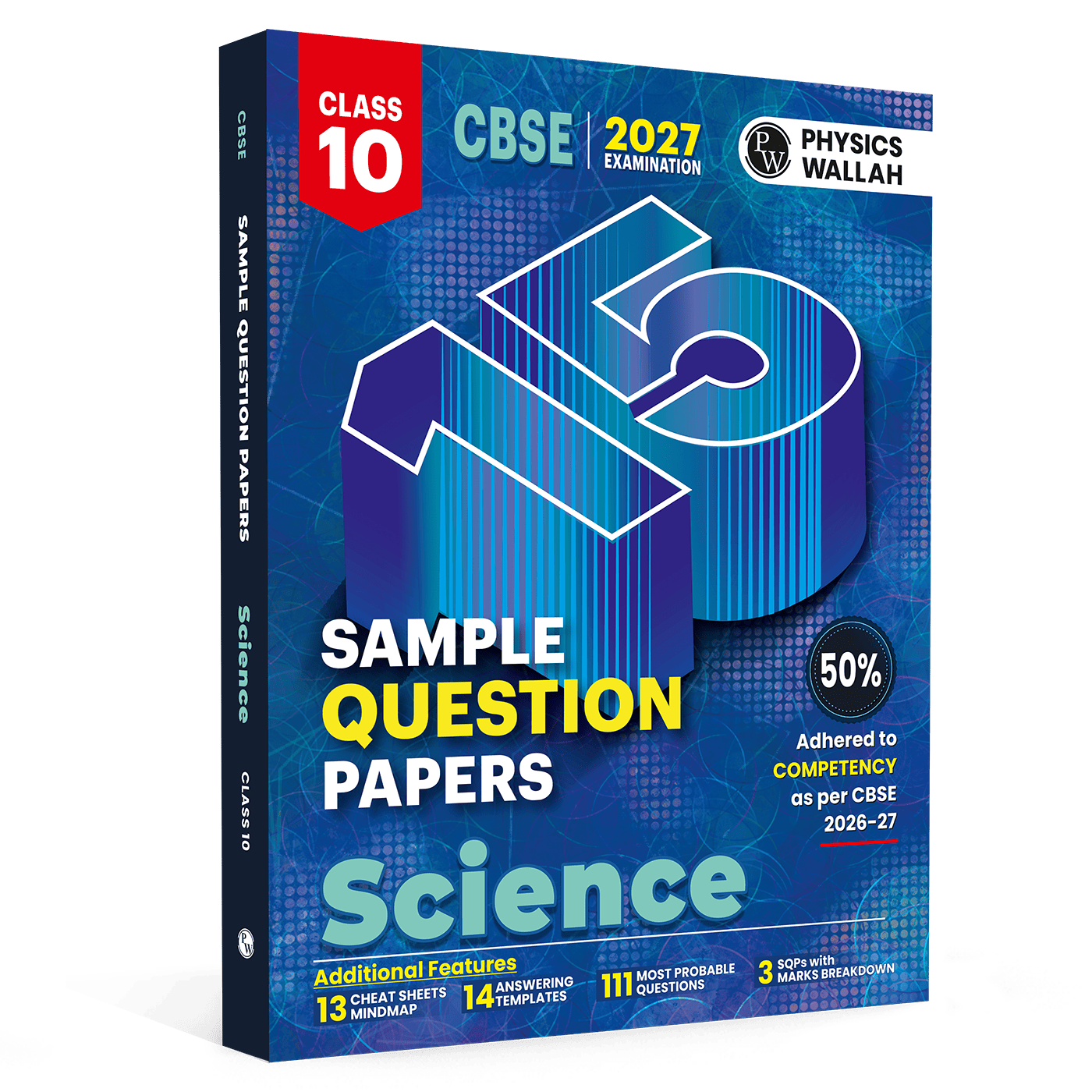
15 CBSE Class 10 Science Sample Papers: Solve 15 complete papers based on the latest CBSE exam pattern.
-
5 Years of Question Trends: Study important trends from the past five years with solved papers from 2024 and 2025.
-
13 Cheat Sheets & Mind Maps: Quickly revise important concepts, diagrams, formulas, and facts.
-
111 Most Probable Questions: Practise selected questions covering important Class 10 Science topics.
-
Topper's Answers & Marking Scheme: Understand how high-scoring answers are presented and how marks are awarded.
-
Different Difficulty Levels: Move from easier questions to more challenging problems as your preparation improves.
-
14 Answering Templates: Learn useful ways to structure and present Science answers.
-
Extra Practice Booklets: Continue practising with additional questions after completing the main papers.
-
Marking Stickers: Track your performance and identify topics that need more revision.
-
Mistake 101 & Key Takeaways: Learn about common errors and simple ways to improve accuracy.
-
Updated Exam Guidance: Prepare according to the latest CBSE updates, including the Two-Exam Policy 2026.
How Do Class 10 Metals and Non-Metals Questions Improve Your Score?
Regular metals and non-metals practice questions help students remember reactions and understand how concepts are applied. They also improve writing speed, which is useful when several Science questions need to be completed within a fixed time.
Try to solve some questions without looking at notes. If you cannot answer one, first identify the exact concept you have forgotten. Then revise that topic and attempt the question again.
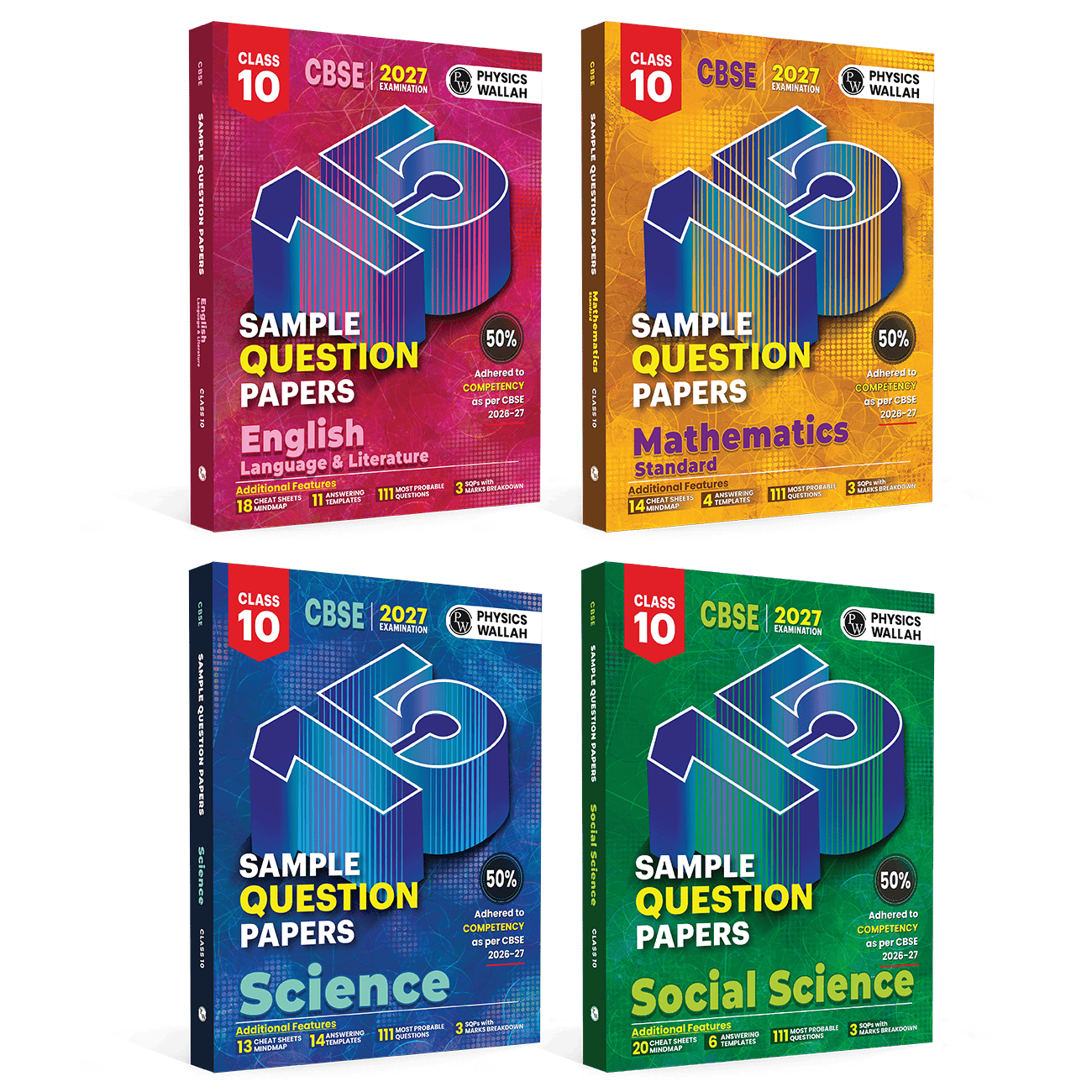
This method, when practised with the CBSE Class 10 Sample Papers Combo of 4 Books 2027, is better than repeatedly reading the same chapter because it shows what you can actually remember during an exam.
Tips for Solving Class 10 Metals and Non-Metals Questions
Solving class 10 metals non metals PYQs gives students practice with questions from previous board examinations. PYQs can help you understand common concepts and different ways in which a topic can be tested.
While solving them, pay attention to:
-
Questions about the reactivity series.
-
Reactions with water, oxygen, and acids.
-
Ionic compound properties.
-
Extraction and refining.
-
Corrosion and prevention.
-
Questions requiring balanced equations.
Do not assume that a question will be repeated exactly. Instead, understand the concept behind it so that you can solve a new question based on the same idea.
Using metals and non-metals questions with solutions allows students to check both the final answer and the method used to reach it.
For chemical equations, check whether the formulas and balancing are correct. For theory questions, check whether your answer includes all the important points. For longer questions, compare the order in which the solution explains the process.
If your answer is different, do not immediately assume that it is wrong. First check whether your explanation correctly addresses what the question asked.
Read More: CBSE Class 10 Sample Papers 2026-27: Subject-Wise PDF & Solutions
Class 10 Metals and Non-Metals Questions FAQs
What are the most important topics in class 10 metals and non-metals questions?
Focus on physical and chemical properties, the reactivity series, reactions with oxygen, water and acids, ionic compounds, extraction of metals, corrosion, and alloys.
How can I practise metals and non-metals questions with solutions?
Start with NCERT and textbook exercises, followed by previous year questions and sample papers. Use detailed solutions after attempting the questions yourself to find and correct mistakes.
Why should I solve class 10 metals non metals PYQs?
PYQs help you understand how important concepts have been tested in earlier board exams. They are also useful for practising question formats and improving exam speed.
Are metals and non-metals practice questions useful for revision?
Yes. They help you quickly check your understanding of reactions, properties, the reactivity series, ionic compounds, and other important topics.
How should I answer long questions from the Metals and Non-Metals chapter?
Read the question carefully, write the relevant definition or concept first, include balanced chemical equations where needed, and explain the process in a clear step-by-step manner.