NCERT Solutions for Class 6 English Poorvi Unit 1 Chapter 3 Rama to the Rescue
Finding the right Class 6 English Poorvi Unit 1 Chapter 3 NCERT Solutions can be helpful for students who are adjusting to the new Poorvi textbook. The chapter “Rama to the Rescue” presents a heart-warming folk tale from Tamil Nadu about a clever couple who successfully outsmart a thief using their intelligence and presence of mind. The story teaches students important values such as cleverness, courage, teamwork, and quick thinking.
The NCERT Class 6 English Poorvi Unit 1 Chapter 3 Solutions provide simple and clear explanations to help students understand the story, its characters, events, and underlying message. Students can use these solutions to learn how to frame meaningful answers and improve their comprehension and writing skills.
The Class 6 English Unit 1 Chapter 3 Question Answers cover the textbook exercises and help learners understand the clever trick used by the couple in the story. Referring to Poorvi Chapter 3 Class 6 Answers can make revision easier and help students prepare confidently for class tests and examinations.
By practising these NCERT-based solutions regularly, students can strengthen their understanding of the chapter, improve their answer-writing skills, and complete their homework more effectively. These solutions are a useful resource for learning, revision, and exam preparation.
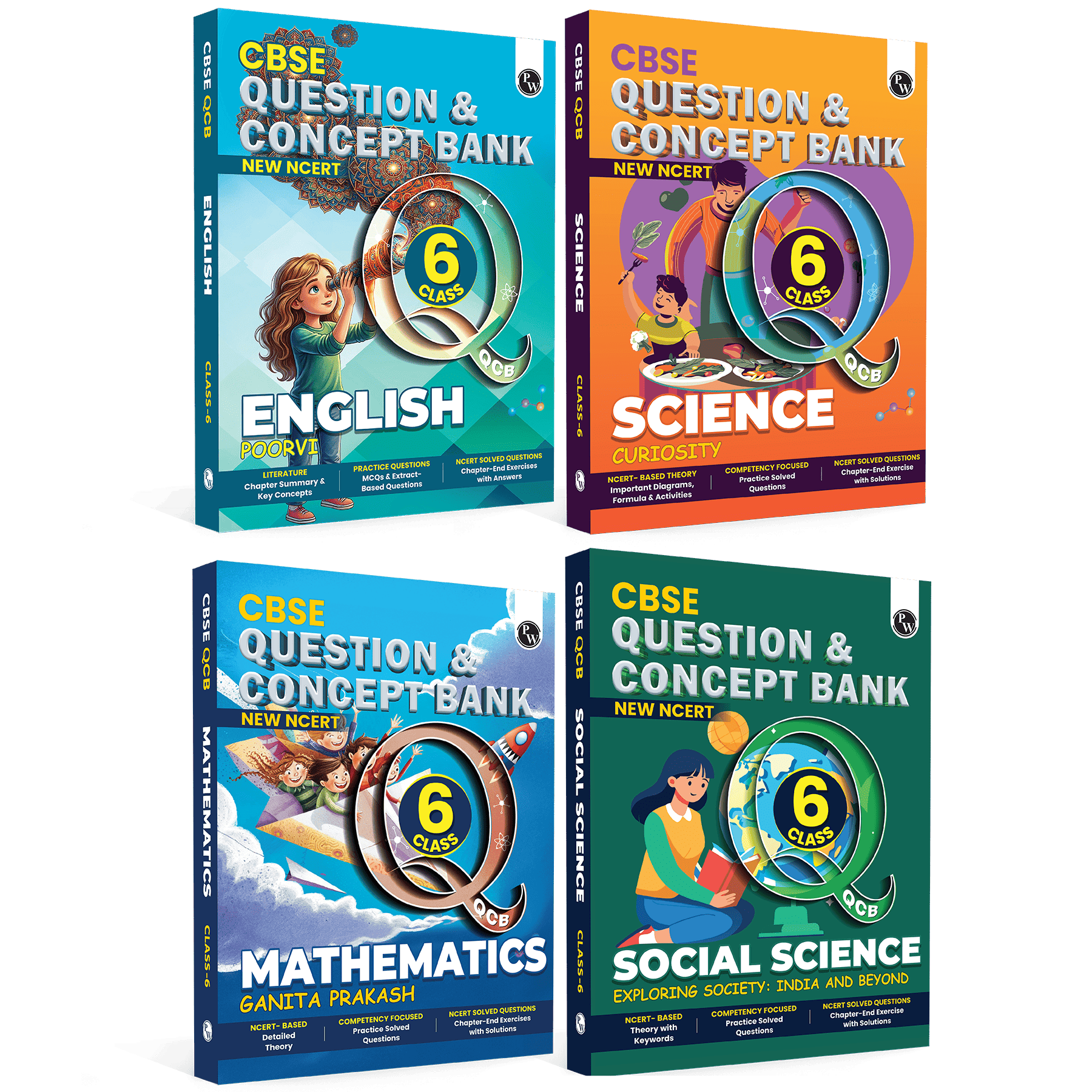
Check Out: Class 6th Books
Class 6 English Chapter 3 Rama to the Rescue Chapter Overview
The story of Rama to the Rescue is a famous folk tale that highlights the importance of presence of mind. Instead of using physical strength, the characters use their intelligence to get out of a dangerous situation. This NCERT Class 6 English Rama to the rescue summary focuses on how a man and his wife trick a thief into getting caught by the village kotwal.
The Clever Plan
When the couple hears a thief outside, they don't panic. Instead, they pretend to have a loud conversation about naming their child "Rama." Since the local policeman (Kotwal) is also named Rama, he hears his name being called in different tones and rushes to the house.
The Outcome
Because they acted "softly" at first and then "very loudly," they managed to alert the right person without the thief suspecting anything. This Rama to the rescue question answer guide shows how their quick thinking led to the thief being taken away by the Kotwal.
Class 6 English Chapter 3 Question Answer
This part of our guide provides the primary class 6 English Chapter 3 question answer bank based on the textbook exercises. These are designed to help you score high marks by using clear and accurate points.
Page 20 – Let us do these activities before we read
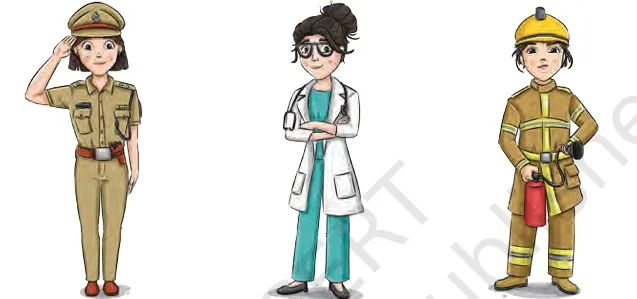
I. Identify the following people. How do they help us when we are in trouble?
Students' own answers. Example:
-
Doctor – Treats us when we are ill.
-
Police – Protects us and catches criminals.
-
Firefighter – Rescues people from fire.
II. Choose the correct option to complete the sentence.
The word ‘rescue’ means to –
→ 2. save someone
III. Tick the phrases describing those who need to be rescued.
✔ A man stuck in a building on fire.
✘ A woman buying vegetables in the market.
✔ A dog who has hurt its leg.
✔ A tree being cut down in a forest.
IV. What do you call a policeman in your language?
Student’s own language term, e.g., “S.I.” or “Policewala”
V. Imagine you are alone at home and face a problem.
-
I will try to solve the problem myself.
-
(iii) Think quickly about ways to solve the problem.
Page 22 – Let us discuss
I. Circle the odd one.
-
children (odd one out)
-
Kotwal (odd one out)
Page 23 – Let us discuss
I. Write whether True or False.
-
The man tells his plan to his wife. – True
-
The thief wants to know where they kept their jewels. – True
Page 24 – Let us discuss
-
Along with your classmates, call out the name ‘Rama’– softly, loudly and very loudly.
(Activity-based, to be done in class) -
What do you think will happen next in the story?
Rama will come to the house and catch the thief.
Page 25 – Match the words
I. Match Column A with Column B.
-
wonder – (vi) a feeling of surprise
-
yard – (iii) an area outside a building
-
chatter – (iv) talk for a long time about unimportant things
-
instead – (i) in place of someone or something
-
closely – (ii) carefully
-
perhaps – (v) maybe
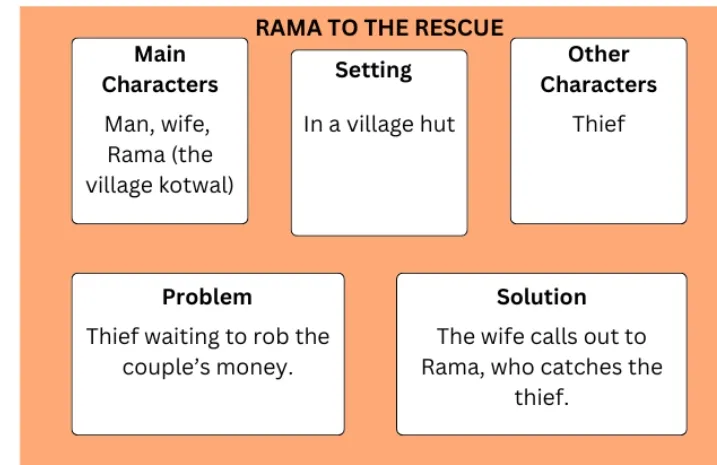
Page 26 – Story Diagram
Fill the boxes:
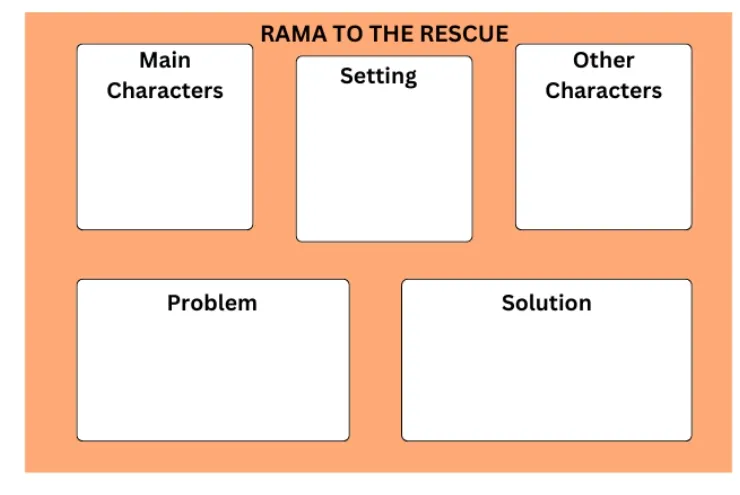
Answer:
Page 26 – Let us think and reflect
1. (i) What makes the man say the first line?
He hears his wife making a sound and notices her looking around.
(ii) What does ‘Ssssh’ mean here?
→ D. be silent
(iii) How can you tell that the wife was listening carefully?
She asked the man to be quiet and listen, showing she was paying attention to sounds.
Read More: NCERT Solutions for Class 6 English Poorvi Unit 3 Chapter 7
Page 27 – Let us think and reflect
2. (i) The villagers caught the thief and took him to the ____.
→ Kotwal
(ii) What do the words “Oh, Oh!” show here?
→ A. surprise
(iii) How can you tell the kotwal was good at his job?
He responded quickly and caught the thief with the help of the villagers.
II. Why were the man and his wife not able to fall asleep?
They heard strange noises outside and suspected a thief was trying to break in.
III. What did the thief wish would happen? Did it happen?
He wished the couple would go to sleep. No, it didn’t happen as they stayed alert and called Rama.
IV. How did the man and his wife get help from the kotwal?
They cleverly spoke loudly to trick the thief and called out Rama’s name, who then came and caught the thief.
V. Do you think cleverness can help us solve our problems? Why?
Yes, clever thinking helps us find smart solutions without panic, just like the man and his wife tricked the thief.
Page 27 – Let us learn
I. Write the full words with the missing letter (Contractions):
-
I’m feeling so sleepy. → I am
-
It’s a thief. → It is
-
They’re awake. → They are
Page 28 – Expand the contractions
| S. No. | Contracted Words | Expanded Form | Example Sentence |
|---|---|---|---|
| 1 | What’s | What is | What’s your name? |
| 2 | I’ll | I will | I’ll go with you. |
| 3 | I’d | I would / I had | I’d like to help you. |
| 4 | We’ll | We will | We’ll reach soon. |
| 5 | That’s | That is | That’s my friend. |
| 6 | We’re | We are | We’re ready. |
| 7 | Don’t | Do not | Don’t be late. |
| 8 | You’ll | You will | You’ll love this. |
| 9 | Must’ve | Must have | He must’ve forgotten. |
III. Choose the correct option:
The sentences 1–5 refer to actions that
→ are going on at the time of speaking.
Page 29 – Present Progressive Tense
IV. Fill in the blanks:
-
I am studying in Grade 6.
-
My friend is reading a story book.
-
We are playing a board game.
-
I am learning a new language.
-
The teachers are sitting in the staff room.
-
My mother is cooking food in the kitchen.
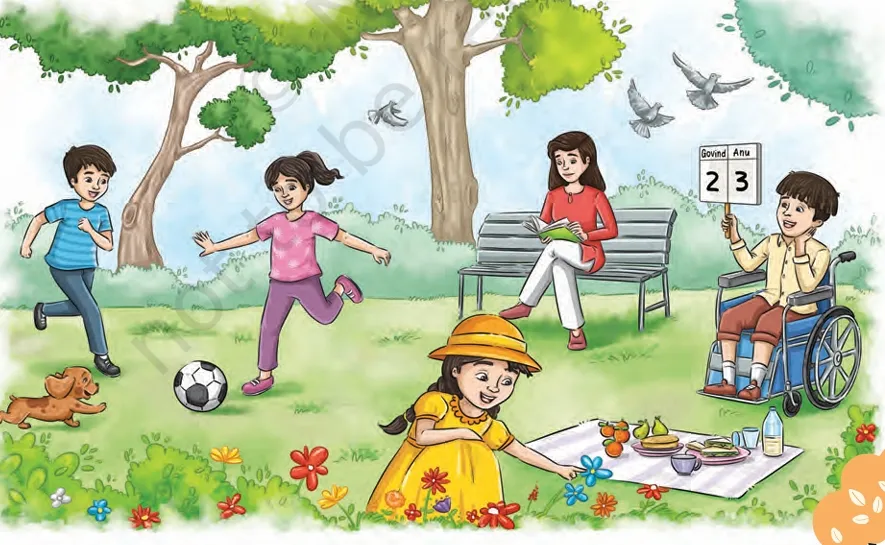
V. Fill in the blanks using verbs from the picture:
(Assuming a standard scene; teacher may modify based on illustration)
-
The boy is running.
-
The girl is skipping.
-
The children are playing football.
-
The teacher is watching them.
-
The dog is barking.
Page 30 – Adverbs
VI. Complete the table:
| S. No. | Sentence | Question Word | Answer |
|---|---|---|---|
| (i) | I’d better listen closely. | How does he listen? | closely |
| (ii) | I’ll call out softly. | How does she call out? | softly |
| (iii) | I’ll call out very loudly. | How does she call out? | very loudly |
VII. Fill in the blanks with suitable adverbs (choose from box):
Box: warmly, gracefully, smoothly, beautifully, funnily, quickly, hurriedly
-
Govind and Anu quickly play football.
-
Pema beautifully arranges flowers.
-
Anil hurriedly writes the score card.
-
The mother warmly reads a book.
-
The dog quickly tries to catch the ball.
-
The birds gracefully fly in the sky.
Page 31 – More Adverbs
VIII. Fill in the blanks (story-based):
Box: peacefully, slowly, tirelessly, honestly, brightly, sweetly, angrily
-
Once upon a time in a small forest, animals lived peacefully.
-
The wise old tortoise moved slowly.
-
The ants worked tirelessly.
-
The lion ruled honestly.
-
The birds sang sweetly.
IX. Choose the correct options:
(i) Sentence 1 expresses a feeling of → tiredness
(ii) Sentence 2 expresses a feeling of → relief
(iii) Sentences 3 and 4 ask → questions
Page 32 – Punctuation
X. Punctuate and identify sentence type:
-
Wow! What an intelligent man he is! → Exclamatory
-
Oh! How big the hole is! → Exclamatory
-
Do you like to read comic books? → Interrogative
-
What is your favourite story? → Interrogative
Page 32 – Listening Activity
(To be filled during listening; sample answers based on context)
-
Robbery has been happening in that area.
-
Tell the police.
-
Safety is the main thing.
-
Call helpline when needed.
Page 33 – Speaking Activity
II. Reasons for keeping house and self safe:
(i), (ii), (iii), (v), (vii) – are all valid. Example sentences:
-
I think it’s important because we must protect our family.
-
I feel it’s necessary as it keeps us safe from danger.
-
The reason we need to look at safety is to avoid accidents.
III. Three ideas on how to keep safe:
-
I think they should lock all doors and windows.
-
They must install a security alarm.
-
How about keeping emergency numbers handy?
Page 34 – Writing
Imagine and write what happened:
(Sample paragraph)
My wife and I were about to go to sleep last night when we heard someone trying to break in. We stayed quiet and listened carefully. Soon, we realized a thief was inside. To protect ourselves, we pretended to talk loudly about calling Rama, the kotwal. Rama heard us and came running. He saw the thief and caught him with the help of the villagers. It all happened in our house late at night. We were scared, but our clever plan helped us stay safe.
Page 34 – Explore
1. Who will you call if...
-
Fire → Fire department
-
Someone getting hurt → Doctor / Emergency services
-
Wounded animal → Animal rescue / Vet
-
Someone suspicious → Police
-
Lost child → Police or help centre
-
You get lost → Call parents or police
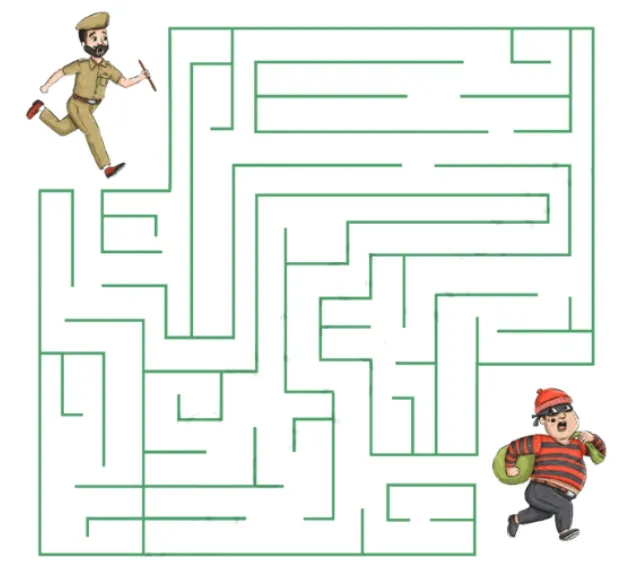
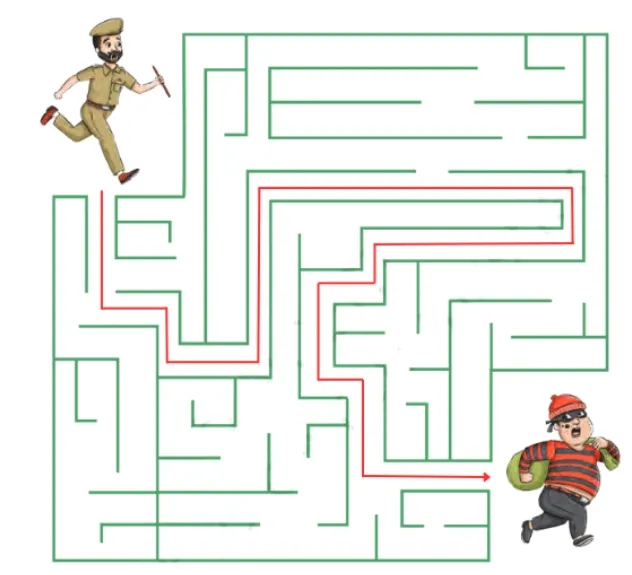
2. Maze activity (Page 35)
→ Trace the correct path from the kotwal to the thief (to be done on worksheet)
Answer:
Check Out: CBSE Class 6 Question Bank
NCERT Solutions for Class 6 English Poorvi Unit 1 Chapter 3 PDF
Using a class 6 English Poorvi Chapter 3 solutions pdf can be helpful, but understanding the logic behind these answers is the best way to improve your English skills. The PDF provides complete NCERT solutions for Chapter 3 Rama to the Rescue from the Class 6 English Poorvi textbook. It includes answers to all textbook exercises, grammar sections, and writing tasks, based on the latest CBSE syllabus and exam pattern. These solutions help strengthen comprehension, vocabulary, and language skills.
Grammar and Extra Practice for Rama to the Rescue Question Answer
Teachers often ask about grammar from the text. Preparing with class 6 English Poorvi chapter 3 extra questions and answers on adverbs and contractions will give you an edge in your exams.
Learning Adverbs (How actions are done)
In the story, characters speak "softly" or "loudly." These are adverbs. Identifying these in a rama to the rescue question answer task shows you understand how actions are performed.
Understanding Contractions
The book shows you how to use short forms like "I'm" (I am) and "It's" (It is). You need to know how to use these well for your Rama to the rescue question answers class 6 homework to make sure your writing is up-to-date and correct.
How to Write the Perfect Rama to the Rescue Question Answer
Writing a high-quality answer requires focus. If you want to master the rama to the rescue question answer format, follow these steps to impress your teachers:
-
Identify the Tone: Note if the question asks about the couple's feelings, such as surprise or relief.
-
Use Adverbs: Describe how the characters acted using words like "closely" or "hurriedly" to add detail.
-
Stay Relevant: Always focus on the "Presence of Mind" theme when explaining the couple's actions.
If you are looking for the class 6 english poorvi chapter 3 solutions pdf, ensure it includes the "Let us think and reflect" section, as those questions are most common in exams.
Preparing Tips for Rama to the Rescue Answer Sets
When exam season comes, you should have a list of rama to the rescue short answer questions ready. This saves you from reading the entire story again.
-
Punctuation Practice: Practice adding exclamation marks to sentences like "Wow! What an intelligent man he is!" to show surprise.
-
Present Progressive Tense: Learn to describe ongoing actions, such as "My mother is cooking food in the kitchen."
-
True or False: Confirm facts, such as whether the man told his plan to his wife (True).
By focusing on these areas, your class 6 english chapter 3 question answer prep will be complete and effective for the 2024-25 session.
Final Thoughts
The story of Rama to the Rescue is an inspiring tale of bravery through intelligence. Whether you are reading the NCERT class 6 english rama to the rescue summary or solving grammar tasks, the goal is to see how the couple saved themselves.
Remember to use your textbook to practice the story diagram. Comparing your answers with a class 6 english poorvi chapter 3 solutions pdf will help you improve your sentence structure. Keep practicing, and you will excel in your English exams!
Check Out: PW Stationery Items
NCERT Solutions for Class 6 English Poorvi Unit 1 Chapter 3 FAQs
Where can I find the answer of question related to "Rama to Rescue" for my homework?
You may find the answer to Rama to the Rescue question answer in this guide or by visiting the official Physics wall school prep page, Class 6 Poorvi Solutions.
Is the Rama to the rescue question answers class 6 set based on the new syllabus?
Yes, the Rama to the rescue question answers class 6 provided here are strictly based on the new NCERT Poorvi textbook for the current academic year.
What are some class 6 english poorvi chapter 3 extra questions and answers?
Common class 6 English Poorvi chapter 3 extra questions and answers include identifying adverbs like "gracefully" or "warmly" and explaining why the man said "Ssssh" in the story.
How does the NCERT class 6 english rama to the rescue summary help?
The NCERT class 6 English Rama to the rescue summary helps you quickly understand the plot, which is vital for answering long-form questions about the couple's clever plan.
Can I download the class 6 english poorvi chapter 3 solutions pdf?
You can access the class 6 English Poorvi Chapter 3 solutions pdf content online through the PW website to check your grammar, contractions, and punctuation exercises easily.