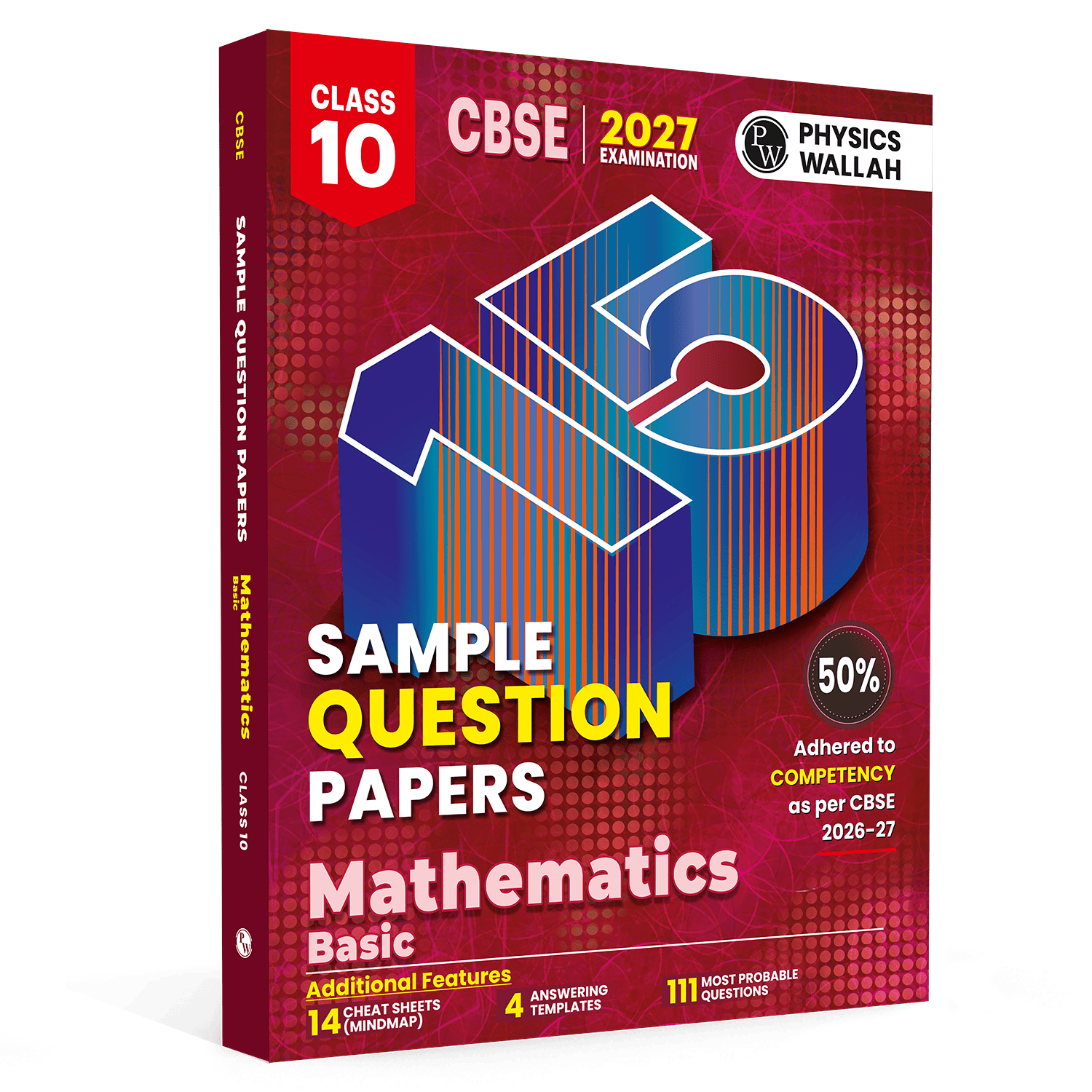
How to Score 80+ in CBSE Class 10 Maths Basic
Many learners feel stuck, worrying whether choosing the simpler math paper will limit their potential or if they can genuinely achieve an impressive aggregate score. Reaching your target requires a focused approach that leverages your strengths, avoids complex panic, and turns everyday practice into guaranteed marks.
This article walks you through a practical framework to score 80+ in CBSE Class 10 Maths Basic, with the support of CBSE Class 10 Books for concept clarity, regular practice, and effective revision before exam day.
Overview of CBSE Class 10 Maths Basic
Understanding the exam structure is the very first step toward planning your preparation. The CBSE class 10 maths basic sample paper is specifically designed for students who want to clear mathematics comfortably without the rigorous, high-level problem-solving demanded by standard or advanced mathematics. However, scoring 80 plus demands absolute clarity on fundamental theorems, algebraic manipulation, and geometric reasoning.
The question paper typically tests direct conceptual application rather than convoluted multi-concept tricks. This makes structured practice extraordinarily rewarding. When you know what type of questions to expect, your confidence naturally rises.
Exploring past trends shows that direct formula-based questions and standard theorem proofs make up a massive chunk of the paper. By keeping your concepts clear, you can breeze through the initial sections without wasting precious minutes. Every single mark saved in the first hour gives you extra breathing room for the long-answer sections later on.
Which Chapters to Prioritise in CBSE Class 10 Maths Basic for 80 Plus
Smart preparation always starts with identifying high-weightage topics. Not all chapters carry equal weight, and spending weeks on low-yield topics can derail your schedule. Focus heavily on algebra, arithmetic progressions, statistics, and probability, as these sections offer predictable and scoring questions.
-
Arithmetic Progressions: Focus heavily on finding the nth term and the sum of the first n terms. These formulas are straightforward, and questions follow a reliable pattern.
-
Statistics and Probability: These are among the easiest chapters to secure full marks. Learn the direct formulas for mean, median, and mode, and practice basic probability experiments thoroughly.
-
Coordinate Geometry: Memorize the distance formula, section formula, and area of a triangle. Direct application questions appear every year without fail.
-
Introduction to Trigonometry: Keep your focus on standard trigonometric ratios and basic identity applications rather than exceptionally difficult proofs.
-
Circles and Triangles: Memorize key theorems like the tangent theorem and basic proportionality theorem, as direct riders frequently show up in the exam paper.
How to Practise Questions for CBSE Class 10 Maths Basic
Consistent practice separates average scorers from toppers. Once you finish a chapter, do not just close the book. Immediately solve all exercise problems and supplementary questions. When working through problems for maths basic board exam, maintain a clean notebook where every step is written out explicitly. Skipping steps during practice leads directly to silly calculation errors in the actual exam hall.
Incorporate mixed-bag problem sets once you cover multiple chapters. Real exams do not present questions neatly categorized by chapter name; you have to recognize which concept applies instantly.
Use official CBSE sample question papers to familiarize yourself with the prescribed question-paper format and assess your preparation against the board's resources. You can refer to the CBSE Academic official sample question papers for the latest Class 10 examination resources.
Study Strategy to Score 80 Plus in CBSE Class 10 Maths Basic
A winning study strategy relies on consistency, periodic revision, and simulated exam conditions. Break your weekly schedule into dedicated blocks for learning new concepts, revising older chapters, and solving practice tests. Never let weeks pass without touching a completed chapter, or your brain will naturally start forgetting the methods.
Incorporate targeted study aids into your routine. Utilizing resources that provide quick cheat sheets or mind maps can transform your last-minute revision sessions into high-efficiency reviews. Focus on understanding the marking scheme so you know precisely how much detail to provide for 2-mark, 3-mark, and 5-mark questions. Balance your study days by alternating between heavy calculation chapters, like surface areas and volumes, and lighter theoretical units, like statistics. This keeps mental fatigue at bay and maintains steady momentum throughout your preparation cycle.
Tips to Improve Speed and Accuracy in CBSE Class 10 Maths Basics
Knowing how to solve a question is only half the battle; finishing the paper within the stipulated three-hour timeframe is what secures 80+ marks. Practising with CBSE Class 10 Sample Papers helps students improve time management, build accuracy, and reduce rushed arithmetic mistakes in the final minutes.
-
Show Every Step Clearly: Examiners look for structured steps. Writing down formulas before substituting values ensures you grab partial marks even if a final calculation goes wrong.
-
Practice Mental Calculations: Speed up simple additions, subtractions, and multiplications to reduce reliance on rough work margins.
-
Allocate Time Blocks: During practice tests, assign specific time limits for each section and stick to them strictly.
-
Keep the Last 15 Minutes Free: Always reserve the final moments of your exam to review your answer sheet, check question numbers, and verify calculation signs.
Read More: CBSE Class 10 Sample Papers 2026-27
Mistakes to Avoid in CBSE Class 10 Maths Basics
Even well-prepared students sometimes miss out on top grades due to avoidable procedural errors. Being aware of these pitfalls beforehand gives you a distinct advantage.
-
Misreading Question Parameters: Failing to double-check whether a question asks for the radius or diameter of a circle leads to entirely incorrect final values.
-
Skipping Intermediate Steps: Rushing through calculations without writing down formula applications forfeits valuable partial marking credits during board evaluation.
-
Ignoring Unit Specifications: Forgetting to append appropriate geometric units such as square centimeters or cubic units to final answers invites unnecessary point deductions.
-
Poor Time Management: Spending excessive time on a single difficult problem instead of moving forward and returning later leaves later sections unfinished.
-
Messy Presentation: Submitting cramped or unstructured rough work creates confusion for the examiner and increases the chance of overlooked steps.
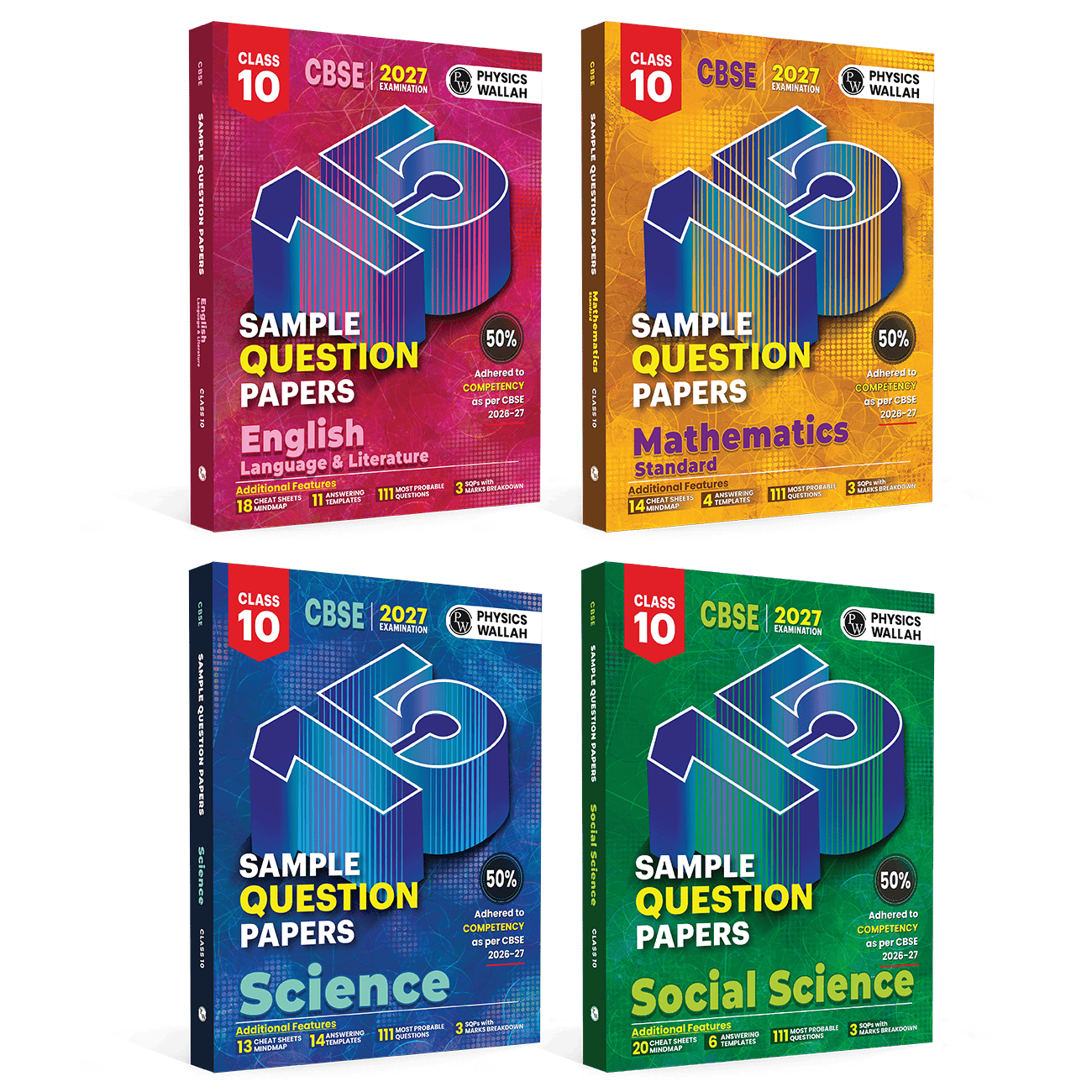
CBSE Class 10 Sample Papers Combo of 4 Books 2027 helps students practise exam-style questions and become familiar with the latest exam pattern. Regular practice can improve time management, accuracy, and confidence for the CBSE Class 10 board exams.
Practice Plan to Score 80 Plus with CBSE Class 10 Maths Basic
Execution is everything. A disciplined practice plan bridges the gap between ambition and actual board results. Divide your remaining timeline into distinct phases: conceptual completion, intensive problem practice, and full-length exam simulation.
-
Phase One (Conceptual Foundation): Dedicate the first four weeks to clearing textbook theories, deriving formulas, and solving standard exercise problems chapter by chapter.
-
Phase Two (Targeted Problem Solving): Spend the next three weeks tackling specialized question banks, focusing particularly on high-probability questions and previous years' trends.
-
Phase Three (Exam Simulation): Reserve the final weeks for solving at least 8 to 15 full-length sample papers under strict timed conditions to build final exam stamina.
-
Phase Four (Evaluation and Fine-Tuning): Check every completed test strictly against official marking schemes to pinpoint and eliminate recurring silly mistakes.
Read More: CBSE Class 10 Pre Board Sample Papers 2026-27
CBSE Class 10 Maths Basic FAQs
Is CBSE class 10 maths basic sufficient for higher studies?
Yes, choosing the basic mathematics paper completely qualifies you to pursue higher education, commerce streams, arts, and even biology-based science streams in Class 11 and 12 under current board guidelines.
How many sample papers should I solve during class 10 maths preparation?
Solving at least 8 to 15 quality sample papers under timed conditions is ideal to build exam temperament, improve speed, and eliminate exam-day anxiety.
Are NCERT questions sufficient to score 80 plus in maths?
NCERT textbook questions form the bedrock of the board examination, but practicing additional sample papers and previous years' solved questions is essential to handle unexpected twists in question phrasing.
How can I avoid calculation errors during the maths basic board exam?
Regular practice without calculators, writing down every intermediate step clearly, and utilizing the final 15 minutes of the exam for a thorough recheck will drastically cut down silly mistakes.
What is the best way to execute a solid class 10 maths tips routine?
Avoid rote memorization. Instead, understand the geometric or algebraic derivation of each formula, maintain a dedicated formula diary, and apply them across diverse practice problems daily.