Solve 10 Years CBSE Class 12 PYQs for High Score
Exam preparation can sometimes be stressful, as a large section of your syllabus is involved, and you want to do well! Due to the weightage of certain topics on your board exam, it can also be hard to work out which topics will appear on the board exam and what their format is, so that you can arrange your answer in an appropriate way to satisfy the examiner’s criteria.
Using a CBSE Class 12 PYQ book, which is preferably a recommended one, will allow you to have actual exposure to how the actual board exam questions will be formatted.
This article explains how to use ten years of solved papers to bridge the gap between theoretical knowledge and exam-day excellence, ensuring you are fully prepared for the 2027 session.
Check Out: CBSE Class 12th Books
Overview of CBSE Class 12 PYQ
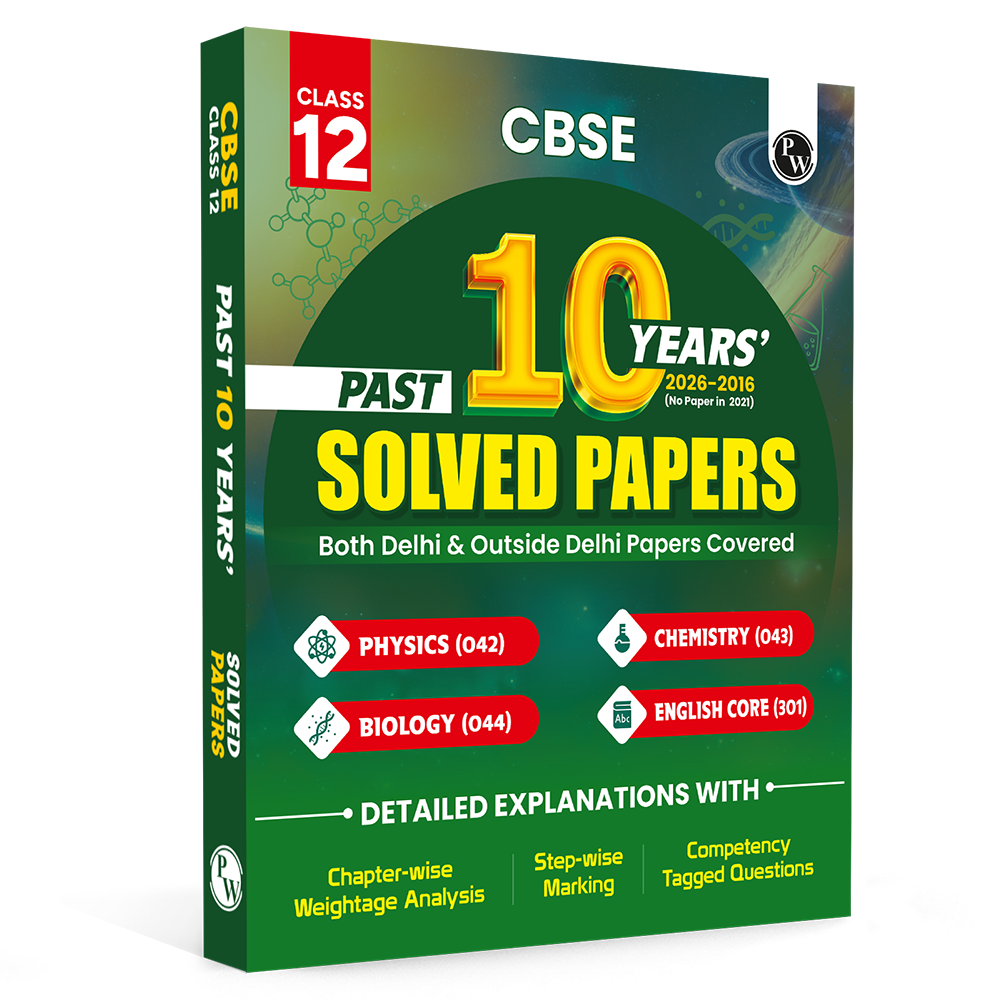
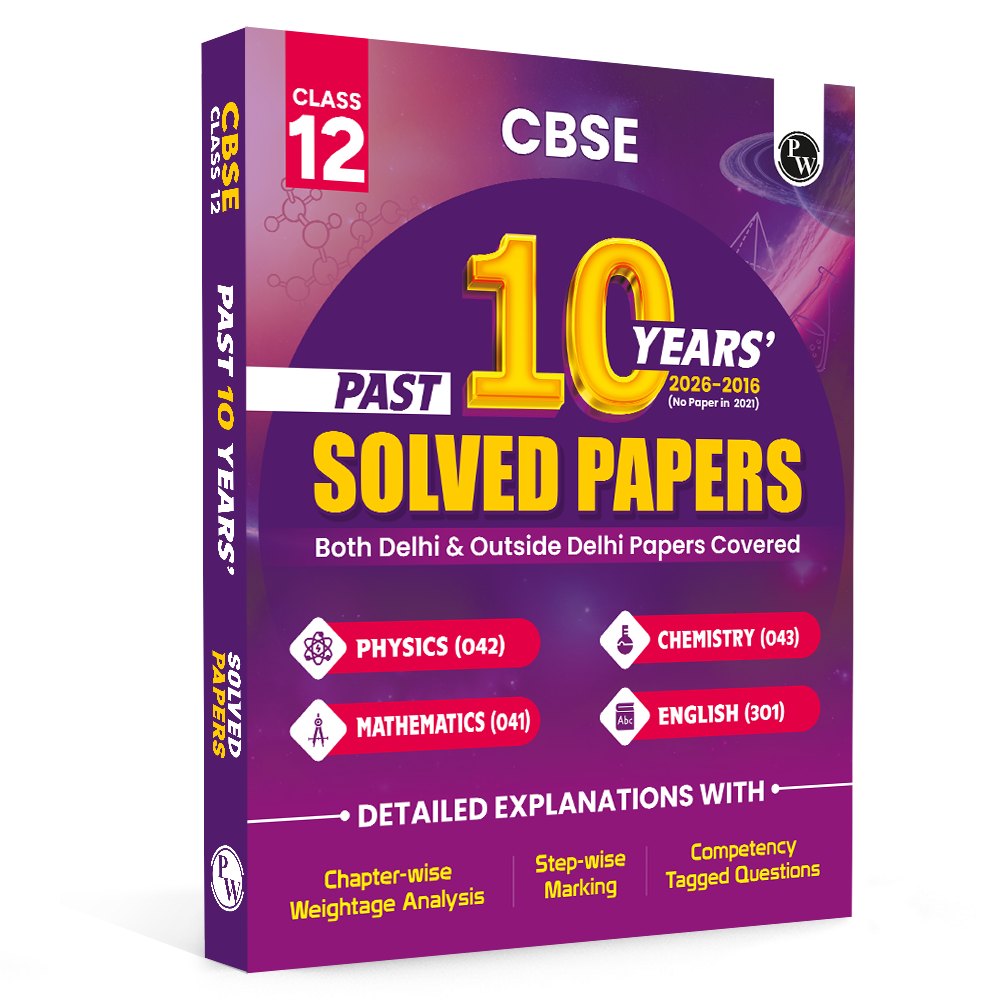
The 10-year solved papers collection is a dedicated resource for students aiming for high scores.
It integrates multiple subjects into a single, comprehensive framework, ensuring that your preparation is balanced across the core disciplines.
-
Subject Coverage: Includes Physics, Chemistry, Mathematics, and English.
-
Paper Variety: Features both Delhi and Outside Delhi sets.
-
Exam Focus: Tailored for the 2027 board exam cycle.
-
Accuracy: Solutions are aligned strictly with the official CBSE marking scheme.
|
Feature |
Details |
|
Total Years Covered |
Past 10 Years |
|
Subjects Included |
PCME (Physics, Chemistry, Maths, English) |
|
Paper Types |
Delhi, Outside Delhi, Term-I & Term-II |
|
Special Marking |
Out of Syllabus (OS) topics are clearly identified |
Key Features of CBSE Class 12 PYQ
Using the CBSE Class 12 PYQ book allows you to see the evolution of the board exam over the last decade. It is not just a collection of questions but a strategic tool that highlights how the board's expectations have shifted toward competency-based learning.
Chapter-wise Trend Analysis
-
Detailed weightage breakdown for every chapter.
-
Visual insights into question typology from the last 5 years.
-
Identification of recurring themes in CBSE chapterwise PYQ class 12.
Real Paper Inclusion
-
You can get 20 original CBSE papers for each subject.
-
Includes papers from both Term I and Term II for full practice.
-
Real test formats can help you feel less anxious when you take the test.
Solutions in Steps
-
Detailed answers that follow the official marking scheme.
-
Advice on how to give answers that will get you the most points.
-
There is a clear difference between the different kinds of marks (1, 2, 3, and 5-mark questions).
Benefits of CBSE Class 12 PYQ
Consistent practice with the CBSE Class 12 PYQ sets helps you get used to taking tests. Students who regularly work on papers find that they are less likely to make stupid mistakes or run out of time on the final exam.
-
Pattern Recognition: You start to see which sub-topics come up a lot in CBSE Class 12 Physics PYQ.
-
"Out of Syllabus" (OS) content: It tells you what you don't need to know, so you don't waste time on topics that have been removed.
-
Language Proficiency: Reviewing CBSE Class 12 English PYQ helps you learn the exact words and format you need to use when writing.
-
Confidence Building: Solving a full paper within three hours builds the mental discipline needed for the board hall.
When to Use CBSE Class 12 PYQ
The timing of revision is important for success. Some students will put off doing these after completion of the entire course; however, they often can achieve much greater success if they begin working on their past paper solutions early in the semester.
When you have finished a chapter, refer to the past year’s CBSE chapter-wise PYQ Class 12 to see whether you can answer the questions in the current syllabus at the end of each Chapter.
-
In the pre-board period: This is the ideal time to complete three hours of paper review to give you the right experience and preparation for your upcoming exams.
-
In the final month before exams: Focus mostly on questions that you have previously answered incorrectly, leaving you without a gap in knowledge going into your testing period.
| CBSE Class 12 PYQs Physics, Chemistry, Maths, English | Link |
| CBSE Class 12 PYQs Physics, Chemistry, Biology, English | Link |
Subject-Specific Benefits of CBSE Class 12 PYQ
Each subject requires a different approach. The solved papers address these nuances specifically to help you score across the board.
Physics: Numericals and Derivations
-
Practice the distribution of competency-based questions in Class 12 Physics PYQ.
-
Learn the correct way to draw circuit diagrams and ray diagrams as per the marking scheme.
Chemistry: Organic and Inorganic Mastery
-
Focus on name reactions and conversion mechanisms frequently found in CBSE Class 12 Chemistry PYQ.
-
Understand the logic behind reasoning questions in p-block and d-block elements.
Mathematics: Accuracy and Speed
-
Work through various integration and calculus problems in maths PYQ.
-
Learn to show clear steps in long-form questions to avoid losing marks on calculations.
English: Formatting and Creative Writing
-
Study the topper-style answer formats in CBSE class 12 English PYQ.
-
Get familiar with the tone and structure required for letters, reports, and literature-long answers.
Study Plan with CBSE Class 12 PYQ
To get the most out of your resource, follow this structured 4-week revision plan.
Week 1: Analysis Phase
-
Go through the trend analysis section to identify high-weightage chapters.
-
Solve 2 years of chemistry PYQ to gauge your current level.
-
Mark the questions that seem difficult or are from chapters you have not mastered yet.
Week 2: Deep Dive
-
Dedicate two days each to Physics, Maths, and English.
-
Use PYQ to practice at least 50 varied problems.
-
Read through solved English papers to understand the marking criteria for the reading section.
Week 3: Mock Simulation
-
Sit in a quiet room and solve a full paper from the CBSE class 12 PYQ collection.
-
Set a timer for 3 hours and do not use any reference material.
-
Self-evaluate using the step-wise solutions provided in the book.
Week 4: Final Polish
-
Focus only on the questions you missed in previous weeks.
-
Review the "Out of Syllabus" markings to ensure you are only studying relevant material.
-
Quickly go through the last 3 years of CBSE class 12 physics PYQ to refresh your memory on derivations.
Check Out: Class 12th Question Banks
Mistakes to Avoid in CBSE Class 12 PYQ
Even with the right PYQ bank, students can make errors in their approach. Avoid these common pitfalls:
-
Ignoring the OS Markings: Do not waste energy on topics marked as Out of Syllabus.
-
Skipping English: Students often neglect English PYQ, leading to lower overall percentages.
-
Not Timing Yourself: Solving a paper over 5 hours does not prepare you for the 3-hour exam pressure.
-
Ignoring Diagrams: In subjects like Physics and Chemistry, a clean diagram can often earn you marks even if the text is brief.
Read More: CBSE Class 12 Physics Chapter-Wise PYQs - Download PDF
CBSE Class 12 PYQ FAQs
Q1: How many years of class 12 PYQ should I solve?
It is recommended to solve the last 10 years of previous year question papers (PYQs) in order to get to know the questions for the various types and difficulty of the questions that can be expected in the exam.
Q2: Does the book include papers from both Delhi and places outside of Delhi?
There are 20 real question papers for both the Delhi region and outside the Delhi region in the PW CBSE Class 12 Previous Year Question Papers.
Q3: Are the answers in the CBSE class 12 chemistry PYQ section easy to follow?
Yes. The book gives detailed answers based on how the CBSE grades, which makes it easy to follow even for complicated reactions or math problems.
Q4: Is the information up to date for the 2027 board exams?
Yes, it lists upcoming board exams and marks "out of syllabus" topics so you can focus on what you need to study for the exam(s).
Q5: Is it safe to use CBSE class 12 maths PYQ for questions that test my skills?
Yes, skill-based assessment level questions have been showing up more and more in CBSE class 12 math papers from the last ten years. This lets you get used to them and practice what you need to know.