Why Solving NCERT Textbook Questions Is First Step to Maths Mastery
You might find yourself staring blankly at your notes, wondering how a single subject can suddenly feel this difficult. The anxiety builds up when you try to leap straight into advanced reference materials without a proper foundation.
Relying on the standard CBSE Class 9 maths textbook is the absolute definitive strategy to resolve your doubts, conquer the syllabus, and build a stress-free path to high marks.
What is the CBSE Class 9 Maths Textbook?
The official CBSE Class 9 maths textbook is the primary academic book designed specifically to match the national curriculum parameters. It is curated to build structured mathematical understanding from the ground up.
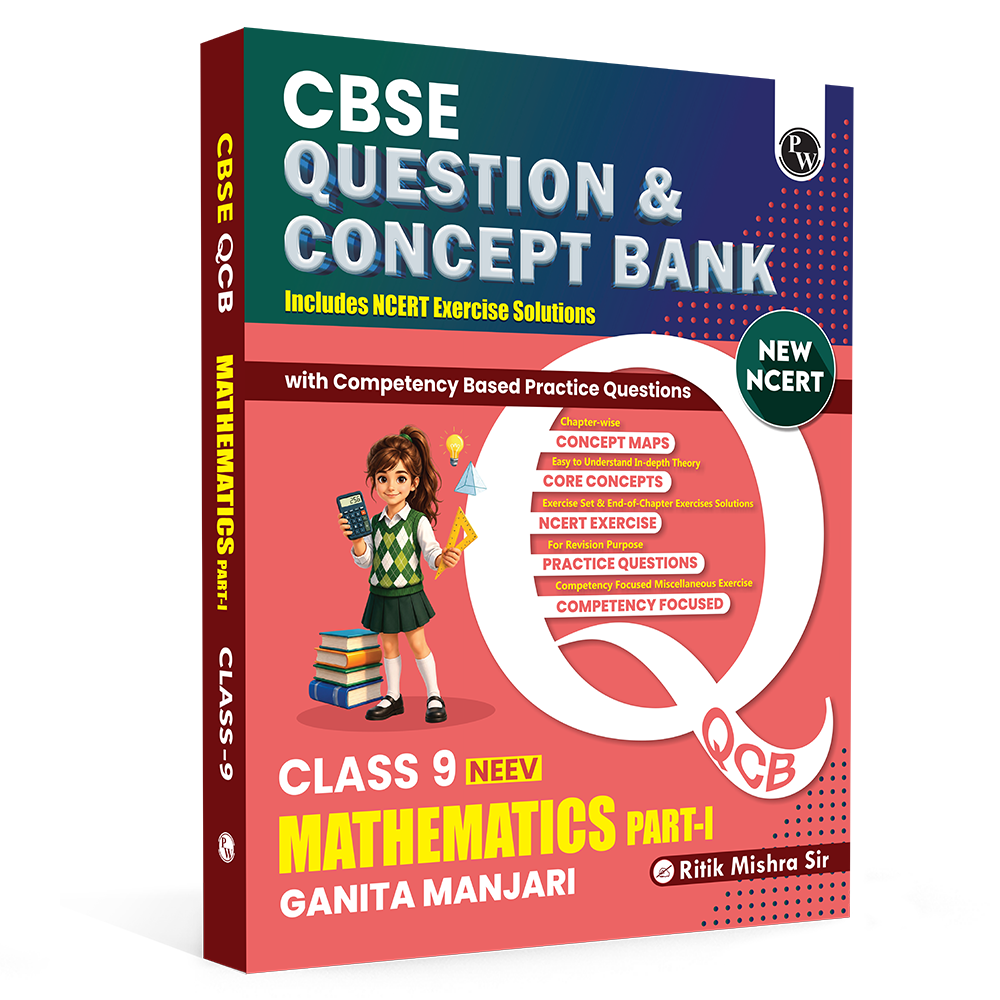
The latest edition includes the modern Ganita Manjari Part 1 curriculum, ensuring every single topic aligns directly with modern school assessments.
Rather than overloading you with confusing, dense jargon, it introduces essential principles stage by stage. It acts as a structured manual containing clear conceptual theories, solved examples, intext questions, and comprehensive end-of-exercise problems.
Understanding this book thoroughly ensures that you are reading exactly what your school teachers will use to design your exams.
Why the CBSE Class 9 Maths Textbook Is the Foundation of Maths Learning?
True mathematical competence cannot be memorised overnight; it must be built systematically. The CBSE Class 9 maths textbook serves as the ultimate bedrock because it prioritises raw logic over superficial rote learning. When you tackle the foundational exercises, you are actively training your brain to spot logical patterns.
Every single chapter introduces a concept, explains the underlying rule, and then shows you how to apply it via textbook practice. Skipping this foundational step to solve complex mock papers is like attempting to build a house without setting up the ground pillars.
By mastering the fundamental textbook questions, you create an unbreakable conceptual base that makes future topics feel completely effortless.
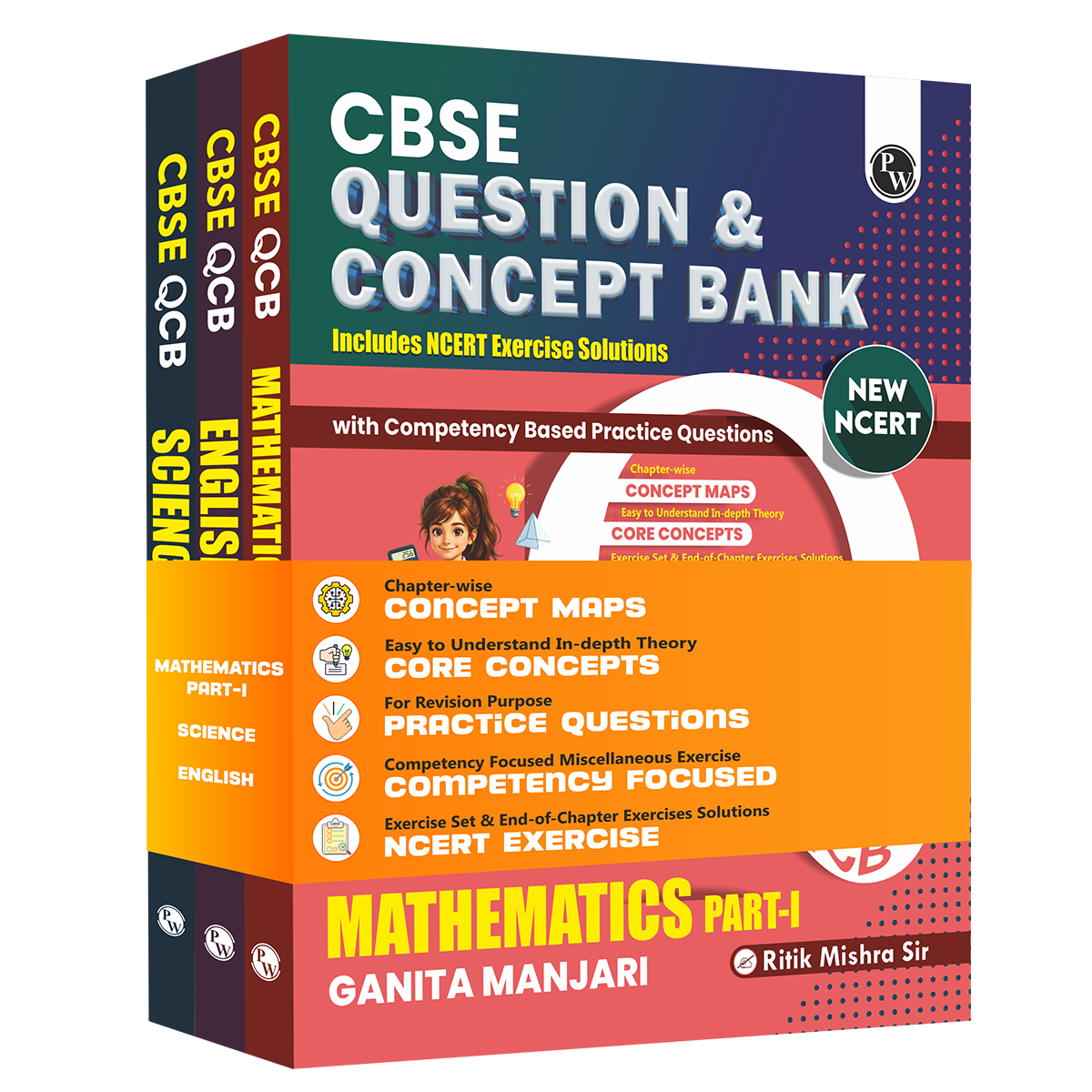
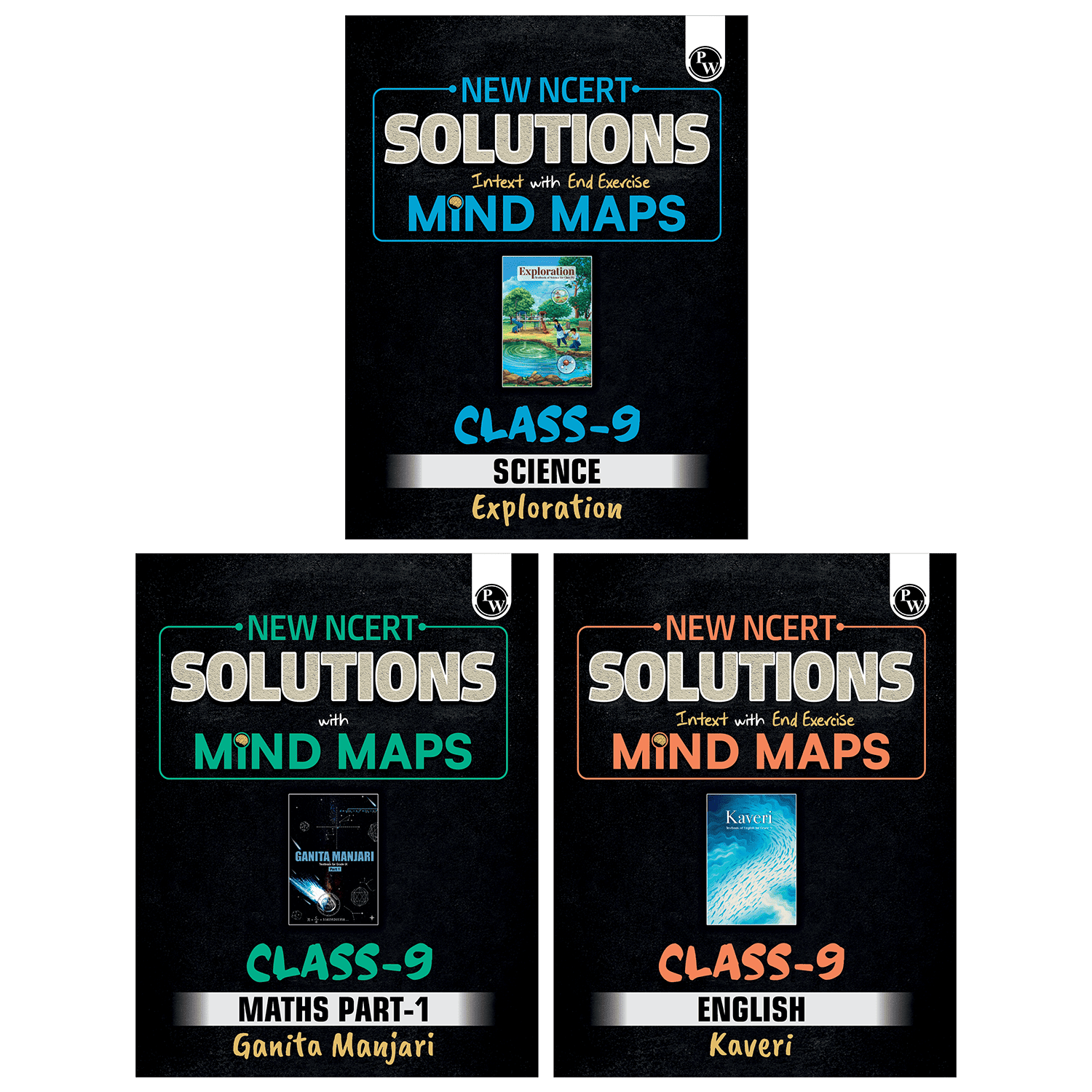
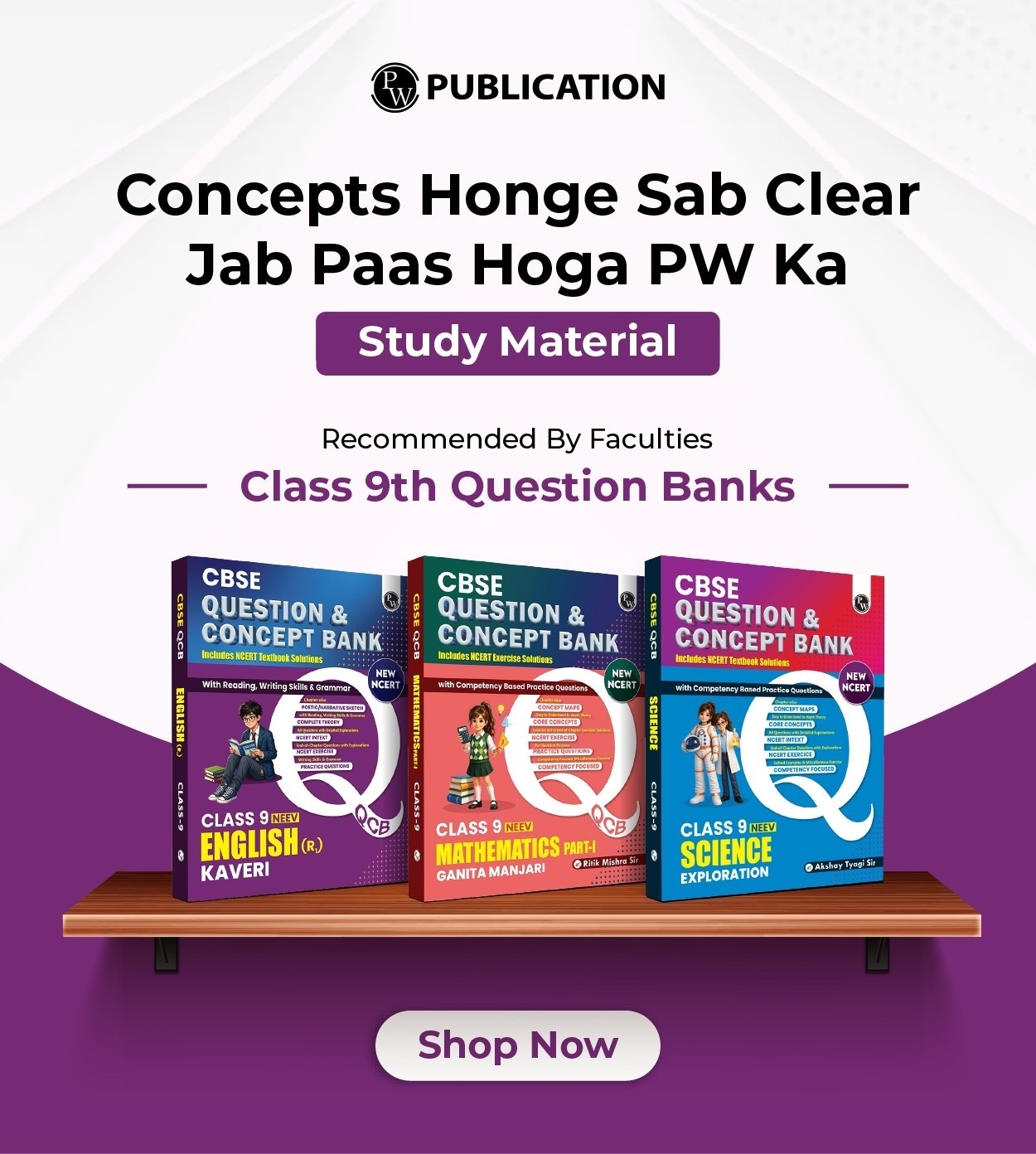
Excel in your Class 9 studies with PW New NCERT Class 9 Maths Ganita Manjari Part 1, English Kaveri & Science Exploration Combo Set of 3 Books (2026–27).
How the CBSE Class 9 Maths Textbook Prepares Students for Advanced Questions?
Advanced application-based questions are nothing more than standard textbook problems presented in a creative or twisted format. The CBSE Class 9 maths textbook trains you to see through these exam traps by instilling deep step-by-step explanations.
-
Deconstructing Complex Realities: The solved textbook examples show you how to break a lengthy word problem down into minor algebraic equations.
-
Step-by-Step Logic: It teaches you to write clean, methodical proofs that secure maximum marks under strict step-marking schemes.
-
Transitioning to Higher Difficulty: Once you understand the core formulas within the text, you can naturally handle higher-order thinking skills questions with complete ease.
-
Encouraging Maths Mastery: Solving regular, structured problems converts your fear into genuine confidence, allowing you to achieve true maths mastery over time.
Benefits of UsingCBSE Class 9 Maths Textbook
Using CBSE Class 9 book as your core study resource provides clear advantages that will instantly reflect in your school grade sheet.
-
Direct Exam Alignment: School teachers design exam papers directly from the official text exercises, making your preparation highly efficient.
-
Simplification of Topics: It breaks down complex, scary mathematical concepts into small, digestible fragments for straightforward learning.
-
Accurate Question Formats: The book provides the exact structure and difficulty level of questions that you will encounter in real school halls.
-
Time-Saving Structure: Focusing on this text prevents you from wasting valuable study days wandering through irrelevant topics that are outside your official school syllabus.
Check Out - CBSE Class 9 Question Bank
How to Use the CBSE Class 9 Maths Textbook?
Simply reading through a mathematics book like a storybook will never yield results. To truly benefit from your CBSE Class 9 maths textbook, you must adopt an active, pen-and-paper writing methodology. Start by reading the initial theory sections thoroughly to understand the main definitions.
Never skip the solved examples that sit between the paragraphs. Cover the solution with a sheet of paper and attempt to solve the question completely on your own first. If you get stuck, study the step-by-step explanations to see exactly where your logic faltered. Once you have cracked the solved examples, move directly into the main exercise sets to test your speed and accuracy under self-imposed exam timelines.
Study Plan for Using the CBSE Class 9 Maths Textbook
To balance your academic preparation with limited time, you need a highly structured, organized framework. This detailed strategy table provides a clear chapterwise solutions tracking method to organise your weekly study hours efficiently:
|
Revision Phase |
Target Chapters |
Study Focus Area |
Expected Outcome |
|
Phase 1: Foundation |
Number Systems & Polynomials |
Intext questions & basic definitions |
Clear algebraic concepts and variable rules |
|
Phase 2: Geometry |
Introduction to Euclid's Geometry & Lines and Angles |
Theorems, corollaries, and direct textbook proofs |
Flawless geometric step-writing skills |
|
Phase 3: Application |
Coordinate Geometry & Linear Equations |
Plotting graphs and deriving linear variables |
High speed and accuracy during calculations |
|
Phase 4: Consolidation |
All Final Exam Topics |
Complete end-of-chapter exercises |
Total confidence before the final exam |
Read More - Using NCERT Class 9 Maths Part 1 Alongside Your School Syllabus
Tips for Using the CBSE Class 9 Maths Textbook
Accelerate your school exam preparation with these practical, easy-to-implement textbook tips:
-
Highlight Key Formulas: Use a bright highlighter to mark crucial formulas and properties directly inside your chapters for quick morning glances.
-
Utilise Chapterwise Mind Maps: Create or use visual tools like chapterwise mind maps to summarise long chapters onto a single page for quick revision.
-
Maintain an Error Notebook: Write down every single textbook problem you get wrong in a dedicated notebook so you can review it before the exam day.
-
Focus on Intext Exercises: Pay extra attention to small, hidden intext questions, as teachers love converting them into tricky multiple-choice questions.
-
Set Strict Timers: Practice solving standard exercise blocks with a stopwatch to dramatically improve your final calculation speed.
-
Execute Consistent Maths Revision: Dedicate at least thirty minutes every single evening to systematic maths revision to keep older concepts fresh in your mind.
CBSE Class 9 Maths Textbook FAQs
Q1: Can I score top marks in school exams by studying only the CBSE Class 9 maths textbook?
Ans: Yes, absolutely. Official school exam papers are curated directly from the text. Mastering every example, in-text question, and end-of-chapter problem will easily allow you to secure top marks.
Q2: How do I manage continuous maths revision alongside other subjects?
Ans: Spend 30 minutes daily using chapter-wise mind maps and your error notebook. This structured routine keeps formulas fresh without taking valuable time away from your science or language studies.
Q3: Why is consistent textbook practice better than using complex reference materials?
Ans: Regular class 9 maths textbook practice ensures you build deep conceptual clarity based exactly on the official syllabus guidelines, saving you from wasting time on irrelevant topics.
Q4: How does solving the official book assist in achieving long-term maths mastery?
Ans: It builds your fundamental calculation logic step by step. This deep clarity changes your perspective on the subject, leading to ultimate maths mastery.
Q5: Are the chapterwise solutions provided in the revision book combo easy to understand?
Ans: Yes, the combo provides clear, step-by-step chapterwise solutions for all in-text and end-of-exercise problems, making your self-study hours highly efficient.