Using NCERT Class 9 Maths Part 1 Alongside Your School Syllabus
For many students entering secondary school, the transition to higher-level mathematics can feel overwhelming. The sudden shift from basic arithmetic to abstract algebraic concepts and complex geometry frequently causes anxiety.
Balancing daily Classroom lectures with independent study often feels like a difficult juggling act. Aligning your daily routine with your CBSE Class 9 maths textbook is the most reliable way to stay on track, reduce exam stress, and ensure your school syllabus remains completely manageable.
What Is the CBSE Class 9 Maths Textbook?
The CBSE Class 9 maths textbook, specifically the new Ganita Manjari Part 1 under the updated curriculum, serves as the definitive foundation for secondary school mathematics.
This CBSE Class 9 Book is designed by educational experts to introduce students to logical reasoning, analytical thinking, and structured problem-solving. It covers foundational topics ranging from number systems to advanced geometry and algebra.
Unlike supplementary reference guides, this book acts as the primary anchor for the national board based on the latest NCERT 2026-27 curriculum. Every question, theorem, and exercise is structured to build your mathematical temperament progressively.
By focusing on NCERT maths part 1, you ensure that you are studying exactly what board guidelines mandate, without wasting time on irrelevant or overly complex theories that lie outside your immediate academic requirements.
Why does the CBSE Class 9 Maths Textbook align with the School Syllabus?
School teachers plan their daily lessons, weekly assignments, and term exams strictly around the official national curriculum. This is why your CBSE Class 9 maths textbook aligns seamlessly with your ongoing school syllabus maths lectures.
When your teacher introduces a new chapter in the Classroom, they follow the exact sequence of topics laid out in the textbook. The terminology, definitions, and properties taught on the blackboard match your text word-for-word.
Trying to study from random online resources or mismatched reference guides creates confusion, as different authors use varying methods to solve the same problem. Sticking to your primary textbook guarantees that your home study perfectly reinforces what was taught in school that morning.
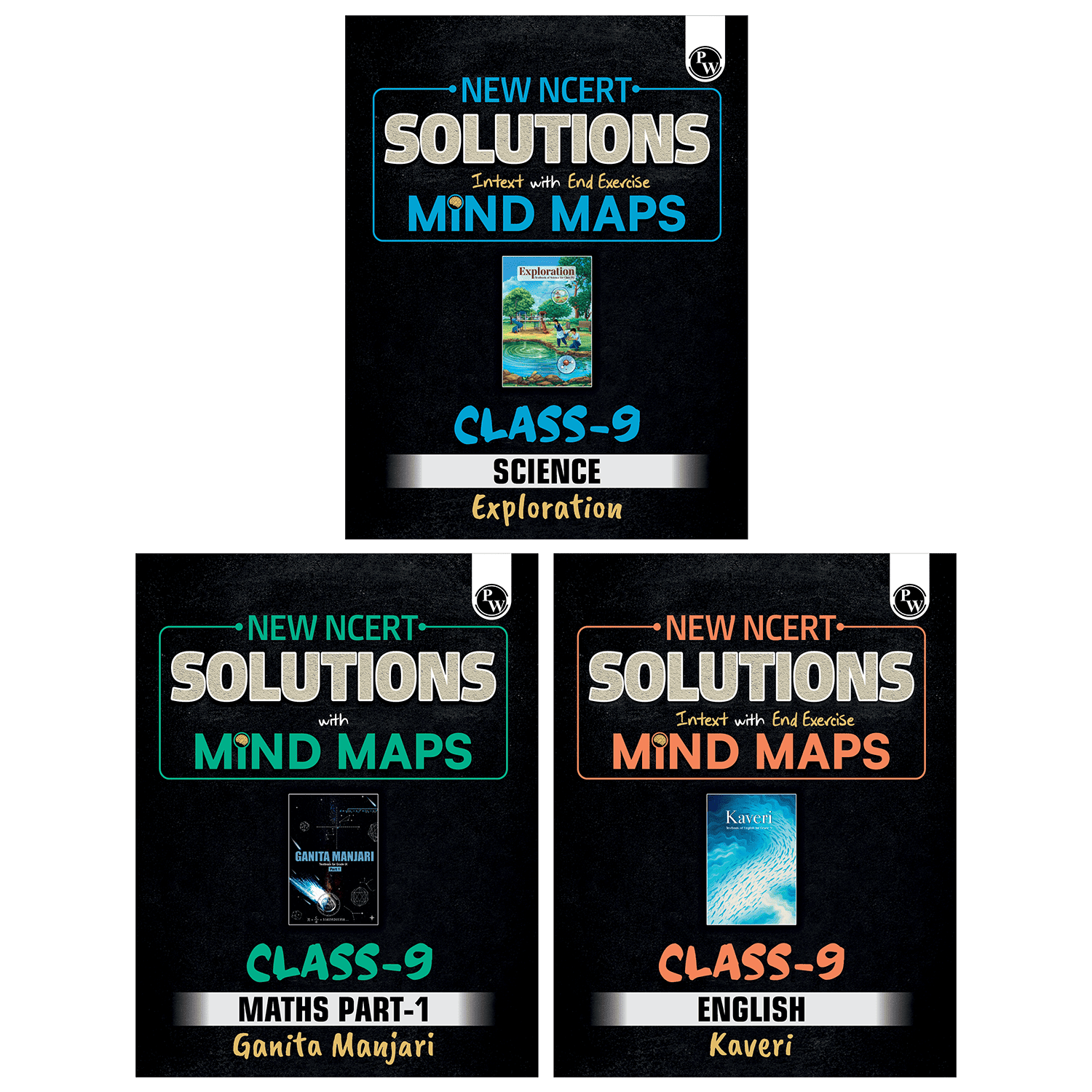
Prepare effectively with PW New NCERT Class 9 Maths Ganita Manjari Part 1, English Kaveri and Science Exploration Combo Set of 3 Books (2026-27).
How to Use the CBSE Class 9 Maths Textbook Alongside Classroom Teaching?
Achieving top marks requires a tactical approach to how you handle your daily school lectures alongside your self-study hours.
-
Pre-Read the Next Chapter
Spend just ten minutes the night before a new topic is introduced skimming through your Class 9 revision textbook. Look at the headings, bold definitions, and introductory paragraphs. When your teacher explains the topic the next day, it will feel like a revision session rather than completely new information.
-
Actively Solve In-Text Examples
Never skip the solved examples that precede the main exercises. These examples provide a blueprint of how examiners expect you to present your answers. Write down these solved problems in your notebook without looking at the solutions, then compare your steps with the book to identify gaps in your logic.
-
Leverage High-Quality Solutions
When you get stuck on a difficult homework problem, utilize reliable textbook solutions rather than giving up. Good solutions do not just give you the final answer; they break down the problem-solving journey into systematic, step-by-step explanations, helping you understand the exact formula application needed for your Class 9 maths preparation.
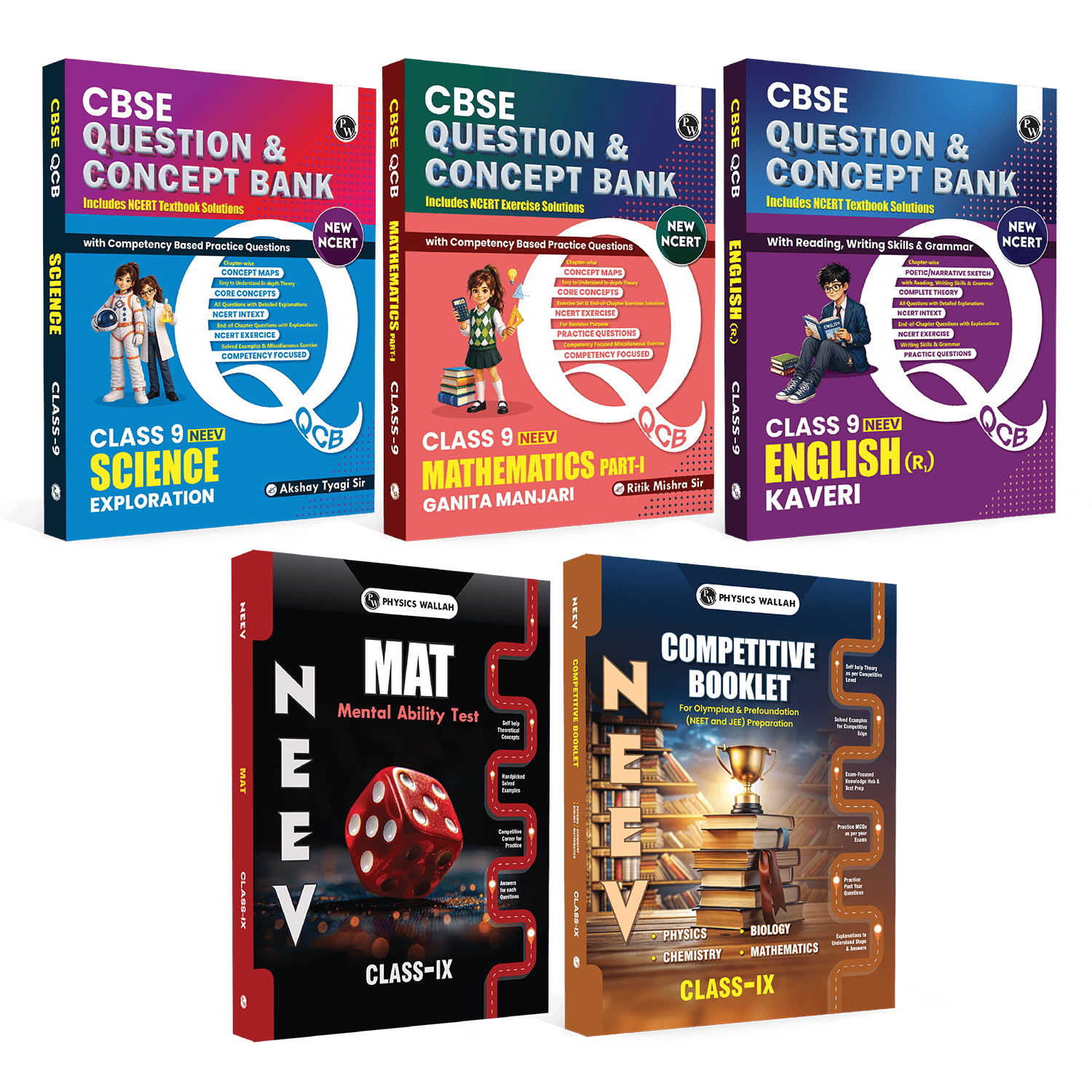
Check Out - CBSE Class 9 Question Bank
Benefits of the CBSE Class 9 Maths Textbook
Leaning heavily on your official textbook during your study routine provides distinct advantages that external materials cannot match.
-
Conceptual Clarity: The book prioritizes deep understanding over rote memorization, ensuring you know the logic behind every formula to improve problem-solving skills.
-
Direct Exam Alignment: School unit tests and final papers are drafted directly from the concepts, in-text questions, and end-of-exercise problems highlighted within this specific text.
-
Graded Difficulty Levels: Exercises move smoothly from basic computational problems to advanced, high-order thinking questions to build confidence for Class tests.
-
Structured Visual Aids: The text utilizes clear diagrams, geometric illustrations, and step-by-step proofs to make abstract concepts tangible.
Mastering the official CBSE Class 9 maths textbook ensures you form a strong base, which is vital because Class 9 concepts directly dictate how well you will understand Class 10 board topics next year.
Study Plan for Using the CBSE Class 9 Maths Textbook
To balance your academic revision with daily school homework, you need a structured routine. Here is a practical weekly strategy to optimize your maths practice using your primary book:
|
Day of the Week |
Study Focus Area |
Action Plan |
|
Monday & Tuesday |
Conceptual Foundations |
Read textbook theories, memorize key formulas, and solve all in-text examples for the current chapter. |
|
Wednesday |
Core Exercise Problems |
Solve the first half of the textbook exercises, focusing heavily on basic and intermediate questions. |
|
Thursday |
Advanced Problem Solving |
Tackle the remaining complex questions and optional exercises at the end of the chapter. |
|
Friday |
Error Analysis & Corrections |
Re-attempt every question you got wrong earlier in the week. Find where your calculation broke down. |
|
Saturday & Sunday |
Mock Revision & Speed Tests |
Set a timer and solve a mixed set of questions from multiple chapters to build exam speed and stamina. |
Read More - Why NCERT Class 9 Revision Book is Perfect for Quick Exam Prep
Common Mistakes to Avoid While Using the CBSE Class 9 Maths Textbook
Even diligent students can fall into bad habits that limit the effectiveness of their study sessions. Avoid these common pitfalls to keep your preparation sharp:
-
Reading Maths Like a Storybook: Browsing through steps visually without picking up a pen is a recipe for disaster. Mathematics requires muscle memory; you must physically write out every step.
-
Rushing to Complex Reference Books: Many students ignore their basic CBSE Class 9 textbook to solve complex, high-level books. This leaves gaps in foundational knowledge, causing them to lose easy marks on straightforward school tests.
-
Ignoring Chapter-End Summaries: The introductory paragraphs and chapter-end summary points often contain the precise conceptual explanations that form the basis of one-mark multiple-choice questions.
-
Leaving Hard Chapters for the Last Minute: Skipping difficult topics like geometry or polynomials hoping they will not feature prominently in exams is risky. Address challenging exercises early when you still have time to ask your teacher for help.
CBSE Class 9 Maths Textbook FAQs
Q1: Is the CBSE Class 9 maths textbook enough to score full marks in school examinations?
A1: Yes, the official textbook covers the entire CBSE curriculum comprehensively. School exams are designed directly around its concepts, in text questions, and end-exercise problems, making it completely sufficient for achieving top scores.
Q2: How should I use textbook solutions effectively without hurting my learning?
A2: Attempt each question independently at least twice before looking up assistance. Use textbook solutions purely as a guiding tool to correct your steps, understand the logic, and fix your calculation mistakes.
Q3: Why do I struggle with school syllabus maths despite practicing daily?
A3: Regular practice must be structured. Ensure your maths practice focuses on understanding the underlying logic of formulas and systematic steps rather than just memorizing the solutions to specific questions.
Q4: How can I manage my Class 9 maths preparation when chapters feel too long?
A4: Break each chapter down by its subtopics. Focus on mastering one specific exercise of your NCERT maths part 1 book at a time, rather than trying to finish an entire chapter in a single study session.