Tips to Use Class 12 Chemistry PYQ for Inorganic Revision
Inorganic Chemistry is a difficult subject since it has a large range of concepts, reactions and periodic trends. Usually, just memorizing NCERT information is not enough for board exams. Regularly solving the Class 12 Chemistry PYQ helps you familiarize with commonly asked topics, increase conceptual knowledge, improve active recall and build confidence via persistent practice, making your board exam preparation more effective and result-oriented.
Why Solve Class 12 Chemistry PYQ for Inorganic Sections?
Inorganic Chemistry has a good weightage in board exams. Inorganic Chemistry requires keen factual recall and analytical reasoning compared to Physical Chemistry, which involves a lot of mathematics, and Organic Chemistry, which is based on reaction mechanisms.
Direct Alignment with NCERT Concepts
The board examinations are based on the NCERT curriculum. Question setters take questions from textbook lines, worked examples and end of chapter problems.
-
Pattern Recognition: Solving previous years papers will tell you that some types of reactions are repeated in subsequent years.
-
Focus Areas: It helps to determine high priority subjects in p-block elements, d-block and f-block elements and coordination compounds.
-
Exact Terminology: Marking schemes reward precise scientific terms and balanced equations rather than lengthy explanations.
High Return on Investment (ROI)
Inorganic questions generally require less time to answer during the exam compared to numerical problems.
-
Speed Boost: Knowing the exact answer to a reasoning question saves valuable minutes for calculations in other sections.
-
Confidence Building: Quick solutions in the initial minutes of the exam build positive momentum.
-
Error Reduction: Repeated chemistry practice minimizes silly mistakes in trend order questions and oxidation state determinations.
The table below illustrates the impact strategic prior paper practice can have on your preparation efficiency:
|
Aspect |
Traditional Reading |
PYQ-Based Revision |
|
Focus |
Passive line-by-line reading |
Target-oriented topic identification |
|
Recall Mechanism |
Recognition-based memory |
Active recall under exam conditions |
|
Time Management |
Variable reading speeds |
Measured speed matching actual exam time |
|
Error Tracking |
Hard to measure |
Immediate feedback via Chemistry solved papers |
How to Analyze Class 12 Chemistry PYQ Trends for p-Block and d-Block
Analyzing trends is more valuable than blindly solving questions. A structured breakdown of CBSE Class 12 PYQs reveals the core competencies, recurring concepts, and question patterns tested by examiners each year. Regularly reviewing these previous year questions helps students identify important topics, understand the exam pattern, and make their revision more focused and effective
Identifying Recurring Question Themes
Certain chapters feature predictable question formats. Categorizing your Inorganic Chemistry PYQs by question style transforms raw past papers into an organized study roadmap.
1. Reasoning and Trend Questions
-
Oxidation States: Stability variations down groups due to the inert pair effect.
-
Acidic Strength: Trends in hydrides and oxoacids across p-block elements.
-
Transition Metals: Variable oxidation states, catalytic properties, and colored ion formation in d-block elements.
2. Structure and Hybridization
-
Xenon Fluorides: Molecular geometry and VSEPR theory applications for XeF_2, XeF_4, and XeO_3.
-
Oxoacids of Phosphorus and Sulphur: Structural drawings, basicity determination, and oxidation number calculation.
3. Coordination Chemistry
-
IUPAC Nomenclature: Standard naming rules for coordination complexes.
-
Isomerism: Identifying structural and stereoisomers in complex ions.
-
Valence Bond and Crystal Field Theories: High-spin vs. low-spin complexes, magnetic moments, and d-d transitions.
Chapter-Wise Weightage and Focus Breakdown
Organizing your study schedule around chapter weightage allows you to spend time effectively. The following table shows a proposed focus breakdown for inorganic revision:
|
Chapter |
Core Topics Tested |
Recommended PYQ Allocation |
|
p-Block Elements |
Group trends, oxoacids, xenon compounds, anomalous properties |
30% of inorganic revision time |
|
d and f-Block Elements |
Lanthanoid contraction, potassium permanganate/dichromate preparations, metallic properties |
35% of inorganic revision time |
|
Coordination Compounds |
IUPAC names, Werner's theory, VBT, CFT, isomerism |
35% of inorganic revision time |
How to Use Class 12 Chemistry PYQ in Daily Practice
To get the maximum benefit from past questions, you need a consistent and structured approach. Solving papers randomly without a planned schedule may limit your progress. Along with regular PYQ practice, CBSE Class 12 Books can help strengthen your concepts, revise important topics, and build a strong foundation for Chemistry.
Use your books to understand the concepts first, then solve related PYQs to test your understanding and identify areas that need more practice. This combination makes daily preparation more focused, improves accuracy, and supports better performance in the CBSE Class 12 Chemistry examination.
Step 1: Topic-Wise Segregation
Start by answering questions that are arranged by chapter rather than by whole papers.
-
Thoroughly read the relevant chapter of NCERT.
-
Solve questions related to the topic just after you complete a theory session.
-
Highlight questions you fail to answer on your first attempt.
Step 2: Time-Bound Practice
Create board exam-like conditions to develop speed and lessen test anxiety.
-
Allocate 1.5 to 2 minutes per mark in practice sessions.
-
Avoid looking at textbook notes while solving questions.
-
Use a stopwatch to measure your resolution speed each question.
Step 3: Self-Evaluation Using Marking Schemes
Evaluating your answers against official answer keys is crucial for writing exam-ready responses.
-
Comparing your answers line by line with standard solved papers.
-
Ensure that the relevant conditions are provided. Check for state symbols and balanced chemical equations.
-
Marks deducted for omission of technical keywords even if the basic concept is correct.
Step 4: Maintenance of an Error Notebook
An error notebook is your most powerful tool for final-day revision.
-
Record every reaction you miswrote or forgot.
-
Note down exceptions to periodic trends that tripped you up during practice.
-
Review this notebook every morning before starting new topics to reinforce memory.
How to Learn Complex Chemical Reactions and Trends Through Class 12 Chemistry PYQ
Inorganic revision often stalls when dealing with lengthy chemical equations and subtle exception rules. Here is how focused past paper analysis simplifies these challenges.
Chemical Equation Strategy
Examiners frequently test specific synthesis reactions and balancing skills.
-
Categorize Reactions: Group equations by type, such as thermal decomposition, disproportionation, and redox reactions involving KMnO_4 and K_2Cr_2O_7.
-
Complete the Following: Practice incomplete reaction prompts regularly found in previous year papers.
-
Condition Checklist: Memorise catalysts, temperature requirements, and pressure conditions specified in official solutions.
Trend-Based Reasoning Strategy
When answering reasoning questions, structure your answers to follow a clear logical chain:
-
State the Trend: State the property change clearly (e.g., "Acidic character increases down the group").
-
Provide the Reason: State the underlying electronic or structural cause (e.g., "Decrease in bond dissociation enthalpy").
-
Mention Exceptions: Highlight any anomalous behavior (e.g., nitrogen's inability to expand its octet due to non-availability of d-orbitals).
Using this systematic approach guarantees that your answer addresses every point required by board examiners. Regular practice with a CBSE Class 12 chemistry Question Bank can further help you understand different question types, improve answer presentation, and identify important topics. Combining structured writing practice with question-bank revision makes board exam preparation more focused and effective.
Common Mistakes to Avoid When Solving Class 12 Chemistry PYQ
Many students solve past questions diligently but fail to translate that effort into higher board scores. Avoiding these frequent mistakes will keep your preparation on track.
1. Passive Reading of Solutions
Simply reading solutions gives a false sense of competence.
-
The Trap: Looking at the answer key and thinking, "I knew this reaction."
-
The Fix: Always write out chemical equations and reasoning explanations completely on paper.
2. Ignoring Low-Weightage Exceptions
Inorganic Chemistry is full of exceptional behaviors that are frequently targeted in short-answer questions.
-
The Trap: Skipping small exception notes in NCERT believing they are unimportant.
-
The Fix: Treat every exception highlighted in past questions as a high-priority concept.
3. Relying on Unverified Resources
Practicing with inaccurate solutions leads to memorising wrong concepts or obsolete syllabus topics.
-
The Trap: Using unverified answer keys found randomly online.
-
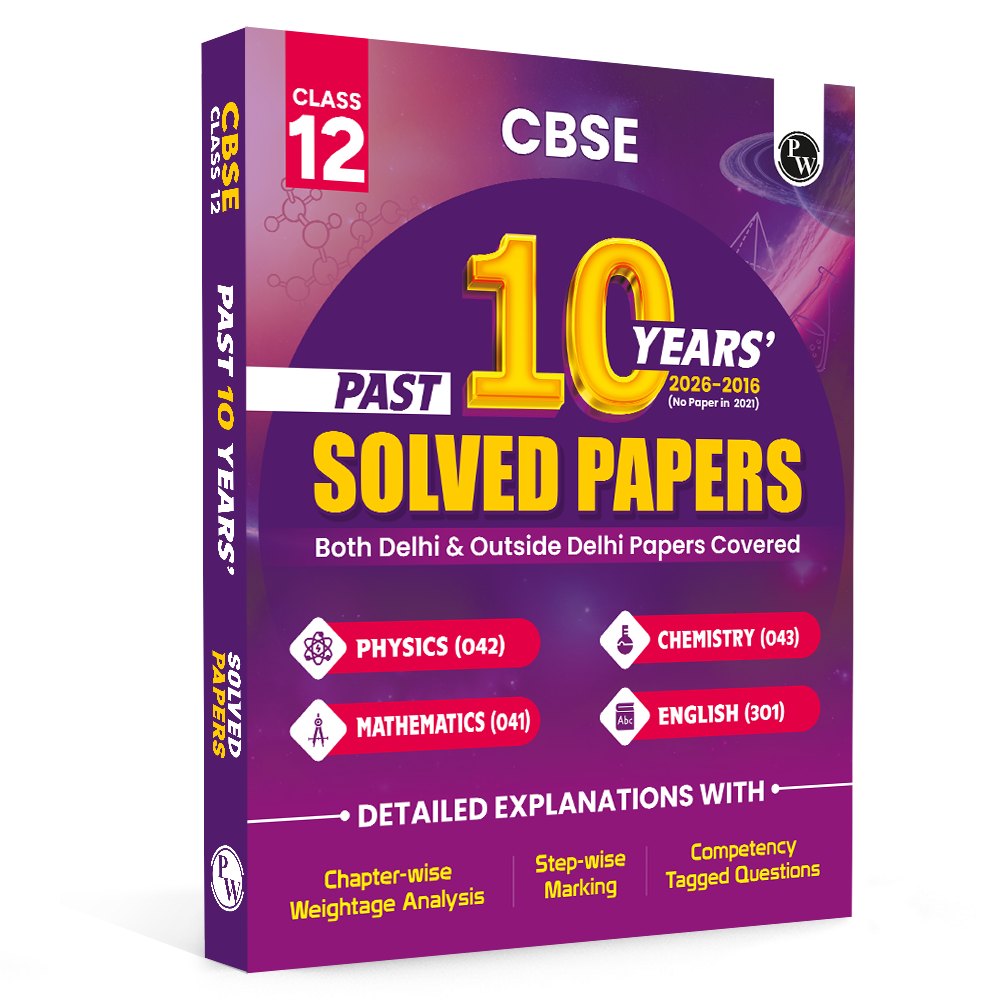
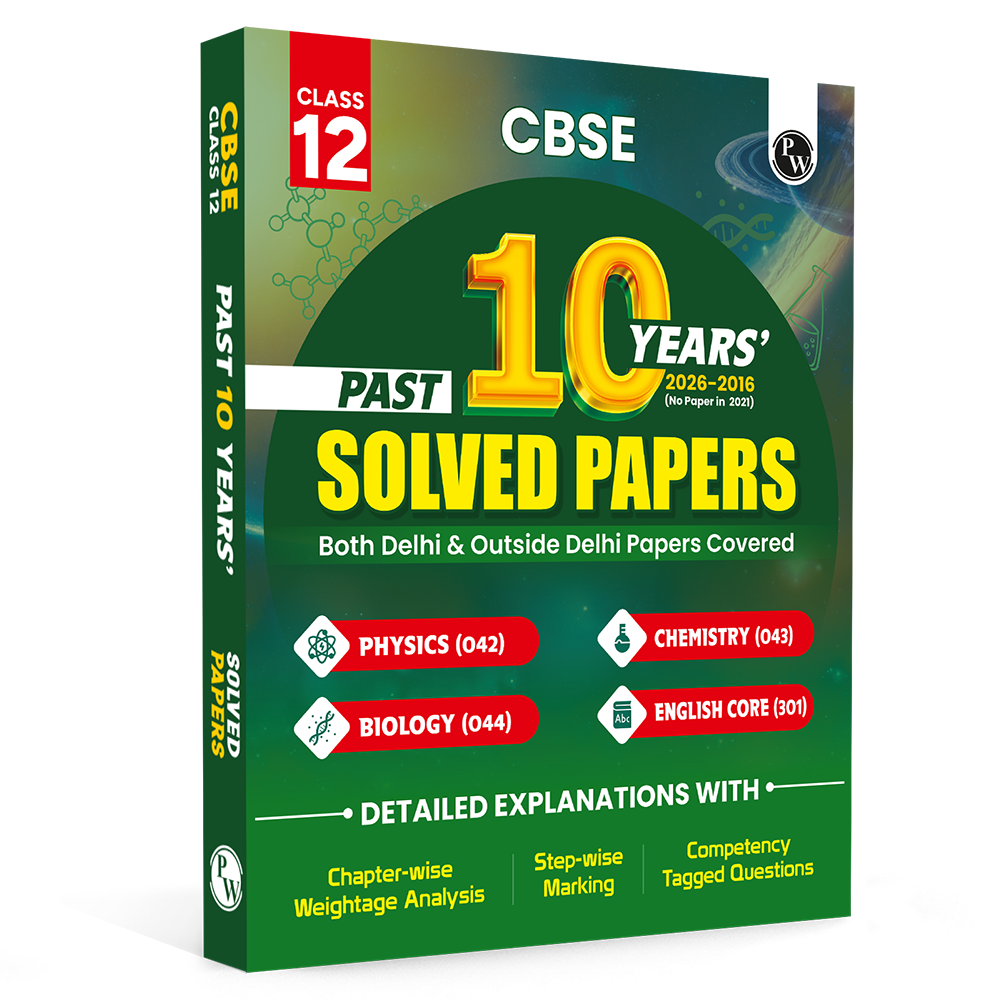
The Fix: Refer to standard, expert-reviewed collections like the PW PCME Class 12 Book, which aligns strictly with current CBSE patterns and updated marking schemes.
4. Neglecting Full-Length Mock Papers
Solving isolated chapter-wise questions is beneficial, but it does not prepare you for full paper fatigue.
-
The Trap: Practicing only individual chapters without attempting 3-hour papers.
-
The Fix: Transition to complete Chemistry PYQ Class 12 papers at least six weeks before the final board exams.
How to Prepare with Class 12 Chemistry PYQ
Choosing the right study resources saves time and ensures high accuracy during your chemistry revision.
Key Features to Look For in a PYQ Book
When selecting past paper material, prioritize these essential features:
-
Chapter-Wise and Topic-Wise Organization: Allows targeted revision of weak areas.
-
Step-by-Step Marking Scheme Explanations: Helps you understand point-wise mark allocation.
-
Updated Syllabus Alignment: Ensures deleted topics are excluded so you do not waste study hours.
-
Mind Maps and Quick Trend Charts: Facilitates rapid last-minute review sessions.
A well-organized compilation, such as those available on the official PW Store, provides curated sample papers, previous years' solved board papers, and precise answer keys tailored for high-scoring performance.
Integrating Multiple Subjects in Your Revision Schedule
Balanced preparation requires dividing time efficiently across Physics, Chemistry, Mathematics, and English.
-
Allocate dedicated time blocks for Inorganic Chemistry every alternate day.
-
Combine inorganic study sessions with numerical practice in Physical Chemistry or Physics to maintain high engagement.
-
Consistently test your overall preparation using full-length past paper sets.
Revision Timetable Using Class 12 Chemistry PYQ
To ensure complete coverage of Inorganic Chemistry alongside other subjects, adopt a structured weekly schedule. A consistent plan prevents last-minute cramming and maintains regular chemistry practice.
|
Week Day |
Focus Area |
Activity Breakdown |
|
Monday |
p-Block Elements |
NCERT reading + 15 topic-specific questions |
|
Tuesday |
Physics / Math Focus |
Alternate subject revision |
|
Wednesday |
d and f-Block Elements |
Reaction balancing + 15 past reasoning questions |
|
Thursday |
Physics / Math Focus |
Alternate subject revision |
|
Friday |
Coordination Compounds |
IUPAC naming + VBT/CFT past paper practice |
|
Saturday |
Error Notebook Review |
Re-solving incorrect questions from previous days |
|
Sunday |
Full Inorganic Mock |
Timed section test using Chemistry PYQ class 12 papers |
Read More: CBSE Class 12 Chemistry Syllabus 2026-27
Class 12 Chemistry PYQ FAQs
How many years of Chemistry PYQs should I practice for inorganic revision?
Practicing the last 10 years of past questions is ideal. This coverage exposes you to almost every variation of reasoning questions, reaction completions, and trend analysis tested by the board.
Is solving previous year chemistry questions enough to score full marks in Inorganic Chemistry?
Solving prior questions is crucial, but it must be supplemented with a comprehensive reading of NCERT textbooks. NCERT promotes basic conceptual understanding, while past papers teach you how to deliver answers successfully according to official grading systems.
How should I revise chemical reactions in d-block and p-block elements?
Group similar reactions together, write them repeatedly in a dedicated practice notebook, and check your work against standard Chemistry solved papers. Focus specifically on oxidation states, catalysts, and reagents.
When is the best time to start practicing Inorganic Chemistry PYQs during the academic year?
You should begin solving chapter-wise past questions immediately after finishing each chapter in class. Transition to full-length paper practice 2 to 3 months before your final board examinations.
Why do answers in Inorganic Chemistry need specific NCERT keywords?
Strict marking keys are used by board exam evaluators, giving marks for specific scientific terms, correct oxidation states and correct electronic configurations. Using correct terms assures you do not lose marks unnecessarily.