What Should I Do After Getting a Low Score in Class 10 Sample Paper

You sit with your evaluated paper, looking at red marks across long-answer sections and numerical steps, wondering where your preparation went off track. It is easy to panic and feel that your board preparation is falling apart.
However, test practice serves as a diagnostic tool rather than a final reflection of your ability. A low score at this stage simply points out specific gaps in content retention, time management, or answer presentation.
By treating every practice test as a feedback mechanism, you can systematically improve class 10 sample paper metrics and turn weak areas into strengths well before the final examinations.
Overview of Class 10 Sample Paper
A standard class 10 sample paper is crafted to mirror the actual board exam environment in terms of question structure, marking distribution, and time allocation. It covers four major subjects: Science, Mathematics Standard, Social Science, and English. Understanding how these papers are built helps you approach them with the right strategy.
-
Structure and Blueprint: Papers follow the latest board specifications, offering a blend of multiple-choice questions, short-answer queries, case-based scenarios, and long structured questions.
-
Trend Alignment: Modern practice tests incorporate past five years' trend analysis to ensure students encounter questions that reflect recent shifts in question styles.
-
Level-Wise Testing: Quality practice resources include level-wise papers ranging from basic foundational tests to advanced board-level challenges.
-
Evaluation Framework: Every test comes with detailed CBSE marking schemes, step-wise marking breakdowns, and toppers' explanations to guide correct answer formatting.
Features of a Class 10 Sample Paper Result You Must Check
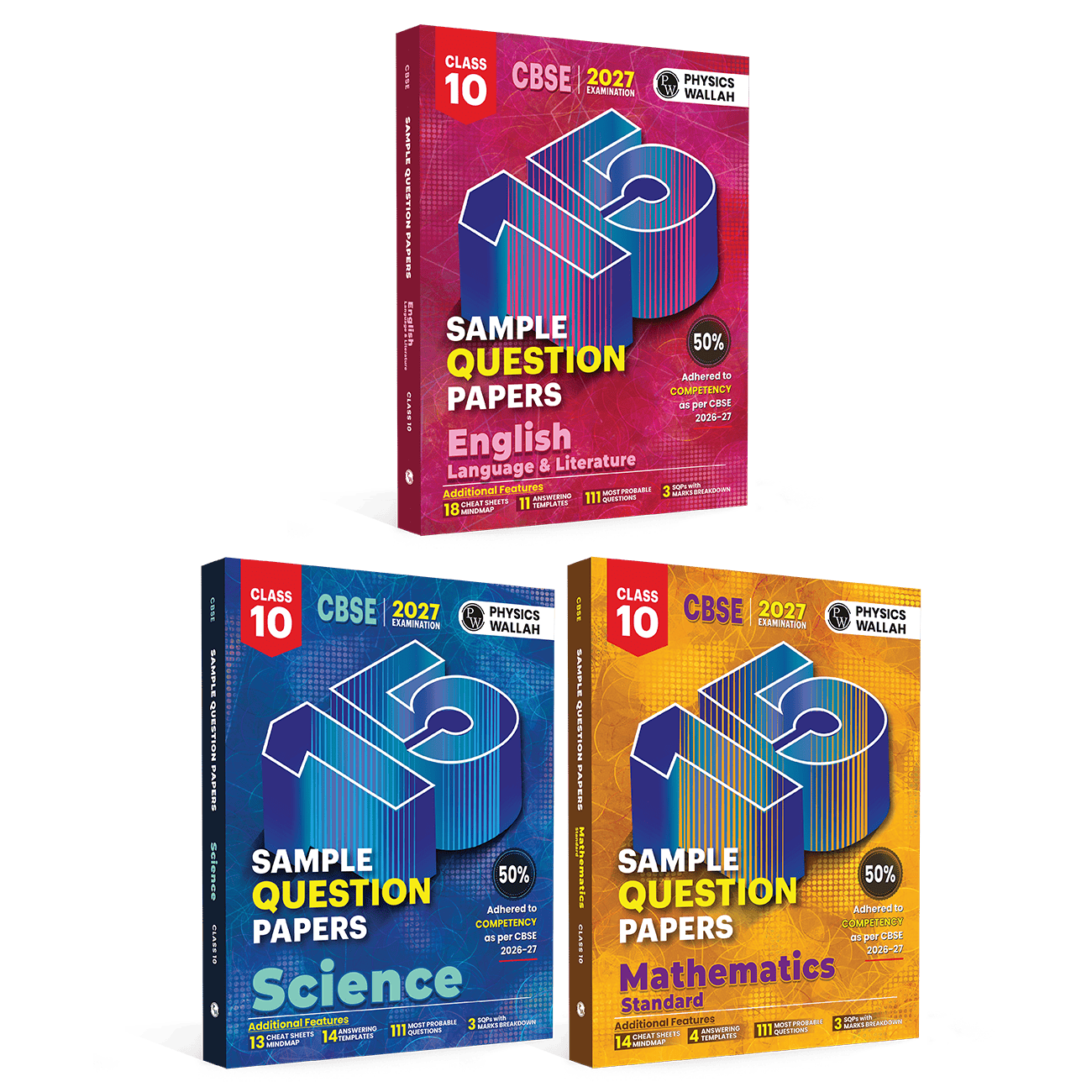
Evaluating a test requires looking beyond the total score printed on the top page. To effectively fix Class 10 sample paper mistakes, you must conduct a detailed section-by-section analysis. Using CBSE Class 10 Books alongside this analysis can help clarify concepts, revise weak topics, and improve performance in future tests.
|
Evaluation Area |
What to Look For |
Corrective Action |
|
Step-Wise Marking Breakdown |
Missing steps in Science derivations or Maths problems |
Practice writing full step-by-step solutions following official marking schemes. |
|
Question Typology Performance |
High error rates in MCQs, case-based questions, or assertion-reasoning |
Solve dedicated practice question booklets focused on specific question types. |
|
Mistake Patterns |
Repeated errors across multiple papers logged via tracking stickers |
Use guidance tools like Mistake 101 sheets to eliminate recurring blunders. |
|
Answering Templates |
Poor layout, missing diagrams, or unformatted answers |
Adopt structured answering templates to align with board evaluation standards. |
Why Low Marks in Your Class 10 Sample Paper Actually Matter?
Scoring lower than expected on a mock test provides valuable insights into your actual exam readiness. Rather than viewing a low class 10 mock test score as a failure, consider it a clear map highlighting what needs immediate attention.
-
Uncovering Hidden Conceptual Gaps
Reading textbook chapters passively often creates a false sense of security. You might feel you understand a topic until an application-based question tests your retention. A poor result highlights topics where fundamental concepts remain weak.
-
Highlighting Poor Time Management
Many students know the answers but fail to finish the paper within three hours. Low marks frequently reveal that too much time was spent on initial sections, leaving long-answer questions rushed or incomplete.
-
Exposing Format and Presentation Issues
Board exams award marks for structure, step-by-step calculations, and proper keyword placement. A lower score often indicates that while your facts were correct, your presentation failed to meet step-wise marking criteria.
How to Analyze Your Weak Areas in a Class 10 Sample Paper?
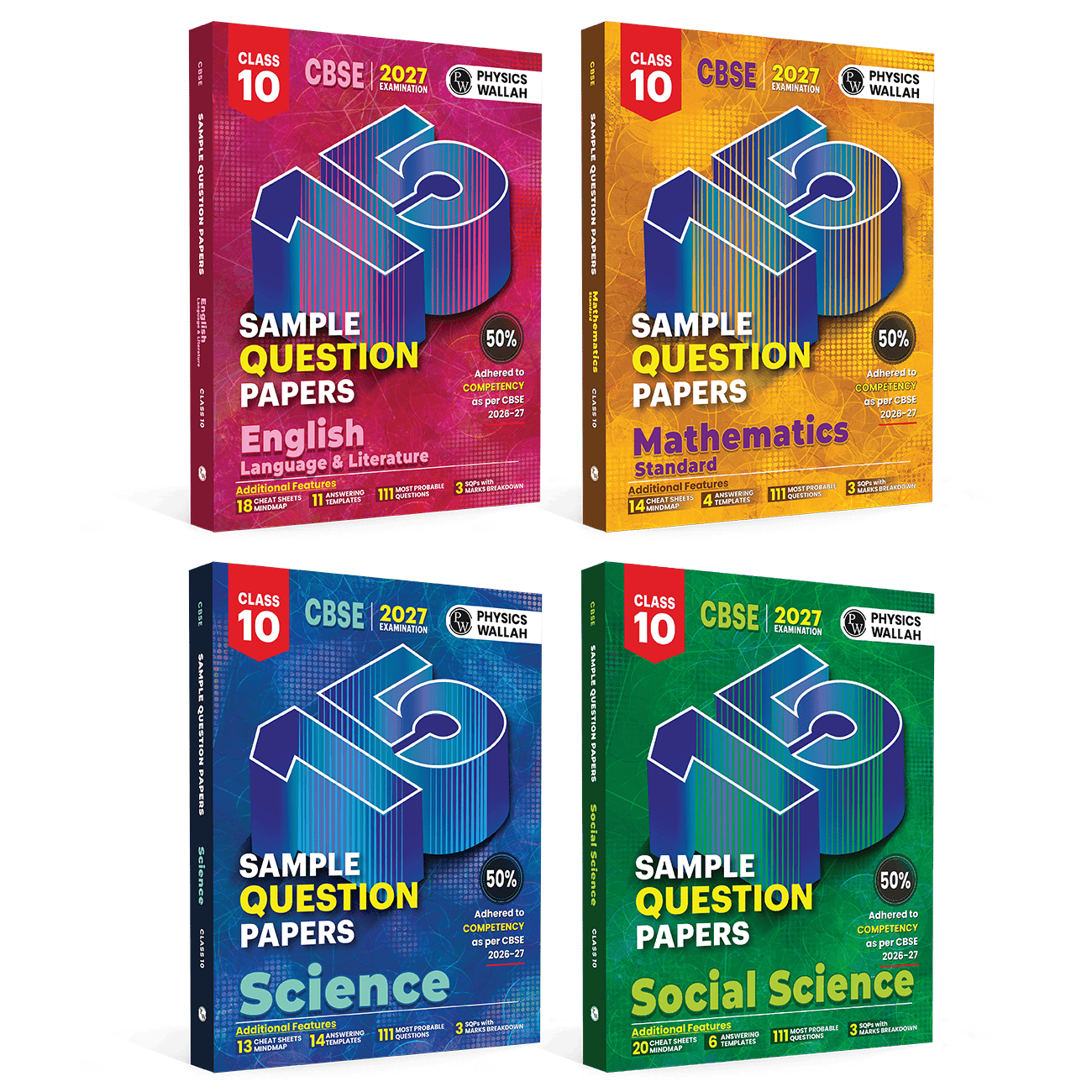
Proper analysis transforms mistakes into actionable study targets. When reviewing your evaluated Class 10 sample paper, categorize every lost mark into one of three specific buckets. Using the CBSE Class 10 Sample Papers Combo of 4 Books 2027 can provide additional exam-oriented practice and help you identify recurring mistakes more effectively.
1. Conceptual Errors
These occur when you do not understand the underlying theory or formula. If a question on electricity circuit diagrams or quadratic equations stumped you entirely, label it as a conceptual gap.
2. Execution and Calculation Errors
These are silly mistakes—misreading the question, making calculation errors, or omitting essential units. Identifying these helps you build better checking habits during the last 15 minutes of an exam.
3. Time-Pressure Errors
If you left questions unattempted or wrote incomplete answers toward the end, your issue lies in speed and pacing rather than knowledge.
When to Stop Attempting New Class 10 Sample Paper Tests and Focus on Revision?
Continuously taking mock tests without addressing your previous mistakes leads to repeated failures and burnout. Knowing when to stop testing is crucial for steady progress.
-
When Scores Plateau: If your marks remain stuck across three consecutive tests, stop taking new papers immediately.
-
When Error Logs Are Unaddressed: If you notice the same mathematical or grammatical errors appearing repeatedly, pause testing to improve class 10 marks through targeted revision.
-
When Concepts Feel Shaky: If solving a test feels like guessing rather than applying learned facts, step back to review your textbooks and quick reference cheat sheets.
-
Two Weeks Before Board Exams: In the final fortnight, shift away from full-length tests. Focus entirely on revising solved papers, key formulas, and high-yield summary sheets.
Study Strategy Plan After a Low Class 10 Sample Paper Score
A low mark demands a structured shift in your daily routine. Use this structured four-week recovery framework to rebuild your preparation.
Phase 1: Deep Review and Error Classification (Days 1–3)
Go through your latest test paper line by line. Compare your written responses against step-wise solved answers and topper explanations. Highlight every topic where you lost more than two marks.
Phase 2: Focused Targeted Revision (Days 4–12)
Put away full-length tests. Dedicate this period to weak chapters identified in Phase 1.
-
Use quick reference cheat sheets and mind maps to quickly review main definitions and formulas.
-
Solve most probable questions specifically selected for board exam revision.
-
Practice handwritten explanations using QR-code-linked video solutions for complex topics.
Phase 3: Sectional Timed Practice (Days 13–20)
Before taking another full three-hour test, work on individual sections under timed conditions.
-
Complete Section A (MCQs) in 25 minutes.
-
Practice long-answer responses using structured templates.
-
Review official CBSE marking schemes to ensure every required keyword is present.
Phase 4: Full-Length Re-Testing (Days 21–28)
Attempt a new level-wise test paper under strict exam conditions. Apply your refined time management strategy and monitor your score for noticeable improvements.
Check Out: CBSE Class 10th Previous Year Papers
Tips to Improve Your Performance in the Next Class 10 Sample Paper
To raise your score on your next attempt, incorporate these practical test-taking strategies.
-
Utilize Reading Time Effectively: Use the initial 15 minutes of reading time to scan the paper, select internal choice options, and sequence your approach.
-
Start with High-Confidence Sections: Answer questions you are completely sure of first to build momentum and secure early marks.
-
Follow Step-Wise Formatting: Write steps clearly in numerical problems and state final units explicitly to capture partial credit.
-
Use Marking Stickers for Self-Tracking: Apply physical marking stickers to your study notebook to visually flag topics that need another round of review.
-
Review Two-Exam Policy Changes: Stay aligned with the latest CBSE Two-Exam Policy updates to ensure your preparation matches current board formats.
Practice Sheet for Class 10 Sample Paper Revision
Use this structured practice template to track your mistakes after every test and organize your revision priorities.
|
Subject |
Test Paper ID |
Low-Scoring Chapter |
Type of Error (Concept/Silly/Time) |
Revision Tool Used (Cheat Sheet/Mind Map) |
Re-test Scheduled Date |
|
Science |
Paper 01 |
Electricity / Optics |
Calculation / Formula |
Mind Maps & Solved Papers |
15th October |
|
Maths Standard |
Paper 01 |
Triangles / Trigonometry |
Conceptual Step Loss |
Step-Wise Marking Templates |
17th October |
|
Social Science |
Paper 01 |
Nationalism in Europe |
Omitted Key Dates |
Past 5 Years' Trend Analysis |
19th October |
|
English |
Paper 01 |
Analytical Paragraph |
Format / Time Loss |
Answering Templates |
21st October |
Read More: Latest CBSE Sample Papers for Class 10 All Subjects
CBSE Class 10 Sample Paper FAQs
Is a low score in a mock test a sign of failure in board exams?
No, a low test score simply highlights knowledge gaps and time management issues that you can fix well before the official board examinations take place.
How many practice papers should I solve before board exams?
Solving around 15 level-wise sample question papers per subject provides comprehensive exposure to exam trends, question variations, and proper timing.
How do I stop making silly blunders in Mathematics?
Maintain a dedicated mistake log, use cheat sheets for formula verification, and practice answers using step-wise marking templates.
Should I take another test immediately after a bad score?
No, always pause to analyze your evaluated paper, categorize your mistakes, revise weak topics, and then attempt your next test paper.
What is the best way to revise chapters quickly after a test?
Utilize visual mind maps, concise cheat sheets, and solved papers with step-wise explanations for targeted and efficient chapter revision.