Reactions, Mechanisms and Numericals: What's Inside PW Class 12 Chemistry Question Bank
Balancing school laboratory work, internal assessments, and theoretical studies creates immense pressure, leaving little time to decipher complex exam patterns. Many learners struggle to convert their textbook knowledge into structured, high-scoring answers that match the official marking schemes.
This is where a dedicated CBSE Class 12 chemistry question bank becomes absolutely essential. By focusing on targeted Class 12 chemistry practice, this book serves as a definitive resource to simplify your preparation, streamline your daily study routines, and boost your confidence during crucial chemistry revision sessions.
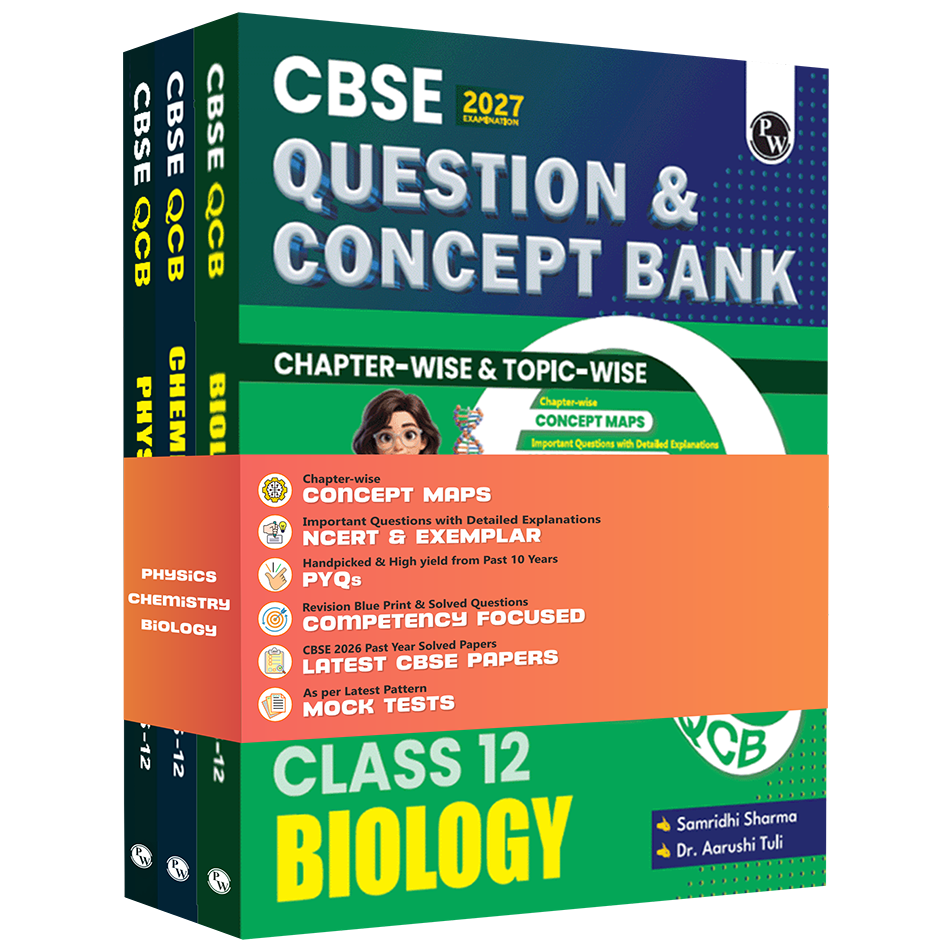
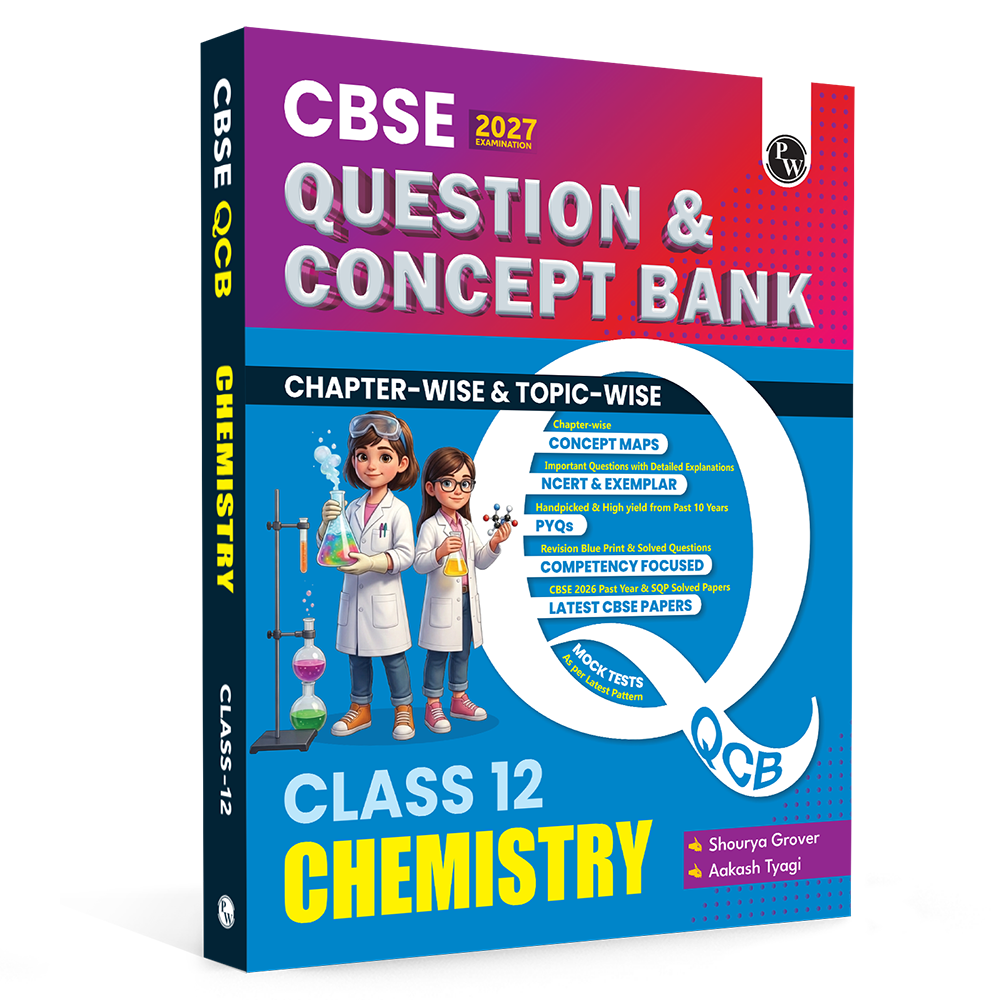
The CBSE Class 12 chemistry question bank is a structured, exam-oriented study resource designed precisely in line with the latest board guidelines and competency-based education frameworks. It consolidates foundational text concepts, textbook questions, and previous year patterns into a unified study tool.
Rather than filtering through multiple books, students find fully solved CBSE Class 12 Previous Year Questions (PYQs), Sample Question Papers (SQPs), and high-yield question sets organized by chapter. The book bridges the gap between theoretical reading and actual exam application by providing clear answer blueprints, marking scheme insights, and analytical practice problems.
What Does the CBSE Class 12 Chemistry Question Bank Cover?
This comprehensive question pool acts as an all-in-one repository for systematic preparation. It splits chapters into manageable segments, ensuring no syllabus area is left unchecked.
-
Chapter-Wise Concept Maps
Every unit opens with structured visual breakdowns that compress long chapters into clear, single-page diagrams. These charts highlight essential formulas, raw reactions, definitions, and interconnected concepts for quick reference.
-
10 Years High-Yield Questions
The resource curates the most frequent, high-scoring CBSE chemistry questions from the past decade of board exams. This allows students to identify recurring trends and prioritize highly anticipated topics.
-
Mock Tests and Practice Blueprints
To mimic actual exam conditions, the book includes complete mock papers based on the latest board patterns. Detailed answer keys accompany these tests, explaining the precise steps needed to secure full marks.
How Does the CBSE Class 12 Chemistry Question Bank Help with Organic Reactions?
Organic chemistry often overwhelms students due to the sheer volume of naming reactions and conversions. The CBSE Class 12 chemistry question bank simplifies this by categorizing chemistry reactions logically.
Instead of forcing rote memorization, the text groups reactions by functional groups and chemical properties. It provides dedicated conversion drills, teaching you how to move from a simple reactant to a complex product step by step.
By practicing these contextual worksheets, you learn to identify patterns, predict major products, and write neat, error-free equations during the exam.
How Does the CBSE Class 12 Chemistry Question Bank Simplify Reaction Mechanisms?
Understanding the step-by-step pathway of a chemical transformation is essential for solving advanced application questions. This CBSE Class 12 question bank unpacks intricate organic mechanisms by breaking down electron movements, intermediate formations, and breaking points.
|
Step Type |
Focus Area |
Exam Benefit |
|
Nucleophilic Attack |
Identification of electrophilic centres and reactive intermediates. |
Prevents directional errors in arrow marking. |
|
Intermediate Stability |
Comparison of carbocation, carbanion, or free radical states. |
Helps explain reasoning-based board questions. |
|
Product Elimination |
Final detachment of leaving groups to form the stable end-product. |
Ensures complete step-by-step writing for full marks. |
How Should You Use the CBSE Class 12 Chemistry Question Bank?
To get the most out of your CBSE Class 12 chemistry question bank, embed it deeply into your weekly study routine. Use it as a self-assessment tool immediately after completing a chapter from your textbook.
Begin by reviewing the visual concept maps to refresh your memory. Next, attempt the core question sets without looking at the solutions. Once finished, compare your answers with the provided step-by-step solutions to identify gaps in your explanations. Use a highlighter to mark tricky questions or calculation errors so you can revisit them easily during your final chemistry revision phase.
Benefits of Using the CBSE Class 12 Chemistry Question Bank
Scoring well in senior secondary chemistry requires balancing factual memory, logical application, and mathematical accuracy. The CBSE Class 12 chemistry question bank acts as a strategic asset for daily study and final revision.
-
Eliminates Exam Pattern Guesswork: Direct exposure to solved board papers and mock tests clarifies marking criteria and question formats.
-
Encourages Active Recall: Testing your knowledge through structured Class 12 chemistry practice reinforces retention better than passive reading.
-
Optimises Study Time: Chapter-wise visual summaries and curated question sets ensure you spend your hours on high-priority topics.
-
Reduces Last-Minute Anxiety: A predictable, steady preparation routine builds real exam confidence and time management skills.
Study Plan for Using the CBSE Class 12 Chemistry Question Bank
A structured timeline transforms a dense syllabus into a series of achievable milestones. Use this four-step preparation blueprint to manage your workload effectively:
-
Phase 1: Conceptual Alignment (Months 1–3): Read a textbook chapter, then immediately solve the corresponding basic and conceptual questions in the bank.
-
Phase 2: Core Drill Practice (Months 4–6): Focus heavily on specialized sections containing numerical problem sets and step-by-step mechanism pathways.
-
Phase 3: Targeted Revision (Months 7–8): Revisit highlighted questions and solve the 10-year high-yield board questions to refine your writing speed.
-
Phase 4: Full Simulation (Final Month): Sit in a quiet room, set a timer for three hours, and solve the integrated mock test papers under real exam conditions.
Common Mistakes to Avoid While Solving CBSE Class 12 Chemistry Question Bank
Below are some common mistakes to avoid when using the CBSE Class 12 PCB question bank. It will help in a better preparation:
-
Reading Solutions Passively: Treating the book like a storybook without writing down equations on paper leads to poor retention. Always practice with a pen and notebook.
-
Ignoring the Step-Wise Marking Schemes: Board examiners award marks for intermediate steps. Skipping formulas, omitting state symbols, or jumping directly to final numerical answers can cost you easy marks.
-
Neglecting Competency-Based Prompts: Modern board exams feature case studies and assertion-reasoning questions. Skipping these application drills leaves you unprepared for analytical paper sections.
-
Inconsistent Revision Cycles: Solving a chapter once and forgetting it for months weakens your recall. Revisit your marked, difficult questions at regular two-week intervals.
CBSE Class 12 Chemistry Question Bank FAQs
How does the CBSE Class 12 chemistry question bank handle physical chemistry numericals?
The question bank breaks down numerical problems by stating the primary formula first, showing step-by-step substitution, and highlighting SI units to ensure complete accuracy.
Can I rely on this question bank for structural naming reactions?
Yes. The book provides dedicated sections for naming reactions, conversions, and chemical distinction tests, making organic reactions highly approachable.
Does this book contain the latest board exam patterns?
Absolutely. It is fully updated with competency-based education guidelines, assertion-reasoning pairs, case-based questions, and the latest solved sample papers.
How do visual concept maps improve the speed of preparation?
Concept maps summarize whole chapters into single-page visual flowcharts, allowing you to recall key formulas and structural connections in just a few minutes.