How to Complete SSC Modules in 3 Months

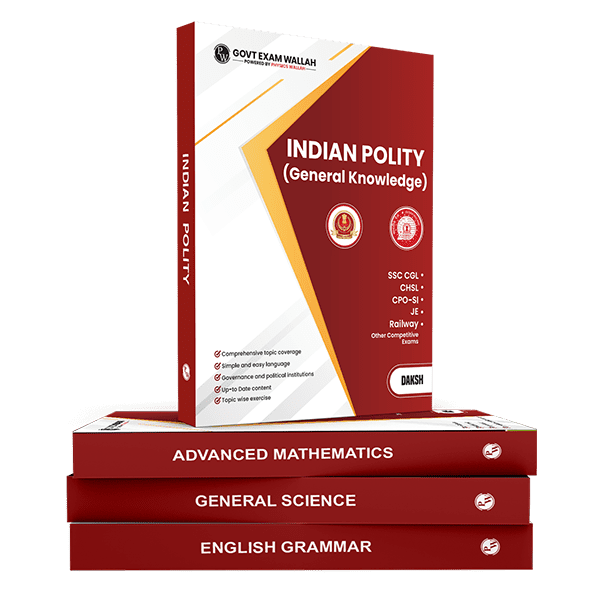
It's not so much how much you study for a Staff Selection Commission exam as it is how well you use your time and money. Most students start studying with a lot of excitement, but they quickly feel overwhelmed by how much they have to learn. Most of the time, the main problem isn't that there isn't enough substance but that there isn't enough structure. This is where SSC modules come in. If you want to pass the CGL, CHSL, or MTS exams, having a set of materials that are easy to use, like the SSC Daksh modules, can help you learn more effectively. You need a plan that blends speed with understanding if you want to finish how to complete SSC syllabus in 3 months.
Why is SSC Important for Your Career?
Before getting into the "how," it's important to know why SSC is important. For millions of people in India who want to work for the government, the Staff Selection Commission is more than just a job; it's a method to get a safe, respectable, and steady job with the central government.
-
Job Security: Government jobs are much more stable than jobs in the private sector.
-
Many Different Jobs: The jobs are prestigious, from income tax inspectors to assistant section officials.
-
Possibilities for Growth: Clear paths for promotion and departmental tests make it possible to move up in your profession.
-
Work-Life Balance: Most SSC jobs have set hours, which helps you have a good personal life.
How to Complete SSC Modules in 90 Days?
Phase 1: Build Basics with Modules (Days 1–30)
The first month of your SSC study plan for 90 days should be all about developing a strong base. You can't just go over the basics of grammar or quant quickly and expect to do well on the mains.
How to Cover SSC Subject Wise Modules
Don't leap right into answering questions from last year during this stage. Instead, divide your modules by subject like this:
-
Quantitative Aptitude: Start with maths. Topics like percentages, ratios, and profit & loss form the base for almost every other chapter.
-
English Language: Spend this month on functional grammar. Know the different parts of speech and how to put sentences together.
-
General Intelligence & Reasoning: These are the areas where you get points. Start with simple things like coding, decoding, and series.
-
General Awareness: Don't try to remember everything at once. Use your modules to read through history and geography like a story.
Daily Routine for Month 1
Aim for 6–8 hours of study. Dedicate 2 hours to maths, 1.5 hours to English, 1 hour to reasoning, and the rest to general awareness and current affairs.
Phase 2: Practice and Speed Using Modules (Days 31–60)
Once you understand the "why" behind the formulas, you need to focus on the "how". The second month is about speed. This is where the SSC Daksh modules prove most effective, as they often include tiered exercises ranging from basic to advanced levels.
Identify High-Weightage Topics from SSC CGL Modules
To finish the syllabus on time, you must stop treating every chapter with equal weight. Use your CGL modules to identify high-weightage topics.
-
Maths: Move into advanced maths—geometry, mensuration, and trigonometry. Solve at least 50 questions per topic.
-
English: Start focusing on vocabulary (synonyms, antonyms, and idioms). Use your modules to learn 20 new words daily.
-
Reasoning: Tackle more complex puzzles and syllogisms.
-
General Awareness: Focus on Science (Biology and Physics) and Static GK (National Parks, Dams, Folk Dances).
Phase 3: Revision and Mock Tests with Modules (Days 61–90)
The final 30 days of your SSC study plan should be about refinement. If you haven't finished a small section of the syllabus by now, leave it. It is better to be 100% prepared for 90% of the syllabus than 50% prepared for 100% of it.
Mock Tests and Revision
-
Full-Length Mocks: Take one mock test every two days. Analyse your mistakes thoroughly using the solutions provided in your modules.
-
Formula Revision: Maintain a small notebook for maths formulas and English grammar rules.
-
Current Affairs: Revise the last 6–8 months of current affairs.
Check Out: SSC Previous year Papers
SSC Modules 90-Day Preparation Plan
To help you visualise your progress, here is a structured breakdown of how your three months should look.
|
Month |
Focus Area |
Primary Goal |
Recommended Daily Hours |
|
Month 1 |
Foundation & Basics |
Complete 50% of modules |
6 Hours |
|
Month 2 |
Practice & Speed |
Complete the remaining subject-wise modules |
8 Hours |
|
Month 3 |
Mocks & Revision |
Solve 15-20 full-length CGL modules mocks |
9 Hours |
Tips to Complete SSC Modules
Simply owning the books isn't enough. You need to interact with the content. The Daksh modules are designed for active learning, so use them wisely.
1. The 2-Pass Method
When reading a new chapter in your modules, go through it once quickly to understand the gist. On the second pass, take notes and highlight key definitions. This improves retention significantly.
2. Subject Rotation
Avoid studying only one subject all day. It leads to burnout. Switch between a "heavy" subject like mathematics and a "lighter" one like English or reasoning to keep your brain engaged.
3. Focus on Quality over Quantity
It is better to solve 20 questions with a complete understanding of the logic than 100 questions by just looking at the solutions. Your modules are goldmines of logic; dig deep into each explanation.
4. Stay Consistent with General Awareness
General awareness is often the "make or break" section. Spend 45 minutes every single day on this. Use the subject wise modules to categorise static GK and current events separately.
Completing the modules in three months is an ambitious but achievable goal. It requires a disciplined approach, the right study material, and a refusal to give up when a particular concept gets tough. By following a structured SSC study plan, you ensure that you aren't just working hard, but working smart.
Check Out: SSC Textbooks
Benefits of Using SSC Modules
The SSC study plan becomes much more effective when your resources are aligned with the latest exam patterns.
Integration of Previous Year Questions (PYQs)
You cannot conquer an exam without knowing its history. The modules include a dedicated zone for recent PYQs. This helps you understand the general "vibe" of the paper and identify high-frequency topics that examiners focus on.
Time-Saving Shortcuts
Speed is the currency of the SSC exam. These modules teach innovative shortcuts and strategies, particularly for the Quantitative Aptitude and Reasoning sections. Learning these methods via your SSC CGL modules saves valuable seconds during the actual test.
Fast Feedback Loop
Every exercise is followed by detailed, logical solutions. This immediate feedback allows you to correct your mistakes in real-time. It fosters self-reliance, which is essential for students who are not enrolled in offline coaching.
Comprehensive Coverage
The 11-set combo of Daksh modules acts as a complete kit. It covers everything from arithmetic and Advanced Maths to general studies (history, geography, science, and polity/economy), ensuring that no part of the syllabus is left behind.
Remember, the goal isn't just to finish the books—it is to master the content within them. Focus on the process, and the results will follow.
Read More: How to Start Preparation for SSC Exam?
Complete SSC Modules in 3 Months FAQs
Can I really complete the SSC modules in just 3 months?
Yes, you can finish all the SSC modules in 90 days if you stick to a strict 8-hour daily schedule and a well-organised plan.
Which are the best SSC modules for beginners?
The SSC DAKSH modules are great for beginners because they start with the basics and then go on to the more complex material that is needed for tests.
How many hours should I dedicate to SSC subject-wise modules daily?
You should spend roughly 2 hours on Maths, 1.5 hours on English, and 1 hour each on Reasoning and GA to balance your SSC subject wise modules effectively.
Is the SSC CGL module's content different from other SSC exams?
While the core subjects are similar, these modules often contain higher-level difficulty questions, especially for Tier II preparation, compared to MTS or CHSL.
Why is SSC important for graduates today?
Understanding why SSC is important comes down to the combination of prestige, high pay scales, and the opportunity to serve in influential government departments.