Time and Work Questions For SSC Exam

ssc time and work questions are an integral part of the quantitative aptitude section of the SSC CGL, CHSL, and MTS exams. This topic assesses the skills of the exam-going aspirant regarding the relationship between the number of workers, the time span of the workers, and the work done. Expertise in such questions is crucial for achieving top marks in Government exams.
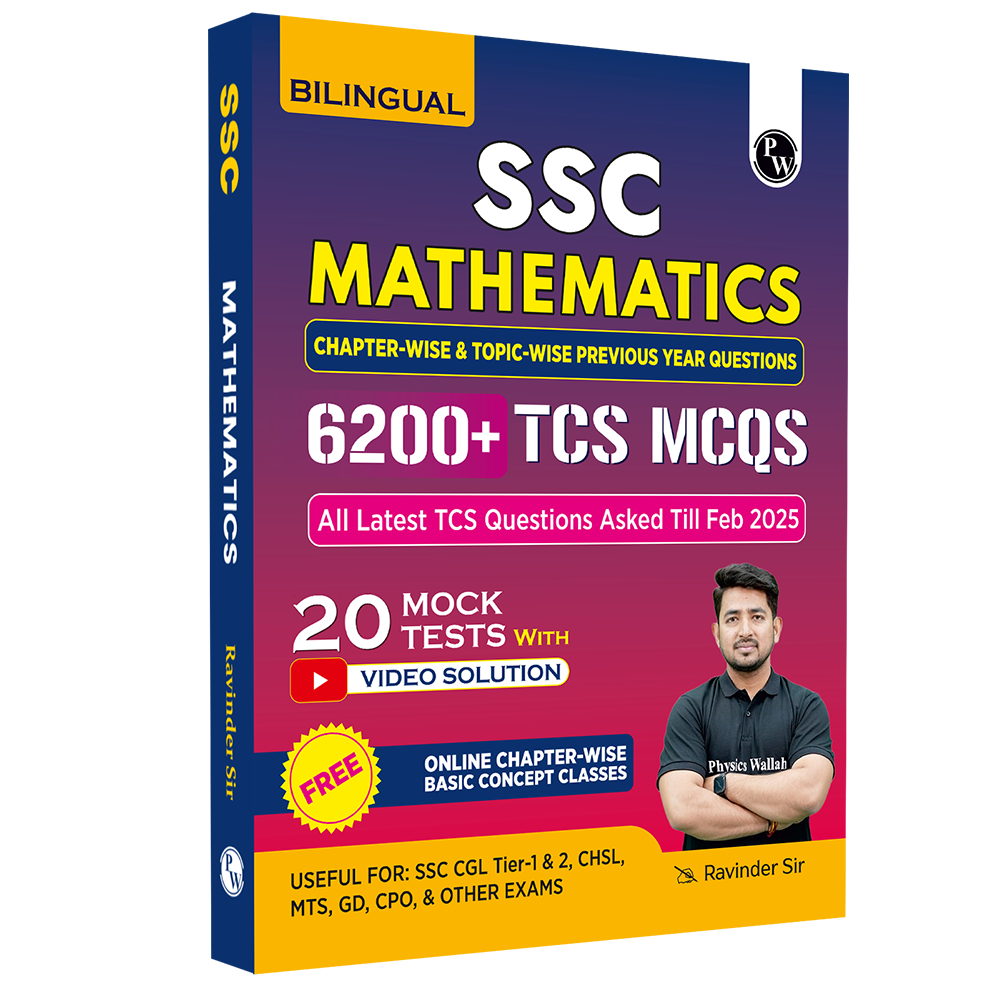
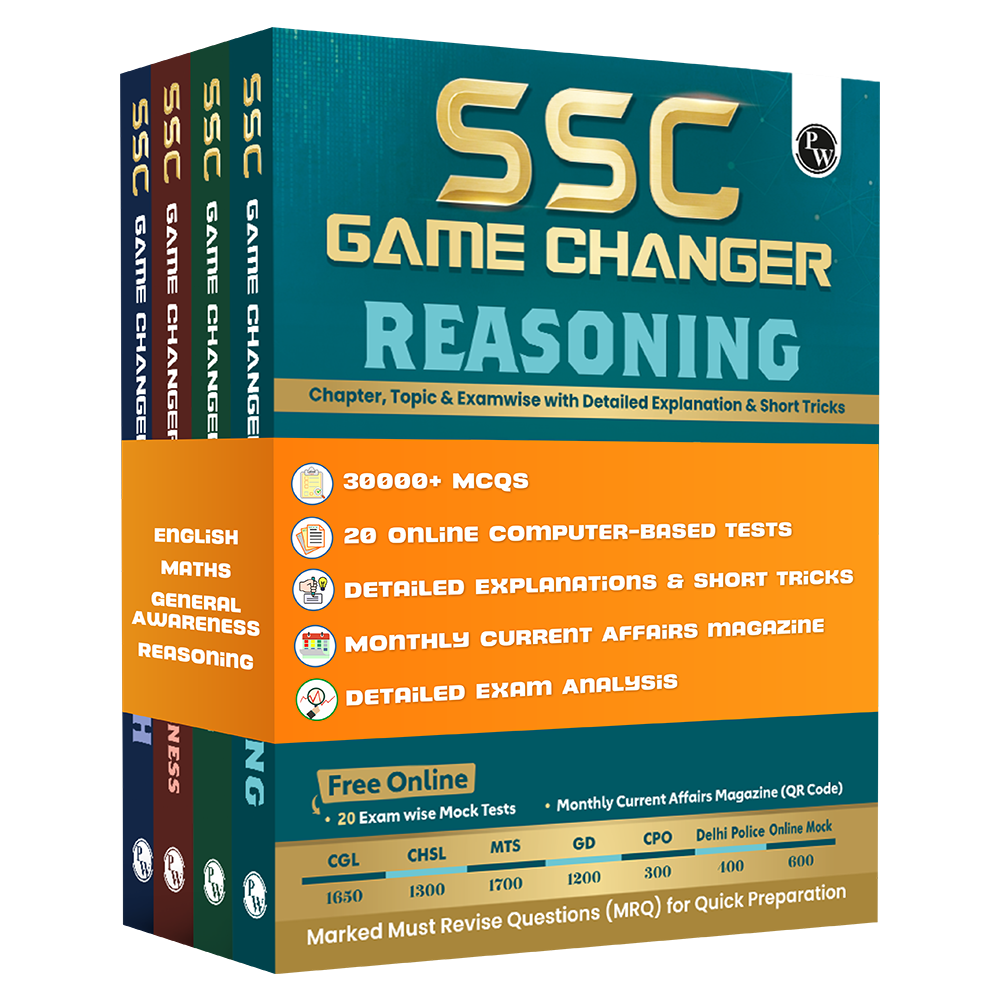
Check Out: SSC Books
Mastering SSC Time and Work Questions
Preparing for the SSCs requires one to be sound on the core mathematical concepts. Most aspirants search for an ssc time and work questions pdf, which can be practiced offline, since individual patterns of work, group efficiency, or the case of work alternating in shifts fall under the category. For those who prefer studies in their vernacular medium, ssc time and work questions in hindi are available to explain the logic behind "man-days" and "work-rate".
Why Focus on SSC Practice Material?
Accessing an ssc time and work questions with solutions pdf in hindi provides the following advantages:
Unveiling Tough Concepts: See how LCM (Least Common Multiple) helps simplify work problems involving fractions.
Patterns Identification: The ability to spot common patterns of questions such as 'leaving and joining' or 'men and women and children' ratios
Language Comfort: The comfort of the language will be ensured with the help of an ssc time and work questions pdf in hindi.
With these resources incorporated into a study regimen, students can move forward from rudimentary unitary concepts to more complex shortcuts that are necessary for the 2026 cycle of exams.
Key Concepts and Solutions for SSC Time and Work
"Time and Work" concept is based on the inverse proportion between time and efficiency. The formula for this concept, based on resources from Testbook and PW, is:
Work = Work Hours x Efficiency
Basic Rules to Remember
Inverse Relation: If a person needs X days to complete a particular piece of work, in that case his/her work in a day is measured by 1/X.
LCM Method:
Instead of working on fractions, the LCM of the working days of the individuals is assumed to be the entire amount of work. Efficiency and Time: The ratio of efficiency of A and B will be a:b. Hence, the ratio of time will be b:a.
Efficiency and Time: If the efficiency ratio of A and B is a:b, the time taken ratio will be b:a.
Example Problem with Solution
Question: A can finish a piece of work in 12 days and another person, B, can do it in 18 days. If A and B work for 4 days together, then what fraction of work is left?
Solution (LCM Method):
Therefore, Total Work = LCM of 12 and 18 = 36 units.
Efficiency of A = 36 ÷ 12 = 3 units per day.
Efficiency of B = 36 / 18 = 2 units per day.
(A + B) in 1 Day = 3 + 2 = 5 units.
Work done in 4 days = 5 x 4 = 20 units.
Remaining work = 36 - 20 = 16 units.
Fraction Left: 16/36 = 4/9.
Check Out: SSC Previous year Papers
The Strategic Advantage of the LCM Method in SSC Exams
To excel in ssc time and work questions, adopting the LCM (Least Common Multiple) method is a game-changer for speed and accuracy. By assuming total work as a common multiple of the given time periods, you transform difficult fractions into easy-to-manage whole numbers. This strategy allows you to calculate individual efficiencies rapidly, making it much simpler to handle complex variations like workers leaving mid-task or alternate-day shifts. Mastering this technique ensures you save precious seconds during the 2026 competitive exams.
Common Variations in SSC Time and Work Questions
Success in SSC CGL or MTS often depends on how quickly you recognize the problem type. Here are the most frequent variations found in ssc time and work questions:
1. Alternate Day Work
In these problems, A and B work on alternate days. You calculate the work done in a "cycle" of 2 days and then determine how many full cycles fit into the total work.
2. Efficiency-Based Problems
Questions often state "A is 25 percent more efficient than B." This means if B's efficiency is 4 units, A's is 5 units. This allows you to find total work by multiplying efficiency with the time taken by either person.
3. Work and Wages
Wages are distributed based on the total work done by each individual. If they work for the same number of days, the ratio of wages equals the ratio of their efficiencies.
4. Men, Women, and Children
These require converting different types of workers into a common unit (e.g., 2 men = 3 women) using the provided completion times for each group.
PW SSC Study Material for 2026 Exam Preparation
PW SSC Study Material for 2026 exam preparation is designed to help aspirants build strong fundamentals and prepare effectively for SSC exams. It covers the latest syllabus with clear, easy-to-understand explanations and NCERT-based concepts where required.
SSC Time and Work Questions FAQs
1. How can I download ssc time and work questions pdf?
Most leading educational platforms have a dedicated ssc time and work questions pdf available in their Free Downloads section. You can have a look on websites like PW.
2. What is the MDH formula in Time and Work?
The general formula for MDH is:
(M1 × D1 × H1) / W1 = (M2 × D2 × H2) / W2
This formula is used when analyzing two groups with varying numbers of men denoted as ‘M,’ days denoted as ‘D,’ hours denoted as ‘H,’ and varying amounts of work denoted as ‘W’.
3. In which way is the LCM method better than the Fraction method?
The LCM method gives work a value in “units,” which makes it easier to work with whole numbers rather than complex fractions to reduce errors in calculation during examinations.
4: Is the ssc time and work problem in hindi the same as in English?
The answer is no. The math and the numbers will be the same. The only change will be the language in the word problem. Aspirants will be able to choose the type of book they prefer.
5. Is Pipes and Cisterns a concept related to Time & Work?
The Pipes and Cisterns have the same logic. The only point of difference is that the Efficiency of an outlet pipe is assumed to be negative.