Don't Just Solve UGC NET PYQs: Here's What to Do After Every Question

Students often find themselves stuck in a loop of solving hundreds of UGC NET PYQs without seeing a real improvement in test scores. Simply checking whether an answer is right or wrong creates a false sense of progress. When faced with tricky statements or subtle options in Paper 1, raw practice alone falls short.
True mastery requires understanding why incorrect options were included, identifying underlying concept gaps, and tracking how NTA twists basic formulas. A dedicated UGC NET paper 1 PYQ book serves as an essential tool to guide this post-question analysis.
By converting every practice item into a mini-learning session, candidates can build real confidence across all units.
What Is the UGC NET Paper 1 PYQ Book
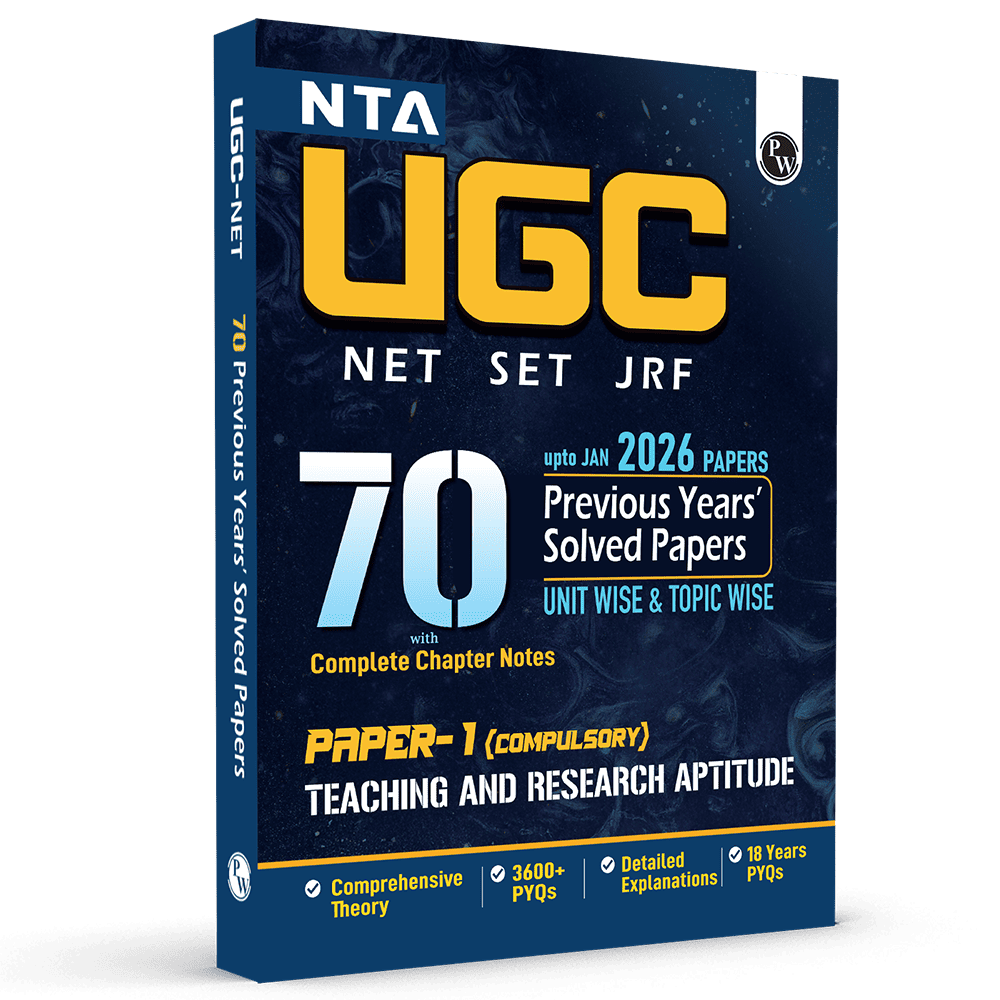
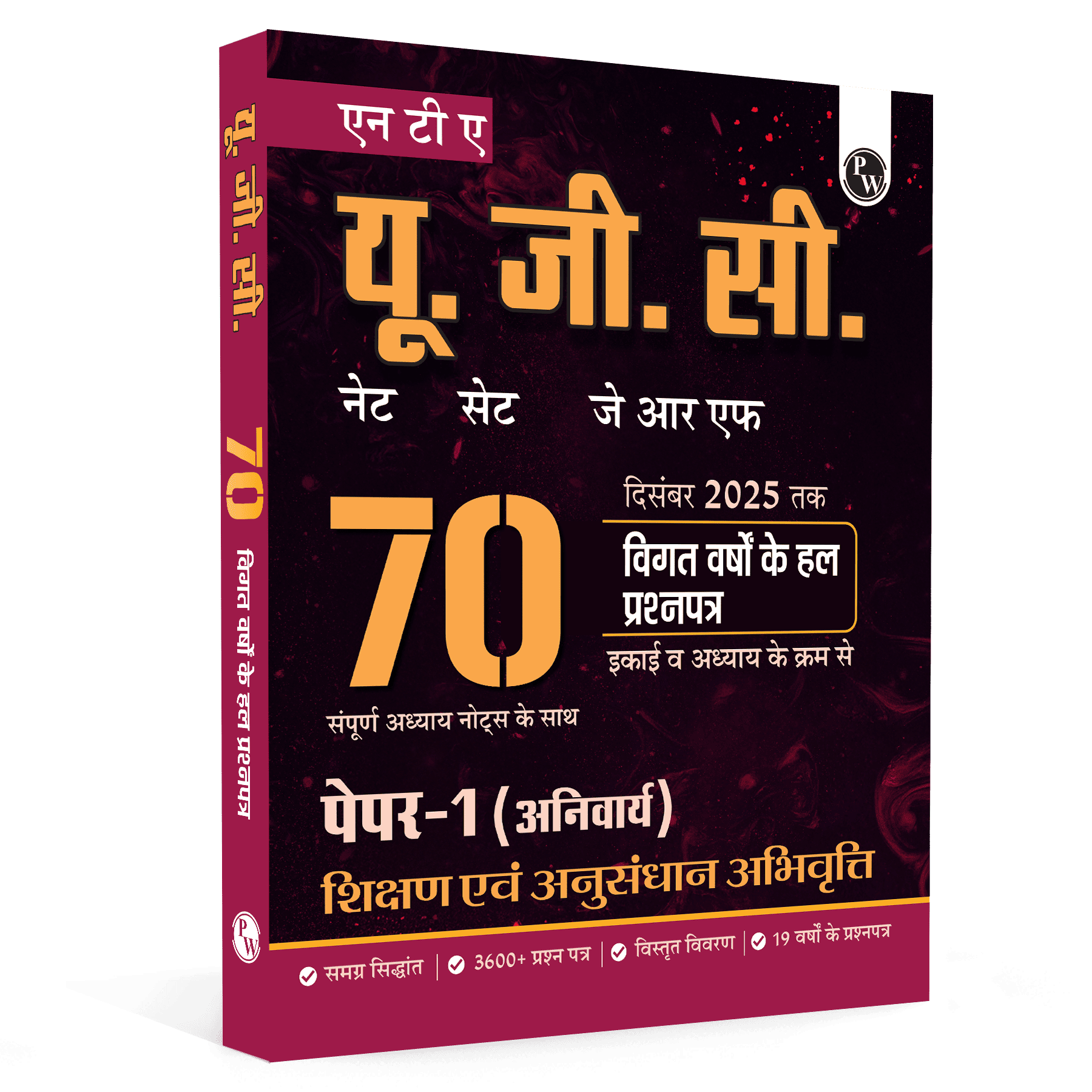
The UGC NET paper 1 PYQ book is a comprehensive practice resource designed specifically for candidates preparing for the National Eligibility Test. Rather than offering basic practice tests, this specialized UGC NET question bank compiles genuine previous year papers covering 18 years of examinations (since 2009). It brings together over 3,600+ questions across 70 exam sets, including 56 shift papers and 14 earlier paper formats.
Beyond simply listing past items, this UGC NET practice book acts as an all-in-one preparation guide. It incorporates crisp theoretical summaries for all 10 syllabus units alongside fully verified, step-by-step explanations.
Whether an aspirant is preparing for the JRF Exam, Assistant Professor eligibility, or PhD entrance tests, this resource bridges the gap between raw theory and practical problem-solving. It reflects modern shift patterns and updated exam standards, making it a foundation for structured self-assessment.
Features of the UGC NET Paper 1 PYQ Book
Selecting the right study material is crucial for systematic preparation. A quality UGC NET paper 1 PYQ book combines thorough coverage with strategic exam alignment. Key structural highlights include:
-
Extensive Historical Coverage: Includes 18 years of authentic UGC NET previous year questions dating from 2009 up to the recent Jan 2026 solved paper.
-
Vast Question Volume: Features over 3,600+ practice items sourced across 70 distinct exam sets.
-
Shift-Wise Formatting: Incorporates 56 recent shift papers along with 14 earlier paper sets to reflect evolving question structures.
-
Unit-Wise Concise Theory: Offers crisp theoretical summaries for all 10 Paper 1 units to support rapid revision.
-
Step-by-Step Verified Solutions: Delivers accurate, detailed answers that clarify underlying concepts and logic.
-
Updated Contemporary Topics: Contains recent developments in Higher Education policies, ICT, Environmental issues, and Teaching/Research trends.
How to Use the UGC NET Paper 1 PYQ Book
To gain the highest value from a UGC NET paper 1 PYQ book, candidates must adopt an active learning methodology rather than passive reading.
|
Step |
Action |
Objective |
|
Step 1: Theory Review |
Read the unit's concise theory section. |
Refresh fundamental concepts before solving. |
|
Step 2: Timed Practice |
Solve questions from recent UGC NET solved papers. |
Simulate real exam time pressure. |
|
Step 3: Solution Audit |
Cross-check answers against verified solutions. |
Identify logic errors and conceptual gaps. |
|
Step 4: Option Analysis |
Research why three options were incorrect. |
Broaden topical understanding beyond the prompt. |
|
Step 5: Error Logging |
Note down repeating mistakes in a revision notebook. |
Prevent recurrent errors on exam day. |
When to Use the UGC NET Paper 1 PYQ Book
Timing your practice correctly throughout your preparation cycle ensures maximum retention and skill development. Integrating a UGC NET paper 1 PYQ book at different phases serves distinct strategic purposes:
-
Initial Preparation Phase: Use the book alongside primary syllabus learning to understand how theoretical topics translate into actual questions.
-
Mid-Way Practice Phase: Attempt unit-specific blocks of UGC NET paper 1 questions to evaluate your understanding after finishing each chapter.
-
Final Revision Phase: Solve complete shift papers from recent years under strict time limits to build speed, endurance, and exam-room familiarity.
-
Post-Mock Assessment: Revisit specific sections of the book to resolve weak areas exposed during full-length mock tests.
Topics Covered in the UGC NET Paper 1 PYQ Book
A reliable UGC NET paper 1 PYQ book covers the full syllabus across all 10 official units. It addresses both traditional pedagogical concepts and modern dynamic trends:
-
Teaching Aptitude: Concepts, objectives, learner characteristics, evaluation systems, and modern teaching support tools.
-
Research Aptitude: Research types, ethics, thesis writing formats, and application of ICT in research methods.
-
Reading Comprehension: Passages requiring analytical interpretation and inference-based answering.
-
Communication: Types, barriers, mass media, and effective classroom communication dynamics.
-
Mathematical Reasoning and Aptitude: Number series, codes, ratios, proportions, percentages, and profit-loss calculations.
-
Logical Reasoning: Understanding argument structures, deductive and inductive reasoning, Venn diagrams, and Classical Indian Logic (Pramanas).
-
Data Interpretation: Quantitative data analysis using tables, bar charts, line graphs, and pie charts.
-
Information and Communication Technology (ICT): Basics of interNET, email, digital initiatives in higher education, and ICT terminology.
-
People, Development and Environment: Human-environment interaction, environmental issues, renewable energy, and international treaties/policies.
-
Higher Education System: Institutions of higher learning, governance, administration, value education, and new national education policies.
What to Do After Solving Each Question in the UGC NET Paper 1 PYQ Book
The real secret to topping competitive exams lies in what happens after you pick an option. Simply marking an answer and moving on leaves half the learning on the table. When using your UGC NET book, execute these five actionable post-question steps:
-
Analyze the Incorrect Options
Every distractor option in Paper 1 is picked intentionally by test-setters. When you finish a question, look closely at the three wrong choices. Define the concepts behind those options and ask yourself under what conditions they would be the correct answer.
-
Identify the Underlying Concept
Do not just memorize the correct key. Trace the question back to its core rule or formula. If a question deals with logical fallacies, verify whether you truly understand the fallacy or if you simply guessed correctly.
-
Document Unfamiliar Terminology
Paper 1 frequently introduces updated terms across ICT, Higher Education, and Environmental Science. Whenever you encounter an unfamiliar term in either the question stem or the explanation, write it down immediately in a dedicated formula/fact register.
-
Evaluate Your Time and Approach
Review how much time you spent on the item. Did you reach the answer using a long, roundabout calculation, or did you apply a shortcut? Cross-check your approach against the detailed solutions provided in the book to find faster methods.
-
Categorize the Nature of Your Errors
If you got the question wrong, categorize the error into one of three types:
-
Conceptual Gap: You did not know the underlying theory.
-
Misreading: You missed key words like "NOT", "INCORRECT", or "ALWAYS".
-
Calculation/Logic Slip: You made a simple calculation or reasoning error.
Addressing the specific type of mistake prevents you from repeating the same error on future tests.
Study Strategy Plan With the UGC NET Paper 1 PYQ Book
To finish 3,600+ questions systematically, follow a structured 4-week study plan using your UGC NET paper 1 PYQ book.
-
Week 1: Foundations & Analytical Units
-
Focus on Teaching Aptitude, Research Aptitude, and Reading Comprehension.
-
Solve 30-40 questions daily; spend equal time reviewing explanations for each question.
-
Build summary notes for key research methods and evaluation types.
-
Week 2: Quantitative & Logical Units
-
Focus on Mathematical Reasoning, Data Interpretation, and Logical Reasoning.
-
Solve 2 sets of DI and 20 math/logic items daily from past shift papers.
-
Practice shortcut methods shown in verified detailed solutions.
-
Week 3: General Awareness & Dynamic Units
-
Focus on ICT, People & Environment, and Higher Education Systems.
-
Solve questions while making short lists of schemes, policies, and environment protocols.
-
Review all the latest trend questions from the Jan 2026 solved paper included in the book.
-
Week 4: Full Shift Simulation & Final Review
-
Attempt 5 full-length 50-question paper sets under timed exam conditions.
-
Conduct a thorough error audit after every test.
-
Re-solve previously marked incorrect questions to confirm conceptual clarity.
Also Check - CTET Books
Common Mistakes to Avoid With the UGC NET Paper 1 PYQ Book
Avoid these common mistakes while using a UGC NET Paper 1 PYQ Book to make your preparation more effective. Knowing what to avoid can help you analyse previous-year questions better and improve your exam strategy.
-
Ignoring Detailed Solutions: Skipping the written explanations when your answer is correct prevents you from learning faster alternate methods.
-
Memorizing Answers Instead of Concepts: Memorizing specific answer options is unhelpful because questions are rarely repeated verbatim; NTA tests the underlying concepts.
-
Practicing Without Time Limits: Solving questions casually without tracking your time leads to poor pacing during the actual exam.
-
Neglecting Dynamic Updates: Ignoring recent developments in ICT, higher education policies, and environmental initiatives leaves you unprepared for current-trend questions.
-
Selective Unit Practice: Focusing only on your favorite units while ignoring weaker ones leads to uneven scores across Paper 1.
Read More: UGC NET Syllabus 2026 for Paper 1 and Paper 2
UGC NET Paper 1 PYQ Book FAQs
How many past years of questions are included in a standard UGC NET paper 1 PYQ book?
A quality book covers 18 years of questions (from 2009 up to the latest 2026 exams) across 70 sets.
Are verified step-by-step solutions provided for math and logic questions?
Yes, authentic practice books offer detailed, step-by-step solutions to help you understand the logic behind every answer.
Is theory included along with practice questions in the UGC NET paper 1 PYQ book?
Yes, it includes crisp theory summaries for all 10 Paper 1 units alongside extensive question sets.
How does analyzing incorrect options improve test performance?
Analyzing wrong choices helps you catch subtle trap options and broadens your understanding of related concepts.
Can solving previous year questions help prepare for PhD entrance tests?
Yes, Paper 1 PYQs strengthen core research and teaching concepts useful for JRF, Assistant Professor, and PhD entrance exams.