How to Use 4000+ Questions in PW UPTET Book
Many struggle to track their progress or retain complex concepts across multiple subjects without a clear plan. Having thousands of practice questions can feel overwhelming if you do not know how to structure your daily practice sessions properly.
By combining chapter-wise theory, past papers, and structured practice tests into a routine, candidates can systematically cover the entire syllabus. This detailed strategy shows you exactly how to work through the 4000+ questions in your UPTET book to build accurate problem-solving skills, improve timing, and boost overall exam confidence.
Importance of UPTET Book
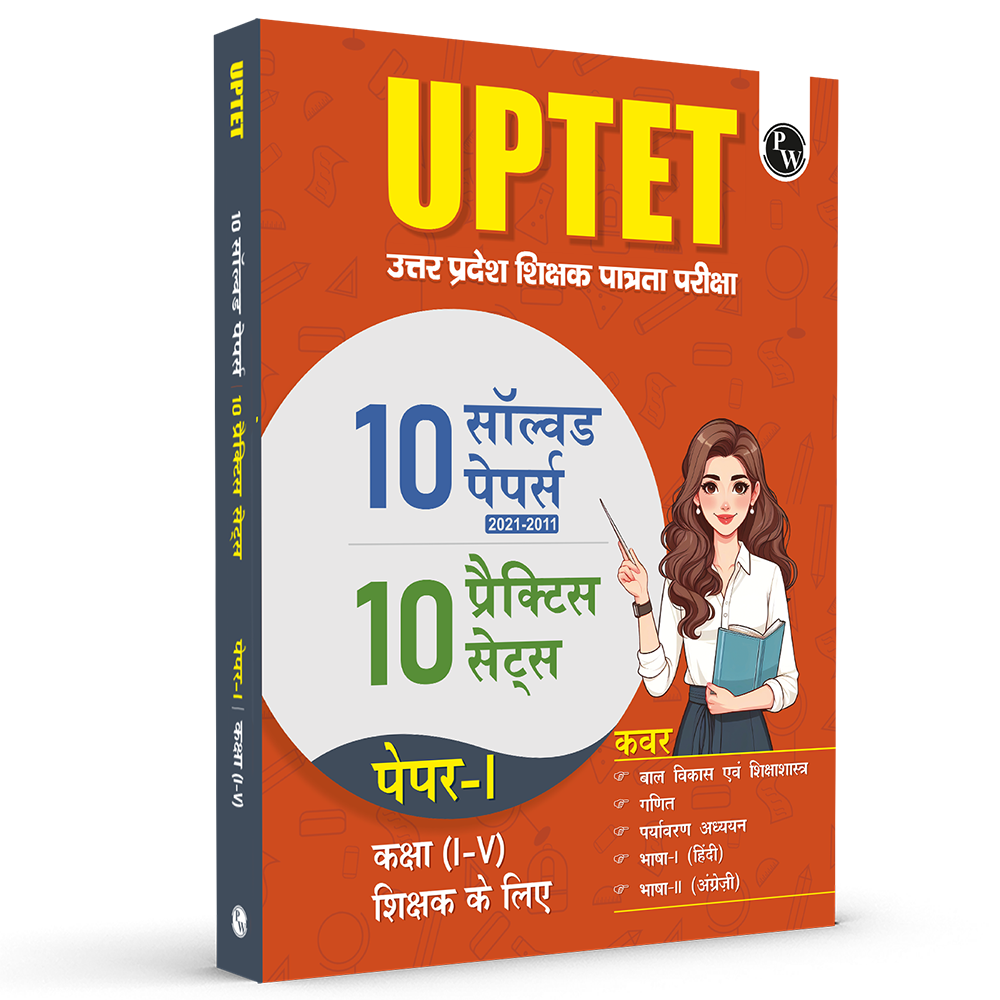
Preparing for the Paper 1 primary level teaching exam requires dedicated practice alongside conceptual learning. A structured preparation resource provides all necessary materials under one cover, helping candidates avoid scattered study sources.
-
Structured Syllabus Alignment: Covers all mandatory subjects according to the latest official exam pattern, ensuring target-oriented preparation.
-
Balanced Theory and Practice: Combines chapter-wise conceptual summaries with extensive practice questions to reinforce topic clarity.
-
Exam Trend Analysis: Features previous years' solved papers that help candidates understand changing question styles over time.
-
Skill Enhancement: Strengthens problem-solving speed, accuracy, and teaching methodology through repetitive practice.
Features of the UPTET Book
Understanding the core components of your preparation resource ensures that you make full use of every section during your revision phases.
|
Feature Component |
Key Details |
Primary Benefit |
|
10 Solved Papers |
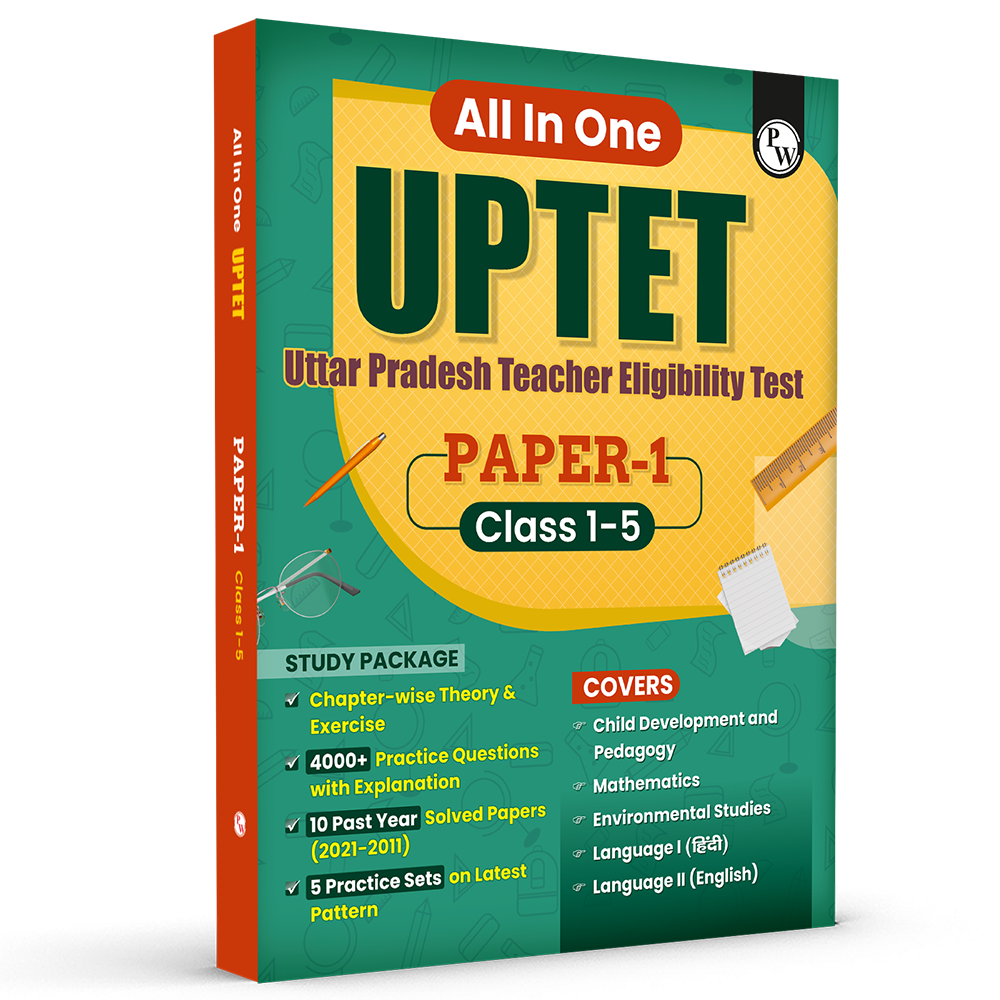
Past papers covering exams from 2021 to 2011. |
Explains recurring trends and question patterns. |
|
4000+ MCQs |
Vast collection of objective-type practice questions. |
Provides thorough practice across all topics. |
|
Step-by-Step Solutions |
Detailed explanations provided for every objective question. |
Improves conceptual clarity and reduces errors. |
|
5 Practice Sets |
Full-length mock papers built as per the latest pattern. |
Simulates real exam conditions for better speed. |
Candidates using the UPTET all in one book can rely on these features to create an organized daily study routine.
How to Use the UPTET Book for Exam Preparation
To make the most of your resources, follow a structured sequence rather than attempting questions randomly.
-
Read Chapter Theory First: Begin each section by studying the concise chapter summaries to establish core concepts.
-
Solve Practice Exercises: Immediately complete the objective MCQs at the end of each chapter to check your understanding.
-
Review Detailed Explanations: Read the step-by-step solutions for every incorrect answer to correct logical gaps.
-
Analyze Solved Papers: Work through UPTET previous year papers to recognize recurring question types and essential topics.
-
Attempt Full-Length Mock Tests: Time yourself using the full practice sets to improve speed and time management under real exam conditions.
Using this structured approach ensures that your UPTET practice questions directly contribute to long-term memory and accuracy.
When to Use the UPTET Book
Timing your resource usage across different phases of preparation guarantees better retention and overall readiness.
-
Early Phase (Foundation): Use the chapter-wise theory and preliminary exercises to build strong conceptual clarity across all subjects.
-
Mid Phase (Practice & Analysis): Work through the UPTET 4000 questions bank to test topic knowledge and identify weak functional areas.
-
Final Phase (Revision): Solve the 10 previous years' solved papers and 5 full-length practice sets to benchmark speed, accuracy, and overall confidence.
Topics Covered in the UPTET Book
The official syllabus for Primary Teacher (Class 1 to 5) includes five core subject areas. The contents of the UPTET paper 1 book are distributed across these main subjects:
-
Child Development and Pedagogy (CDP): Focuses on child psychology, learning theories, inclusive education, and teaching methodologies.
-
Mathematics: Covers basic arithmetic, geometry, measurement, data handling, and pedagogical aspects of teaching mathematics.
-
Environmental Studies (EVS): Includes family, surroundings, plants, animals, natural resources, basic science, and environmental pedagogy.
-
Language I (Hindi): Focuses on Hindi grammar, unseen passages, comprehension, and language development pedagogy.
-
Language II (English): Covers English grammar, comprehension passages, vocabulary, and language instruction techniques.
Study Strategy Plan for 4000+ Questions in the UPTET Book
Solving over four thousand questions requires a daily, disciplined effort. Using a weekly study distribution plan helps complete the entire bank without causing study fatigue.
-
Morning Session (Theory & Concept Review): Spend 1.5 hours reviewing chapter theory in your UPTETpreparation book.
-
Afternoon Session (Targeted Practice): Attempt 50–60 UPTETquestion practice MCQs related to the studied chapter.
-
Evening Session (Detailed Error Analysis): Review step-by-step solutions for incorrect items to avoid repeating mistakes.
Practice Sheets With the UPTET Book
Integrating structured practice sheets alongside your regular reading creates an interactive learning environment.
-
Topic-Wise Tracking Sheets: Maintain a log to track accuracy rates across CDP, EVS, Maths, Hindi, and English.
-
Timed Sectional Tests: Use individual chapter exercise sets as mini-quizzes, allowing roughly 1 minute per question.
-
Error Log Sheets: Record incorrect answers along with the correct underlying concept from the step-by-step explanations.
Using an UPTETquestion bank alongside self-made tracking sheets helps track measurable score gains over time.
Common Mistakes to Avoid With the UPTET Book
Even with comprehensive preparation resources, inefficient habits can hinder progress. Avoid these frequent errors during your study cycle:
-
Skipping Explanations: Do not just check the answer key; always read the step-by-step solutions to understand the logic.
-
Ignoring Mock Tests: Relying only on chapter exercises without taking full-length practice sets can hurt your exam-day time management.
-
Selective Subject Coverage: Focusing heavily on strong subjects while neglecting weak areas like Mathematics or CDP limits overall score potential.
-
Rushing Through PYQs: Attempting past paper questions without analyzing exam trends reduces their learning value.
Read More: UPTET Syllabus 2026 for Paper I and Paper II Exam
UPTET Book PYQs FAQs
1. How many total practice questions are included in this resource?
The book contains more than 4000 objective-type practice questions covering all five syllabus subjects, accompanied by detailed step-by-step solutions.
2. Does the book include previous year solved papers?
Yes, it includes 10 fully solved previous years' papers from 2011 to 2021 to help aspirants understand question patterns and exam trends.
3. Is this resource suitable for both Paper 1 subjects?
Yes, it comprehensively covers all five subjects required for Paper 1 (Class 1-5): CDP, Mathematics, EVS, Language I (Hindi), and Language II (English).
4. How do practice sets help in exam preparation?
The 5 full-length practice sets simulate real exam conditions, helping candidates improve their speed, accuracy, and overall time management skills.
5. Why are step-by-step explanations important for MCQs?
Detailed explanations help clarify underlying concepts, correct logical misunderstandings, and ensure you learn the right problem-solving techniques for future questions.