How to Prepare for UPTET Paper 1 Exam 2026 with PYQ
Aspiring teachers often feel overwhelmed by the vast syllabus of the Uttar Pradesh Teacher Eligibility Test. Balancing Child Development, Mathematics, and Environmental Studies while trying to understand the exam's specific logic is no small feat.
This is where focusing on the UPTET Paper 1 PYQ becomes a game-changer. By studying past questions, you bridge the gap between theoretical knowledge and practical application, ensuring your preparation is aligned with what the examiners actually look for.
Check Out - CTET Books
Overview of UPTET Paper 1 PYQ
The UPTET Paper 1 is a mandatory requirement for those aiming to teach Classes 1 to 5 in Uttar Pradesh. The exam tests your foundational understanding of pedagogy, language proficiency, and core subjects.
To succeed, you need more than just textbooks; you need a strategy that includes a UPTET Paper 1 PYQ analysis. The 2026 exam cycle expects candidates to have a deep conceptual grasp rather than just rote memory.
|
Subject |
Number of Questions |
Total Marks |
|
Child Development and Pedagogy |
30 |
30 |
|
Language I (Hindi) |
30 |
30 |
|
Language II (English/Urdu/Sanskrit) |
30 |
30 |
|
Mathematics |
30 |
30 |
|
Environmental Studies (EVS) |
30 |
30 |
|
Total |
150 |
150 |
Features of UPTET Paper 1 PYQ
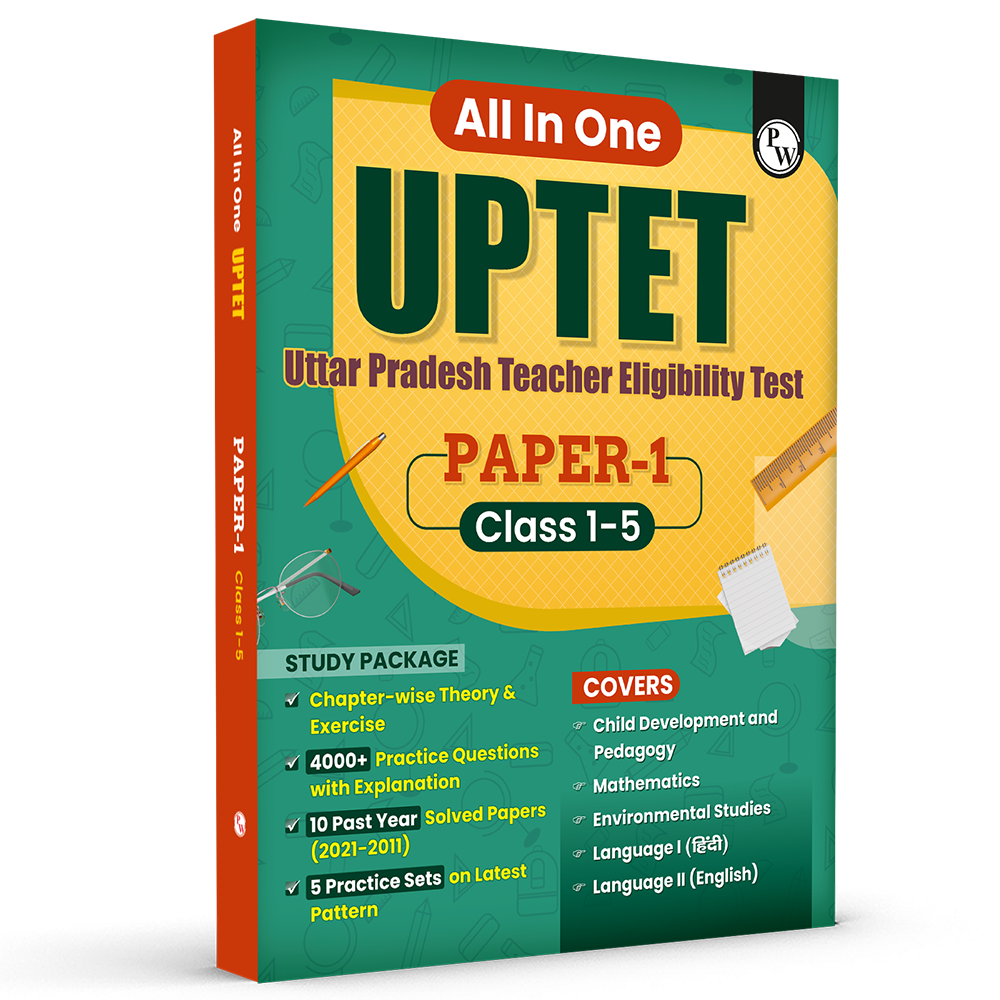
When selecting resources for your preparation, look for tools that offer more than just a list of questions. A high-quality study resource provides a structured approach to the UPTET Paper 1 PYQ by integrating it with theory.
-
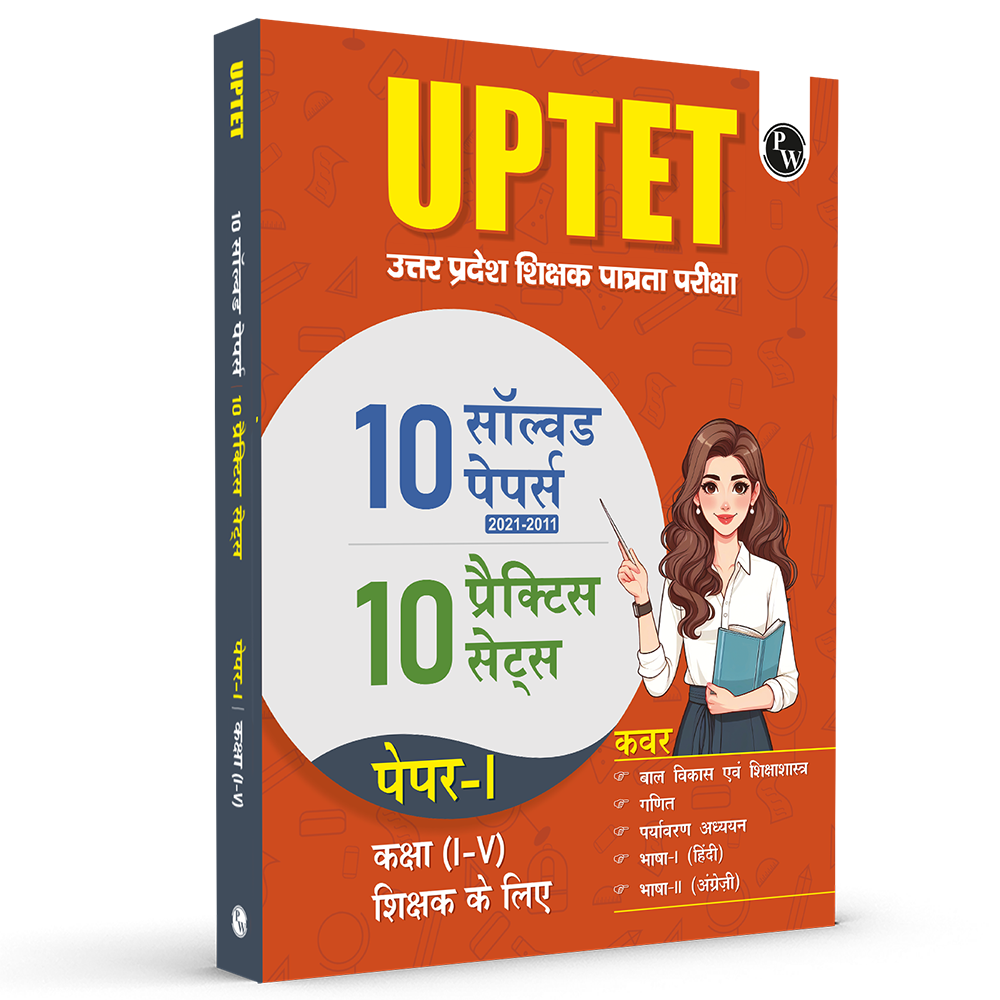
Solved Papers (2011–2021): Accessing a UPTET PYQ collection helps you identify which topics repeat every year.
-
Chapter-wise Theory: Learning becomes easier when theory is followed by related questions from a previous year's paper.
-
4000+ Practice Questions: Extensive practice ensures that you are prepared for any variation of a question.
-
Detailed Explanations: Every last year UPTET question paper solution should be broken down step-by-step to build your logic.
-
Full-Length Practice Sets: These simulate the actual exam environment, helping you manage time effectively.
When to Use UPTET Paper 1 PYQ?
Timing is crucial in your preparation journey. You should introduce the PYQ set at three distinct stages:
-
The Beginning: To understand the "what" and "how" of the exam.
-
The Middle: To ensure your chapter-wise preparation matches the exam standard found in a PYQ set.
-
The Final Month: To polish your speed and accuracy using a UPTET previous year paper.
If you wait until the last week to look at the UPTET question paper from last year, you might find yourself panicking over unfamiliar patterns. Start early to stay ahead.
How to Improve Scores with UPTET Paper 1 PYQ
To maximise your score, you must use the UPTET Paper 1 PYQ systematically. Simply reading through questions is not enough; you need to engage with them actively.
Initial Diagnostic Test
Before you start your full-scale preparation, take UPTET previous question paper and solve it without any help. This acts as a diagnostic tool to show you where you stand. It highlights your natural strengths and the subjects that require immediate attention.
Topic-wise Integration
After finishing a chapter, such as Number Systems in Maths or Piaget’s Theory in CDP, immediately solve questions from that specific topic found in a previous paper of UPTET. This reinforces the concept and shows you how that specific theory translates into a multiple-choice question.
Time-Bound Mock Sessions
As the exam approaches, use a UPTET PYQ set as a formal mock test. Set a timer for 150 minutes and sit in a quiet room. This helps you build the stamina needed to stay focused for the entire duration of the actual exam.
Benefits of Practising with UPTET Paper 1 PYQ
Using a previous paper of UPTET is not just about testing your knowledge; it is about refining your exam-taking skills. Many students know the answers but fail due to poor time management or a misunderstanding of the question's phrasing.
-
Understanding Difficulty Levels: By reviewing a previous year question paper of UPTET, you see the shift in difficulty over the last decade.
-
Identifying High-Weightage Topics: You will notice that certain sections in EVS or CDP carry more marks consistently.
-
Improving Accuracy: Regular practice with PYQs reduces the chances of making silly mistakes under pressure.
-
Boosting Confidence: Solving an actual PYQ set successfully gives you the mental boost needed for the final day.
-
Language Proficiency: Reviewing the language sections in a UPTET previous year paper helps you grasp the specific grammar and comprehension style used by the UP board.
Study Plan for UPTET Paper 1 PYQ
Success in UPTET requires a balanced approach. Follow this structured plan to make the most of your UPTET Paper 1 PYQ resources.
Phase 1: Foundation Building (Months 1-2)
Focus on the "All In One" theory sections. Don't worry about speed yet. Read the chapter-wise theory for Hindi, English, and EVS. After each chapter, look at the corresponding questions in a previous paper of UPTET to see if you understood the core concepts.
Phase 2: Intensive Practice (Month 3)
Shift your focus to the 4000+ practice questions. This is where you build your "muscle memory" for the exam. Ensure you read the step-by-step explanations for every question you get wrong in the PYQ set. Understanding the "why" behind an answer is more important than just knowing the "what."
Phase 3: Mock Tests and Revision (Final Weeks)
This phase is dedicated to the 5 practice sets and the PYQs from the most recent years. Focus on:
-
Reducing the time spent per question.
-
Improving your score in your weakest subject.
-
Revising the "Explanations" section of the UPTET Paper 1 previous year paper to avoid repeating past errors.
Read More: UPTET Syllabus 2026 for Paper I and Paper II Exam
UPTET Paper 1 PYQ FAQs
Q1: How many years of UPTET Paper 1 PYQ should I solve?
It is highly recommended to solve at least the last 10 years of papers (2011–2021). This gives you a complete view of how the exam pattern has evolved and which topics remain evergreen.
Q2: Is a UPTET Paper 1 previous year paper enough to pass the exam?
While past papers are essential, you should use them alongside a comprehensive theory guide. Past papers help with practice, but theory builds the conceptual foundation needed for new questions.
Q3: Where can I find a reliable UPTET previous year paper with solutions?
A good resource includes at least 10 years of solved papers with step-by-step explanations, making it reliable for your preparation.
Q4: Did last year's UPTET question paper repeat in the next exam?
Questions are rarely repeated word-for-word, but the "themes" and "types" of questions are very consistent. Mastering PYQs ensures you are familiar with these recurring themes.
Q5: What is the benefit of solving a previous year's question paper of UPTET in a timed environment?
Solving it with a timer helps you manage the 150-minute limit. It teaches you which questions to skip and which to answer quickly, ensuring you complete the full paper on exam day.