UGC NET Political Science Important Topics Preparation with PW Book

UGC NET Political Science Questions and Important Topics to Cover
There is a huge syllabus to get through and you need to know which parts are most important for the exam. The test evaluates your knowledge of political theory, international relations, Indian government and public administration in depth. The core themes you will concentrate on will get you the correct answers to political science questions under exam pressure.
-
Political Theory: Focus on liberalism, Marxism, democracy, and justice.
-
Indian Government and Politics: Learn constitutional developments, fundamental rights, and federalism.
-
International Relations: Study foreign policy, international organizations, and major theories.
-
Public Administration: Understand administrative theories, governance models, and public policy.
Identifying political science important topics for UGC NET early in your study cycle saves valuable time. Candidates must look at past trends to see which sub-sections appear repeatedly across sessions.
How to Analyse UGC NET Political Science Questions With Past Papers
The best way to get to know the mind-set of the examiner is to practice the previous exam papers. Looking at real questions, you see the translation of the theoretical concepts into application-oriented questions.
-
Practising the latest December session paper keeps you updated with current patterns.
-
Analysing year-wise question patterns shows shifts in exam difficulty and focus areas.
-
Solving chapter-wise problems highlights weak spots in your understanding before the test.
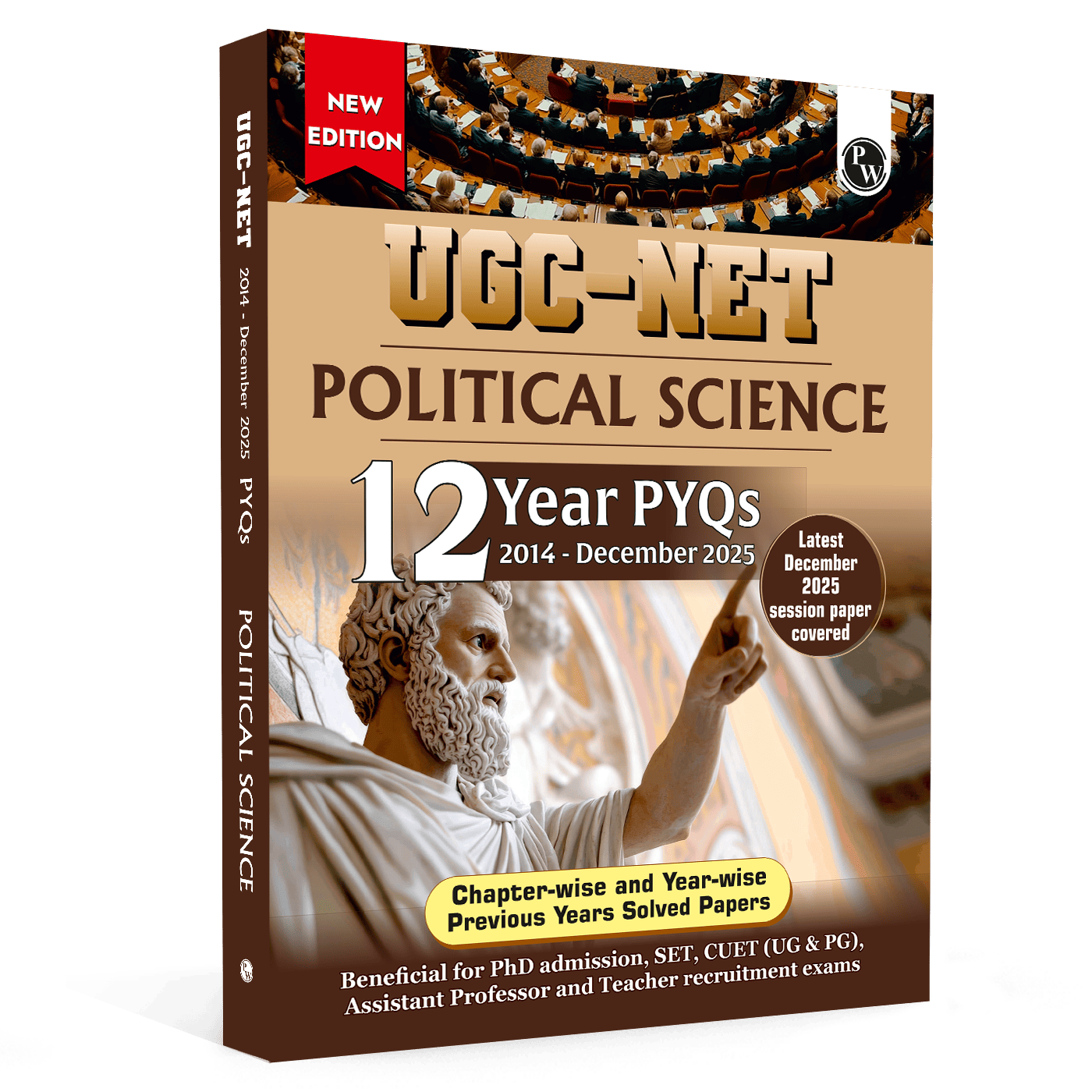
Using the PW UGC NET Political Science PYQ 12 Years book bridges theory and practice. It covers papers from 2014 to 2025, offering detailed solutions that clarify the reasoning behind every correct option.
UGC NET Political Science Questions Preparation Strategy
A solid study routine turns chaotic revision into a manageable process. Structured UGC NET political science preparation relies on disciplined daily targets and regular testing.
-
Syllabus Mapping: Break down the official curriculum into weekly achievable goals.
-
Active Recall: Test yourself after finishing each unit instead of passive reading.
-
Error Logs: Maintain a notebook for incorrect answers during mock tests to review later.
Integrating these habits builds confidence. When you evaluate your performance against standard solutions, your accuracy improves significantly.
UGC NET Books for complete exam preparation with important concepts, previous year questions, practice sets, and detailed solutions for NET, JRF and SET exams.
UGC NET Political Science Questions With the Right Study Material
Reading standard textbooks is only half the battle. Your study material must align with the current examination pattern and difficulty level.
-
Choose books that offer comprehensive chapter-wise breakdowns and trend analyses.
-
Ensure explanations go beyond simple answers to explain underlying concepts clearly.
-
Verify that the resource includes recent exam sessions for up-to-date practice.
The PW resource provides a well-structured syllabus breakdown covering all essential sections. This ensures you do not miss critical areas required for high scores.
Important Topics for Better Political Science Questions Practice
Certain segments of the syllabus consistently yield high marks across sessions. Concentrating on these specific UGC NET political science topics maximizes your score potential.
-
Western political thought, including Plato, Aristotle, and Machiavelli.
-
Indian political thought, focusing on Gandhi, Ambedkar, and Kautilya.
-
Comparative political analysis and contemporary political issues.
A targeted review of these areas prepares you for both direct and analytical inquiries in the main examination.
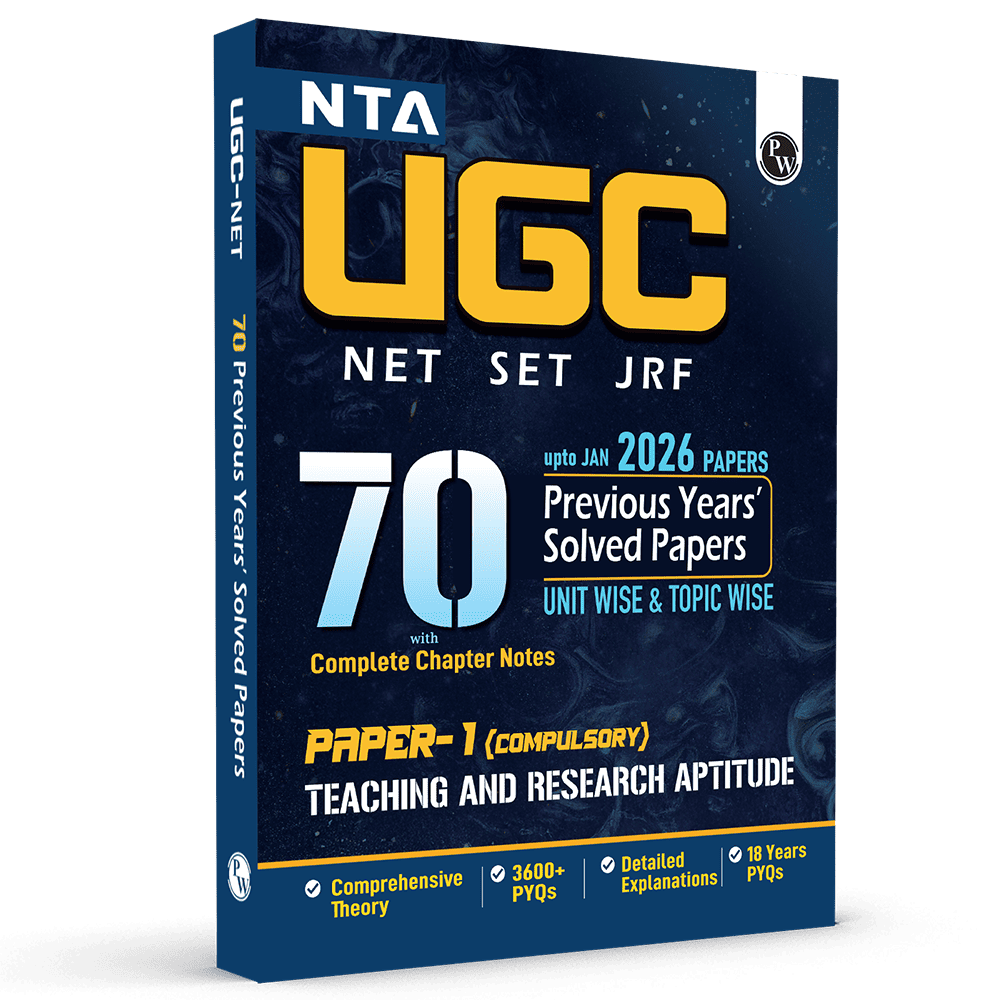
UGC NET Paper 1 book with 18 years of PYQs, complete chapter notes, and unitwise & topicwise solved papers for NET, JRF and SET exam preparation.
Unit-Wise Weightage for UGC NET Political Science Questions
Understanding the distribution of questions across different units can help candidates plan their revision more carefully. The following table provides a simple framework for comparing the major areas, their expected focus, and important subtopics.
|
Unit Name |
Estimated Question Weightage |
Difficulty Level |
High-Yield Subtopics |
|
Political Theory |
15 Percent |
Moderate to High |
Democracy, Rights, Justice |
|
Indian Government |
20 Percent |
High |
Constitutional Articles, Federalism |
|
International Relations |
18 Percent |
Moderate |
Foreign Policy, IR Theories |
|
Public Administration |
12 Percent |
Moderate |
Public Policy, Theories |
What Year-Wise Trends Show About UGC NET Political Science Questions
Looking at questions across different periods can help candidates understand how the nature of the examination has changed. This comparison can also guide students in balancing factual revision with conceptual and application-based practice.
|
Exam Period |
Primary Focus Area |
Question Type Shift |
Analytical Depth |
|
2014 to 2017 |
Direct Theoretical Facts |
Factual and Static |
Standard |
|
2018 to 2021 |
Conceptual Clarity |
Statement-Based |
Moderate |
|
2022 to 2025 |
Applied Case Studies |
Multi-Statement Matching |
High |
Comparing Study Resources for UGC NET Political Science Questions
Choosing the right study source can make revision more organised. Comparing different resources helps candidates understand where each type of material is useful and why a combination of conceptual reading and PYQ practice may be helpful.
|
Source Type |
Conceptual Depth |
PYQ Integration |
Revision Friendliness |
|
Standard Textbooks |
High |
None |
Low |
|
Coaching Class Notes |
Moderate |
Low |
Moderate |
|
PW PYQ Solved Book |
High |
12 Years Complete |
High |
Manage Your Study Time for UGC NET Political Science Questions
A fixed study schedule can help candidates balance theory, question practice, and revision without spending too much time on one activity. The framework below gives a simple way to divide study hours across different preparation tasks.
|
Phase |
Daily Time Allocation |
Primary Goal |
Target Output |
|
Morning Session |
3 Hours |
Core Theory Reading |
One Chapter Finished |
|
Afternoon Session |
2 Hours |
PYQ Practice |
50 Questions Solved |
|
Evening Session |
1 Hour |
Error Analysis |
Notebook Revision |
Read More - UGC NET Syllabus 2026 for Paper 1 and Paper 2
How to Revise UGC NET Political Science Topics With PYQs
Regular revision becomes more useful when candidates combine topic-wise study with previous year's question practice. Instead of revising every chapter in the same way, students can use questions to identify topics that need more attention. This approach can make revision more focused and help improve recall before the examination.
-
Revise One Unit at a Time: Complete the important concepts of a unit before attempting its related PYQs.
-
Mark Difficult Questions: Keep a separate list of questions that take longer to solve or are answered incorrectly.
-
Connect Questions With Concepts: Return to the relevant theory or topic whenever a PYQ exposes a knowledge gap.
-
Use Short Notes: Record important thinkers, theories, constitutional concepts, and important terms for quick revision.
-
Reattempt Marked Questions: Solve difficult questions again after revision to check whether your understanding has improved.
-
Mix Topics During Final Revision: Practise questions from different units to improve recall and prepare for mixed question sets.
This method helps students use questions not only for practice but also as a tool to guide their final revision.
FAQs
What are the most important UGC NET questions to practise?
Focus on recurring themes from political theory, Indian constitution, international relations, and public administration found in previous year papers.
How does the PW book help with UGC NET political science preparation?
It provides 12 years of solved papers from 2014 to 2025, chapter-wise breakdowns, detailed explanations, and trend analysis to guide your studies.
Which UGC NET political science important topics should I cover first?
Start with high-weightage sections like western political thought, Indian government and politics, and international relations theories.
Are previous year papers enough for UGC NET political science study material?
They form the backbone of your preparation, but you should combine them with standard textbooks for comprehensive conceptual clarity.
How can I improve my accuracy in answering UGC NET questions?
Maintain an error log during practice tests, review detailed explanations for incorrect answers, and revise core concepts regularly.