Ancient History Trend Analysis Using PW UPSC PYQ Book
Aspirants often struggle to decode the unpredictable nature of ancient history questions in the IAS Preliminary examination. While the syllabus appears vast and open-ended, a structured UPSC PYQ Book simplifies revision by categorising past questions into clear thematic areas.
Analyzing three decades of General Studies papers reveals that questions are not random; they follow distinct patterns centered around terminology, art and architecture, socio-economic structures, and religious movements.
By shifting from passive reading to trend-focused practice, candidates can isolate high-yield topics, refine their elimination skills, and approach ancient history with measurable confidence.
Importance of UPSC PYQ Book for Ancient History Preparation
Ancient history presents a unique challenge in General Studies Paper 1. The syllabus outline provided by the Union Public Service Commission is brief, yet the actual scope of questions spans thousands of years - from early human settlements to the post-Gupta era. Without a dedicated PYQ Book, candidates often spend hundreds of hours reading exhaustive textbooks without knowing which specific details examiners actually test.
Trend analysis transforms static historical facts into actionable insights. Instead of memorising entire royal genealogies, an examination of past questions reveals that test-makers care significantly more about administrative terminology, economic terms, and cultural patronage.
Features of UPSC PYQ Book
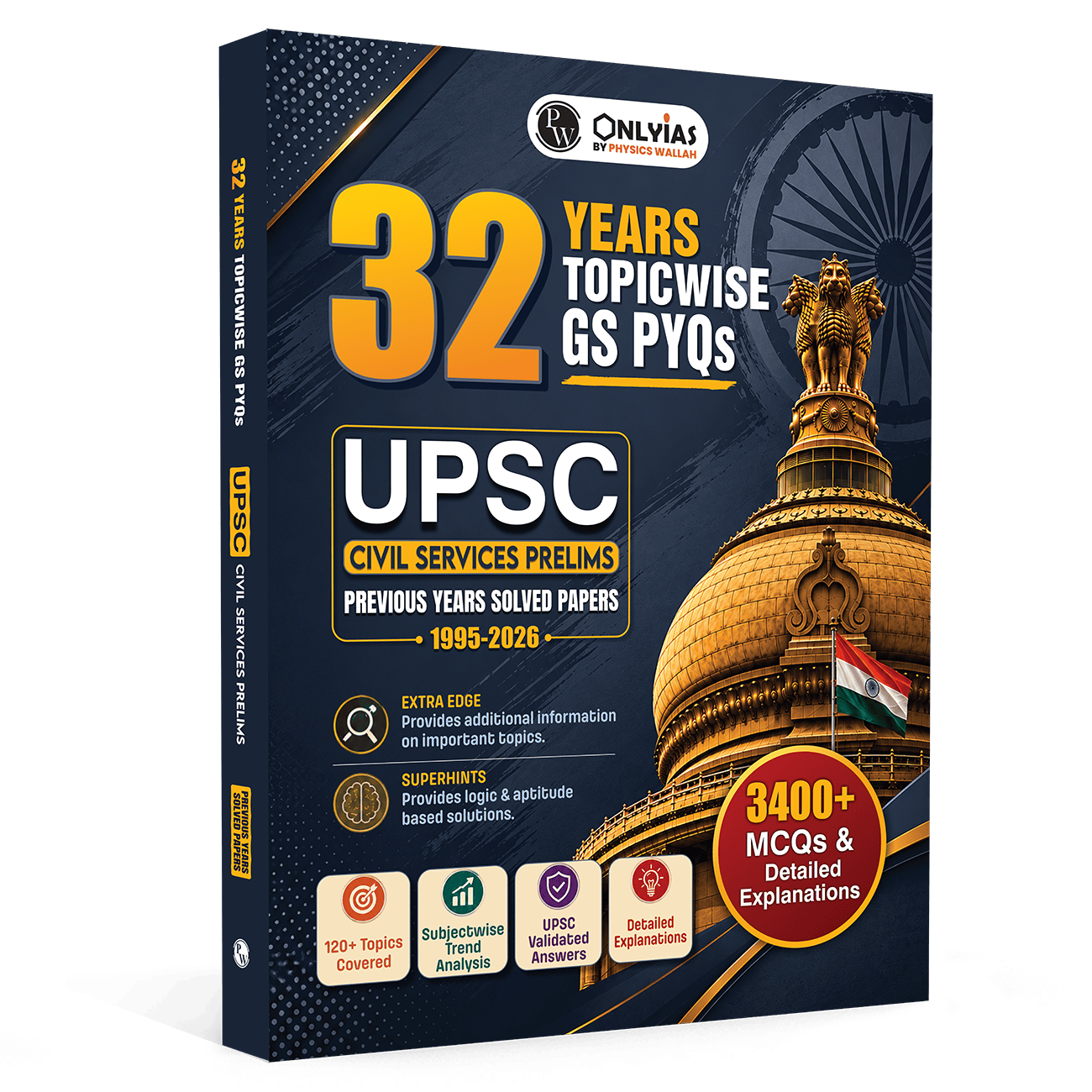
Get complete UPSC Prelims practice with 32 years of previous year papers, 3400+ solved MCQs, topic-wise questions, and detailed exam analysis. The UPSC Previous year papers helps you understand the exam pattern, improve accuracy, and revise important topics effectively.
32 Years of UPSC Prelims Papers (1995–2026): Practice UPSC Prelims questions from 1995 to 2026, covering both General Studies Paper 1 and CSAT Aptitude Paper 2. This helps you understand how the exam has changed over the years.
3400+ Solved MCQs: Solve more than 3400 authentic UPSC MCQs with detailed answers. Practice regularly to improve your concepts, question-solving skills, and confidence.
Topicwise Segregation: Find questions arranged across 120+ topics, including Polity, Economy, History, Geography, Environment, Science & Technology, Current Affairs, and more. This makes it easy to practice one topic at a time.
Detailed Option-Wise Solutions: Learn why the correct option is right and why the other options are wrong. This helps you understand the logic behind each question and improve your elimination skills.
Trend & Pattern Analysis: Study previous UPSC question trends to find repeated themes, important topics, and high-weightage areas. Use this analysis to give more attention to topics that matter most.
PWOnlyIAS Extra Edge: Get expert tips, preparation strategies, and special “Superhints” to improve accuracy and make better choices when you are not fully sure about an answer.
Updated for UPSC 2027: Prepare with content based on the latest UPSC Prelims pattern and syllabus expectations. It is designed to support preparation for the UPSC 2027 exam.
Visual Learning Support: Understand topics better with maps, diagrams, infographics, and other visual aids. These resources also make important information easier to revise.
Prelims + Mains Integration: Build a strong understanding of key subjects that can help in both Prelims and Mains. The explanations focus on concepts, not only answers.
Strategic Preparation Framework: Use topic-wise question trends and analysis to identify important areas, set priorities, and plan your preparation in a more focused way.
What is the Ancient History Weightage Using UPSC PYQ Book?
Over the past three decades, General Studies Paper 1 has consistently allocated a substantial portion of its history distribution to ancient and medieval India. An analysis of ancient history previous year questions demonstrates a noticeable shift in how these questions are structured and worded.
In earlier years, questions were largely factual and direct. However, contemporary papers test conceptual clarity, contextual vocabulary, and interdisciplinary linkages with art and architecture.
|
Era / Period |
1995–2005 Focus |
2006–2015 Focus |
2016–2026 Focus |
|
Indus Valley Civilisation |
Major site locations, basic artifacts |
Town planning, trade linkages |
Material culture, craft techniques, specific sites |
|
Vedic & Later Vedic |
Vedic literature names, rituals |
Philosophical schools, social varna |
Terminology, socio-economic transitions, land grants |
|
Buddhism & Jainism |
Founders, councils, sacred texts |
Core doctrines, Bodhisattvas |
Monastic practices, technical terms, sect differences |
|
Mauryan & Post-Mauryan |
Ashokan edicts, key rulers |
Administrative titles, trade routes |
Inscriptions, guild systems, port terminology |
|
Gupta & Post-Gupta |
Literary works, famous court poets |
Art, temple architecture styles |
Feudalism, land grants, administrative units |
Using a compiled history PYQ book allows candidates to map these shifts year by year. Observing this evolution prevents students from relying on outdated preparation methods that fail to address recent question styles.
What are the Main Ancient History Topics in UPSC PYQ Book?
A topic-wise approach is essential when reviewing Ancient History for UPSC Prelims. Rather than studying history only chronologically, dividing the syllabus into core themes makes revision more structured and efficient. Using UPSC Books alongside this approach can help strengthen conceptual understanding, provide organised topic-wise coverage, and support focused revision of important Ancient History topics.
1. Prehistoric Eras and Harappan Culture
Questions from the Harappan period frequently center on material culture, urban planning, and trade connections. Aspirants must focus on:
-
Specific Site Features: Unique characteristics of sites like Dholavira (water management), Kalibangan (ploughed fields), and Lothal (dockyard).
-
Economic Links: Evidence of maritime trade with Mesopotamia, seal motifs, and standardized weights and measures.
-
Absence vs. Presence: Frequently tested contrasts, such as the absence of iron weapons versus the prominent presence of bronze metallurgy.
2. Vedic Period and Philosophical Thought
Questions on the Vedic period frequently examine philosophical concepts and societal transformations. Using topic wise history PYQs helps track how questions transition from early pastoral society to complex agrarian kingdoms:
-
Vedic Terminology: Words related to agriculture, cattle, revenue, and social positions (e.g., Gopa, Bali, Niska).
-
Six Schools of Philosophy (Shad-Darshana): Core tenets of Samkhya, Yoga, Nyaya, Vaisheshika, Mimamsa, and Vedanta.
-
Socio-Economic Shifts: Transition from pastoral tribal assemblies (Sabha, Samiti) to territorial monarchies (Janapadas).
3. Religious Movements: Buddhism and Jainism
Buddhism and Jainism form the most high-yielding sub-segment in ancient India UPSC preparation. Nearly every year, General Studies Paper 1 contains one to three questions from this section. Key areas include:
-
Philosophical Terminology: Concepts like Anatta, Pratityasamutpada, Syadvada, and Anekantavada.
-
Sects and Literature: Schools such as Theravada, Mahayana, Vajrayana, Lokottaravada, and Sarvastivada, along with texts like the Tripitakas and Jatakas.
-
Bodhisattvas and Iconography: Distinct attributes of Avalokiteshvara, Maitreya, Manjusri, and Padmapani.
4. Administrative and Economic Terminology
Examiners regularly construct questions around obscure ancient terms defining land measures, taxation, and administrative posts. A comprehensive PW UPSC PYQ Book aggregates these terms in one place, allowing candidates to review:
-
Taxation Terms: Bhaga, Bali, Kara, Hiranya, and Vishti (forced labour).
-
Administrative Designations: Mahamatra, Yukta, Rajuka, Samaharta, and Sthanika.
-
Trade and Guilds: Sreni, Nigama, Sarthavaha, and ancient ports like Bharuch (Barygaza), Tamralipti, and Arikamedu.
How to Use UPSC PYQ Book for Ancient History Revision?
To maximize retention, integrate history trend analysis UPSC directly into your regular study routine rather than treating it as a separate weekend task.
-
Pre-Study Assessment: Before opening a textbook chapter (e.g., The Gupta Empire), review all ancient history UPSC PYQ entries belonging to that topic. This conditions your mind to notice critical details while reading.
-
Textbook Engagement: Read the primary textbook or standard reference material with elevated focus on themes highlighted during your PYQ assessment.
-
Post-Study Practice: Solve topic-wise past questions without referring to notes to assess your recall accuracy and conceptual understanding.
-
Explanation Review: Read the detailed explanations in your history PYQ book to understand option elimination techniques and capture peripheral facts.
-
Revision Flashcards: Create concise flashcards for historical terms, inscriptions, and architectural styles that you incorrectly answered or found challenging.
What Should Be the Study Strategy for Ancient India Preparation with USPC PYQ Book?
Building a reliable UPSC history strategy requires balancing thorough textual reading with strategic question practice. Ancient India demands a distinct approach compared to Modern Indian History because source materials vary in density and terminology can feel unfamiliar.
Recommended Resource Combination
-
Primary Textual Base: Class 11 Old NCERT (Ancient India by R.S. Sharma) or New NCERTs (Themes in Indian History Part 1).
-
Reference Work: Fine Arts NCERT (Class 11) for early temple architecture, sculptures, and cave paintings.
-
Analytical Engine: A dedicated PYQ Book containing categorized past questions and comprehensive explanations.
Common Pitfalls to Avoid
-
Over-memorising Royal Lineages: UPSC rarely asks about minor kings or genealogical chronologies. Focus instead on socio-economic structures and cultural patronage.
-
Ignoring Option Distractors: Treating past questions as simple single-answer quizzes leaves valuable background information unexplored.
-
Neglecting Inscriptions: Edicts and land grant inscriptions (e.g., Allahabad Pillar Inscription, Junagadh Rock Inscription, Aihole Inscription) are recurring sources for questions regarding rulers, titles, and administrative terms.
Also Check: PW UPSC GS Paper 1 Ancient & Medieval Indian History Handwritten Notes
Ancient History Questions in UPSC PYQ Book
Examining actual historical questions in a UPSC PYQ Book helps you understand how question framing and recurring themes have evolved over time.
Example 1: Terminology Focus
Question: In ancient India, the term Vishti referred to:
(a) Forced labour
(b) A tax paid in cash
(c) Land donated to Brahmins
(d) A royal officer in charge of forests
-
Trend Insight: UPSC frequently tests single-word terms related to taxation and labour obligations.
-
Analysis: Vishti was a form of forced labour extracted by the state or local lords, particularly prevalent during the Gupta period. Knowing this term helps solve broader questions on Gupta administration and agrarian relations.
Example 2: Religious Sects and Doctrines
Question: With reference to the religious history of ancient India, consider the following statements:
-
The Sautrantikas and Sammitiyas belonged to Buddhism.
-
The Sarvastivada sect held that the constituents of phenomena were not wholly momentary, but existed forever in a latent form.
Which of the statements given above is/are correct?
-
Trend Insight: Recent papers probe deeply into specific philosophical sub-sects of Buddhism and Jainism rather than focusing only on general tenets.
-
Analysis: Both statements are correct. Analysing this question through your UPSC PYQ Book can help you create a reference chart of early Buddhist schools, such as the Sthaviravadins, Mahasanghikas and Sarvastivadins, along with their unique doctrinal positions.
Read More: UPSC History Syllabus for 2026 Exam
UPSC PYQ Book FAQs
How many years of PYQs should I cover for ancient history in UPSC Prelims?
Aspirants should analyze at least 25 to 30 years of past questions. Examining papers from 1995 to 2026 exposes recurring terminology, evolving question formats, and persistent focus areas like Buddhism, Jainism, and ancient trade routes.
Is reading past year questions enough to crack ancient history questions?
PYQs serve as an analytical guide rather than a standalone replacement for core concepts. You must combine standard reference texts (such as NCERTs) with a structured PYQ Book to understand how historical facts are converted into examination questions.
Why does UPSC place so much emphasis on ancient terms and vocabulary?
Ancient terminology tests precise historical understanding regarding socio-economic structures, administrative posts, and taxation mechanisms. Vocabulary-based questions minimize subjective interpretation and allow examiners to evaluate a candidate's conceptual clarity effectively.
How often do ancient history topics repeat in the IAS Preliminary exam?
While exact questions rarely repeat verbatim, underlying themes, administrative terms, and sub-topics repeat frequently. Options used as distractors in previous years often form the main question stems in subsequent examinations.
How can a topic-wise PYQ compilation improve my elimination techniques?
Topic-wise compilations group similar question structures together. This organization helps you recognize common distractor patterns - such as inverted technical definitions or swapped historical eras - improving your elimination speed during the actual test.