How Chapterwise UPSC PYQs Make Prelims Preparation More Effective
Many aspirants spend countless hours memorising facts, yet they struggle when faced with the actual exam paper. The real challenge lies in understanding how the exam paper setters frame queries and how options are designed to test your analytical thinking.
To bridge this gap, integrating a comprehensive UPSC prelims PYQ resource into your daily study routine is vital. It shifts your approach from passive reading to active problem-solving.
By reviewing UPSC Previous Year Papers, you get a clear look into the examination pattern, helping you align your focus with what the exam actually demands.
What is UPSC Prelims PYQ?
A UPSC prelims PYQ refers to the collection of previous year questions that have appeared in the Civil Services Preliminary Examination over the past decades. These questions span across both General Studies Paper 1 and the Civil Services Aptitude Test (CSAT) Paper 2.
For any serious aspirant, these past question papers serve as the official blueprint of the exam. Unlike mock tests created by various coaching institutes, these questions represent the exact standards, language, and difficulty level set by the official commission.
They provide a reliable benchmark for self-assessment, helping students understand the depth of knowledge required for various subjects like Polity, History, Economy, and Science & Technology.
Features ofChapterwise UPSC Prelims PYQ
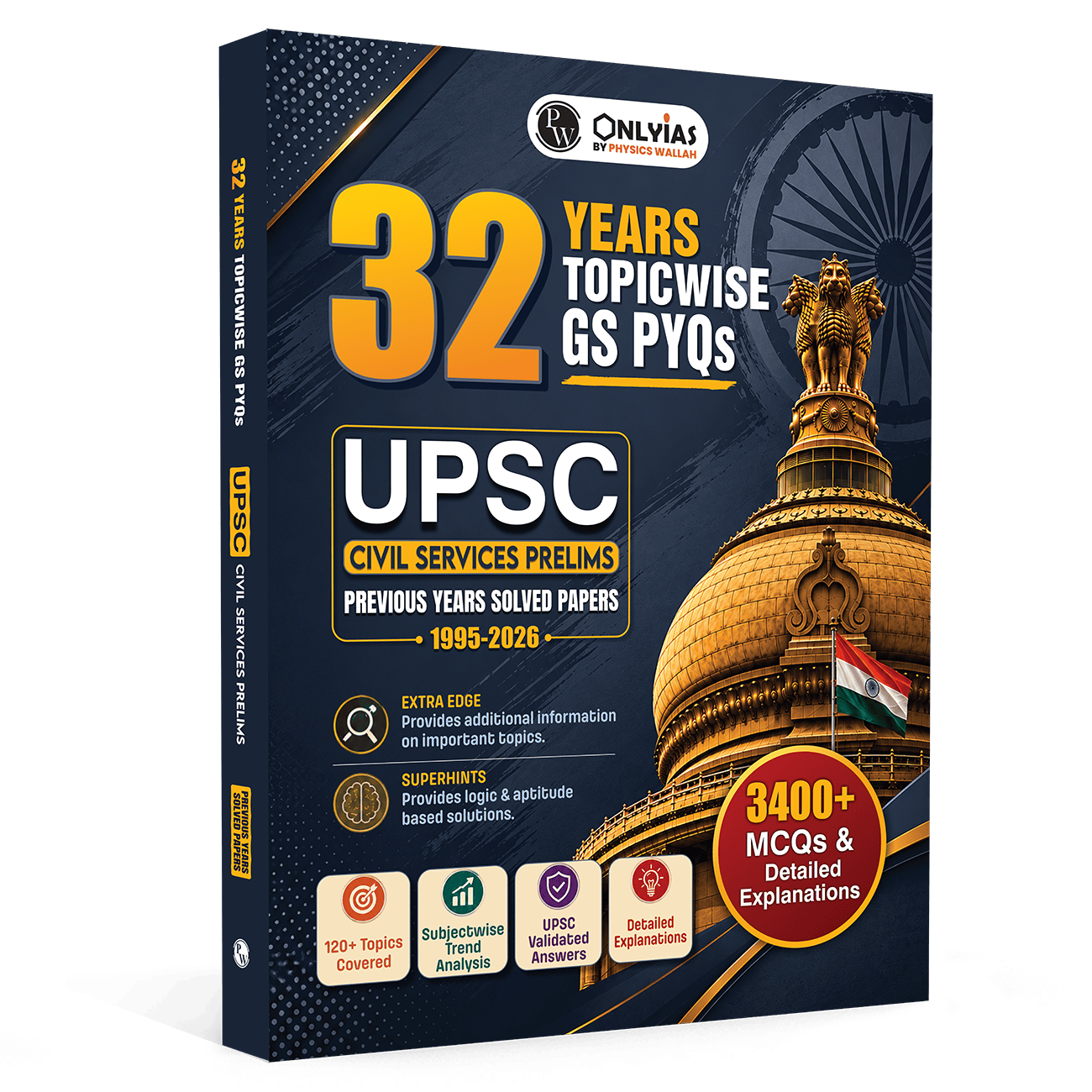
A well-structured UPSC PYQ book compilation goes beyond just listing old exam papers chronologically. It organises historical questions into structured formats to make targeted preparation easier. Key features of a premium previous year question bank include:
-
Long-Term Coverage: It compiles questions across 32 years (1995–2026), giving a vast question pool of over 3400+ MCQs to practice.
-
Topicwise Segregation: Questions are neatly distributed across 120+ distinct topics, allowing students to study a concept and immediately test themselves.
-
Dual Paper Inclusion: It contains questions for both General Studies Paper 1 and CSAT Aptitude Paper 2 under a single resource.
-
Detailed Option-Wise Solutions: It offers detailed explanations that explain why a specific option is correct and why the other three choices are incorrect, assisting in building elimination skills.
-
Visual Learning Elements: The inclusion of maps, flowcharts, diagrams, and infographics simplifies complex historical or geographical details.
-
Trend & Pattern Frameworks: Special trend analysis breakdowns help students see how the focus on certain topics has shifted over the decades.
How Does Chapterwise UPSC Prelims PYQ Help Identify High-Weightage Topics?
Syllabus management is one of the biggest hurdles in civil services preparation. The syllabus is vast, and attempting to study every single topic with equal intensity is practically impossible. This is where topicwise UPSC questions become incredibly valuable.
When you look at questions sorted by topic, you quickly notice that certain themes repeat almost every year. For example, in Indian Polity, questions around Fundamental Rights, Parliament, and the Judiciary are consistently present.
In Economics, inflation, banking, and monetary policy always see regular questions. By assessing these topicwise UPSC questions, you can separate high-yield areas from low-yield ones. This allows you to allocate your study time better, ensuring you spend more energy on chapters that carry the maximum marks weightage in the actual exam.
How Does Chapterwise UPSC Prelims PYQ Support Subject-Wise Revision?
True progress in UPSC Prelims preparation is built on regular, structured revision. However, rereading lengthy textbooks multiple times can lead to fatigue and lower information retention. Using chapter-wise UPSC PYQs creates an active and focused approach to revision.
Instead of simply revisiting notes, you can solve previous year questions from a specific chapter and evaluate how well you understand the concepts. This method tests your memory, reinforces important topics, and highlights the exact areas that require additional revision.
For example, if you consistently struggle with questions on topics such as Buddhism or Jainism in Ancient History, you immediately know which concepts need more attention. This targeted strategy saves valuable preparation time and keeps your revision highly productive.
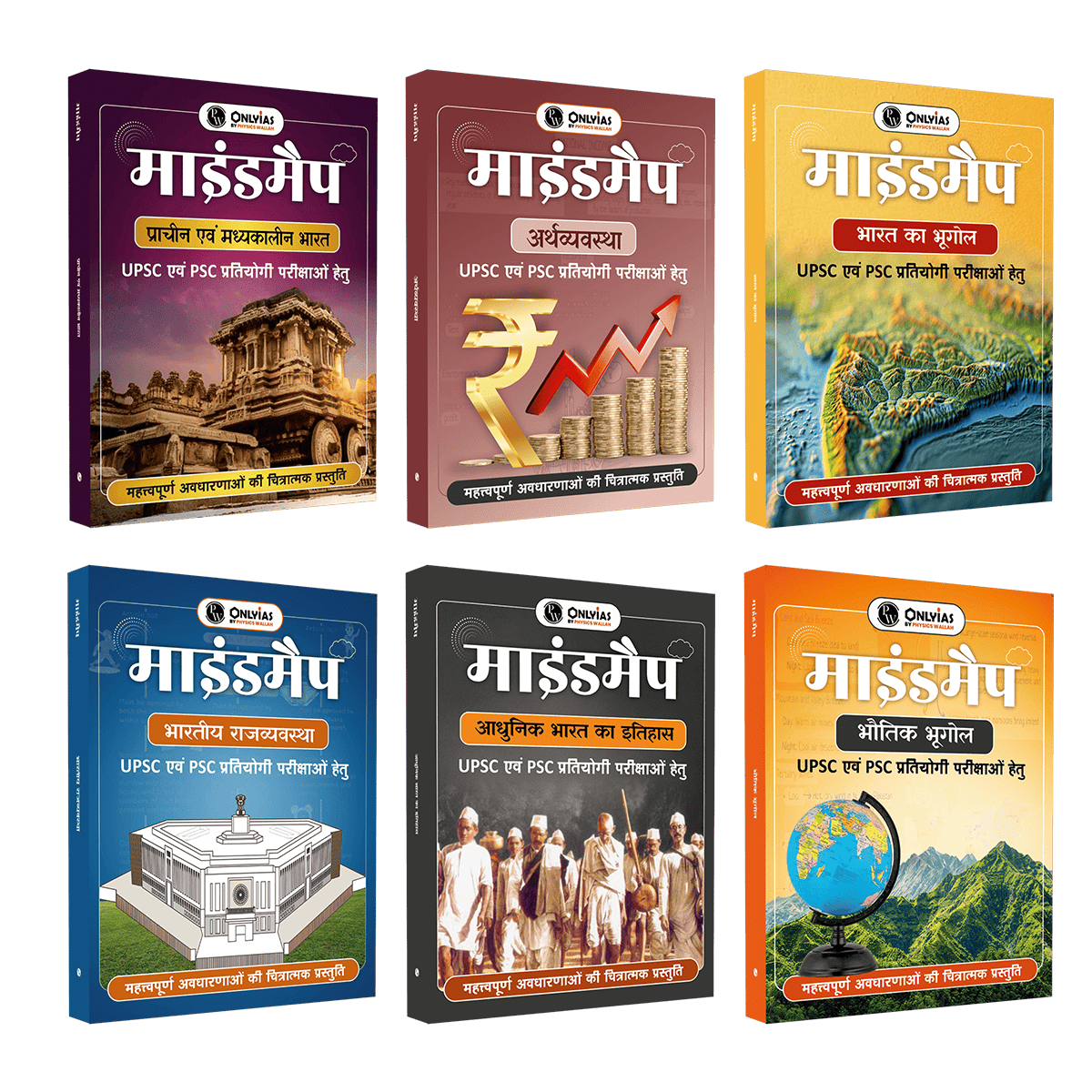
To strengthen your preparation further, combine PYQ practice with UPSC Books, which provide comprehensive subject-wise theory, conceptual explanations, practice questions, and exam-oriented content aligned with the latest UPSC syllabus. Studying concepts through UPSC books and reinforcing them with chapter-wise previous year questions helps build conceptual clarity and improves performance in both the UPSC Prelims and Mains.
How to Use Chapterwise UPSC Prelims PYQ?
To get the most out of your UPSC prelims PYQ book, you need a systematic method rather than flipping through random pages.
-
Study First, Solve Next: Always finish reading a standard textbook chapter or your class notes before opening the question bank. Don't try to solve questions completely blind.
-
Analyse the Explanations: Do not just check if your answer is right or wrong. Read the detailed option-wise solution thoroughly to understand the underlying logic.
-
Learn the Art of Elimination: Use past papers to practice eliminating highly unlikely options. Pay close attention to extreme words like "all", "only", or "never" that often appear in options.
-
Mark Tricky Questions: Highlight or star questions that you found difficult or answered incorrectly. These marked items will form the core of your final review material closer to the exam date.
-
Maintain a Mistake Journal: Write down recurring factual errors or conceptual misunderstandings in a separate notebook for quick reading later.
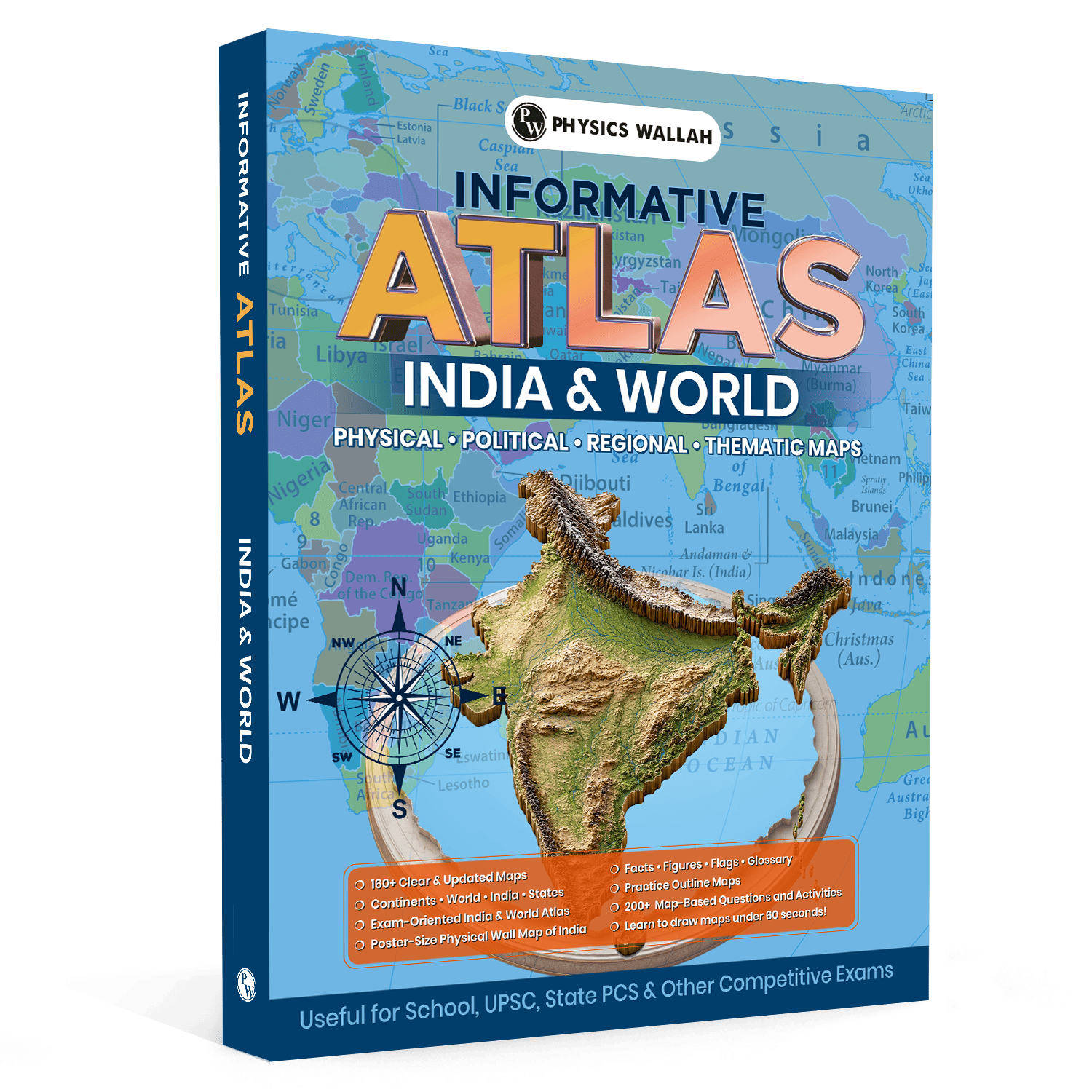
- Use an Atlas Alongside PYQs: Many UPSC Prelims questions are map-based or require geographical context. Pair your PYQ practice with the PW Informative Atlas – India & World to strengthen map work, improve location-based concepts, and revise important physical, political, regional, and thematic maps for UPSC and other competitive exams.
When to Use UPSC Prelims PYQ?
Timing plays a crucial role in how effectively you utilise your previous year questions during your preparation journey.
-
At the Beginning: Spend a few days looking through past papers before diving deep into standard books. This gives you a clear sense of how details are tested.
-
During Daily Study: Dedicate the final 30 minutes of your daily study block to solving past questions related to the specific topic you studied that day.
-
Mid-Term Review Phases: Use historical papers during your monthly evaluation periods to check your long-term retention of older subjects.
-
The Final Months: In the last two to three months before the actual test, solve full-length past papers in timed, exam-like environments to build mental stamina.
Study for Using the UPSC Prelims PYQ
Integrating past papers into a broader civil services preparation framework requires balancing theory with practice. A balanced study strategy involves aligning your reading schedule directly with your UPSC question bank practice.
|
Phase of Strategy |
Daily Action Plan |
Expected Outcome |
|
Step 1: Theory Base |
Read standard chapters thoroughly and make brief notes. |
Building strong conceptual clarity. |
|
Step 2: Topicwise Practice |
Solve the corresponding chapterwise UPSC PYQs immediately. |
Checking comprehension levels right away. |
|
Step 3: Deep Analysis |
Study the provided solutions and understand option design. |
Developing solid elimination techniques. |
|
Step 4: Weakness Correction |
Re-read weak areas from textbooks based on missed questions. |
Plugging gaps in your knowledge base. |
|
Step 5: Periodic Re-testing |
Re-solve marked questions after a gap of two weeks. |
Ensuring long-term retention of facts. |
This systematic loop ensures that your preparation remains tightly aligned with the changing demands of the civil services exam.
Common Mistakes to Avoid While Solving UPSC Prelims PYQ
Many students own excellent question banks but fail to get the desired results because of faulty practices. Avoiding these common mistakes can significantly improve your scores:
-
Memorising Answers Blindly: The exact questions rarely repeat word-for-word. The goal is to understand the underlying concepts and themes, not to memorize the answer key options.
-
Ignoring the CSAT Paper: Many candidates focus solely on General Studies and ignore CSAT until the last few weeks. Failing CSAT can cost you an entire year, so give equal attention to past aptitude questions.
-
Skipping the Explanations for Correct Answers: Getting an answer right through a lucky guess isn't enough. Always read the explanation to confirm your logic was actually correct.
-
Relying Only on Very Old Papers: While 90s questions are good for basic factual practice, the current exam trend has shifted significantly. Focus heavily on the pattern changes seen over the last five to seven years.
-
Postponing Practice Until the End: Waiting until you finish the entire syllabus before touching past papers is an unsafe strategy. Integrated, daily practice is key to building confidence.
Read More: UPSC Prelims Previous Year Question Papers with Downloaded PDF
UPSC prelims PYQ FAQs
Q1: How many years of UPSC prelims PYQ should an aspirant ideally cover?
A1: Candidates should ideally cover 30 to 32 years of past papers. While the recent five to ten years show the current exam trends, older papers offer an excellent question pool for practicing core static topics.
Q2: Are chapterwise UPSC PYQs useful for Mains preparation as well?
A2: Yes, they help build conceptual clarity and factual accuracy. Understanding these deep topics serves as a strong foundation for writing well-structured analytical answers in the Mains exam.
Q3: How do topicwise UPSC questions help in handling unpredictable current affairs?
A3: Reviewing topicwise UPSC questions helps you identify the specific angles the exam takes on current news, showing you exactly what details to look for in your daily newspaper reading.
Q4: Should beginners start solving previous year questions right from day one of UPSC prelims preparation?
A4: Beginners should look at past papers on day one to understand the exam's language. However, they should try to solve them systematically only after finishing a basic reading of a chapter.