How to Build a Winning UPSC Prelims Strategy Using 32 Years of PYQs
Many students find themselves trapped in a cycle of endless reading without knowing how the actual exam tests their knowledge. The sheer volume of the syllabus can feel overwhelming, leaving you unsure if your efforts will convert into marks.
Integrating a structured UPSC prelims strategy into your daily routine bridges this gap, transforming how you approach the entire syllabus. It moves you away from passive reading and guides you towards active problem-solving.
By using real exam questions as your primary study guide, you can easily filter out low-yield topics and direct your energy toward what truly matters on exam day. To build a strong conceptual foundation, aspirants should also rely on UPSC Books that provide comprehensive subject-wise coverage, standard reference material, practice questions, and revision resources aligned with the latest UPSC syllabus. Combining quality study material with consistent PYQ practice creates a balanced and effective preparation strategy for both the UPSC Prelims and Mains.
What Is UPSC Prelims PYQ?
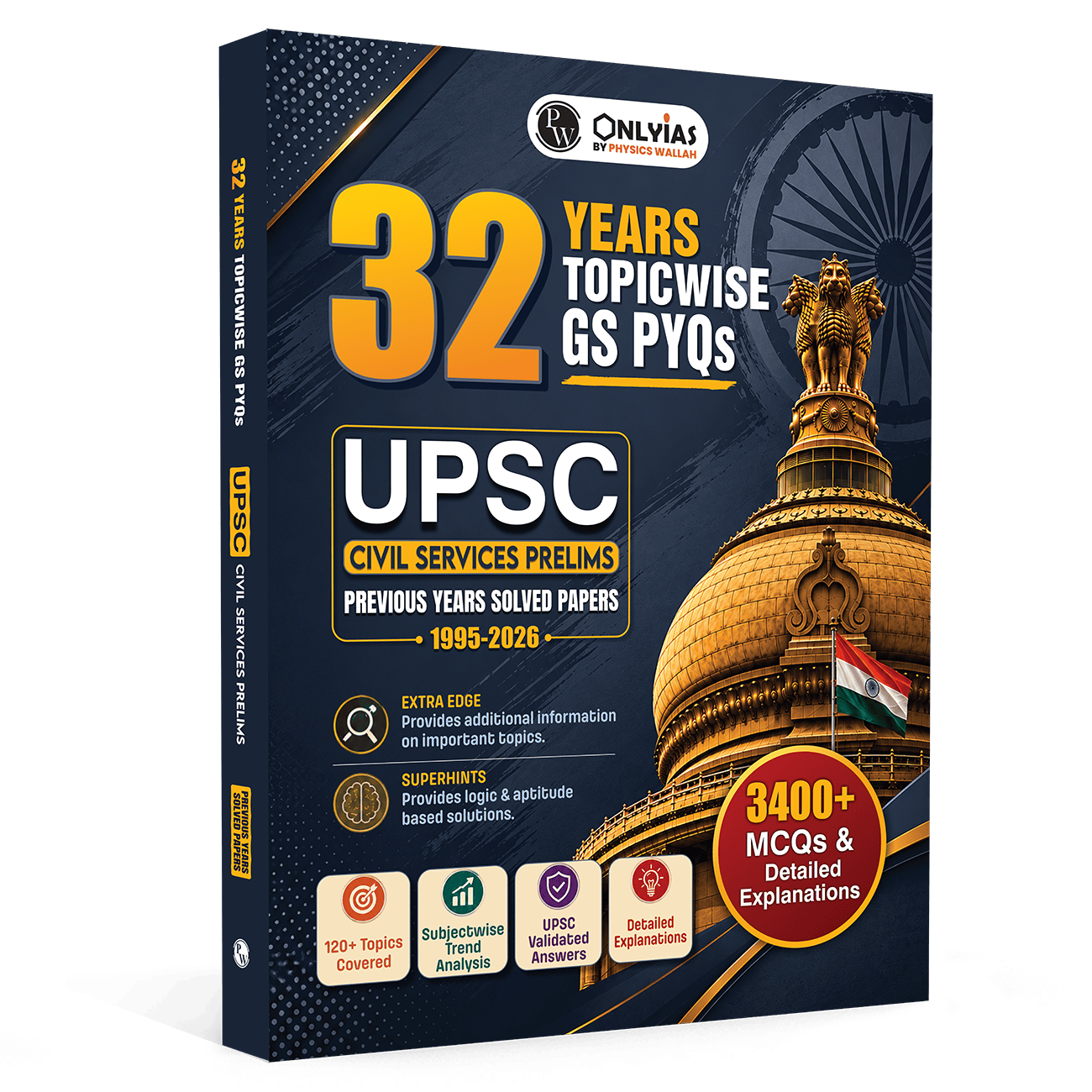
An UPSC prelims PYQ resource consists of past question papers from the Civil Services Preliminary Examination. Specifically, a 32-year compilation bridges the period from 1995 to 2026, offering a vast repository of exam data. This resource serves as a direct window into the changing nature of the civil services test.
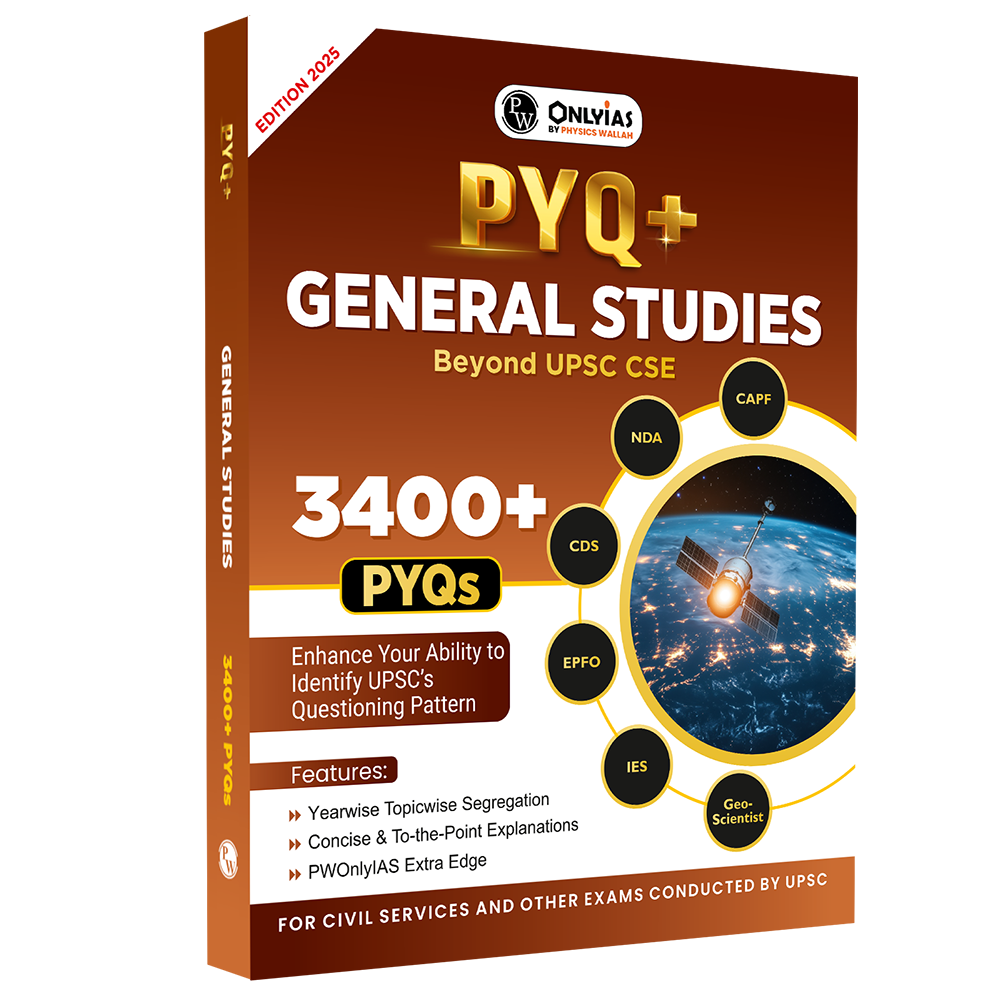
Rather than looking at individual past papers in isolation, a modern UPSC prelims PYQ book organizes these questions logically. It compiles more than 3,400 solved MCQs and segments them across General Studies Paper 1 and CSAT Paper 2. This breakdown turns historical data into an actionable study tool rather than a dry list of old tests.
Why Is UPSC Prelims PYQ Important for an Effective Preparation Strategy?
Using a comprehensive past paper database helps candidates move away from guesswork. It provides a solid foundation for your overall UPSC prelims strategy by showing you the exact standard of the exam.
-
Understanding the Exam Pattern: It helps you get used to the language, traps, and format used by the examiners.
-
Developing Elimination Techniques: Detailed option-wise solutions show you why certain options are wrong, which helps you build intelligent guessing skills.
-
Balancing Two Papers: It ensures you give equal attention to General Studies and CSAT, preventing unexpected failure in the qualifying paper.
-
Dual Exam Benefits: Working through past questions builds a conceptual base that supports both your preliminary and mains preparation.
How Do UPSC Prelims PYQs Help Identify High-Weightage Topics?
Not all chapters in your textbooks hold equal value on exam day. Analyzing the UPSC previous years questions lets you map out which themes are recurring and which ones are minor.
1. Trend and Pattern Analysis
Reviewing papers over three decades highlights shifting trends. You can clearly see how the exam has evolved from straightforward factual recall to complex, concept-based questions.
2. Topic-wise Segregation
A structured question bank sorts historical data across 120 distinct topics. This meticulous division covers essential subjects:
-
Indian Polity (e.g., Fundamental Rights, Parliament, Judiciary)
-
Economy (e.g., Inflation, Banking, Budgeting)
-
History (e.g., Modern India, Ancient Culture, Medieval Administration)
-
Geography (e.g., Physical Geography, Map-based locations)
-
Environment (e.g., Biodiversity, International Conventions, Climate Change)
-
Science & Technology (e.g., Space tech, Biotechnology, daily life applications)
-
Current Affairs (e.g., Government schemes, global summits)
How to Use an UPSC Prelims PYQ?
Owning a comprehensive UPSC PYQ book is only the first step; you need to know how to use it correctly to see real progress.
Step 1: Read Before You Study
Before opening a new textbook chapter, look through the corresponding section in your UPSC prelims PYQ compiler. This primes your brain to notice critical details during your reading. It stops you from highlighting every line and helps you focus on examiner-favorite areas.
Step 2: Analyze Every Option
Do not just stop when you find the correct answer. Read the detailed explanations for all four options to understand the related concepts thoroughly. Often, an incorrect option in one year's paper becomes the central question in a future exam.
Step 3: Use Visual Aids
Incorporate maps, diagrams, and infographics from your solutions to build better mental pictures of complex topics. Visualizing the location of a river basin or the steps of the carbon cycle anchors the knowledge much deeper than text alone.
Step 4: Leverage Expert Hints
Take full advantage of premium features included in your UPSC prelims PYQ book. These sections offer specific tips on intelligent guessing, highlight subtle linguistic traps, and explain common exam-hall pitfalls.
Study Plan for Using the UPSC Prelims PYQ
A structured UPSC study plan must balance learning new facts with analyzing old ones. This step-by-step framework helps you blend past papers directly into your routine.
|
Phase |
Strategy Focus |
Operational Activity |
|
Phase 1 |
Chapterwise Preparation |
Solve topic-wise questions right after finishing a text chapter to confirm your understanding. |
|
Phase 2 |
Mid-Term Review |
Group related topics together and complete timed tests to check your speed and concept retention. |
|
Phase 3 |
Final Prelims Revision |
Revisit high-yield questions to reinforce your memory and boost your confidence. |
Tips for Solving UPSC Prelims PYQ
Below are some of the tips that will help in solving the PYQ in a much better way:
-
Track Your Mistakes: Keep a separate log of questions you get wrong due to conceptual confusion versus careless reading. Review this log weekly.
-
Simulate Exam Conditions: Sit in a quiet room and solve UPSC GS papers or CSAT within the strict two-hour limit. This builds the mental stamina needed for the actual exam day.
-
Focus on Elimination: Practice removing obviously incorrect choices to improve your accuracy on tough questions. Over time, you will start recognizing the patterns of how incorrect options are formulated.
-
Link with Current Trends: Connect older static questions with recent news to see how modern events change the way traditional topics are tested.
Common Mistakes to Avoid When Using UPSC Prelims PYQs
Many aspirants buy the thickest past paper compilations but fail to achieve the desired results on exam day. Simply reading through questions like a novel does not build problem-solving skills. Watch out for these highly common missteps:
-
Treating PYQs as a Simple Mock Test: Do not just solve a question, check the score, and move on. The actual value lies in the explanations and understanding of the examiner's logic.
-
Memorising the Answer Key: UPSC rarely repeats a question word-for-word. Instead, it repeats core themes and specific technical terms from the options. Memorizing "option B" without understanding "why" is a waste of effort.
-
Ignoring the Incorrect Options: Every wrong option in an UPSC prelims PYQ is a potential question for next year. Ignoring these option-wise details limits your knowledge base.
-
Neglecting CSAT Paper 2: Hundreds of candidates clear the GS cutoff but fail the entire exam because they ignored CSAT PYQs. Equal weightage in practice is non-negotiable.
-
Failing to Sync with Core Books: Practising PYQs in isolation from your basic NCERTs and reference books leaves your foundational theory weak.
Read More: UPSC Prelims Previous Year Question Papers with Downloaded PDF
UPSC Prelims PYQs FAQs
1. How many years of past papers should I cover for an effective UPSC prelims strategy?
Covering 32 years of questions provides a complete view of the exam's evolution. This comprehensive range helps you spot long-term patterns, understand structural shifts, and identify recurring topics effectively.
2. Why should I choose a chapter-wise preparation method?
Sorting your UPSC prelims PYQ practice by topic helps you test your knowledge right after studying a specific chapter. This approach ensures you do not leave any weak spots in your syllabus and reinforces your learning immediately.
3. Can a 32-year UPSC PYQ book help me clear the CSAT paper?
Yes, a complete UPSC prelims PYQ book includes both General Studies Paper 1 and CSAT Paper 2. This dual-paper setup allows you to practice math, logical reasoning, and reading comprehension questions systematically under the same framework.
4. How does analyzing previous year's questions improve my guessing skills?
Looking at detailed, option-wise explanations teaches you how examiners set up incorrect choices. This practice sharpens your ability to eliminate wrong options on exam day using the "Superhints" and "Extra Edge" techniques.
5. When is the right time to start the prelims revision phase?
You should start your dedicated review during the mid-term of your schedule. Use sorted UPSC prelims PYQ topics to regularly revisit high-weightage chapters alongside your standard mock tests.