How to use 15 years of CAPF PYQs to crack Paper 1 and Paper 2
Many aspirants struggle to balance the objective nature of the first paper with the intense descriptive demands of the second. By integrating authentic past papers into your daily schedule, you bridge the gap between basic theory and actual exam execution, ensuring you know exactly how to approach every section under real test-day pressure.
Practising the UPSC CAPF PYQ helps you understand the changing exam trends, improve your answer-writing speed, and build conceptual clarity for Paper 1 and Paper 2.
What Is UPSC CAPF PYQ?
The UPSC CAPF PYQ refers to the collection of previous year questions asked in the Central Armed Police Forces (Assistant Commandant) examination conducted by the Union Public Service Commission. These papers serve as an official blueprint, showing the exact standard, structure, and weightage of topics across different subjects.
For serious aspirants, analyzing a comprehensive UPSC CAPF PYQ book is the most authentic way to study. It helps separate important topics from the vast syllabus, ensuring that your preparation remains aligned with what the exam actually demands.
Features of UPSC CAPF PYQ
A quality UPSC previous year question paper book covers all aspects of the examination by providing systematic resources. The major features of a well-structured 15-year compilation include:
-
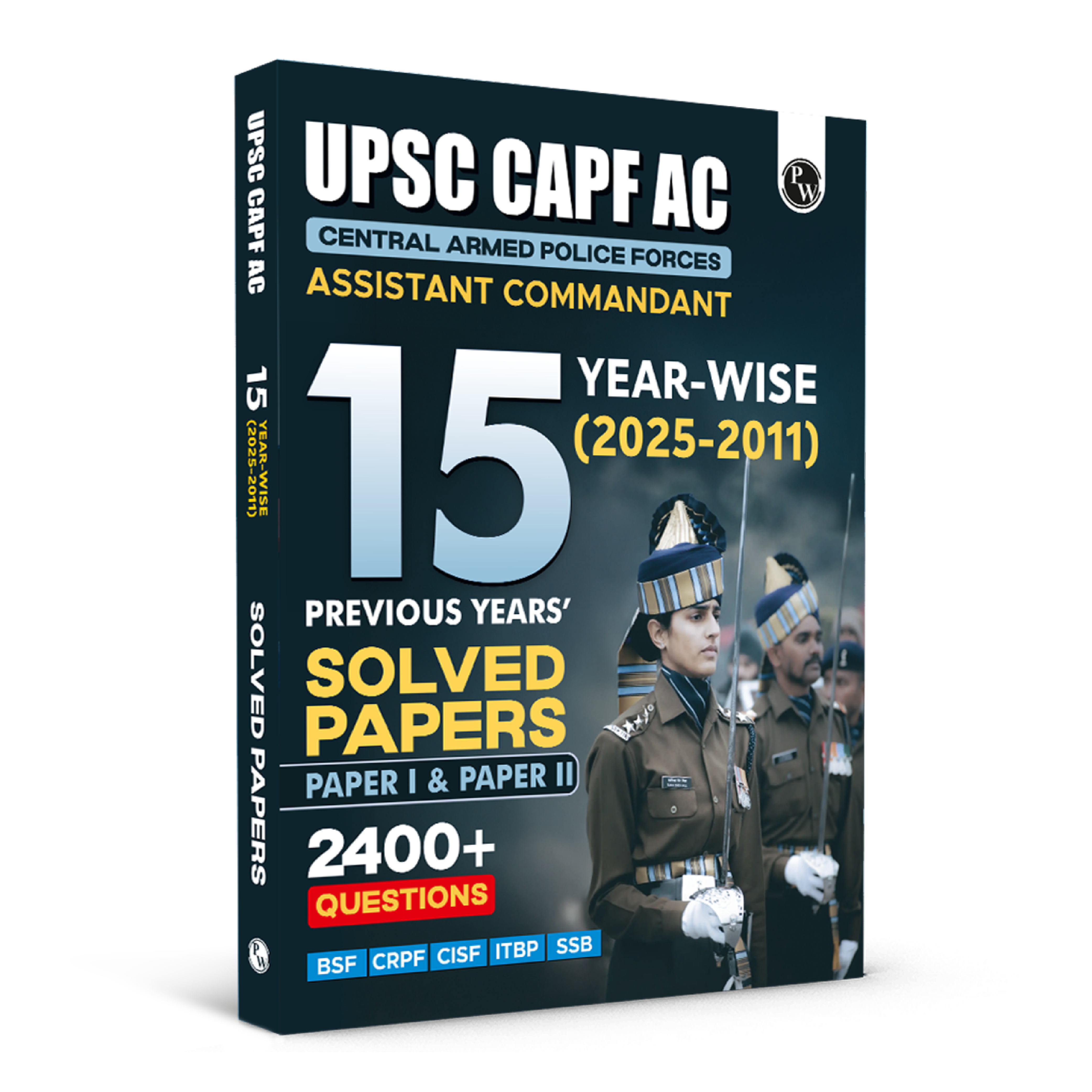
Year-Wise Coverage (2025–2011): Contains 15 years of actual question papers for both Paper 1 and Paper 2, offering a complete look at how the exam has evolved over more than a decade.
-
Extensive Question Pool: Includes over 2400+ questions with detailed solutions, providing an exhaustive practice bank for all subjects.
-
Step-by-Step Explanations: Every question in Paper 1 comes with concept-focused and detailed explanations to build strong analytical skills.
-
Official Exam Alignment: The solutions for the CAPFac paper 2 previous year question paper are written strictly according to the official exam format, keeping prescribed word limits and proper answer-writing structures in mind.
-
Comprehensive Subject Inclusion: Covers General Ability, Intelligence, Essay Writing, Comprehension, Précis, and Current Affairs.
Why Is UPSC CAPF PYQ Important for Paper 1 and Paper 2?
The CAPFAC examination tests two completely different skill sets across its two papers, making the CAPFAC PYQ indispensable.
-
Importance of Paper 1
Paper 1 focuses on General Ability and Intelligence through objective multiple-choice questions. Utilizing the UPSC CAPF PYQ helps you map out repeating themes in subjects like Polity, History, Geography, and Science. It teaches you how to eliminate incorrect options and handles the tricky negative marking system effectively.
-
Importance for Paper 2
Paper 2 is a conventional descriptive test covering General Studies, Essay, and Comprehension. Reviewing the CAPFac paper 2 previous year question paper allows you to see the exact themes picked by the exam authority for essays and arguments.
It gives you a clear template for structuring your introductions, body paragraphs, and conclusions under strict time constraints.
Benefits of Using UPSC CAPF PYQ
Integrating actual exam questions into your daily routine offers distinct advantages that standard mock tests cannot replicate.
|
Benefit Category |
Key Advantage |
|
Authentic Difficulty |
Regular practice exposes you to the exact difficulty level set by the exam board, eliminating unexpected surprises on exam day. |
|
Trend Identification |
Helps you track the changing weightage of static subjects versus dynamic current affairs over the last 15 years. |
|
Time Management |
Teaches you how to allocate specific minutes to different sections, preventing you from leaving papers incomplete. |
|
Self-Assessment |
Serves as an objective tool to evaluate your actual retention and find your weak areas before the real test. |
How to Use UPSC CAPF PYQ for Paper 1 and Paper 2 Preparation?
To get the most out of your UPSC CAPF PYQ book, you need a systematic approach rather than solving questions randomly.
Phase 1: Topic-Wise Segregation
When you finish a particular subject or chapter from your standard textbooks, open your CAPF previous year question paper book and solve the questions related to that specific topic. This reinforces what you just learned and highlights which parts of the chapter are highly relevant.
Phase 2: Mastering Paper 2 Formats
Do not just read the answers for the descriptive section. Take actual prompts from the CAPFac paper 2 previous year question paper and write out full essays, arguments, and report drafts. Compare your attempts with the structured solutions provided in your prep book to check your content organization, grammar, and word counts.
Phase 3: Full-Length Timed Simulations
As the exam approaches, treat the papers from recent years as live mock exams. Set a timer for three hours for Paper 1 and another three hours for Paper 2. Sit in a quiet room and finish them in one go to build the mental stamina required for the actual test day.
Study Plan for Using UPSC CAPF PYQ
A structured timeline ensures you cover all 15 years of questions thoroughly without feeling overwhelmed.
Step 1: Analyze the Trends
Spend the first few days browsing through the CAPF AC PYQ from the last five years. Note down the areas where questions appear every single year, such as Fundamental Rights in Polity or Modern History movements.
Step 2: Build Sectional Strength
Dedicate specific days of the week to Paper 1 and Paper 2. For instance, use weekdays to solve 50 objective questions from past papers, and reserve your weekends to write at least two essays and two counter-arguments from past descriptive papers.
Step 3: Revise via Explanations
Do not just look at whether your answer is right or wrong. Read the step-by-step explanations for every question. The background information provided in the solutions often helps answer new questions in upcoming exams.
Check Out: UPSC Revision Books
When to Start Solving UPSC CAPF PYQ?
A common dilemma among candidates is deciding the right time to introduce past papers into their schedule.
-
From Day One: Use the UPSC CAPF PYQ right at the start of your preparation to understand the exam's boundary lines and depth. This stops you from reading irrelevant details in heavy reference books.
-
During Mid-Term Preparation: Use past papers as a tool for active recall. Instead of simply re-reading chapters, solve the corresponding questions to keep your brain engaged.
-
The Final Month: In the last 30 to 45 days, past papers should form at least 70% of your study routine, acting as your primary source for revision and speed training.
Common Mistakes to Avoid While Using UPSC CAPF PYQ
Many candidates fail to clear the exam despite buying a UPSC CAPF PYQ book because of incorrect utilization strategies.
-
Relying on Rote Memorization: Memorizing answers will not help because questions are rarely repeated word-for-word. Focus on the underlying concepts and themes instead.
-
Neglecting Paper 2 Practice: Many students spend all their time solving objective questions and merely read through the essay answers. Descriptive skills require physical writing practice to improve presentation and speed.
-
Ignoring the Explanations: Skipping the detailed explanations means you miss out on valuable context that could help you solve related questions in the future.
-
Using Outdated Solutions: Current affairs and certain legal frameworks change over time. Ensure you use a book that updates old answers to reflect current facts and data accurately.
Read More: How to Use NCERT Summary Books for UPSC Prelims
UPSC CAPF PYQ FAQs
Q1: Can I clear the exam by only studying the UPSC CAPF PYQ?
No, past papers are meant to supplement your core preparation. You must first build your foundational knowledge using standard textbooks and then use previous questions to refine your strategy, understand trends, and practice your writing skills.
Q2: How many years of past papers should I solve for the CAPF AC exam?
It is highly recommended to solve at least 15 years of past papers. Working through questions from 2011 to 2025 gives you an extensive overview of both older, static question patterns and modern, dynamic exam trends.
Q3: Why is a dedicated CAPF previous year question paper book helpful?
A dedicated book organizes years of chaotic question papers into a clean, systematic format. It provides step-by-step explanations for objective questions and structured, word-limit-compliant drafts for descriptive answers, saving you hundreds of hours of research.