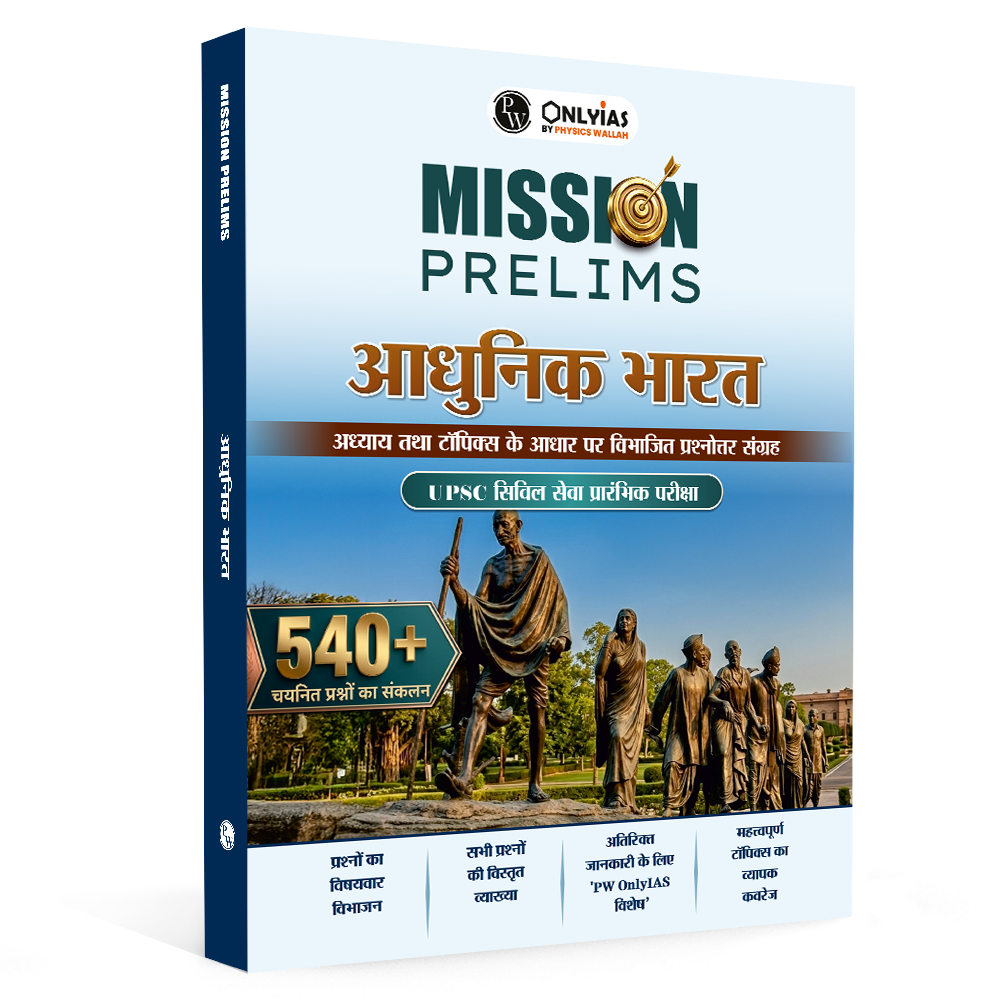
How Modern Indian History Question Bank Covers Freedom Struggle in Depth
The Indian national movement has a huge syllabus and many civil services aspirants find it difficult to revise. The key to success is to find a resource that gives you conceptual clarity and practise with a purpose. In this article, we will discuss how a complete UPSC modern indian question bank removes the mystery of the freedom struggle in a systematic way to boost up your exam readiness.
Importance of UPSC Modern Indian Question Bank
The civil services examination requires a higher level of understanding of historical time lines, socio-religious movements and administrative changes. Textbooks alone often don't fill the gaps in application based learning. This gap is filled by a focused question bank which turns passive reading into active recall.
Memorising complicated timelines and related political changes is often difficult for candidates. And these details can be combined by the practice of targeted questions. This active learning approach will help you remember specific facts under exam pressure.
A curated modern Indian history question bank helps you to find out high-yield topics that keep coming again and again. This focused practice is a real time saver when you’re pushing hard during revision. It shows your weak areas before the real exam day comes.
Freedom Struggle Topics Covered in an UPSC Modern Indian Question Bank
The path to Indian independence is a long and complex journey with many phases, from early peasant uprisings to organised mass movements. A well-structured UPSC books means no major event is missed. It divides the enormous timeline into manageable learning chunks.
The Early Resistance and 1857 Revolt
Organised protests grew out of early tribal movements and peasant resistance. This portion of the exam tests your knowledge of localised grievances and leadership.
-
Santhal Rebellion: Analysing the root causes of tribal discontent against revenue systems.
-
Indigo Revolt: Understanding the economic exploitation faced by local cultivators.
-
1857 Uprising: Evaluating administrative, social, and military triggers behind the revolt.
The Rise of Organized Nationalism
This phase marks the shift towards structured political platforms in the subcontinent. The standard book gives an obvious view of this transforming epoch.
-
Pre-Congress Associations: Tracking early political bodies in Bengal, Madras, and Bombay.
-
Foundation of the National Congress: Examining the safety valve theory and early objectives.
-
Moderate Phase: Assessing methods like petitions, resolutions, and economic critiques.
The Extremist Phase and Swadeshi Movement
The turn of the century witnessed a shift toward more radical political actions. Questions from this era focus on ideological conflicts and mass mobilization techniques.
-
Partition of Bengal: Evaluating the administrative motives behind the 1905 partition.
-
Swadeshi Techniques: Analysing boycott methods and the promotion of national education.
-
Surat Split: Understanding the ideological rift between different political factions in around 1907.
Deconstructing the Gandhian Era
The coming of Mahatma Gandhi transformed the nationalist movement into a popular mass struggle. This segment comprises a big portion of the freedom struggle UPSC syllabus. Questions focus on the strategic shifts in mass mobilisation and non-violent resistance.
The transition between these major movements involves intricate socio-political developments. An effective question pool challenges your understanding of why specific strategies were adopted at certain times. It forces you to look beyond basic timelines.
Features of an UPSC Modern Indian Question Bank
An excellent preparation tool must align with evolving exam trends. It should offer diverse question formats that mirror the actual test environment. Here are the core features to look for in a UPSC question bank.
Chapterwise History Questions for Structured Learning
Organising practice material by topic helps maintain a logical flow during your study sessions. Utilizing chapterwise questions ensures you understand one historical theme before moving to the next. This systematic method prevents cognitive overload.
A thematic approach makes it easier to track your progress over several weeks. You can quickly cross-verify your answers with standard reference books. This builds a solid foundation for both objective and descriptive papers.
High-Yield History MCQs
Modern civil services exams test deep conceptual understanding alongside factual accuracy. Practising diverse MCQs improves your elimination skills during the objective papers. This is vital when options look confusingly similar.
-
Statement-Based Questions: Evaluating multiple analytical sentences to find the correct combination.
-
Match the Columns: Pairing historical personalities with their respective journals or movements.
-
Chronological Ordering: Arranging interconnected historical events in their precise sequence.
Integration of Trends in Prelims History
The nature of the preliminary test changes constantly, with an increased focus on lesser-known personalities and sub-movements. A relevant resource reflects these updates in prelims history sections. It ensures your preparation remains aligned with recent assessment patterns.
Reviewing these updated trends helps you anticipate the complexity of upcoming tests. It reduces exam anxiety by familiarising you with tricky phrasing. This gives you a distinct competitive advantage.
How to Prepare with an UPSC Modern Indian Question Bank
Simply solving questions without a plan yields minimal results. You need a structured approach to integrate practice into your daily routine. Here is a practical roadmap to optimise your workflow.
Devote approximately one hour each day to solving chapter-wise questions to improve retention and conceptual clarity. Avoid checking the answers immediately after every question. Instead, complete an entire set first and then evaluate your performance.
Carefully analyse the detailed explanations for every incorrect answer. Understanding why an option is right or wrong helps eliminate conceptual gaps and transforms mistakes into valuable learning opportunities.
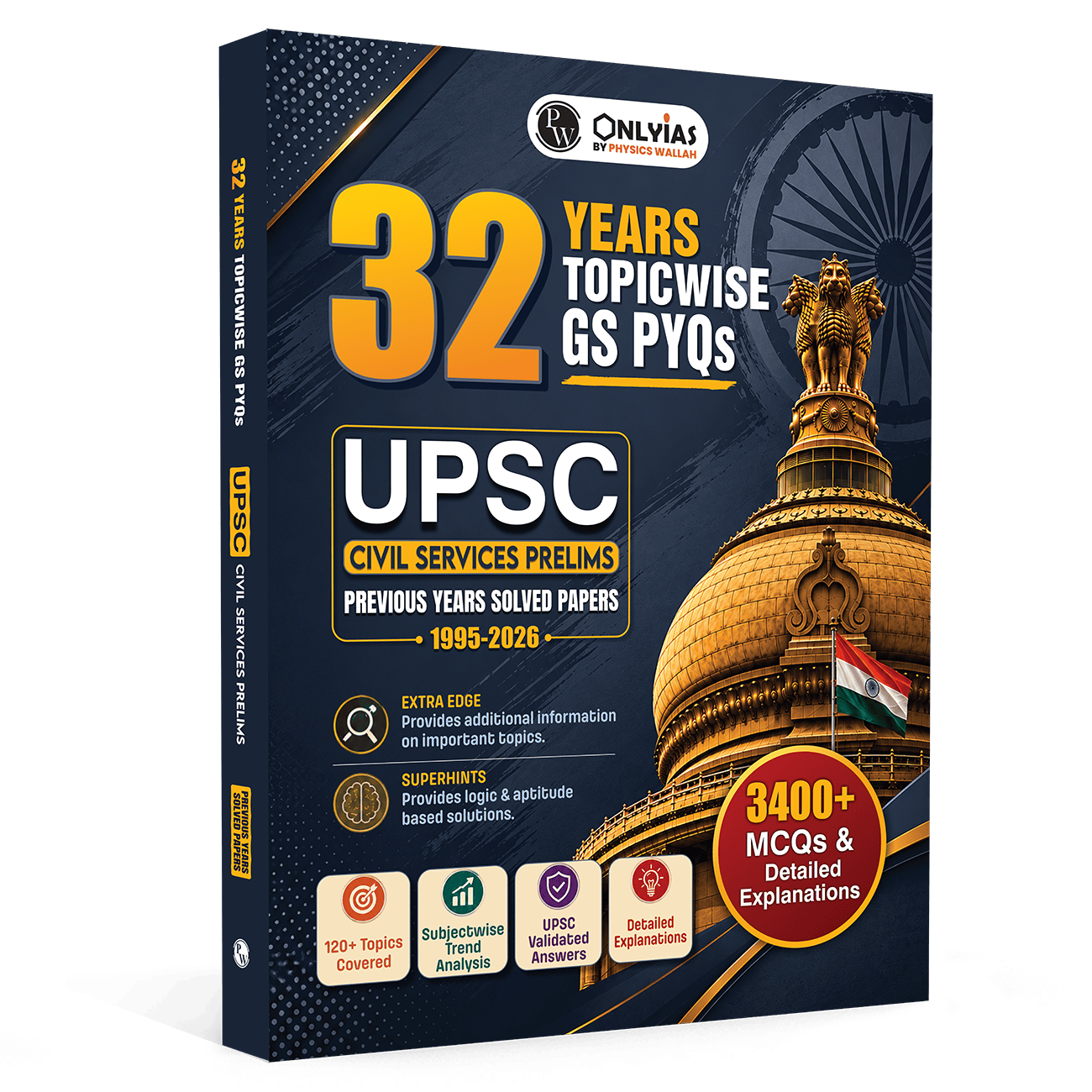
To strengthen your preparation further, practise with an UPSC PYQ Book, which contains authentic previous year questions along with detailed explanations and topic-wise analysis. Solving PYQs alongside your Modern Indian History question bank helps you understand recurring question trends, identify high-weightage topics, and prepare more effectively for both the UPSC Prelims and Mains.
Important Topics Covered in an UPSC Modern Indian Question Bank
To give you a clearer picture of the syllabus depth, a premium question bank covers several horizontal themes. These themes cut across different chronological periods.
-
Administrative and Constitutional History: Tracking the evolution of various colonial acts from around 1773 to 1947.
-
Economic Impact of Colonialism: Analysing the drain of wealth theory, land revenue settlements, and de-industrialisation.
-
Socio-Religious Reform Movements: Evaluating the contributions of enlightened leaders toward women's education and caste reforms.
-
Press and Education: Studying the growth of vernacular newspapers and colonial educational policies.
-
Revolutionary Movements: Examining the activities of both domestic and international revolutionary groups.
Regular practice across these diverse themes ensures comprehensive syllabus coverage. It leaves no blind spots in your final exam strategy. This comprehensive approach builds immense confidence.
How an UPSC Modern Indian Question Bank Improves Analytical Skills
The civil services exam tests your ability to connect historical events with their long-term impacts. A robust UPSC question bank combo set guides you to think analytically rather than just memorising dates. This deep understanding is crucial for tackling tricky analytical problems.
For example, understanding why the non-cooperation movement was suspended requires a grasp of strategic principles. A good question highlights the rationale behind such decisions. This depth prepares you for complex multi-tiered statements.
Focusing on the causes and effects of major events refines your logic. You begin to see history as a continuous narrative rather than isolated incidents. This perspective is incredibly useful for writing well-structured essays too.
How to Revise with an UPSC Modern Indian Question Bank
And when the exam is close, it’s nearly hard to go through the heavy textbooks. A good compact question bank is a great tool for quick revisions. Allowing you to scan hundreds of basic concepts in only hours.
Marking difficult problems on your first pass gives you a personalised review list for the last week. This means you only spend time on things that need more attention. It makes your last revision quite efficient.
This question-based review, coupled with high-quality practice examinations, perfectly mimics the conditions of an actual test. It helps you to manage time properly under strict limitation. This habit, disciplined, guarantees you’re at your best when it counts.
-
Practice a lot to develop muscle memory for elimination moves.
-
Focus on the explanations rather than just keeping track of your ultimate results.
-
Review weak sections immediately using established textbooks.
Using these strategies consistently transforms your modern history preparation from a stressful task into an organized, manageable process.
Read More: What Are UPSC PYQs and Why Are They Important?
UPSC Modern Indian Question Bank FAQs
How does a chapterwise history questions format help in revision?
A chapterwise setup allows you to focus on one specific historical theme at a time. This systematic approach ensures you identify specific conceptual gaps before moving forward, making your revision structured and measurable.
Why are statement-based history MCQs important for the exam?
Statement-based questions are designed to evaluate your deep mental clarity rather than just rote memorisation. They simulate the real exam patterns and help you hone the required elimination abilities for tricky alternatives.
Does the UPSC modern Indian question bank cover tribal and peasant movements?
Yes, a comprehensive question bank covers all early peasant, tribal, and civil uprisings in detail. These areas are highly valuable for the preliminary exam and are thoroughly mapped through diverse questions.
How should I integrate this book into my daily modern history preparation?
Ideally, you should study a topic from your regular history textbook first and then solve the equivalent topic from the question bank. This process reinforces your mental grasp and boosts long-term memory recall.
Are constitutional developments from around 1773 to 1947 included in the questions?
Yes, all major regulatory acts, charter acts, and government of India acts are covered extensively. The questions analyze both the administrative features and the political impacts of these constitutional developments.