Why Modern Indian History is the Most high-yield History topic in UPSC Prelims

Among the sub-sections of the syllabus, modern Indian history for UPSC stands out as one of the most high-yield areas. Every year, a considerable number of questions are asked in direct, factual, and conceptual formats, making it an essential subject for improving Prelims scores. However, memorising extensive timelines, important Acts, and multiple phases of the freedom movement can become overwhelming for aspirants.
Managing such a vast syllabus requires advanced learning resources and well-structured UPSC Books that simplify information without compromising the conceptual depth expected in the examination. Aspirants often find it difficult to balance detailed study with quick revision, which is why structured visual notes, mind maps, and focused UPSC Books become valuable resource for effective preparation and long-term retention.
What Are UPSC Modern History Mindmaps Hindi?
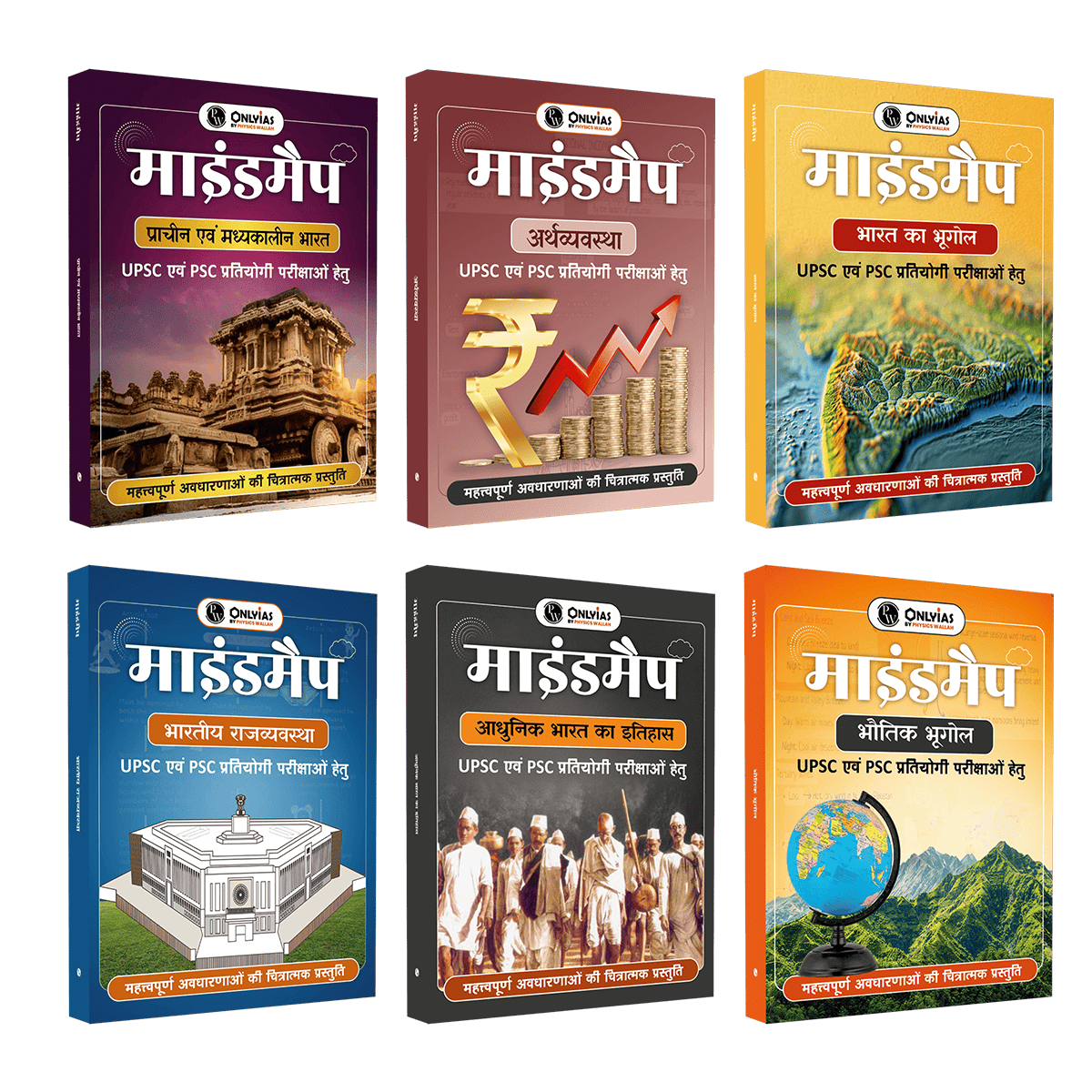
Visual learning tools have transformed how civil services candidates approach vast subjects. The UPSC modern history mindmaps Hindi is a specialised visual learning resource created to help Hindi medium students grasp historical complexities.
This study aid presents crucial historical knowledge through a well-structured layout. It replaces dense paragraphs with interconnected nodes, allowing candidates to see how one historical event triggered another.
This resource features visually engaging mind maps, infographics, charts, timelines, and flowcharts. These components work together to simplify complex historical concepts, making them far easier to understand, revise, and retain. It is specifically designed for visual learners who find traditional textbooks difficult to revise during the final days before the exam.
This tool provides holistic coverage of essential themes, making it an excellent alternative to a standard UPSC modern history book when quick data retrieval is necessary.
Why Modern Indian History Gets More Focus in UPSC Prelims?
The Civil Services Preliminary examination tests both analytical depth and factual accuracy. Modern History receives disproportionate weightage compared to Ancient or Medieval History for several structural reasons:
-
High Trend Predictability: The questions generally revolve around established themes such as constitutional developments, socio-religious reform movements, and the phases of the national movement.
-
Direct Relevance to Mains: The concepts prepared for Prelims directly feed into the General Studies Paper I syllabus, ensuring that effort spent here delivers double returns.
-
Clear Chronology: Unlike ancient eras where dates are regularly debated, modern history follows a documented sequence, making it easier to secure definitive marks.
To handle this section successfully, candidates need to build a mental framework of events from the decline of the Mughal Empire to the independence of India. Using a mind map for history enables students to categorise events by themes, such as economic policies, tribal uprisings, and Governor-Generals' tenures, ensuring no high-yielding topic is missed.
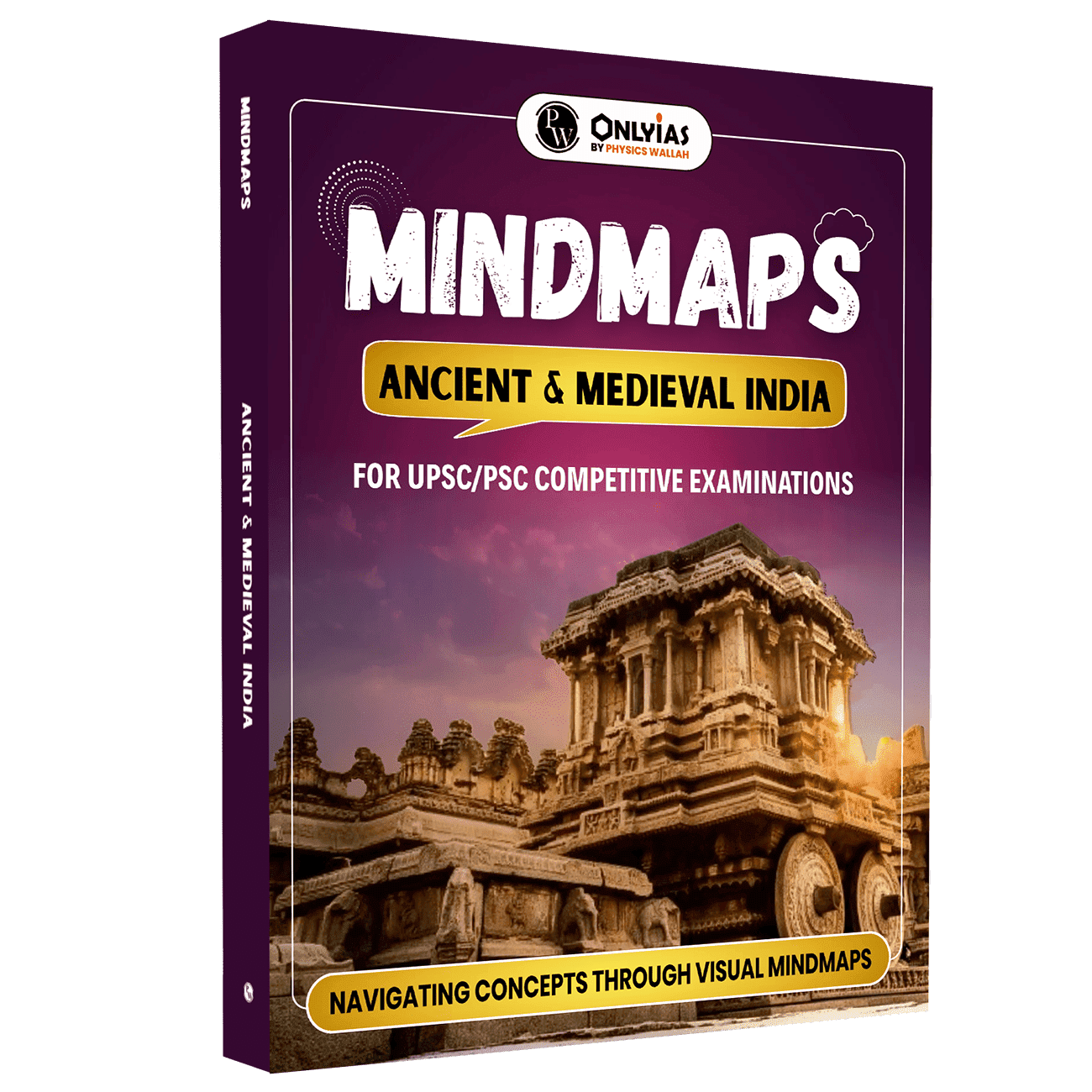
At the same time, aspirants should not ignore foundational areas from Ancient and Medieval History. Resources such as PW UPSC Mindmaps Ancient and Medieval India help simplify timelines, dynasties, cultural developments, and historical linkages into visual formats, making revision faster and improving retention across the complete History syllabus.
How UPSC Modern History Mindmaps Hindi Cover Important Events and Movements?
An effective revision tool must cover the entire syllabus while maintaining a clear structure. The UPSC modern history mindmaps Hindi breaks down major historical turning points into digestible, visual blocks. Each chart provides a concise snapshot of difficult historical topics, helping aspirants grasp the broader picture.
The visual layout systematically covers critical segments:
-
The Advent of Europeans: Tracing the arrival, factories, and conflicts of the Portuguese, Dutch, French, and British East India Company.
-
Socio-Religious Reform Movements: Organising the contributions of the Brahmo Samaj, Arya Samaj, Aligarh Movement, and individual reformers into clean comparative tables.
-
The Indian Freedom Struggle: Dividing the national movement into the Moderate phase, the Extremist phase, and the highly crucial Gandhian Era.
-
Constitutional Milestones: Breaking down dense regulatory laws from the Regulating Act of 1773 to the Indian Independence Act of 1947 into distinct features.
Benefits of Modern History with UPSC Modern History Mindmaps Hindi
Integrating visual graphics into your study routine changes how your brain stores information. These tools provide simplified visuals for complex concepts, ensuring in-depth preparation for both Prelims and GS Mains.
The primary advantages include:
-
Enhanced Spatial Memory: Visual notes leverage spatial arrangements, helping you remember the exact location of information on a page during the exam.
-
Cross-Topic Interlinking: It helps connect economic policies, like the Drain of Wealth theory, directly to the rise of assertive nationalism.
-
Time-Saving Revision: Reviewing an entire century of historical transitions takes hours instead of days when using a well-designed chart.
By utilising comprehensive UPSC mind maps, candidates can transition away from passive reading. This structured visual format encourages active recall, which is essential for filtering out incorrect options in multiple-choice questions.
When to Use UPSC Modern History Mindmaps Hindi
Timing your resources is just as important as choosing them. The UPSC modern history mindmaps Hindi serve different purposes depending on where you are in your preparation journey:
-
During the Initial Reading Phase: Use them alongside standard textbooks to get a quick overview of a chapter before diving into dense text.
-
During Daily Revision Sessions: Spend fifteen minutes at the end of the day reviewing a map branch to reinforce what you have learned.
-
In the Final Month Before Prelims: Swap heavy text volumes entirely for visual charts to perform rapid, high-frequency revision cycles.
For students who prefer digital archives, finding a comprehensive modern history mind map in Hindi PDF can offer portable access to these structures, making it easy to revise while commuting or during short study breaks.
Study Strategy Plan with UPSC Modern History Mindmaps Hindi
To get the most value out of your visual resources, follow this systematic study plan designed to improve your conceptual clarity and data retention:
|
Phase |
Study Focus |
Practical Application |
|
Phase 1: Foundation |
Read standard textbook chapters |
Understand the underlying reasons behind historical conflicts. |
|
Phase 2: Mapping |
Review the UPSC modern history mindmaps hindi |
Match textbook information with the visual branches of the chart. |
|
Phase 3: Integration |
Note down unique factual details |
Add small sticky notes regarding lesser-known personalities directly to the map. |
|
Phase 4: Assessment |
Solve previous years' questions (PYQs) |
Test if your visual memory helps you recall specific acts or event sequences. |
This systematic approach prevents information from becoming unorganised, ensuring that your knowledge base remains structured and ready for exam day. Combining this method with well-designed UPSC Revision Books further strengthens retention by enabling faster revision, better concept mapping, and repeated reinforcement of important topics before the examination.
Common Mistakes to Avoid While Using UPSC Modern History Mindmaps Hindi
While visual summaries are highly effective, misusing them can reduce their utility. Here are the main errors candidates should avoid:
-
Treating Maps as a Complete Textbook Replacement: Visual aids summarize information; they are designed to accompany deep reading, not replace the contextual background found in text volumes.
-
Passive Scanning: Merely looking at a chart without actively quizzing yourself on the underlying facts will not build long-term retention.
-
Ignoring the Chronological Flow: Always read a mind map from its root origin outwards to preserve the true chronological sequence of historical events.
By avoiding these pitfalls and consistently using the UPSC modern history mindmaps Hindi, you can turn a vast, challenging subject into a reliable source of high marks in the UPSC Prelims.
Read More: How to Master Modern History for UPSC Using PYQs?
UPSC Modern History Mindmaps FAQs
Why is Modern Indian History considered highly rewarding in UPSC Prelims?
Modern Indian History is highly rewarding because it has a consistent question pattern and high marks weightage every year. The events follow a clear timeline, making it much easier to score well compared to other historical periods.
How do visual tools simplify historical timelines for Hindi medium students?
Using the UPSC modern history mindmaps Hindi allows students to see complex historical events, treaties, and acts arranged in clear visual formats. This structured approach simplifies dense information and makes memorization much more manageable.
Can I rely entirely on a mind map for history to pass the exam?
No, a mind map for history is designed for a quick overview and rapid revision. It should be used alongside standard textbooks to build a strong foundational understanding before using the maps to reinforce memory.