How PW UPSC Modules Cover Important Prelims Questions?
UPSC modules are specialized, syllabus-oriented study materials designed by Physics Wallah (PW) specifically for the Civil Services Examination. These UPSC modules simplify complex topics through structured notes, interlinking static concepts with current affairs, and integrating diagrams or flowcharts to ensure aspirants can tackle both foundational and applied questions effectively during the rigorous UPSC Prelims stage.
UPSC Prelims Modules: Integrating PYQs and Static-Current Interlinking
This is one of the largest challenges in the preparation for the UPSC exams, and most of them have found themselves skilled at relating a piece of dry history or a clause of the constitution to something that occurred in the news yesterday. This is exactly where UPSC prelims modules by PW will drive a step ahead, for it acts as a bridge, ensuring that your static knowledge doesn't remain in a vacuum. By mastering the topics in the Udaan Prelims Modules, you can revise nearly 60–70% of the syllabus while simultaneously preparing for those tricky applied questions that have become the hallmark of recent UPSC papers.
The UPSC modules pw are built with "smart integration." Every chapter includes updated data, facts, and examples from the latest government reports or national events. For instance, you might study the powers of the Governor (Static) alongside recent judicial clarifications or controversies (Current). This approach deepens your understanding and helps you handle analytical questions with much more confidence.
For those who prefer digital learning, the UPSC modules pdf versions—often provided in batches like SRIJAN 2026—offer the same high-quality content. While some students look into unacademy UPSC modules, the PW series stands out for its "to-the-point" formatting. By embedding Previous Year Questions (PYQs) from the last 12 to 15 years directly into the chapters, these modules show you exactly how a topic is framed in the exam, allowing you to identify recurring patterns and high-weightage areas.
Check Out: UPSC CSE Books
Detailed Features of Udaan and Prahaar UPSC Modules
The UPSC modules from PW are split into specialized series to cater to different stages of preparation. The Udaan series is the "revision powerhouse" for the Prelims, focusing on a crisp delivery of static subjects, while the UPSC Prahaar Mains Modules balances static content with intense current affairs integration for deeper analytical mastery.
1. Subject-Wise Comprehensive Coverage
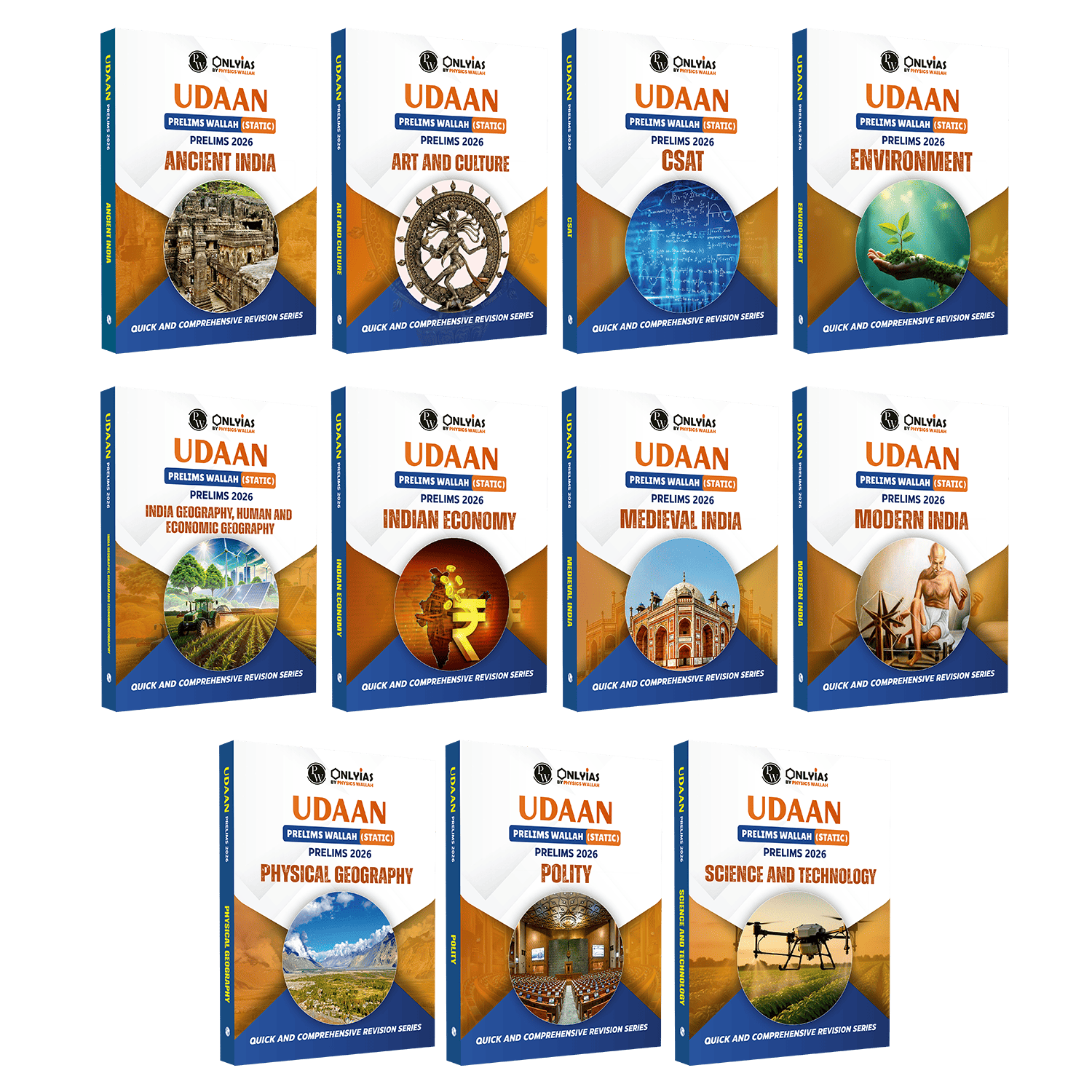
The Udaan Prelims Wallah booklets are organized into 11 key static areas, ensuring no part of the syllabus is left untouched. This structured division helps you complete one topic fully before moving to the next, reducing the stress of a "too-big" syllabus:
-
History: Covers Ancient, Medieval, and Modern India, along with Art & Culture.
-
Geography: Includes Physical, Indian, and Human Geography with detailed mapping.
-
Core Pillars: Comprehensive deep-dives into Indian Polity, Economy, Science & Technology, and Environment.
2. Visual Learning and Retention Tools
Let's face it: memorizing thousands of facts is nearly impossible. That's why these modules use a "visual-first" design:
-
Mind Maps and Flowcharts: These help visualize how concepts like federalism or the monsoon cycle are linked better than plain text could.
-
Bold Keywords: The modules keep high-yield terms bolded so your eyes naturally gravitate toward the most important information during a late-night revision session.
-
Bullet Points: Information is broken down into small, consumable modules, keeping you focused and less overwhelmed.
3. UPSC Prelims Wallah Q&A Bank
Beyond reading theory, the UPSC Prelims Wallah Q&A Bank is where you test your mettle. It offers over 4,000 carefully curated questions. Every question is accompanied by a precise, well-researched explanation that includes the "PW Only IAS Extra Edge"—additional insights that give you a competitive advantage on the final exam day.
Check Out: UPSC Prelims Previous Year Questions
Maximizing Prelims Success Through Structured Revision
"Success in the UPSC requires you to read one book ten times, and not ten books once." The UPSC Prelims study material can easily be incorporated into your daily routine, and you can assess how much you have understood by working on the PYQs that are already included. "Ignite Your Mind" study material has been designed in a way that turns you from a passive learner or reader to an active one.
Read More: UPSC Prelims Syllabus for 2026 Exam
FAQs: PW UPSC Modules and Preparation
-
Are PW UPSC Modules sufficient to clear Prelims 2026?
The UPSC modules will help in covering around 60–70% of the syllabus, and this will be sufficient to secure a cutoff. However, as a general guideline, beginners should refer to NCERTs before proceeding to the Udaan learning modules.
-
What exactly is the "UDAAN Prelims Wallah Static Combo"?
It consists of a complete set of 11 booklets (10 GS and 1 CSAT), and it’s for rapid revision purposes. It deals with topics right from Ancient India to Environment and has PYQs for a total of 15 years in an integrated format so that your preparation stays updated with the latest trends.
-
Can I get a discount on these modules on the PW Store?
Absolutely. PW Store usually provides tremendous discounts. For example, the UDAAN Static Combo for 2026 usually provides a discount of as much as 68%, thus the MRP is significantly reduced.
-
Do these modules help with the CSAT (GS-2) paper?
Yes, The UPSC CSAT study material booklet also contains model questions from the past 10 years (2014-23), 4 mock tests, and quick revision formulas aimed at assisting aspirants in clearing the hurdle of 33% qualifying with ease.
-
How are these different from traditional UPSC books?
Unlike typical book formats that span 800 pages of write-ups, these modules include bullet points, tables, and flowcharts in their content. The modules are more interested in “concise and comprehensive” rather than “exhaustive,” cutting down hours of hard work for you to concentrate in weightage areas.