UPSC Prelims 2027 Preparation: Subject-Wise Strategy
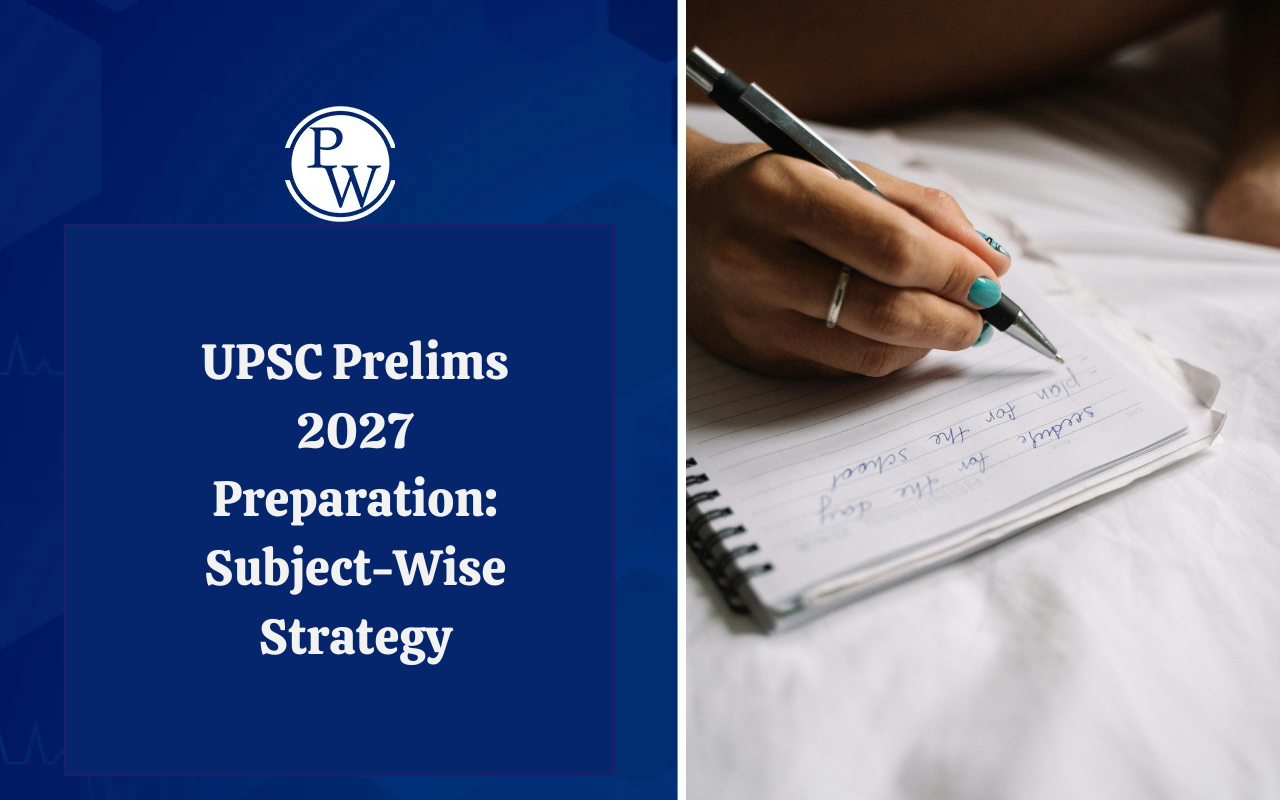
Starting early can make the UPSC journey more organised. The UPSC syllabus covers many subjects, so students need enough time to understand concepts, revise them, and practise questions. A clear plan for UPSC Prelims 2027 preparation can help aspirants divide the syllabus into smaller parts instead of trying to study everything at once.
Good preparation needs a mix of standard books, previous year questions, current affairs, revision, and mock tests. Students should also keep their study resources limited so that they have enough time to revise what they have already studied.
Importance of UPSC Prelims 2027 Preparation
The importance of UPSC Prelims 2027 preparation is that it gives aspirants enough time to cover the large syllabus, understand important concepts, follow current affairs, solve PYQs, and revise regularly.
Starting early can also help students identify weak areas and improve their question-solving skills through practice tests. A planned approach can reduce last-minute pressure and make Prelims preparation more organised.
Why Start UPSC Prelims 2027 Preparation Early?
Early planning gives students more time to cover the syllabus and revise difficult topics. It also allows them to change their plan if they find that a particular subject needs more attention.
-
Building Strong Basics: Start with basic books and standard study material to understand important concepts.
-
Better Time Management: Starting early gives more time for revision, question practice, and tests.
-
Reducing Last-Minute Pressure: Dividing the syllabus across several months can make the workload easier to manage.
-
Finding Weak Areas: Early tests can show which subjects or topics need more study.
-
Making Revision Time: A good plan should leave enough time to return to completed topics.
Students should also use UPSC previous year questions while planning their preparation. PYQs can help them understand the way UPSC has asked questions from different subjects in earlier examinations.
What Are the Key Parts of UPSC Prelims 2027 Preparation?
A strong UPSC Prelims strategy should cover both static subjects and current affairs. Static subjects provide the basic concepts, while current events can help students understand how those concepts are connected to real-world issues.
-
Static Foundation: Build a clear base in subjects such as History, Geography, Polity, Economy, Environment, and General Science.
-
Current Affairs: Follow important national and international developments through reliable sources.
-
Previous Year Questions: Study PYQs to understand the type and wording of questions asked in earlier Prelims papers.
-
Regular Revision: Revise completed topics at regular intervals so that they remain fresh.
-
Testing: Use topic-wise tests first and gradually include full-length mock tests.
-
CSAT Practice: Give regular attention to CSAT instead of leaving it until the final stage.
UPSC Current affairs should not be studied as a completely separate subject. Students can connect news with the related static topic whenever possible. For example, an important constitutional development can be studied along with the relevant Polity concept.
How to Cover Subjects in UPSC Prelims 2027 Preparation?
A good UPSC Prelims preparation strategy should give each subject a clear place in the study schedule. Different subjects need different methods, so students should avoid using exactly the same approach for every topic.
Mastering Polity and Governance for UPSC Prelims Preparation
Polity preparation should begin with the Constitution and basic ideas about how the Indian government and constitutional institutions work. Students should understand concepts instead of trying to memorise every article separately.
-
Study fundamental rights, duties, constitutional bodies, Parliament, the President, the Supreme Court, and other important areas.
-
Revise important constitutional provisions and amendments after understanding their purpose.
-
Follow important developments related to courts, Parliament, government institutions, and public policy.
-
Solve previous year questions to understand how Polity concepts have been tested.
-
Make short notes for difficult provisions and revise them regularly.
Tackling History and Art and Culture in UPSC Prelims Preparation
History covers Ancient, Medieval, and Modern India, while Art and Culture includes many different forms of Indian heritage. Students should divide these areas into smaller sections.
-
Study Ancient and Medieval History to understand major developments, societies, kingdoms, and cultural changes.
-
Give proper attention to Modern Indian History, including the freedom movement and important events.
-
Learn important personalities, organisations, movements, and developments in a clear timeline.
-
Study topics such as architecture, paintings, literature, dance, music, and religious traditions for Art and Culture.
-
Use maps and timelines where they make historical information easier to remember.
-
Practise previous year questions after completing major topics.
Conquering Geography and Environment for UPSC Prelims Preparation
Geography becomes easier when students combine concepts with maps and regular practice. Environment also requires an understanding of basic ecological ideas along with current developments.
-
Study physical and human geography of India and the world.
-
Use maps to learn important rivers, mountains, passes, locations, states, and other geographical features.
-
Understand concepts such as climate, monsoon, soils, resources, agriculture, and natural hazards.
-
Study ecosystems, biodiversity, pollution, conservation, and climate-related topics.
-
Follow important environmental developments and understand their connection with basic concepts.
-
Practise map-based and previous year questions regularly.
Decoding Economy and Social Development for UPSC Prelims 2027 Preparation
Economy can seem difficult when students try to memorise terms without understanding them. Start with basic concepts and then connect them with current economic developments.
-
Understand inflation, interest rates, monetary policy, fiscal policy, taxation, banking, and national income.
-
Learn the basic ideas behind government budgets and important economic policies.
-
Follow major government schemes and understand their purpose and target groups.
-
Revise agriculture, employment, poverty, financial inclusion, and other social development topics.
-
Read important economic updates from reliable sources.
-
Practise questions to check whether you can apply economic concepts.
Integrating General Science and Current Affairs in UPSC Prelims 2027 Preparation
General Science and Technology preparation should focus on understanding basic ideas and their practical uses. Students do not need to memorise every scientific development reported in the news.
-
Cover basic Physics, Chemistry, Biology, and everyday science concepts.
-
Follow important developments in areas such as space, biotechnology, health, artificial intelligence, and defence technology.
-
Understand the basic working and purpose of new technologies rather than memorising only their names.
-
Make short current affairs notes under useful themes.
-
Revise important facts regularly because current affairs can build up quickly.
-
Use previous year questions to understand the level of General Science questions asked in Prelims.
How to Make a Study Plan for UPSC Prelims 2027 Preparation?
A practical UPSC Prelims study plan should include study, revision, current affairs, PYQs, and tests. Students should make daily targets that they can realistically complete instead of creating an extremely heavy timetable.
-
Daily Slotting: Divide study time between static subjects, current affairs, revision, and CSAT practice.
-
Previous Year Questions: Solve UPSC PYQs after completing related topics and review the solutions carefully.
-
Elimination Practice: During tests, practise removing clearly incorrect options based on facts and logical clues.
-
Buffer Periods: Keep some time each week for unfinished topics and unexpected study delays.
-
Weekly Review: Check what was completed, what remains pending, and which areas need more revision.
-
Mock Test Analysis: Do not only check your score. Review wrong, guessed, and unanswered questions to understand the reason behind each mistake.
Students should also avoid changing their resources too often. Completing and revising a small set of reliable resources can be more useful than collecting many books and notes.
UPSC Prelims 2027 Preparation FAQs
What is the ideal timeline to begin UPSC 2027 preparation?
There is no single ideal starting date for every aspirant. Starting early gives students more time to understand the syllabus, build basic concepts, follow current affairs, solve PYQs, and revise. Aspirants starting in 2026 can create a long-term plan that gradually moves from foundation building to revision and testing.
How should I structure my daily UPSC Prelims study plan?
A daily UPSC Prelims study plan can include a static subject, current affairs, revision, and some CSAT or question practice. The exact number of hours depends on the student's schedule. It is better to follow a realistic routine every day than to create a timetable that is difficult to maintain.
Why is an integrated subject-wise UPSC preparation approach necessary?
An integrated approach helps students connect static knowledge with current events. For example, an environmental issue in the news can be studied along with the related ecology concept. This approach can make revision more useful and help students understand topics from more than one angle.
What core materials are required for effective UPSC Prelims preparation strategy?
A useful UPSC Prelims preparation strategy can include NCERTs or other basic books, standard reference books, previous year question papers, reliable current affairs sources, revision notes, and a suitable test series. Students should avoid collecting too many resources and should give enough time to revision.
How do mock tests improve my UPSC Prelims strategy?
Mock tests give students practice in solving questions within a fixed time. They can help identify weak topics, calculation or reading mistakes, and problems with time management. Reviewing the test after completion is important because the analysis can show what needs to be revised before the next test.