How UPSC PYQs Help in Current Affairs Preparation
Aspirants preparing for the Civil Services Examination often feel overwhelmed by the endless volume of daily news, monthly magazines, and government reports. Trying to memorise every event without understanding examiner expectations leads to burnout and poor retention.
Integrating a structured UPSC PYQ book routine solves this challenge by setting clear boundaries around the syllabus. By analysing past papers, candidates learn how static concepts intersect with dynamic developments.
Overview of UPSC PYQ
PYQ refers to the previous years' questions asked in the UPSC Civil Services Examination. These questions help aspirants understand the actual exam pattern, question style, important subjects, and changing trends. Studying past questions also shows how UPSC connects static subjects with current affairs through conceptual and statement-based questions.
A detailed UPSC previous year question analysis can show which topics have been asked repeatedly and how the question style has changed over the years. This makes PYQs useful not only for practice but also for planning current affairs study.
Features of UPSC PYQ
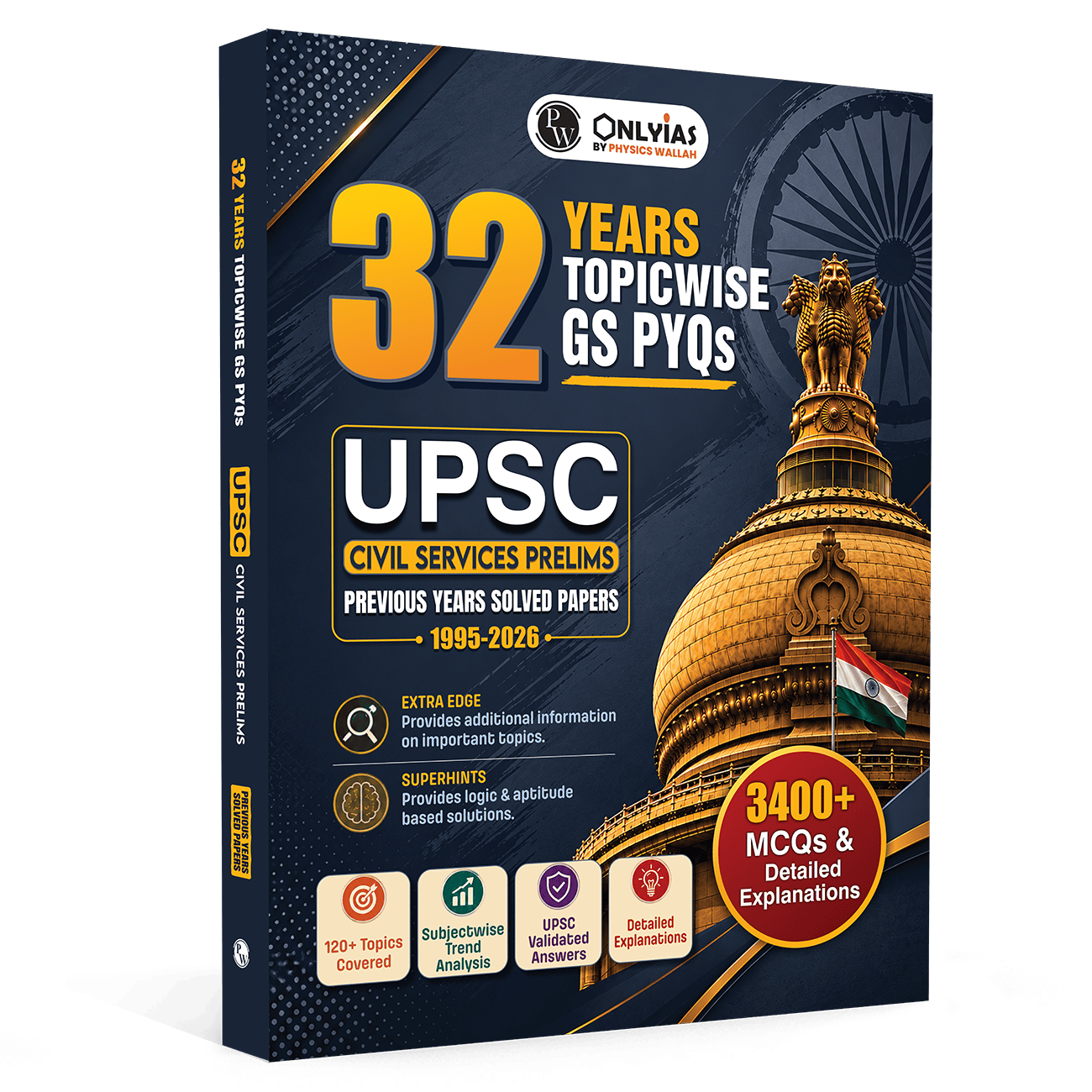
Prepare for UPSC Prelims with 32 years of previous year papers, 3400+ solved MCQs, topic-wise practice, and detailed exam analysis. The book helps you understand the UPSC question pattern, revise important topics, and improve your exam performance.
32 Years of UPSC Prelims Papers (1995–2026): Get UPSC Prelims questions from 1995 to 2026, covering General Studies Paper 1 and CSAT Aptitude Paper 2. Practice these UPSC previous year papers to understand how questions and topics have changed over the years.
3400+ Solved MCQs: Solve more than 3400 authentic UPSC MCQs with clear solutions. These questions provide regular practice and help improve your concepts, accuracy, and confidence.
Topicwise Segregation: Practice questions from 120+ topics, including Polity, Economy, History, Geography, Environment, Science & Technology, Current Affairs, and more. The topic-wise format makes it easier to study and revise one area at a time.
Detailed Option-Wise Solutions: Understand why the correct answer is right and why the other options are wrong. This helps you learn the elimination method and solve tricky questions with better accuracy.
Trend & Pattern Analysis: Study previous year questions to find repeated themes, important topics, high-weightage areas, and changing question trends. This helps you focus your preparation on the right areas.
PWOnlyIAS Extra Edge: Get expert insights, preparation tips, and special “Superhints” to improve your accuracy and make better guesses when you are not sure about an answer.
Updated for UPSC 2027: Prepare according to the latest UPSC Prelims pattern and syllabus expectations. The content is designed to support your preparation for the UPSC 2027 examination.
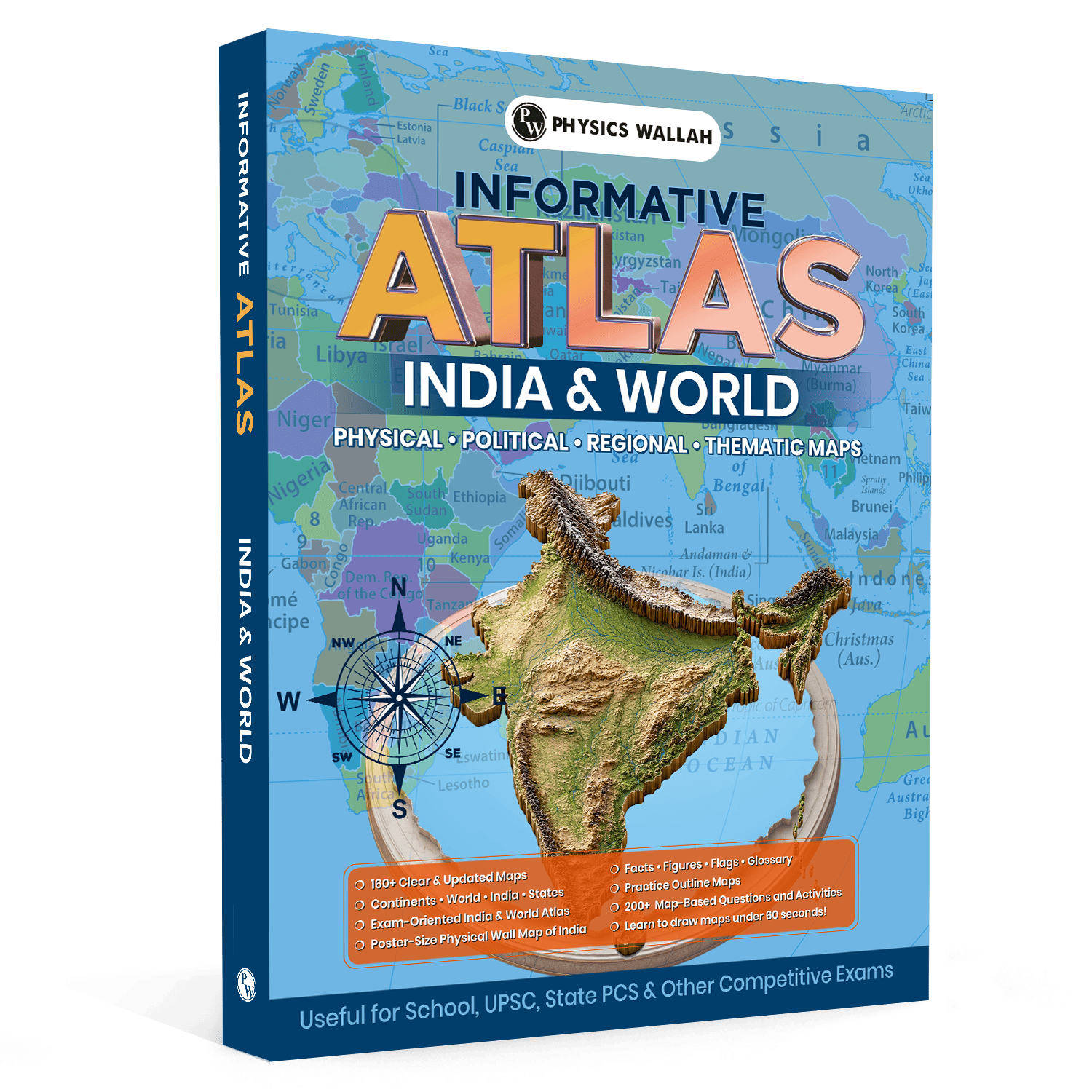
Visual Learning Support: Learn with maps, diagrams, infographics, and other visual aids. These tools make concepts easier to understand and help you revise faster.
Prelims + Mains Integration: Build concepts that are useful for both Prelims and Mains. The detailed explanations help you understand the subject and not just remember the answer.
Strategic Preparation Framework: Use topic-wise question analysis and exam trends to find important areas and set your study priorities. This helps you use your preparation time more effectively.
Why Use UPSC PYQ for Current Affairs Analysis?
Current affairs play an important role in the Civil Services Examination, but many candidates find it difficult to decide what they should study from the daily news. Reading newspapers without connecting the information to the syllabus can make preparation lengthy and confusing.
Studying current affairs and PYQ together helps candidates understand which news topics can become exam questions. Instead of trying to remember every headline, aspirants can focus on events connected with important concepts, government policies, institutions, environment, economy, science, and international relations.
Linking Static Subjects with Dynamic Events
UPSC rarely tests current events as completely separate facts. Questions often test the basic concept behind a recent development. For example, when a monetary policy decision is in the news, the examination may test concepts related to inflation, monetary tools, or the role of the Reserve Bank of India.
Connecting current developments with static subjects creates a stronger learning method:
-
Indian Polity: Legislative amendments, court judgments, government policies, and international agreements can be connected with constitutional provisions and institutional powers.
-
Environment & Ecology: Climate meetings, national parks in news, and species conservation can be linked with ecological concepts, protected areas, and international conventions.
-
Science & Technology: Developments in artificial intelligence, biotechnology, space, and health can be studied along with their basic principles and applications.
-
Indian Economy: Budget announcements, inflation, trade, banking reforms, and financial institutions can be understood through basic economic concepts.
Studying UPSC current affairs with PYQs teaches candidates to look beyond the headline and understand the concept behind a current event.
Identifying Core Themes and Question Mechanics
News changes every day, but the broad areas tested by UPSC often remain important for several years. Previous question trends help candidates identify these recurring areas and understand how current developments can be converted into questions.
|
Subject Domain |
Recurring Dynamic Themes |
Core Focus Area |
|
Polity & Governance |
Constitutional Bodies, Bills & Acts, Rights Issues |
Statutory vs Constitutional powers |
|
Environment |
Protected Areas, Conservation Treaties, Pollution Norms |
IUCN status, geographical features |
|
Economy |
Banking Reforms, External Sector, Inflation Measures |
Institutional frameworks, regulatory roles |
|
Science & Tech |
Emerging Tech, Space Missions, Health & Diseases |
Real-world applications, mechanism principles |
|
Geography |
Places in News, Conflict Zones, River Basins |
Spatial locations, border countries, topography |
Understanding these categories helps candidates filter unnecessary details from newspapers and focus on information that has a clear connection with the UPSC syllabus.
How to Use UPSC PYQ with Daily Current Affairs?
Reading past papers only from one year to another can sometimes create disconnected learning. A more useful approach is to group questions according to subjects and topics. This helps candidates compare old questions with new developments.
Step 1: Categorise Daily Events by Subject
When reading the daily news, connect each important article with a syllabus topic. Following a clear UPSC prelims current affairs strategy ensures that newspaper reading remains focused on the examination.
-
Read the News Item: Identify the main event, organisation, policy, place, or issue mentioned in the report.
-
Find the Related Syllabus Topic: Connect the news with the relevant General Studies subject.
-
Review Related Past Questions: Check whether UPSC has asked questions about the same topic or concept before.
-
Note Important Details: Record useful information such as nodal ministries, constitutional provisions, institutions, locations, schemes, or implementation rules.
This process changes daily news reading from passive reading into active exam preparation.
Step 2: Study Incorrect Options for Future Questions
One of the biggest benefits of PYQ practice is that candidates can study all four options instead of only checking the correct answer. An incorrect option can contain an important term, institution, place, or concept that may become useful later.
-
Option Research: If an option mentions an environmental treaty, international organisation, government scheme, or technology, learn its basic details.
-
Keyword Tracking: Make short notes of important terms that appear repeatedly in questions and options.
-
Future Question Analysis: Think about how a concept mentioned in an older question could be connected with a recent event.
This method forms an important part of PYQ based current affairs preparation because every past question becomes a source of additional learning.
Step 3: Prioritise High-Yield Syllabus Topics
Not every current event needs the same amount of attention. UPSC exam trend analysis can help candidates identify areas that have remained important across different years.
-
High-Yield Sectors: Environmental laws, species in the news, monetary policy, digital technology, space developments, and government schemes.
-
Moderate-Yield Sectors: International organisations, regional economic groups, and important policy initiatives.
-
Low-Yield Sectors: Short-term events, routine appointments, and minor announcements with little connection to the syllabus.
Giving more time to important areas helps candidates manage their daily study schedule better.
What are UPSC PYQ Techniques for Current Affairs?
Solving multiple-choice questions requires more than simple memory. It also requires careful reading, logical thinking, and option elimination. Using UPSC books in daily practice helps candidates understand how UPSC creates difficult statement-based questions.
Mastering the Option Elimination Method
Past papers show common patterns used to create incorrect options. Learning these patterns can help candidates deal with unfamiliar questions.
-
Extreme Statements: Words such as "strictly," "completely," "only," or "all" can make a statement too broad and should be checked carefully.
-
Institutional Swaps: Questions about government schemes may change the nodal ministry, implementing agency, or responsible organisation.
-
Quantitative Statements: Numerical targets, dates, percentages, and budget figures may be changed to create incorrect options.
Learning these patterns supports better UPSC GS preparation. Regular practice also makes elimination faster and more reliable.
Conducting Trend Analysis Across Recent Prelims Papers
Recent papers show that UPSC has increasingly used statement-based questions, multiple statements, matching questions, and conceptual combinations. Candidates should therefore avoid preparing current affairs only through direct fact memorisation.
Regular current affairs revision for UPSC should include important concepts, their background, related static topics, and PYQs. This helps candidates adjust to different question formats and changing difficulty levels.
How UPSC PYQ Book Helps in Current Affairs Revision?
A well-organised PYQ resource can make current affairs revision easier. A dedicated UPSC PYQ book provides a large collection of previous questions that can be studied along with newspaper notes, monthly magazines, and standard books.
Complete Topic-Wise Segregation Across 120 Plus Topics
Instead of keeping questions only in year-wise order, a topic-based arrangement allows candidates to study questions from the same subject together. Subjects such as Polity, Economy, Geography, Environment, and Science & Technology can be divided into smaller areas.
-
Targeted Subject Practice: Complete a textbook chapter and then solve previous questions from the same topic.
-
Clear Topic Boundaries: Understand the connection between static theory and current events.
-
Better Revision: Quickly return to important topics before mock tests and the final examination.
Using a dedicated PYQ resource keeps preparation focused and makes revision easier to manage.
Detailed Option-Wise Explanations and Visual Learning Aids
Knowing only the correct answer is not enough. Candidates should also understand why the other three choices are incorrect. Detailed explanations make it easier to learn concepts from every question.
|
Resource Feature |
Preparation Benefit |
Learning Impact |
|
Option-Wise Decoding |
Clarifies reasoning behind every incorrect choice |
Prevents repeat mistakes and broadens concept knowledge |
|
Maps & Diagrams |
Visualizes geographical sites, river routes, and parks |
Enhances spatial memory for map-based questions |
|
Superhints & Extra Edge |
Delivers high-yield contextual notes on frequent topics |
Provides quick revision notes for final exam prep |
|
Trend Breakdown |
Highlights recent question distribution trends |
Helps identify priority chapters |
Using these features during revision can help candidates connect current events with static concepts and previous questions. Applying practical UPSC preparation tips also makes it easier to approach unfamiliar current affairs questions UPSC with greater confidence.
How to Build a Daily Current Affairs Routine with UPSC PYQ?
A simple daily routine can make current affairs preparation more manageable. Instead of spending many hours trying to cover every piece of news, focus on important events that connect with the UPSC syllabus.
Start by reading the day's important news. Select only the topics that have a clear connection with Polity, Economy, Environment, Science & Technology, Geography, or other General Studies areas.
Next, check related PYQs. If a topic has appeared in previous papers, study the question carefully and understand what UPSC tested. Then add only the useful current information to your notes.
Finally, revise these notes regularly. Connect new information with older concepts instead of creating separate notes for every news article.
This approach makes current affairs preparation more focused and reduces the amount of information that needs to be memorised.
Also Check - UPSC Quarterly Current Affairs Magazine
UPSC PYQ FAQs
How many years of past papers should be solved for current affairs?
Solving 32 years of past papers gives candidates a broad view of how UPSC questions have changed. However, the most recent 7 to 10 years deserve special attention because they provide a clearer idea of recent question styles and statement patterns.
Should past questions be solved year-wise or topic-wise?
Topic-wise practice is useful while studying individual subjects because it helps connect current events with specific concepts. Year-wise papers are more useful after completing the syllabus, especially when candidates want to practise under full exam conditions.
How do past questions help in eliminating wrong options?
Past questions show common patterns in incorrect options, such as extreme statements, changed institutional roles, and incorrect numbers. Studying these patterns helps candidates develop better elimination skills.
Are options from previous questions repeated in subsequent exams?
Exact options may not be repeated, but the concepts, institutions, places, and terms mentioned in them can become important again. Therefore, candidates should study all four options instead of focusing only on the correct answer.