Using Hindi Polity Question Bank for UPSC Prelims 2026 Revision
To prepare for the civil services exam in a particular language, you need good quality resources, which are in accordance with the official syllabus. Many aspirants have a hard time looking for the right mock questions, which are similar to the actual pattern of the exam. One such way to fill this gap is to create a dedicated UPSC Indian polity question bank Hindi which will ensure that the core topics of the constitution are covered in a comprehensive manner.
Importance of UPSC Indian Polity Question Bank Hindi
Succeeding in the preparatory stage takes more than just reading textbooks. Aspirants need to apply their knowledge to challenging, multiple-choice questions. A dedicated UPSC Indian polity question bank Hindi provides targeted practice that helps candidates learn the fine nuances of legal and administrative terminology translated precisely into Hindi.
The use of resource materials in the primary language of examination eliminates confusion due to translation. Gives you a chance to become comfortable with the formal language of the commission. This focused approach is the main aspect of hindi medium effective preparation and it helps the students to save their valuable time in the actual examination.
The regular practice of good quality question bank ensures that you not only memorise facts but also understand the practical application of it. It teaches you to quickly eliminate incorrect options. This systematic elimination technique is important to clear the high cut-offs in the recent prelims.
Features of a UPSC Indian Polity Question Bank Hindi
Not all practice UPSC books are created equal. A reliable study resource must offer a structured breakdown of the syllabus to ensure systematic coverage. Look for resources that divide topics logically so you can test your knowledge immediately after studying a particular chapter.
An excellent resource for constitution practice in Hindi should contain specific elements to maximize your learning efficiency:
-
Detailed Explanations: Every question must have a clear rationale for the correct answer, helping clarify underlying concepts.
-
Previous Years Questions: Integration of past exam trends helps aspirants gauge the actual difficulty level.
-
Error Analysis Sheets: Space or formats that allow students to track their recurring mistakes.
-
Varying Difficulty Levels: Questions ranging from basic factual checks to complex conceptual statements.
|
Feature |
Benefit to Aspirant |
|
Chronological alignment |
Helps link historical acts with current articles |
|
Bilingual terminology notes |
Clears doubts regarding tricky Hindi legal phrases |
|
Trend-based weightage |
Focuses energy on high-yielding operational topics |
How to Revise with an UPSC Indian Polity Question Bank
Without a well-knitted plan, the huge syllabus can be attacked in a piecemeal manner. Your weekly routine should be a mixture of reading standard reference books and solving questions rigorously. When you practice in fixed blocks of time, you are always checking your theory with practice.
A structured roadmap makes your Hindi polity revision highly productive:
-
Phase One: Read a specific constitutional topic from your primary study material.
-
Phase Two: Open the UPSC question bank in Hindi and solve corresponding questions.
-
Phase Three: Analyze all wrong answers and read the explanations thoroughly.
-
Phase Four: Note down weak areas in a separate diary for quick review later.
Consistency across these phases creates deep conceptual clarity. It helps you avoid backlog and assures you complete the entire administrative framework way before the exam date. This controlled loop.
How an UPSC Indian Polity Question Bank Hindi Improves Chapter-Wise Revision
Covering the full course in one go can be intimidating. By breaking the subject into smaller pieces, you can concentrate more deeply and remember better. A revision strategy helps to give individual specific attention to significant topics like the Preamble, Fundamental Rights and Directive Principles.
You could break your practice down into chapters to avoid confusion between overlapping constitutional provisions. For instance, after reading about the Union-State interactions, practising questions on Federalism makes the financial and parliamentary allocations evident. This will help you master the finer points that the exam often probes.
Focusing on Core Constitutional Pillars
Certain sections of the syllabus carry a higher weightage in the preliminary exam almost every year. Prioritizing these areas during your constitution practice Hindi sessions guarantees a solid foundation for your overall score.
-
Fundamental Rights and Duties: Highly conceptual areas where statement-based questions are common.
-
The Executive System: Understanding the powers of the President, Prime Minister, and Governors.
-
Judiciary Structure: Deep dive into the Supreme Court, High Courts, and judicial review mechanisms.
-
Local Self-Government: Focus on the 73rd and 74th Amendments, which are recurring favorites.
Learning these core pillars requires repeated exposure to diverse question formats. By tackling varied scenarios, you train your brain to spot traps in tricky options, which is a major advantage for anyone targeting the UPSC Prelims in Hindi.
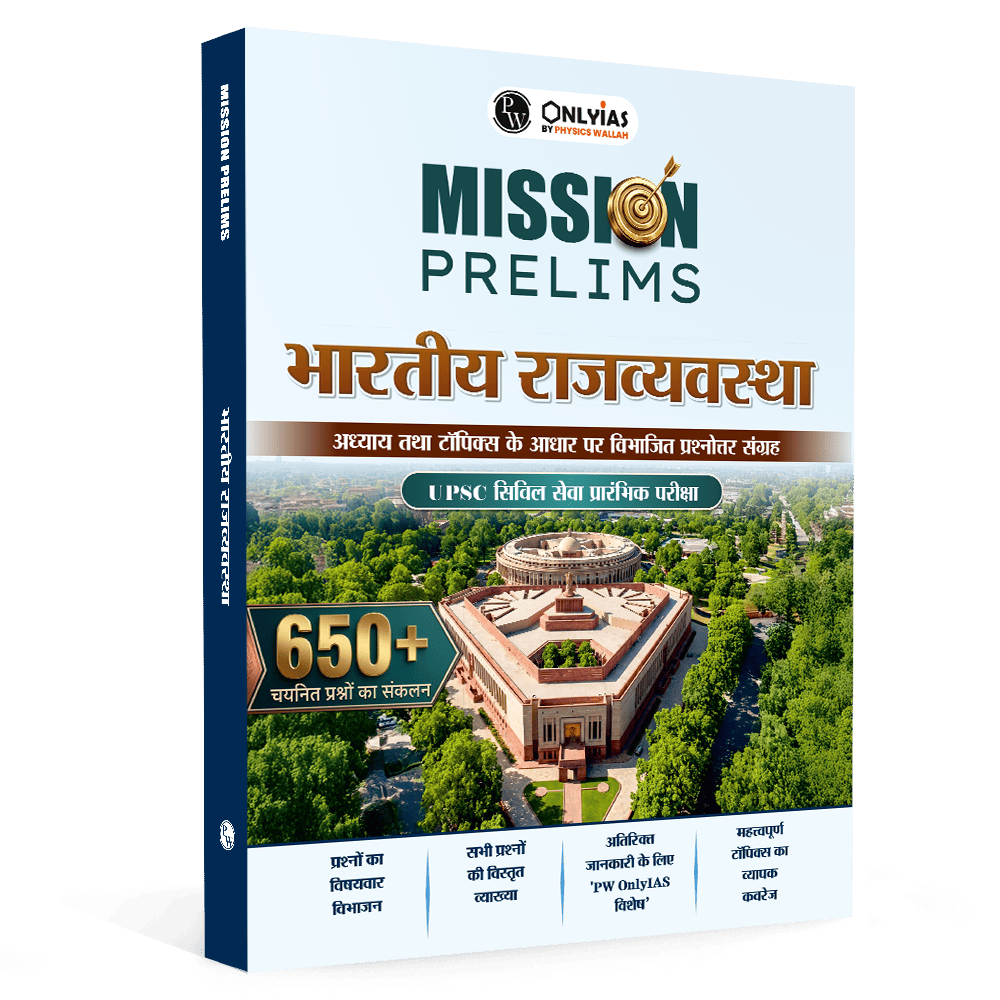
To reinforce your preparation, practise regularly with an UPSC PYQ Book, which contains authentic previous year questions along with detailed explanations and topic-wise analysis. Solving PYQs helps you understand the UPSC question pattern, improve conceptual clarity, and develop the analytical skills needed to eliminate incorrect options with confidence.
Topics Covered in an UPSC Indian Polity Question Bank Hindi
Knowing the estimated distribution of questions on important sub-topics helps you organize your preparation efficiently. The specific pattern could differ from one period to the next, but historical tendencies provide you an indication where your biggest efforts should be directed throughout practice.
|
Constitutional Unit |
Approximate Weightage |
Focus Area |
|
Constitutional Framework |
Around 20% |
Historical background, Preamble, and Amendments |
|
Central & State Government |
Around 35% |
Parliament, State Legislatures, and Executives |
|
Local Government & Bodies |
Around 15% |
Panchayati Raj, Municipalities, Statutory bodies |
|
Constitutional Dimensions |
Around 30% |
Judiciary, Fundamental Rights, and Emergency provisions |
Evaluating your performance against these specific units helps identify whether your weak spots lie in factual retention or conceptual clarity. This insight allows you to fine-tune your schedule, ensuring that no major unit is left under-prepared before entering the examination hall. To strengthen your preparation further, you can complement your revision with the UPSC Prelims Wallah Mission Prelims Combo Set, which offers comprehensive subject-wise study material, practice questions, revision content, and exam-oriented resources aligned with the latest UPSC syllabus, helping you prepare systematically for the UPSC Prelims examination.
How an UPSC Indian Polity Question Bank Hindi Solves Hindi-Medium Challenges
Aspirants choosing the Hindi medium often face unique roadblocks that can hinder their progress if not addressed early. Identifying these hurdles allows you to create active countermeasures, ensuring your hard work translates into a high merit rank.
One major hurdle is the presence of overly complex or literal translations in test series, which do not match the official exam standards. Practicing with an authentic question bank hindi ensures you get used to the exact language style used in the actual civil services paper.
Another common challenge is managing time efficiently while reading lengthy passages in Hindi. Regular reading and solving exercises increase your reading speed and comprehension accuracy. This habitual practice reduces anxiety and boosts your confidence significantly during mock tests.
UPSC Indian Polity Question Bank Hindi Revision Tips
The last few days before the preliminary exam should be reserved exclusively for streamlining what you have already learned. Avoid picking up entirely new books or complex theoretical topics during this period, as it can cause unnecessary confusion.
-
Focus on Mistakes: Review the error logs compiled during your chapterwise revision sessions.
-
Simulate Exam Conditions: Solve full-length papers during the exact hours of the actual exam.
-
Revise Landmark Judgments: Keep a concise list of major legal cases and constitutional amendments handy.
-
Limit New Inputs: Stick strictly to your trusted UPSC Indian polity question bank in Hindi and core notes.
Following these final steps ensures that your mind remains calm, sharp, and focused on execution. Trusting your Hindi medium preparation framework and keeping your practice highly structured will help you unlock your maximum potential on exam day.
Read More: UPSC Indian Polity Importance Question for Exam Preparation
UPSC Indian Polity Question Bank FAQs
How does a UPSC Indian polity question bank in Hindi improve conceptual clarity?
It tests your understanding through varied statement-based questions, forcing you to apply theoretical knowledge to specific administrative scenarios, which uncovers hidden gaps in your learning.
Why is chapterwise revision recommended over full-length tests initially?
It allows you to understand one specific topic completely before moving to the next, ensuring that basic concepts are solid before you attempt comprehensive mock papers.
What role does constitution practice Hindi play in time management?
Regular practice builds familiarity with formal Hindi administrative terms, which helps you read, comprehend, and solve the actual exam questions much faster.
Can I rely on this resource for the UPSC prelims Hindi paper completely?
While a question bank is essential for practice and application, it must be paired with standard reference texts to build the initial theoretical foundation.
How often should I include Hindi polity revision in my weekly schedule?
It is ideal to allocate at least two to three sessions per week for practice and revision alongside your regular current affairs updates to maintain peak retention.