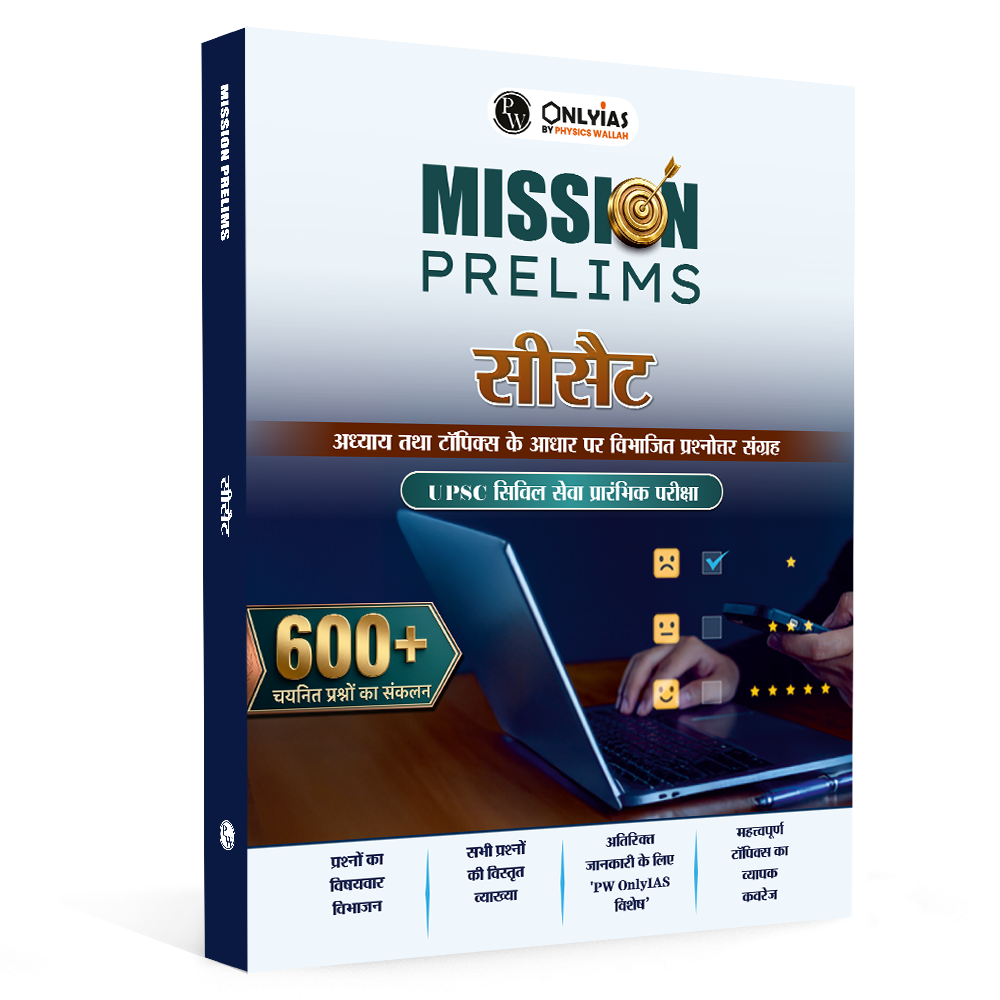
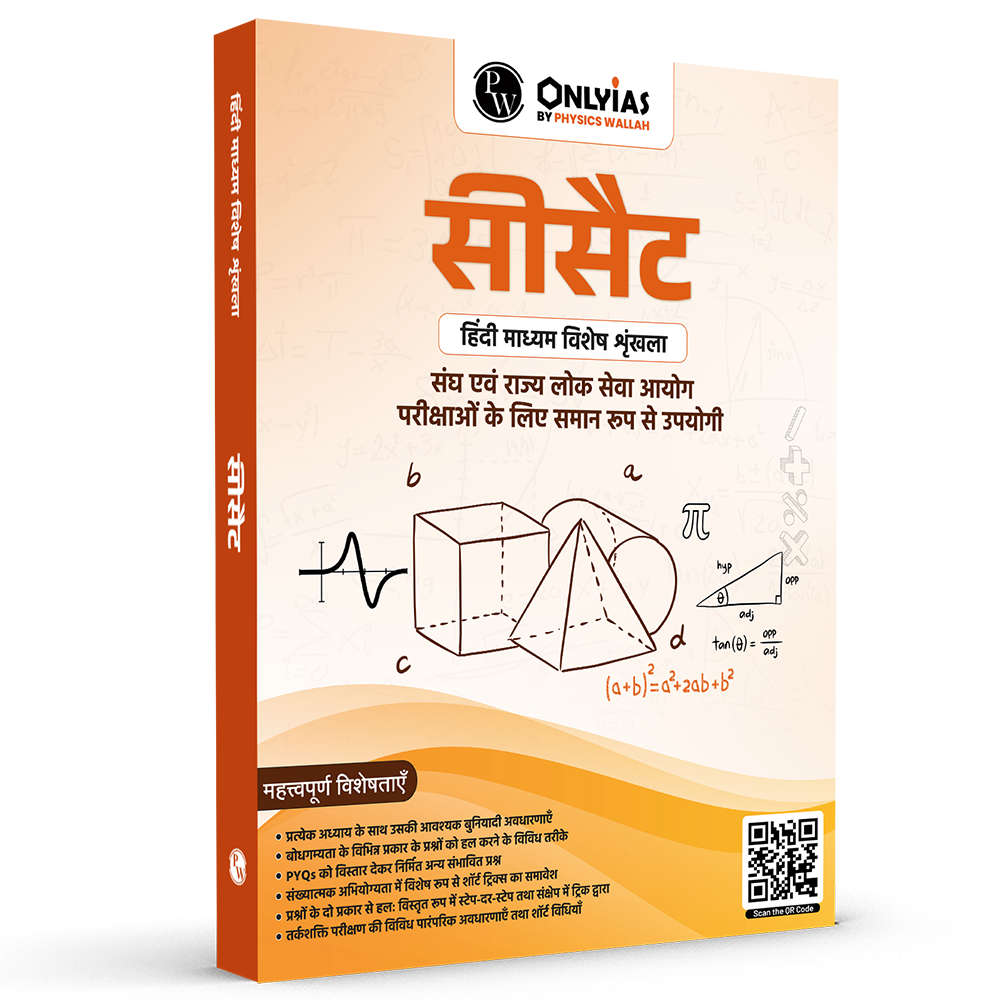
Using Mission CSAT Hindi Edition for Daily Aptitude Practice
Cracking UPSC Civil Services Examination requires a balanced approach but many aspirants fail at the first hurdle itself, that is Civil Services Aptitude Test (CSAT). It is a tough challenge for Hindi medium students to find quality preparation material in sync with the changing exam pattern. Dedicated UPSC CSAT question bank hindi is one of the best way to build speed, accuracy and deep conceptual clarity. This article will teach you how to integrate structured resources into your routine in order to ace the aptitude test.
Common Challenges Solved by an UPSC CSAT Question Bank Hindi
The CSAT paper has become increasingly unpredictable over the last few years. Many candidates who clear the General Studies Paper 1 easily find themselves struggling to score the required 33% marks in Paper 2. This issue is often more acute for the UPSC community due to a lack of well-translated, standard practice materials.
Aspirants often face specific hurdles during their preparation journey:
-
Complex Language: Standard math and logic terms translated poorly into Hindi can confuse readers during the actual exam.
-
Lack of Sectional Practice: Relying only on full-length mock tests without building core topic-wise strength leads to poor time management.
-
Fear of Math: Students from non-engineering backgrounds often develop anxiety toward quantitative sections.
Benefits of an UPSC CSAT Question Bank Hindi
To overcome these hurdles, you need a structured repository of questions. A high-quality question bank bridges the gap between basic conceptual understanding and exam-level problem-solving. It helps you familiarise yourself with the exact vocabulary and tone used in the official UPSC question papers.
|
Benefit of Question Bank |
Impact on Preparation |
|
Language Alignment |
Helps you grasp technical terms in Hindi easily. |
|
Pattern Recognition |
Exposes you to various permutations of a single concept. |
|
Error Tracking |
Allows you to identify weak areas before the final exam. |
How to Plan Daily Practice with an UPSC CSAT Question Bank Hindi
Consistency beats cramming when it comes to aptitude questions. Setting aside a specific time every day for daily CSAT practice ensures that your brain stays sharp and conditioned for problem-solving. You do not need to study for five hours straight; around one to two hours of focused daily practice is more than enough.
1. Step-by-Step Daily Routine
-
Allocate Time: Choose a fixed slot, preferably in the afternoon, as the actual CSAT exam takes place from 2:30 PM to 4:30 PM.
-
Pick a Single Topic: Focus on one specific area, like percentages or syllogisms, instead of mixing multiple concepts initially.
-
Solve Without a Timer First: Focus entirely on accuracy and understanding the core method during the early stages.
-
Introduce the Clock: Once comfortable, try solving around fifteen to twenty questions within a strict time frame.
2. Balacing the Three Key Pillars
The CSAT paper is mainly broken into three parts including Quantitative Aptitude, Logical Reasoning and Reading Comprehension. In your daily routine, you should spread time throughout these areas evenly over a week
Build a strong foundation for the Civil Services Examination with UPSC Books that offer comprehensive theory, concept-based learning, chapter-wise practice, and exam-oriented content across General Studies subjects.
These resources help improve conceptual clarity, strengthen analytical thinking, and support systematic preparation for both the UPSC Prelims and Mains.
How an UPSC CSAT Question Bank Hindi Improves Quantitative Aptitude
The mathematics section often carries significant weight in the paper. To clear this section, you must move away from rote memorisation and focus on core principles. The Mission CSAT hindi book provides a structured layout of topics, starting from basic arithmetic to advanced permutations.
Core Topics to Prioritise
-
Number System: This area dominates the paper, covering topics like divisibility rules, remainders, and prime numbers.
-
Percentages and Averages: These form the foundational base for data interpretation problems.
-
Ratio and Proportion: Crucial for solving partnership, age-based, and mixture problems quickly.
-
Time, Speed, and Distance: Focus on relative speed, trains, and upstream-downstream concepts.
Strengthen your exam preparation with an UPSC PYQ Book that compiles authentic previous year questions along with detailed explanations and topic-wise analysis.
Regular practice helps you understand question trends, identify high-weightage topics, improve conceptual clarity, and prepare effectively for both the UPSC Prelims and Mains.
How to Improve Logical Reasoning with an UPSC CSAT Question Bank Hindi
Logical reasoning is often considered the most scoring part of the paper. It demands sharp analytical skills rather than mathematical calculations. Engaging in regular practice helps your brain identify patterns quickly, saving precious minutes during the exam.
Effective Strategies for Reasoning
-
Visual Representation: Use Venn diagrams for syllogisms and family tree diagrams for blood relation problems.
-
Systematic Layouts: For seating arrangements, draw out all possible cases parallelly to avoid confusion.
-
Elimination Method: Look at the options closely; often, three out of four choices can be discarded through basic logic.
How an UPSC CSAT Question Bank Hindi Improves Reading Comprehension
For many hindi medium UPSC students, reading comprehension can be a double-edged sword. While the passages are in Hindi, the phrasing can sometimes be abstract or philosophical.
-
Read the Questions First: Glancing at the questions before reading the passage helps you look for specific answers.
-
Avoid Outside Assumptions: Base your answers strictly on the information given in the passage, even if it contradicts real-world facts.
-
Focus on Keywords: Look closely for transition words like 'although', 'therefore', or 'however' to grasp the author's core argument.
Last-Minute Revision with an UPSC CSAT Question Bank Hindi
As the prelims date approaches, your strategy must shift from learning new topics to solidifying what you already know. An effective CSAT revision plan ensures that you do not panic in the exam hall.
-
Review Past Mistakes: Go through your error log to see where you frequently make silly calculation mistakes.
-
Solve Sectional Tests: Take short, twenty-minute tests to build mental stamina and quick decision-making skills.
-
Focus on High-Yield Areas: Spend more time refining topics like the number system and basic logic puzzles, which appear every year.
How to Track Your Progress with an UPSC CSAT Question Bank Hindi
Practising without tracking is like driving without a map. Keep a simple logbook or spreadsheet to record your daily performance metrics.
Key Metrics to Monitor
-
Accuracy Rate: The percentage of correctly solved questions out of total attempted ones. Aim for around eighty percent accuracy.
-
Time Per Question: Track how many minutes you spend on a single question bank problem.
-
Skipped Questions: Note down the types of questions you routinely skip; this highlights areas that require a conceptual revisit.
Read More: Important Topics for UPSC Prelims Subject-Wise
Mission CSAT Hindi Edition FAQs
Q1: How many hours should I dedicate to daily CSAT practice?
A1: Spending around one to two hours daily is sufficient for most aspirants. Focus on solving quality problems from a reliable question bank rather than counting the hours spent at your study desk.
Q2: Is the Mission CSAT hindi book suitable for beginners who have a weak background in mathematics?
A2: Yes, this book is designed to explain concepts from the ground up. It helps students from non-math backgrounds build their skills gradually through step-by-step explanations.
Q3: How should UPSC aspirants approach complex analytical reasoning practice?
A3: Aspirants should break down complex puzzles into smaller, visual parts. Regular practice using charts and diagrams makes it much easier to handle tricky questions in the actual exam hall.
Q4: What role does an accurate UPSC CSAT question bank play in final CSAT revision?
A4: During the final weeks, an accurate question bank helps you quickly review high-yield topics, practice past paper trends, and build the speed necessary to clear the qualifying cutoff comfortably.
Q5: Can I rely solely on reading comprehension to clear the hindi medium UPSC CSAT paper?
A5: Relying on just one section is highly risky because the difficulty level varies every year. A balanced approach combining comprehension with steady mathematical and reasoning practice ensures a safer margin of victory.