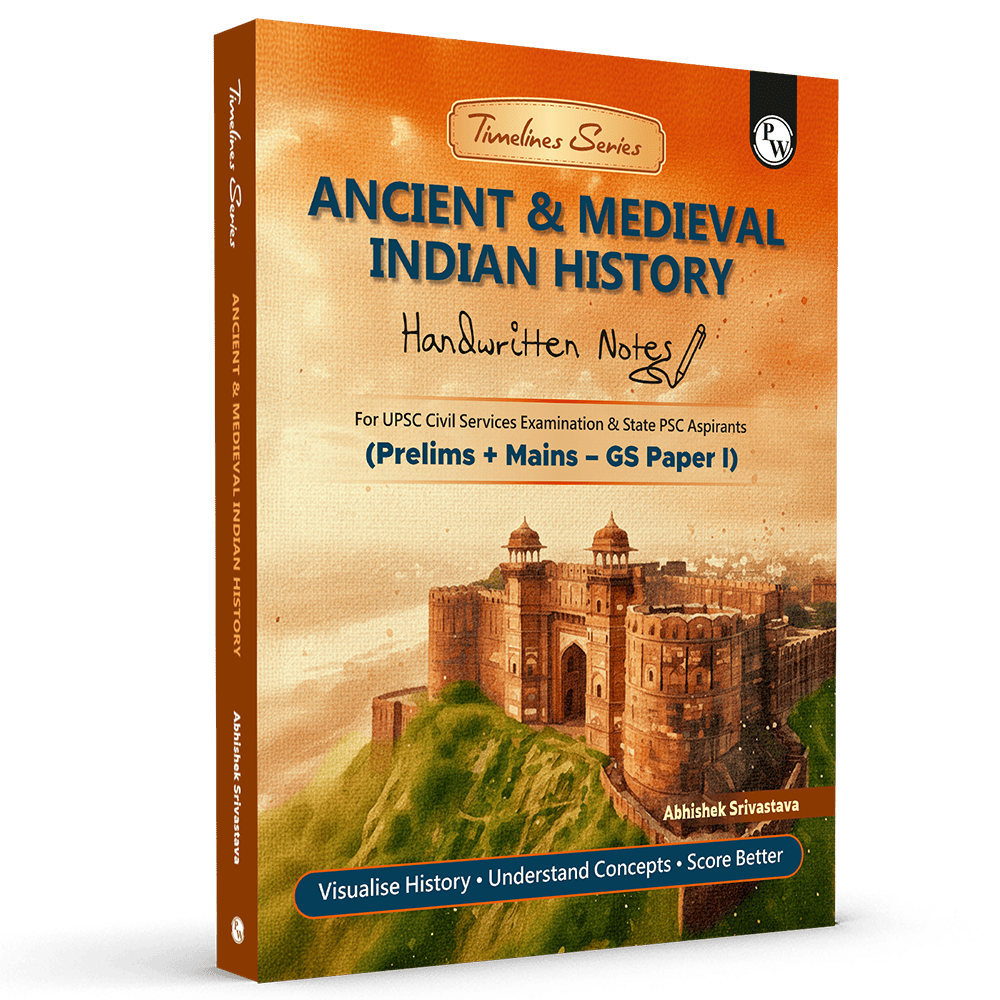
What does UPSC Ancient Medieval History Handwritten Notes Book Cover
Preparing for the Civil Services Examination requires a clear strategy, especially when tackling vast historical periods. Many aspirants struggle to consolidate extensive textbook material into actionable revision patterns.
This is where quality UPSC ancient medieval history notes become essential. This article covers how curated handwritten material streamlines your study routine, helps you link historical developments, and equips you with the analytical tools needed to score highly in General Studies Paper 1.
Overview of UPSC Ancient Medieval History Notes
The UPSC ancient medieval history notes serve as a meticulously structured study aid designed to transform complex factual descriptions into clear, conceptual frameworks. History is frequently viewed as a subject dominated by heavy memorisation, but this resource balances conceptual depth with core exam relevance.
The material serves as an all-inclusive companion for both beginners starting their preparation journey and seasoned repeaters looking to quicken their revision cycles. By integrating static themes with contemporary analytical perspectives, the notes ensure you do not just read facts but understand the underlying historical processes.
Features of UPSC Ancient Medieval History Notes
The unique features of this compilation set it apart from standard textbooks. The prominent features include:
-
Authentic Handwritten Format: Designed to look like natural student notes, which reduces reading fatigue and mimics high-scoring answer structures.
-
Current Affairs Integration: Connects static historical contexts with relevant modern developments, such as newly discovered archaeological sites or national heritage celebrations, enabling multidimensional answers.
-
UPSC PYQs & Revision Sheets: Contains integrated Previous Year Questions from both Prelims and Mains alongside targeted revision sheets to keep your studies fully exam-oriented.
-
Comprehensive History Coverage: Maintains a balanced focus on political, social, economic, religious, and cultural aspects.
Topics Covered in UPSC Ancient Medieval History Notes
This comprehensive text covers the entirety of the GS Paper 1 syllabus for the relevant historical periods. The material is divided logically to ensure that no critical period or transition is left unaddressed.
-
Prehistoric Era and Indus Valley Civilization: Detailed breakdowns of societal evolution, town planning, trade networks, and religious beliefs.
-
Vedic Period and Mahajanapadas: Comparative analysis of Early and Later Vedic societies alongside the rise of territorial states.
-
Religious Movements: Deep dives into the origin, philosophy, and architectural impacts of Buddhism and Jainism.
-
The Mauryan and Post-Mauryan Empires: Administrative structures, Ashoka's Dhamma, and regional kingdoms.
-
Gupta and Post-Gupta Periods: The golden age of literature, science, and the subsequent transition to early medieval feudal structures.
-
Early Medieval Transitions: The tripartite struggle, regional kingdoms of the South, and socio-economic changes.
-
The Delhi Sultanate: Administrative systems, market reforms, and cultural syntheses.
-
The Mughal Empire: Detailed insights into land revenue systems, religious policies, and architectural achievements.
-
Vijayanagara and Bahmani Kingdoms: Administrative distinctiveness, art, and travelers' accounts.
How UPSC Ancient Medieval History Notes Cover Ancient India?
The coverage of ancient Indian history within the UPSC ancient medieval history notes shifts the focus away from isolated dates and toward understanding continuous socio-economic developments. For example, the transition from nomadic communities to organised urban settlements during the Indus Valley Civilization is explained through clear historical progression and connected themes.
The material also places strong emphasis on cultural evolution, showing how early philosophical traditions influenced later developments in literature, architecture, governance, and art forms.
By using this resource, aspirants gain access to an authentic handwritten-style format that creates a more engaging and revision-friendly experience. The clean visual presentation supports better retention and analytical understanding during self-study. To build a stronger conceptual base and connect notes with detailed explanations, students can complement revision with structured UPSC Textbooks for more comprehensive coverage of Ancient and Medieval History topics.
How UPSC Ancient Medieval History Notes Organise Important Events and Dynasties?
Organisation is a vital strength of these notes. The resource uses systematic chronological tools to help students build visual memory. Key tools include:
|
Organisation Tool |
Purpose & Usage in Notes |
|
Timelines |
Trace the rise and fall of major empires sequentially to avoid chronological confusion. |
|
Maps |
Mark territorial extents, trade routes, and prominent archaeological sites accurately. |
|
Mind Maps |
Break down complex concepts like administrative hierarchies or cultural features into scannable branches. |
Benefits of Studying with UPSC Ancient Medieval History Notes
Using specialized ancient and medieval history notes for UPSC provides clear competitive advantages.
-
Saves Significant Time: Eliminates the need to read multiple voluminous reference books by consolidating crucial insights in one place.
-
Enhances Visual Retention: The heavy reliance on mind maps and diagrams helps you recall intricate administrative structures during high-pressure exam scenarios.
-
Improves Answer Quality: The thematic division naturally coaches your brain to write well-rounded multi-dimensional answers covering social, economic, and cultural spheres.
-
Streamlines Last-Minute Revision: Acts as an excellent set of UPSC history short notes for revision that you can easily read through in the final days before the exam.
How to Use UPSC Ancient Medieval History Notes
To extract maximum value from this UPSC history study material, consider adopting a systematic, multi-layered study routine.
-
First Reading: Read through the notes alongside basic UPSC NCERT textbooks to build a foundational narrative without trying to memorise everything immediately.
-
Second Reading with Maps: Focus on the territorial maps and timelines to understand the geographical contexts of battles, trade networks, and empire boundaries.
-
Integrate PYQs: Solve the provided Previous Year Questions right after finishing a topic to evaluate your conceptual clarity.
-
Active Active Recall: Use the mind maps and short revision sheets regularly to test your memory retention before jumping into mock tests.
Common Mistakes to Avoid While Using UPSC Ancient Medieval History Notes
Even with high-quality UPSC history handwritten notes, poor study habits can limit your progress. Be careful to avoid these common pitfalls:
-
Relying on Rote Memorisation: Avoid memorising dates blindly without understanding the underlying socio-economic reasons for historical changes.
-
Ignoring Cultural Themes: The Civil Services Exam heavily emphasizes art, culture, and social history over political wars; never skip these sections.
-
Neglecting Main Answer Writing: Do not wait until after the Prelims to start practicing answers; use the structural layouts in these handwritten notes to start drafting answers early.
-
Overloading Resources: Avoid reading multiple books on the same topic simultaneously. Stick to this consolidated material and revise it multiple times.
Read More: UPSC Ancient & Medieval History Handwritten Notes for UPSC Preparation
UPSC Ancient Medieval History Notes FAQs
What makes these UPSC ancient medieval history notes different from standard textbooks?
These notes provide a highly structured, authentic handwritten format that filters out unnecessary fluff. They consolidate political, social, and economic themes into concise timelines, maps, and mind maps, making them exceptionally practical for quick revision and answer writing.
Are these notes sufficient for both Prelims and Mains exams?
Yes, the material maintains a comprehensive focus on both factual clarity for Prelims and analytical depth for Mains GS Paper 1. It also integrates static themes with contemporary developments to assist in writing multidimensional answers.
How is current affairs integrated into these history notes?
The material actively links historical heritage and archaeological sites with recent discoveries, cultural festivals, and preservation initiatives mentioned in current news cycles, helping you write unique answers.
Do these notes include past exam questions?
Yes, the material features integrated UPSC Previous Year Questions (PYQs) along with focused revision sheets to ensure your preparation matches actual examination patterns.