What Happens If You Skip UPSC Previous Year Questions?

Every year, thousands of dedicated civil services aspirants devote 10 to 12 hours daily to standard textbooks, current affairs magazines, and extensive test series. Yet, a massive number fail to clear the Preliminary stage. The underlying issue rarely stems from a lack of hard work or intelligence. Instead, it frequently traces back to a fundamental misstep in their UPSC exam preparation tips: neglecting UPSC previous year papers.
Treating real examination archives as optional revision material rather than the primary compass of your preparation creates a severe disconnect between what you study and what the Union Public Service Commission actually tests.
Overview of UPSC Previous Year Papers
Previous Year Papers are an important resource for understanding the actual exam pattern, question style, difficulty level, and important topics asked by the Union Public Service Commission. Solving past papers helps aspirants identify recurring concepts, understand topic weightage, and improve speed and accuracy.
Topic-wise practice is useful during the early stages of preparation, while full-length papers help build exam confidence and time management. Regular analysis of previous year questions also helps candidates identify weak areas and plan their revision more effectively for UPSC Prelims.
Why Are UPSC Previous Year Papers Important?
Understanding why solve UPSC PYQs becomes clear once you realize that standard mock tests merely attempt to replicate the exam. Real past papers, however, represent the exact mind of the paper setter. The benefits of UPSC PYQ book extend far beyond basic practice; they serve as the absolute benchmark for tone, depth, and option framing.
-
Deconstructing the Examiner's Mindset: The Commission frames questions with specific nuances, subtle traps, and distinct linguistic clues. Practicing authentic papers trains your brain to spot these cues instantly during high-pressure exam conditions.
-
Targeting High-Yield Core Topics: While syllabus outlines appear vast, certain core themes repeat year after year. A thorough UPSC prelims PYQ analysis reveals that topics like Money Supply in Economy, Preamble/Rights in Polity, or National Parks in Environment appear with remarkable regularity.
-
Refining Intelligent Elimination: Modern Prelims papers test far more than simple rote recall. Working through previous year questions for UPSC prelims helps you master elimination techniques, logical educated guessing, and risk assessment when stuck between two options.
Features of UPSC Previous Year Papers
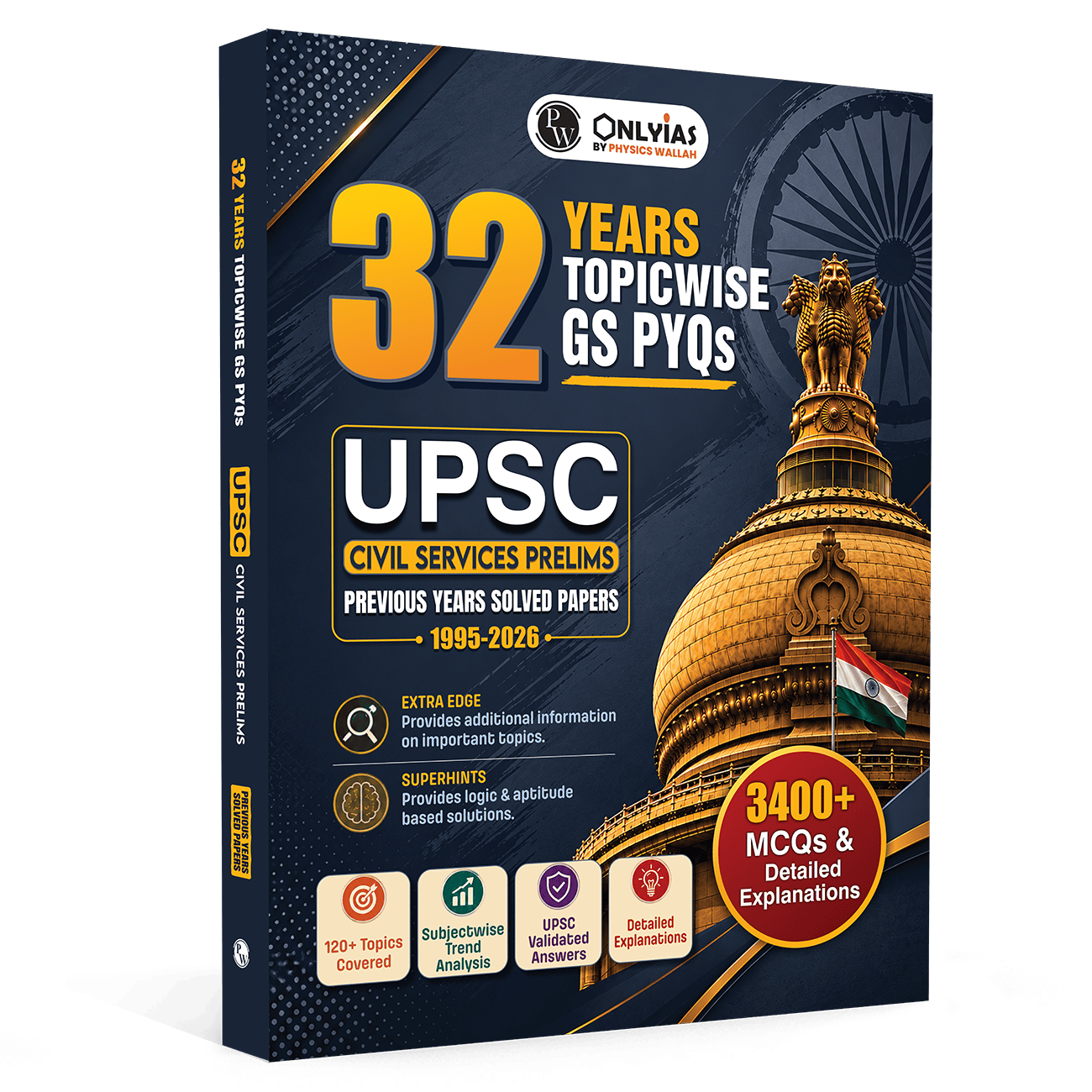
Prepare for UPSC Prelims with a complete collection of previous year papers, solved MCQs, detailed explanations, and exam trend analysis. The book helps you understand important topics, improve accuracy, and plan your preparation in a focused way.
32 Years of UPSC Prelims Papers (1995–2026): Practice 32 years of UPSC Prelims questions from 1995 to 2026. The book covers General Studies Paper 1 and CSAT Aptitude Paper 2 to provide complete previous year question practice.
3400+ Solved MCQs: Practice more than 3400 authentic UPSC questions with detailed solutions. Regular practice helps strengthen concepts, improve accuracy, and understand the type of questions asked in the exam.
Topicwise Segregation: Get questions arranged across 120+ topics, including Polity, Economy, History, Geography, Environment, Science & Technology, Current Affairs, and more. This makes topic-wise practice and revision easier.
Detailed Option-Wise Solutions: Understand the correct answer along with the reason behind each option. The detailed solutions also help you learn how to remove incorrect options and improve your accuracy in the exam.
Trend & Pattern Analysis: Understand recurring topics, important themes, high-weightage areas, and changing question patterns from previous UPSC exams. Use these insights to plan your preparation better.
PWOnlyIAS Extra Edge: Get expert insights, preparation tips, and special “Superhints” to improve accuracy and make better choices when solving questions.
Updated for UPSC 2027: Prepare according to the latest UPSC Prelims pattern and syllabus expectations. The content is designed to support your preparation for the UPSC 2027 examination.
Visual Learning Support: Learn important concepts with the help of maps, diagrams, infographics, and other visual aids. These resources make difficult topics easier to understand and revise.
Prelims + Mains Integration: Build strong concepts that are useful for both Prelims and Mains. The questions and explanations help develop a better understanding of important subjects.
Strategic Preparation Framework: Plan your preparation using topic-wise trends, question analysis, and important areas. This helps you prioritize topics and use your study time more effectively.
What Happens If You Skip UPSC Previous Year Papers?
Ignoring UPSC previous year papers leaves huge blind spots in your revision strategy. Candidates who bypass past questions often experience specific, preventable failures on exam day.
1. Misalignment of Effort and Priority
Without past paper insights, candidates treat every textbook chapter with equal importance. You might spend three weeks memorizing obscure medieval administrative terms while skipping high-yield modern Indian history themes that appear almost every single year.
2. Inability to Handle Evolving Question Trends
The Commission frequently alters its question formats—shifting from standard four-option questions to statement-based pairs or match-the-following types. Candidates who do not analyze past papers face severe anxiety and poor time management when encountering these dynamic formats live in the examination hall.
3. Vulnerability to Flawed Mock Tests
Commercial test series often overemphasize obscure facts to raise difficulty levels artificially. Without grounding yourself in real questions, you end up tailoring your UPSC study plan to match third-party mock tests rather than the actual Commission standards.
Main Benefits of Solving UPSC Previous Year Papers
Making past questions the focal point of your routine transforms passive reading into active, output-driven learning. Using UPSC Books alongside regular PYQ practice can further strengthen conceptual understanding, provide structured topic-wise practice, and help you develop the analytical and answer-writing skills required for the UPSC examination.
|
Preparation Aspect |
Without PYQ Analysis |
With Systematic PYQ Practice |
|
Syllabus Coverage |
Infinite, unfocused reading |
Targeted focus on core recurring themes |
|
Option Elimination |
Pure guessing or hesitation |
Logic-driven, high-accuracy elimination |
|
CSAT Preparation |
Overconfidence or last-minute panic |
Familiarity with recurring math & logic archetypes |
|
Revision Quality |
Re-reading entire bulky books |
Spot-revision of weak areas flagged by wrong answers |
How to Analyze UPSC Previous Year Papers Effectively?
Simply looking at a question and checking the correct answer key is not enough. Effective analysis demands a structured, step-by-step approach.
1.Categorize Questions Topic-Wise:Do not solve papers chronologically during early preparation.
Group past questions into specific subjects such as Indian Polity, Modern History, Environment, and Economy. Solving questions topic-by-topic right after finishing a textbook chapter solidifies conceptual clarity much faster.
2.Investigate All Four Options Thoroughly:The incorrect options of today become questions tomorrow.
Do not stop once you identify the correct option. Research the background of the three incorrect options as well. The Commission regularly turns options from previous years into full-fledged questions in subsequent examinations.
3.Track Recurring Core Themes:Build a personal list of high-priority topics.
Maintain an analytical log of topics that appear repeatedly over a 10-to-30-year timeframe. Use this log to guide your daily revision priorities during the final 90 days before the exam.
4.Simulate Exam Conditions with Full Papers:Transition to timed paper-solving closer to Prelims.
In the final two months, solve complete 100-question General Studies and 80-question CSAT papers within strict two-hour windows. This builds test endurance, sharpens decision-making, and eliminates careless marking errors.
How to Choose a UPSC Previous Year Papers Book?
To execute a seamless analysis, relying on chaotic online PDFs or unverified answer keys leads to wrong conclusions and wasted energy. A structured, authentic PYQ book for UPSC serves as an indispensable tool throughout your entire journey.
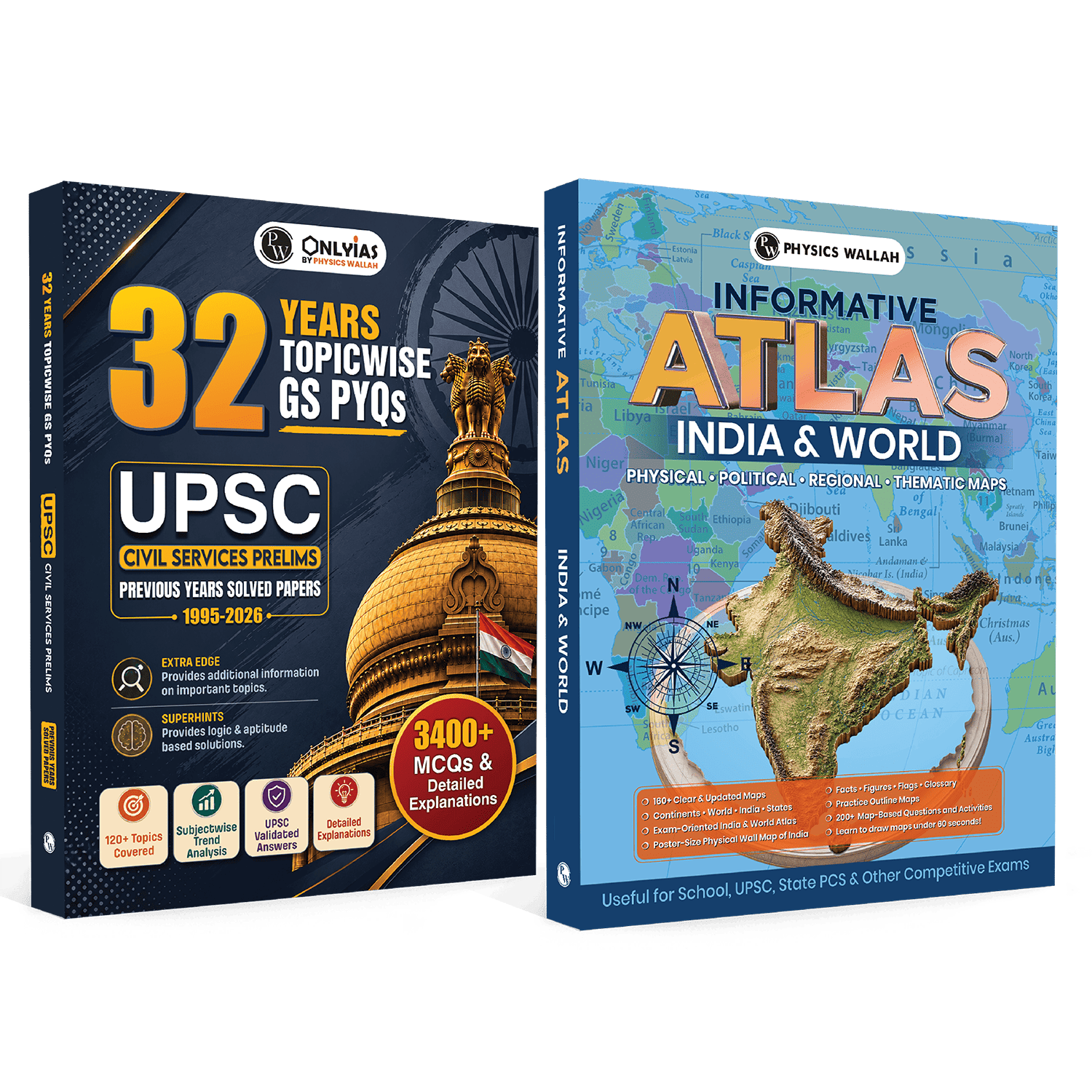
A comprehensive compilation like the PYQ Book (1995–2026) offers a complete solution tailored for targeted practice:
-
Extensive Historical Range: Covers 32 years of authentic Prelims questions across both GS Paper 1 and CSAT Paper 2.
-
3400+ Solved MCQs: Features over 3,400 questions categorized systematically across 120+ distinct topics.
-
Detailed Option-Wise Explanations: Explains why the correct choice is right and provides background details on why other options are incorrect.
-
Trend & Pattern Insights: Includes expert analysis, "Superhints", and visual aids like maps and diagrams to boost retention.
-
Dual Utility: Connects Prelims concepts directly with Mains readiness, ensuring cohesive, long-term preparation.
Enhance your UPSC and other competitive exam preparation with the PW Atlas – Indian & World 2026. It provides detailed maps and geographical information to help you understand India and the world more effectively. Use it alongside your regular study material to strengthen concepts in Geography, Environment, History, and Current Affairs and make map-based learning more engaging and effective
How to Build a UPSC Preparation Strategy with Previous Year Papers?
An effective UPSC preparation strategy weaves past questions directly into every phase of study rather than saving them for the final month.
Phase 1: The Foundation Stage (Months 1–4)
As you read standard foundational books, solve topic-wise UPSC prelims practice questions from past papers immediately after completing each unit. This practice reinforces what you read and demonstrates how theoretical concepts translate into actual exam questions.
Phase 2: The Integration Stage (Months 5–8)
Begin correlating Prelims questions with Mains syllabus topics. Notice how broad concepts tested via objective MCQs in Prelims often reappear as analytical, long-form essay questions in Mains. Utilizing a structured UPSC GS PYQ book during this phase keeps your dual preparation aligned and efficient.
Phase 3: The Refinement Stage (Months 9–12)
Focus heavily on speed, accuracy, and elimination strategies. Re-solve past papers in timed environments, analyze every incorrect response, and refine your approach to minimize negative marking.
Read More: UPSC Syllabus 2026
UPSC Preparation FAQs
1. How many years of UPSC previous year papers should I solve?
Solving at least 10 to 15 years of past papers is essential, but analyzing 25 to 32 years provides a much broader understanding of long-term topic cycles and evolving question patterns.
2. Are questions from UPSC previous year papers ever repeated directly?
While exact word-for-word questions are rare, core underlying concepts, theme frameworks, and options repeat frequently across General Studies and CSAT papers.
3. Should I solve UPSC previous year questions topic-wise or year-wise?
Beginners should always start with topic-wise practice alongside subject reading. Shift to solving full year-wise authentic papers in timed environments during the final two to three months before the exam.
4. How do UPSC previous year papers help in clearing CSAT Paper 2?
Practicing past CSAT papers helps you identify recurring comprehension question structures, logical reasoning patterns, and math problem archetypes, ensuring you comfortably cross the qualifying threshold.
5. What makes a good PYQ book for UPSC preparation?
A quality PYQ book should feature authentic UPSC answer keys, option-wise explanations, topic-wise classification across subjects, and trend analysis to help prioritize study topics effectively.