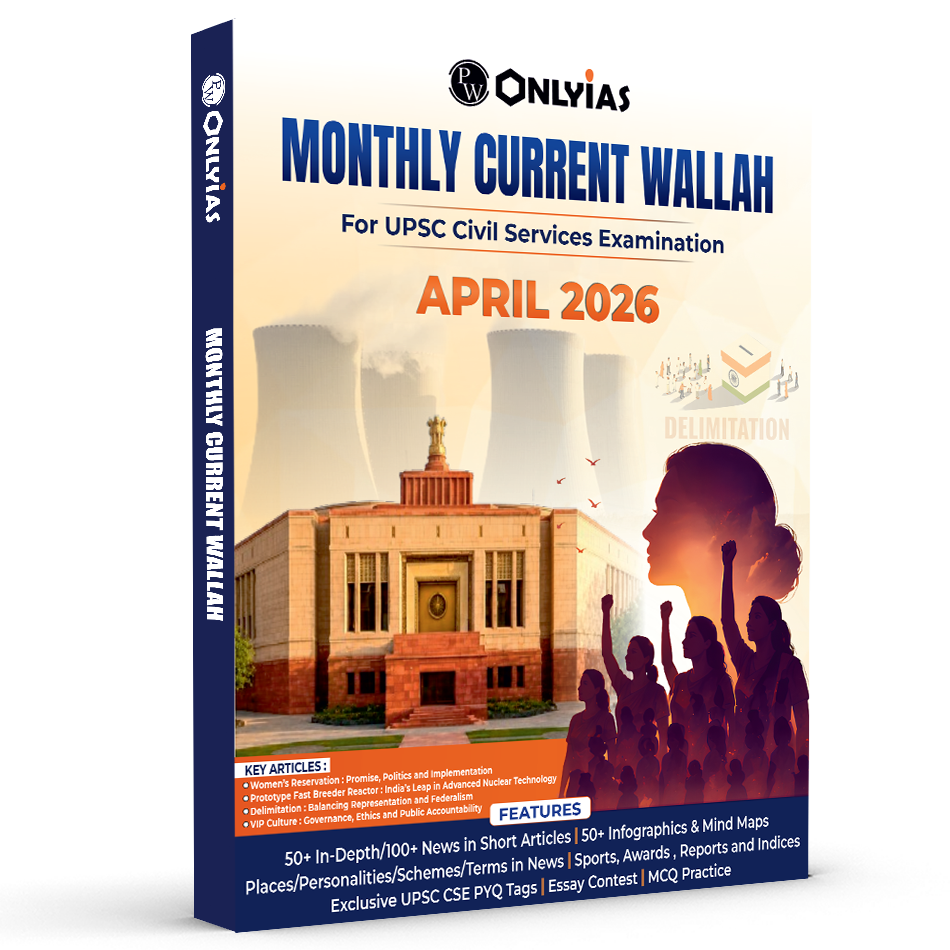
Who Should Buy March and April 2026 Monthly Current Affairs for UPSC

Combining the March and April 2026 issues is essential for UPSC aspirants because it provides a connected and broader understanding of policy developments, national updates, and global events. Studying these months together helps build continuity across topics and improves your ability to link current affairs with static subjects for both Prelims and Mains preparation. This approach reduces knowledge gaps, strengthens analytical thinking, and supports more effective answer writing. To make revision more organised and exam-oriented, aspirants can also complement their preparation with dedicated UPSC Current Affairs resources for structured monthly coverage and consolidated learning.
Why Integrated Current Affairs Preparation is Essential for UPSC
UPSC preparation is a marathon, not a sprint. The syllabus is expansive, and staying updated requires more than just reading news; it demands connecting events over time. Many students focus on a single month in isolation, which creates dangerous blind spots. By studying upsc current affairs april alongside the March issue, you gain a chronological perspective on government schemes, environmental policies, and international summits.
This strategy prevents fragmented learning. Instead of memorizing isolated facts, you begin to see the bigger picture—how a policy proposed in March evolved into an implementation phase by April. Mastering this flow is critical for writing nuanced, multidimensional answers in the Mains examination.
The Strategic Edge of Combining Monthly Magazines
Connecting Developments Over Time
Current events are rarely confined to a 30-day window. When you review an april 2026 current affairs magazine alongside the March edition, you track the trajectory of ongoing issues.
-
Policy Evolution: Understand the legislative journey of bills and schemes.
-
International Relations: Track summits, diplomatic visits, and treaty updates that unfold over weeks.
-
Economic Indicators: Gain a clearer understanding of inflation trends and budget implications by observing month-on-month data.
Strengthening Analytical Depth for Mains
A quality upsc current affairs magazine 2026 does more than report news; it provides editorial analysis. When you consume this analysis for two consecutive months, you develop the ability to critique government decisions from various angles—social, economic, and ethical. This habit is essential for GS Paper IV and essay writing, where balanced, evidence-based arguments are rewarded.
Check Out: UPSC Previous Year Papers
How to Effectively Use Monthly Compilations
To maximise your efficiency, follow a structured workflow when processing your upsc monthly magazine for current affairs:
|
Step |
Action |
Focus Area |
|
First Pass |
Skim the index |
Identify recurring themes |
|
Second Pass |
Deep reading |
Highlight key data and committee reports |
|
Mapping |
Link to Static |
Connect current events to standard books |
|
Consolidation |
Note-making |
Create summaries for quick revision |
Utilizing a reliable UPSC Current Affairs PDF April 2026 helps you keep your notes organised, searchable, and easy to revise. When combined with March coverage, it becomes more effective to arrange your digital notes theme-wise instead of month-wise. Grouping topics under themes such as Economy, Polity, Environment, International Relations, and Science creates stronger conceptual links and makes revision much faster during the final stages of preparation. To build continuity and avoid missing important developments, aspirants can also integrate the UPSC March 2026 Current Affairs Magazine into their study plan for more complete and connected current affairs preparation.
Bridging the Gap: Prelims and Mains Preparation
A primary objective of monthly current affairs for upsc prelims is to provide factual clarity. However, the UPSC exam demands more. Using a magazine that integrates "News in Short" for Prelims with deep-dive articles for Mains ensures you do not waste time on disparate resources.
-
Prelims Focus: Focus on schemes, awards, specific committees, and factual pointers.
-
Mains Focus: Prioritise editorial analysis, impacts of policies, and potential solutions for social or economic challenges.
By maintaining a dual-focus, you ensure your preparation is not just extensive but also intensive, leaving you well-prepared for any unexpected questions that may arise in the paper.
Read More: UPSC Ancient & Medieval History Handwritten Notes for UPSC Preparation
UPSC Current Affairs FAQs
1. Is it enough to rely only on monthly current affairs magazines for UPSC?
While monthly magazines are comprehensive, they should be supplemented with daily newspaper reading to keep your understanding current and nuanced.
2. How do I effectively link March and April 2026 current affairs?
Create a "Topic Tracker" in your notebook. If a topic like "Environment Policy" appears in March, add a section for "April Updates" next to it to track developments in real-time.
3. What is the best way to revise current affairs before Prelims?
Use your summarised notes and highlight only the most critical, high-impact facts. Avoid re-reading the entire magazine; focus on your curated highlights and infographics.
4. How can I improve my Mains answer writing using these magazines?
Use the case studies and analytical arguments provided in the editorials of your monthly magazines to support your answers. Incorporate the cited data to make your answers stand out.
5. Why should I use a specialised UPSC magazine instead of general news sites?
Specialised magazines are curated by subject experts to align directly with the UPSC syllabus. They filter out noise, focusing only on information that is relevant for the examination.