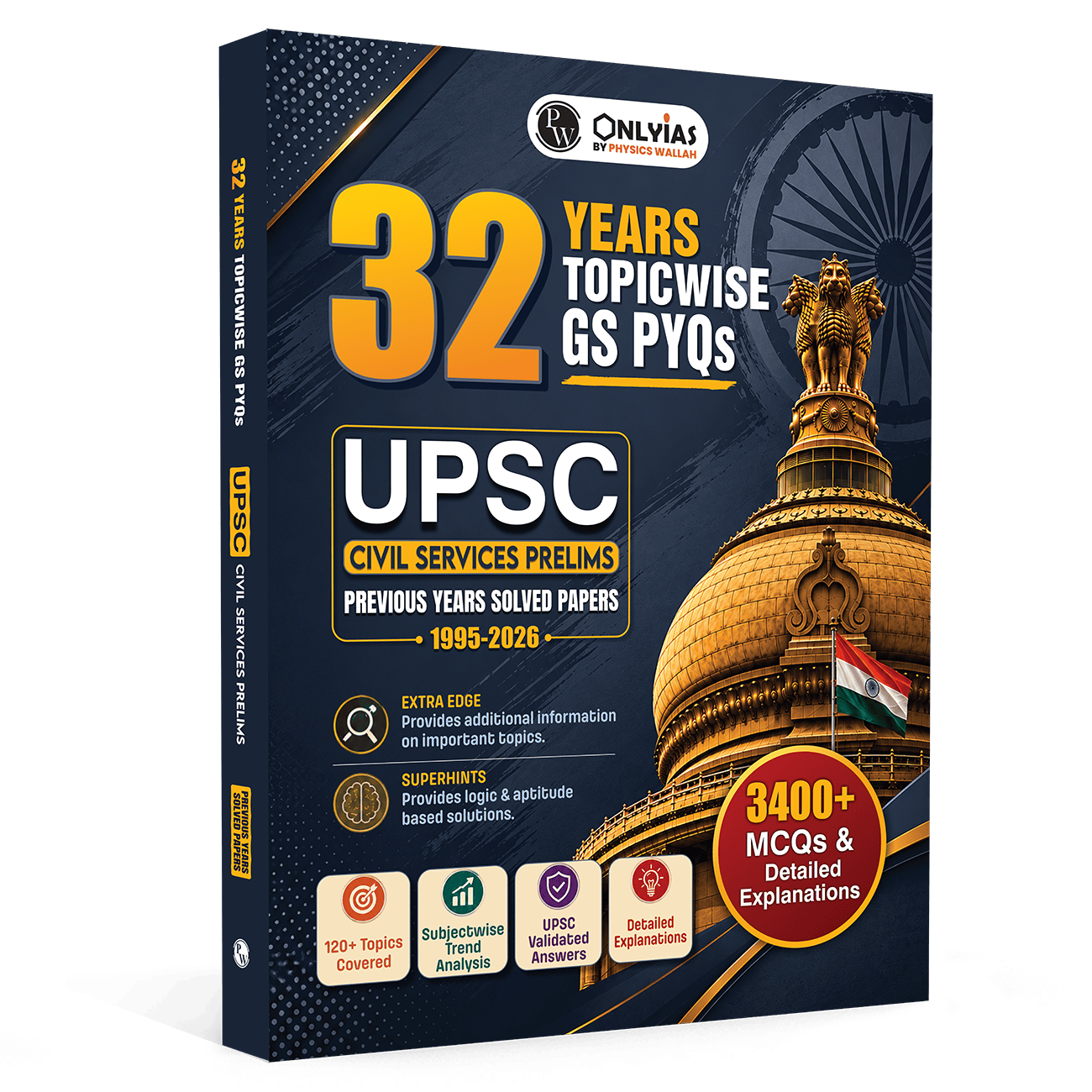
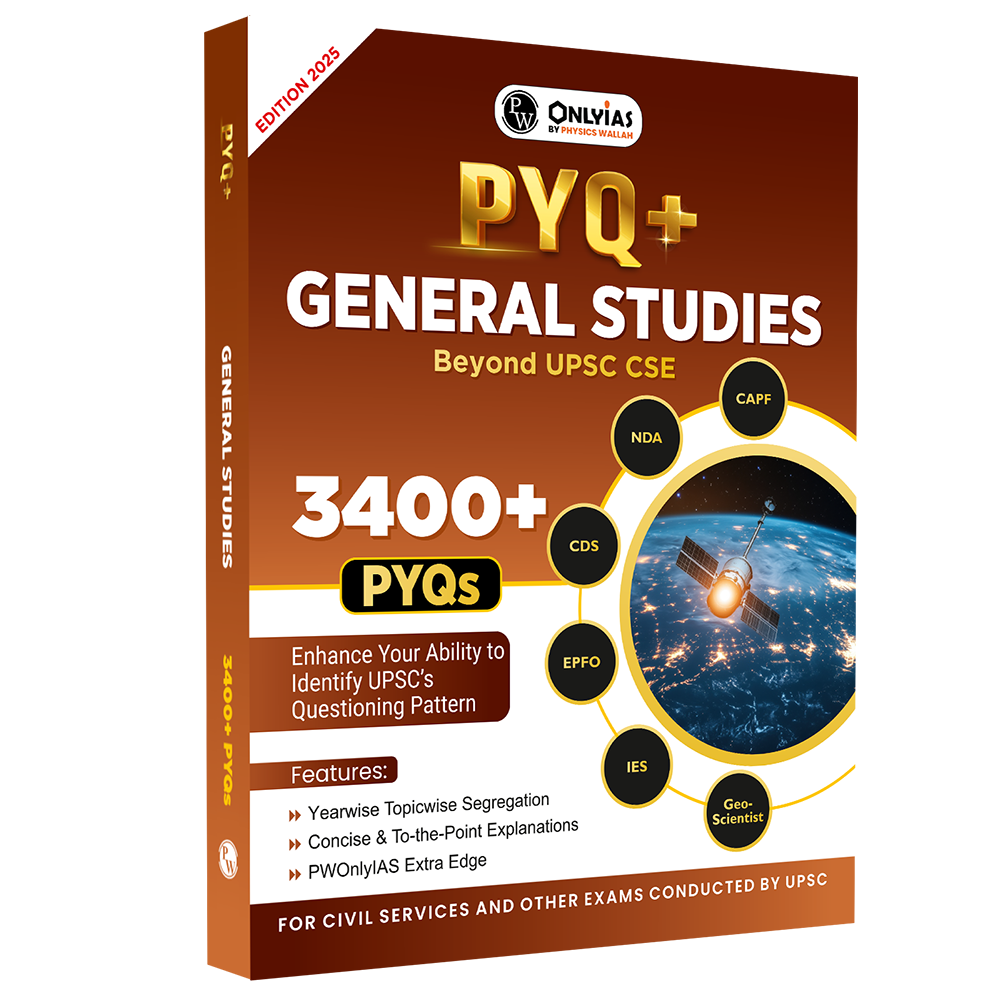
Why PW 32 Years UPSC PYQ Book Reveals Real Prelims Pattern

A common challenge during Civil Services revision is the sudden panic that occurs when mock exam scores drop. You might spend days reading standard textbooks, only to find that the practice questions you face feel entirely disconnected from what the Union Public Service Commission actually demands.
The most effective way to eliminate this confusion is to anchor your study plan directly to authentic UPSC prelims PYQ datasets, which reveal the actual subtopics and question structures used by examiners.
What is UPSC Prelims PYQ?
The term UPSC prelims PYQ refers to the official previous-year questions compiled from the Civil Services Preliminary Examination. These questions serve as the actual historical record of how the commission tests a candidate's knowledge, analytical ability, and decision-making speed under pressure.
Rather than relying on mock questions created by third parties, studying these real papers shows you exactly how questions are phrased. They are divided into two distinct sections:
-
General Studies (GS Paper 1): Testing core disciplines like History, Polity, Economy, Geography, Environment, and Science & Technology.
-
CSAT (Paper 2): Evaluating logical reasoning, reading comprehension, and quantitative aptitude.
Features of UPSC Prelims PYQ Book
Using a structured UPSC PYQ book completely changes how you prepare, moving you away from passive reading and toward active, target-driven practice.
|
Feature |
Resource Detail & Benefit |
|
Comprehensive Scope |
Covers 32 years of actual papers (1995–2026) for GS Paper 1 and CSAT Paper 2. |
|
Question Volume |
Includes more than 3400 high-quality solved MCQs for deep practice. |
|
Syllabus Coverage |
Organized into more than 120 distinct topics for targeted revision. |
|
Visual Learning Support |
Uses clear maps, diagrams, and infographics to simplify complex ideas. |
This comprehensive book offers several distinct advantages for your daily study routine:
-
Topic-Wise Organization: Questions are sorted across more than 120 individual topics, letting you test your knowledge right after finishing a subject.
-
Integrated Prelims and Mains Preparation: Solving these questions clarifies fundamental concepts, which naturally improves your descriptive answer writing for the Mains stage.
-
Specialized Analytical Hints: The book includes expert insights and strategic "Superhints" that teach you how to make smart guesses when down to two options.
-
Up-to-Date Formatting: The entire collection is updated to match current exam expectations and syllabus guidelines.
Why are UPSC Prelims PYQs important for Understanding the Exam Pattern?
Aspirants often accumulate stacks of UPSC books, yet they struggle to understand the actual UPSC exam pattern. Standard textbooks provide raw theoretical data, but they cannot teach you how the commission frames choices to test your critical thinking.
Authentic past papers provide a highly reliable foundation because they reveal the exact balance between static concepts and dynamic current affairs. By reviewing multiple years of actual tests, you can see how the commission introduces unique phrasing and trick options. This direct insight helps you look past the noise of speculative study material and focus on the precise depth of knowledge required to pass.
How Does This UPSC Prelims PYQ Book Reflect Actual UPSC Trends?
The specialized resource covering 32 years UPSC PYQs provides a clear view of how the examination has changed from 1995 to 2026. It proves that while individual questions change, the underlying conceptual areas remain remarkably consistent.
1. Long-Term Theme Tracking
Reviewing a comprehensive timeline lets you see exactly how simple factual questions from the late 1990s changed into the complex, statement-based problems seen today. This long-term view makes it much easier to spot recurring themes.
2. Option Elimination Insights
The true value of analyzing ancient papers lies in learning the logic behind how options are structured. This book uses detailed, option-wise explanations to show you why certain choices are incorrect. This helps you understand the examiner's logic and build better elimination techniques for exam day.
How to Use UPSC Prelims PYQ?
Simply reading through a past paper like a storybook will not improve your score. You need a structured approach to turn these past questions into an effective preparation tool.
-
Sync with Your Primary Reading: After finishing a chapter from your standard UPSC preparation books, open the topic-wise section of the past papers book immediately.
-
Study the Wrong Options: Do not just look at the correct answer. Spend time reading the explanations for the other three choices to expand your general knowledge.
-
Highlight High-Weightage Trends: Mark the topics that appear frequently over the years so you know exactly where to focus your active revision.
-
Practice Active Review: Revisit the toughest questions every week to ensure you remember the underlying concepts and do not make the same mistake twice.
Explore detailed physical, political, regional, and thematic maps with the Informative UPSC Atlas – India & World 2026 Edition. An excellent resource for school students and aspirants preparing for UPSC, State PSC, and other competitive exams.
Common Mistakes to Avoid While Solving UPSC Prelims PYQ
Many students fail to get the full value from their UPSC prelims previous year questions because of a few common mistakes:
-
Memorizing Answers Without Understanding: Memorizing the final answer is useless because the commission rarely repeats questions word-for-word. You must understand the underlying core concept.
-
Ignoring the CSAT Syllabus: Many candidates focus entirely on General Studies and ignore CSAT, only to fail Paper 2 on exam day. You need to practice both papers consistently.
-
Skipping Detailed Explanations: Checking only the answer key prevents you from learning the valuable elimination techniques explained in the text.
-
Studying out of Context: Practicing questions without tracking broader exam trends makes it difficult to see how the exam's style is changing.
Read More: UPSC Prelims Previous Year Question Papers with Downloaded PDF
UPSC Prelims PYQ FAQs
1. How many years of past papers should I analyze for a strong prelims strategy?
You should analyze at least 25 to 30 years of questions to truly understand the exam. Using a book that tracks trends over 32 years lets you see how the commission's formatting and choices have evolved over time.
2. Can studying an UPSC PYQ book remove the need for regular textbooks?
No, past papers are meant to supplement your primary reading, not replace it. Use your textbooks to build a basic understanding of the subjects, then use the past papers to see how those facts are tested.
3. Why are topic-wise sorted UPSC prelims previous year questions better than year-wise papers?
Topic-wise sorting lets you test your knowledge immediately after finishing a specific subject area. This targeted practice helps you find and fix weak spots in your understanding much faster than mixing all subjects together early on.
4. Is the CSAT section in the 32 years UPSC PYQs collection comprehensive enough?
Yes, the collection includes thorough coverage of both GS Paper 1 and CSAT Paper 2. It provides detailed solutions for reading comprehension, logic, and math problems to help you cross the qualifying boundary safely.