Why UPSC CSAT is the Biggest Silent Killer for Hindi-Medium Aspirants

Many applicants manage high scores in general knowledge but miss the cutoff in the aptitude test. This trend makes a reliable UPSC CSAT PYQ book an essential component of an effective study plan.
By practicing structured sets of previous questions, students can bridge the gap between theoretical understanding and actual exam performance. Relying on an accurate UPSC CSAT PYQ book allows applicants to track changing trends and master the exact paper format.
What Is the UPSC CSAT PYQ Book?
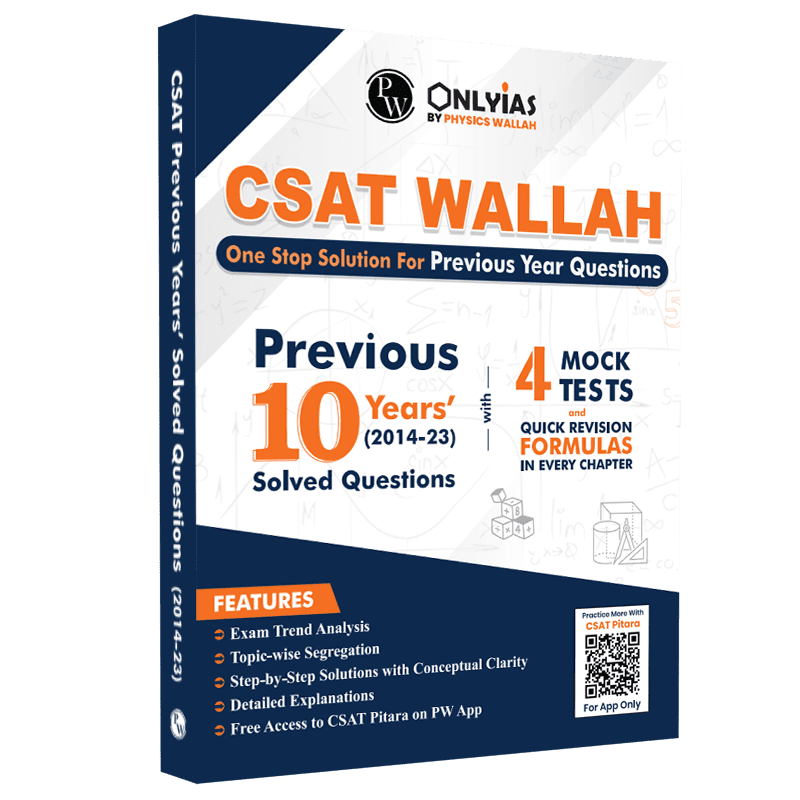
An UPSC CSAT PYQ book is a dedicated preparatory resource compiled specifically to help civil services aspirants master General Studies Paper II. It contains a compilation of previous years' questions, structured systematically to match the changing trends of the Preliminary examination.
Unlike standard aptitude guides, this book aligns completely with the distinct language requirements and logical patterns set by the Union Commission.
For students answering in the vernacular medium, a high-quality UPSC CSAT PYQ book serves as an authentic mirror to the actual examination hall. It covers all key segments of the syllabus, including quantitative aptitude, logical reasoning, and reading comprehension.
By presenting past exam papers in a well-organized manner, it provides candidates with a realistic view of the difficulty level they will face on exam day.
Features of the UPSC CSAT PYQ
A proper study resource must provide more than a simple list of questions and answers. The design of a quality UPSC CSAT PYQ book focuses on building structural clarity and application-based skills.
Below are the primary features included in this comprehensive workbook:
-
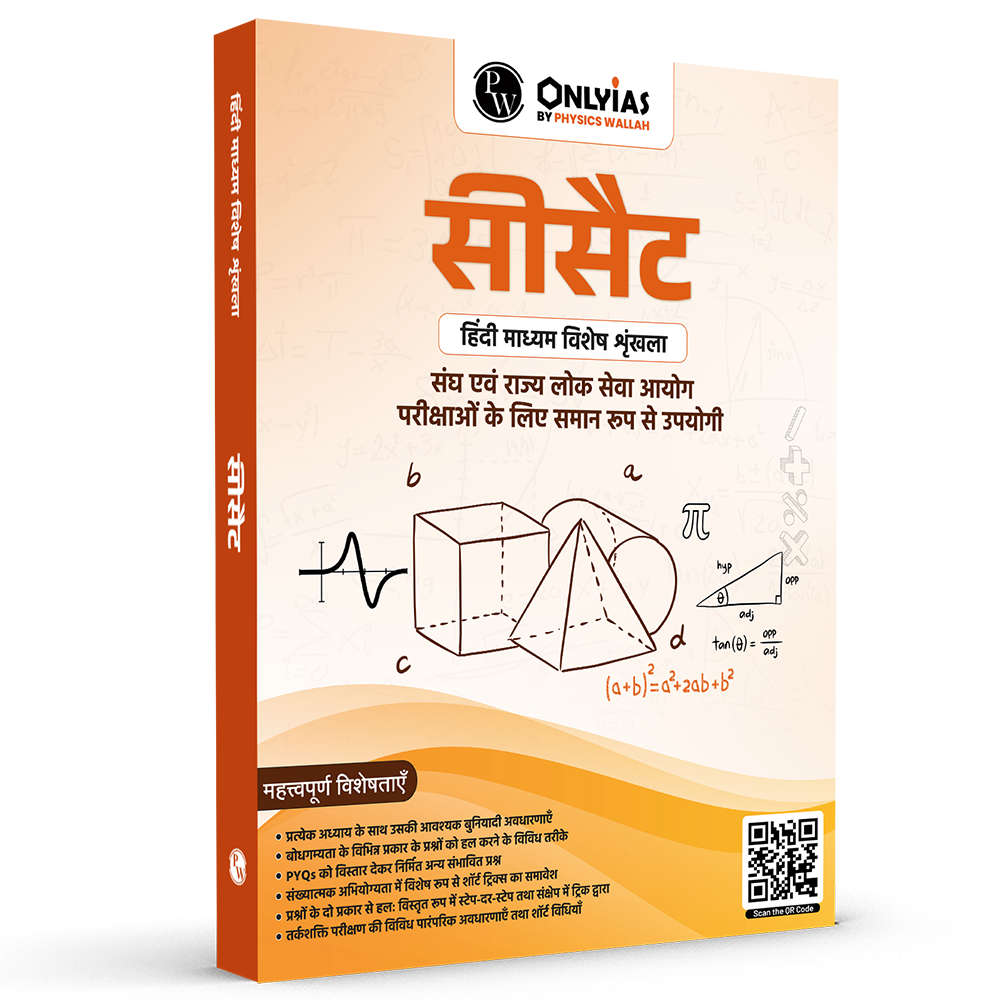
Chapter-Wise Concept Clarity: The book organizes past papers into distinct chapters rather than mixed test sets. Essential basic concepts are explained clearly with each chapter to build a strong foundation before jumping into problem-solving.
-
Comprehensive Comprehension Practice: Reading comprehension makes up a massive chunk of Paper II. This book teaches multiple methods to solve different types of comprehension questions effectively, ensuring better accuracy in Hindi passages.
-
PYQ-Based Advanced Practice: Beyond standard UPSC previous year papers, the book includes additional probable questions developed by expanding and analysing previous year questions (PYQs) to prepare you for unexpected pattern shifts.
-
Quantitative Aptitude with Smart Short Tricks: Math sections can be incredibly time-consuming. The content features a special focus on short tricks to solve quantitative aptitude questions faster and more accurately.
-
Dual Solution Approach: Every question is solved in two distinct ways to suit different learning stages. You get detailed step-by-step solutions for deep conceptual clarity alongside quick methods using tricks for exam-day speed.
Benefits of UPSC CSAT PYQ
Studying with a targeted UPSC CSAT PYQ book provides major tactical advantages during the preparation phase. Instead of practicing random math or English puzzles, candidates interact with standard UPSC-grade questions.
|
Feature |
Direct Benefit to the Aspirant |
|
Authentic Exam Orientation |
Eliminates guesswork by showing the precise depth of topics like Number System or Permutations. |
|
Dual-Method Explanations |
Helps build foundational concepts while offering fallback short-cuts for time-strapped situations. |
|
Language Synchronisation |
Ensures the Hindi translation of technical terms matches the exact vocabulary used by exam paper setters. |
|
Segmented Progress Tracking |
Allows students to check their accuracy topic-by-topic rather than solving overwhelming full-length tests prematurely. |
Why UPSC CSAT Remains a Challenge for Many Hindi-Medium Aspirants?
The Preliminary Aptitude Test has earned a reputation as a silent barrier for candidates studying in the Hindi medium. Even though it is a qualifying paper requiring only 33% marks, the failure rate has risen noticeably over the past few years.
-
The Translation Barrier in Comprehension
One of the biggest issues lies in the language used for reading comprehension. The Hindi passages provided in the exam are often direct literal translations of complex English text. This mechanical translation results in complicated sentence structures and unfamiliar terminology that takes too long to read and interpret.
Without a proper UPSC CSAT PYQ to study these language patterns beforehand, candidates struggle to comprehend the true meaning of the text during the actual exam.
-
Evolving Math and Logic Patterns
The nature of the quantitative aptitude section has shifted away from basic arithmetic toward higher-level mathematical logic. Topics like Number System, Permutation and Combination, and Data Sufficiency now dominate the paper.
Many humanities background students find this sudden shift challenging, especially when standard textbooks do not show how these topics connect to the civil services exam pattern.
How the UPSC CSAT PYQ Book Helps Identify Weak Areas?
True evaluation happens when you test your skills against official exam standards. A structured UPSC CSAT PYQ book functions as an excellent diagnostic tool for self-assessment.
When you use the PYQ of csat UPSC compilation, you notice clear patterns in your mistakes. For instance, you might be highly accurate in logical puzzles but exceedingly slow in long-form data interpretation.
Alternatively, you might find that your reading speed in Hindi comprehension is adequate, but your accuracy drops when identifying the central corollary of a passage. Spotting these precise issues early prevents wasted effort and allows you to streamline your revision.
When to Start Using the UPSC CSAT PYQ Book?
Timing your preparation is critical to avoid last-minute panic or overconfidence. A balanced approach ensures that aptitude practice does not interfere with General Studies but still gets the dedicated focus it requires.
-
The Early Phase (6-8 Months Before Prelims): Open your UPSC CSAT PYQ book to browse through the chapters. Solve 5 to 10 questions alongside your regular GS prep to understand your baseline skill level.
-
The Mid-Term Phase (3-5 Months Before Prelims): This is the ideal window to utilize the UPSC CSAT PYQ PDF resources or physical workbooks intensively. Dedicate fixed weekend slots to finish specific chapters like percentages, coding-decoding, or passage inferences.
-
The Final Phase (Last 2 Months): Use the CSAT PYQ PDF materials to solve complete, timed question sets. This simulates real test conditions, helps manage stress, and stabilizes your biological clock for the afternoon exam shift.
Study Strategy with the UPSC CSAT PYQ Book
To get the best results from your UPSC CSAT PYQ book, avoid reading it like a conventional theory guide. Aptitude is a skill developed through active application and routine exposure.
Step 1: Master the Foundational Theory
Before attempting the past questions, read the concise basic concepts given at the start of the chapter. Make sure you understand the core formulas and logical rules in Hindi before attempting the exercises.
Step 2: Practice the Graded Examples
Work through the solved examples sequentially. Pay close attention to the dual solution approach. First, understand the detailed step-by-step method to grasp the logic. Next, study the short trick to see how you can slash your solving time by half.
Step 3: Solve and Review Past Papers
Attempt the previous years' questions without looking at the answers. Once completed, compare your approach with the provided solutions. If a question took more than two minutes, analyze where the delay occurred and see if a shortcut trick could have streamlined the calculation.
Read More: How Many Hours Should You Study for UPSC Daily?
UPSC CSAT PYQ Book FAQs
1. Is an UPSC CSAT PYQ book enough to pass the aptitude paper?
Yes, a well-structured book is highly effective because it focuses directly on the actual exam pattern. Since CSAT is a qualifying paper requiring 33% marks, mastering past question trends, short tricks, and comprehension techniques provides sufficient preparation to clear the cutoff safely.
2. How does the dual solution approach help Hindi-medium students?
The dual solution approach provides a step-by-step explanation to build basic conceptual clarity, followed by a quick, shortcut method. This helps students understand the core logic of tough math or reasoning problems while training them to solve questions quickly during the actual exam.
3. Why should I focus on chapter-wise questions instead of full mock tests first?
Chapter-wise study allows you to build your skills progressively. By using a book categorized by topic, you can isolate your weak areas, master the specific short-cuts for that section, and build steady accuracy before attempting mixed, full-length practice sets.