Why Every CAT Aspirant Should Solve Previous Year Questions?
Many students spend months mastering formulas, grammar rules, and analytical concepts, yet they experience performance anxiety, slow speed, or poor question selection during the actual exam. This issue arises because standard practice materials often fail to reflect the subtle nuances, logical depth, and exact difficulty calibration of official papers.
Incorporating CAT previous year questions into your daily revision routine solves this problem directly. By working with genuine test items, candidates gain clear insights into examiner expectations, learn to navigate strict time constraints, and turn conceptual clarity into high percentile scores.
What Are CAT Previous Year Questions?
Past examination papers represent authentic tests administered in previous years, specifically covering sessions from 2017 to 2025. These papers provide an accurate record of how test setters frame problems, combine concepts across topics, and adjust difficulty levels across different testing slots.
Rather than relying on guesswork or generic practice sets, studying these official materials helps candidates understand exact test requirements and question structures.
-
Authentic Test Papers: Genuine test sets covering 2017 to 2025 reflect real exam standards, question formats, and difficulty levels accurately.
-
Chapter-Wise Organization: Systematic chapter-wise arrangements allow candidates to target specific topics in line with the latest syllabus.
-
Detailed Step-by-Step Solutions: Comprehensive explanations clarify logical reasoning, shortcuts, and core concepts clearly.
-
Trend-Based Paper Analysis: Detailed trend analysis reveals frequently tested concepts, weightage distributions, and structural paper changes over time.
Why Should Every Aspirant Solve CAT Previous Year Questions?
Practising authentic exam papers remains one of the most reliable strategies for building complete test readiness. Authentic test items demonstrate how theoretical concepts appear in actual test situations, helping candidates understand question patterns, manage time effectively, and avoid unexpected surprises on exam day. Using MBA Books alongside previous year papers can further strengthen concepts, provide structured practice, and improve overall problem-solving and exam readiness.
-
Building Exam Temperament and Confidence
Regular exposure to genuine test items builds familiarity with question formats and strict time constraints. As candidates practice real problems under timed conditions, test anxiety reduces significantly. Facing actual papers consistently develops steady confidence, allowing candidates to maintain composure even when encountering challenging sections during the test.
-
Understanding High-Weightage Topics
Analyzing past papers reveals recurring patterns across various test topics. Some concepts appear regularly with slight variations, while others feature less frequently. Identifying these high-weightage chapters helps candidates prioritize their study time, ensuring maximum effort goes into topics that yield the highest return in marks.
|
Feature |
Authentic Past Paper Practice |
Standard Practice Exercises |
|
Question Authenticity |
Directly sourced from official tests (2017–2025) |
Generic or simulated practice questions |
|
Syllabus Alignment |
Fully aligned with latest syllabus trends |
May include non-standard or outdated topics |
|
Explanations |
Detailed, step-by-step logical reasoning |
Basic answer keys with brief notes |
|
Strategic Value |
Builds exam temperament and time management |
Reinforces basic theoretical concepts |
What Can You Learn from CAT Previous Year Questions?
Past examination papers serve as valuable learning tools that offer insights far beyond traditional textbook exercises. They highlight operational traps, teach strategic question selection, and demonstrate efficient problem-solving methods.
1. Logical Reasoning and Problem Solving
Detailed explanations accompanying authentic papers teach candidates how to break down complex word problems into simple logical steps. Studying step-by-step solutions improves conceptual clarity and logical reasoning. Candidates discover alternative approaches to solve problems faster, strengthening overall analytical thinking skills.
2. Identifying Question Traps and Patterns
Examiners often craft options to test attention to detail, creating subtle traps for unprepared students. Analyzing past papers exposes these design patterns and common pitfalls. Recognizing how questions are structured helps candidates avoid careless mistakes, leading to higher accuracy during the actual test.
Utilizing comprehensive test preparation resources helps candidates prepare for broader challenges across any MBA entrance exam. Developing sharp analytical skills ensures consistent performance across various competitive test formats.
How to Use CAT Previous Year Questions for Daily Practice?
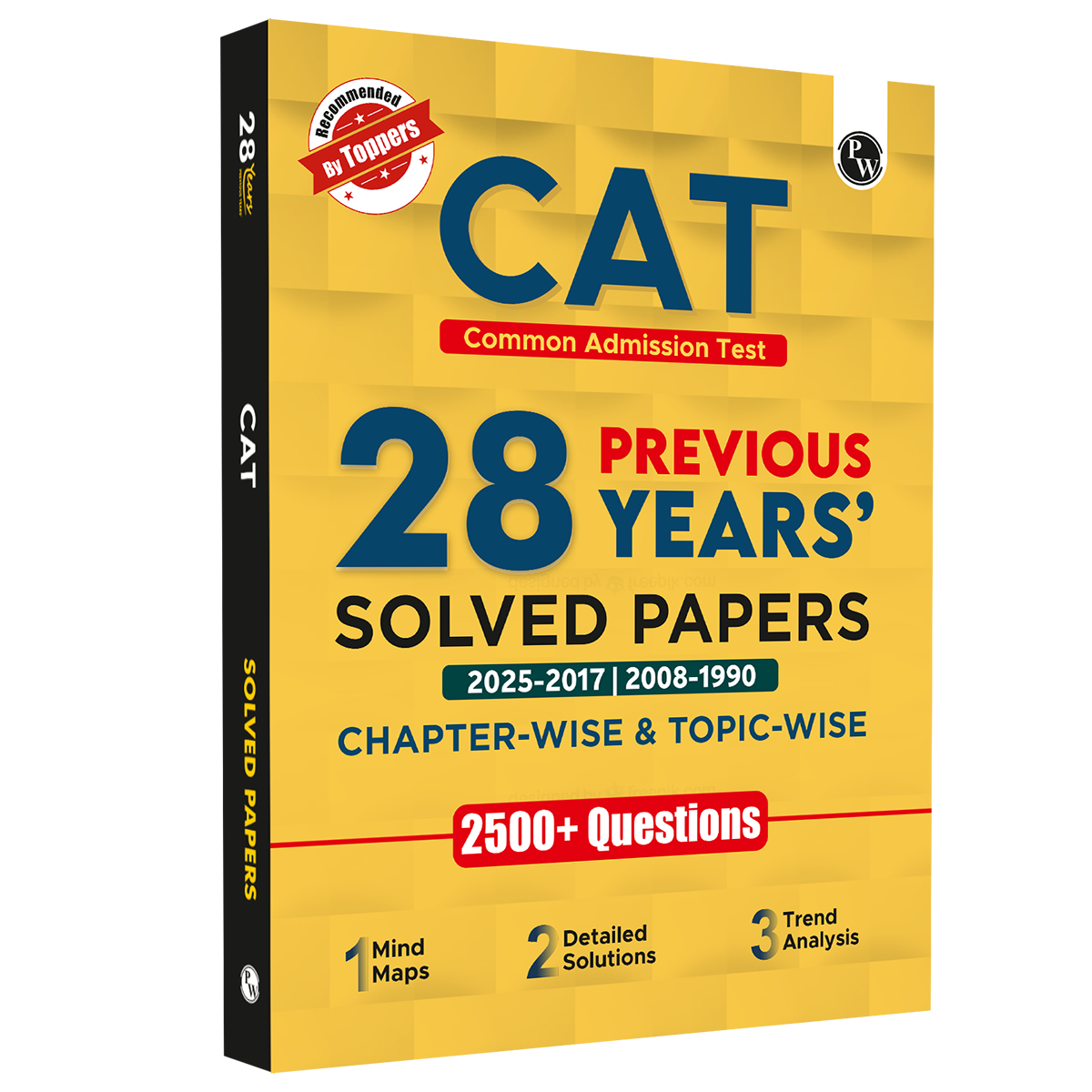
To achieve optimal results, candidates must approach past test items strategically rather than solving questions without a plan. Integrating structured practice into your daily study schedule ensures steady progress and long-term retention. The 28 Years PYQ CAT Book can support this approach by providing extensive previous year question practice, helping candidates understand recurring patterns, identify important concepts, and improve speed and accuracy through consistent revision.
-
Topic-Wise Integration: Solve chapter-wise past questions immediately after completing a topic to solidify core theoretical understanding.
-
Deep Solution Analysis: Review provided step-by-step solutions thoroughly to compare your method against the most efficient logical approach.
-
Maintain an Error Log: Document every incorrect or skipped question in a notebook to identify personal weak areas and track recurring mistakes.
-
Simulate Timed Practice: Use a timer during daily practice sessions to build speed, improve pacing, and increase confidence under clock pressure.
Study Strategy Plan Using CAT Previous Year Questions
A structured study plan helps candidates extract maximum value from past paper practice. Structuring your preparation into clear phases ensures balanced syllabus coverage, targeted revision, and robust test readiness.
-
Phase 1: Concept Reinforcement and Chapter Practice
-
Focus on chapter-wise questions from 2017 to 2025 alongside initial theory preparation.
-
Emphasize conceptual accuracy and understanding logical principles over speed.
-
Use step-by-step solutions to address early learning gaps immediately.
-
Phase 2: Targeted Revision and Trend Analysis
-
Use trend-based analysis to identify high-weightage topics and core weak areas.
-
Re-solve incorrect items from your error log to eliminate persistent mistakes.
-
Strengthen logical reasoning ability through focused, time-bound topic sets.
-
Phase 3: Full Test Simulation and Final Refinement
-
Transition to full-length computer-based tests to mirror real exam environments.
-
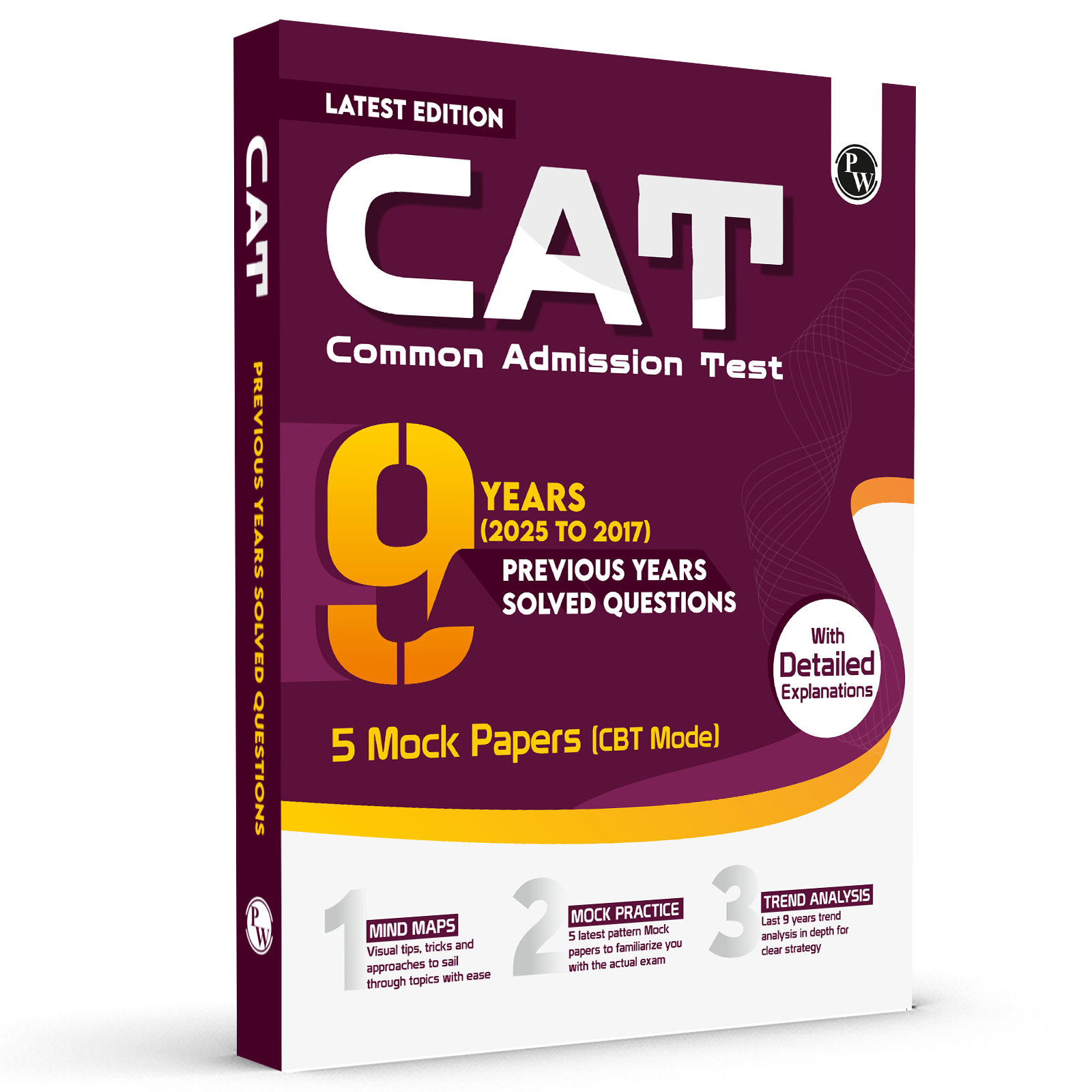
Complete 5 full-length CBT mock tests available via QR codes.
-
Analyze test reports to optimize section-wise time management, question selection, and overall exam strategy.
Tips for Using CAT Previous Year Questions
To extract maximum value from past paper practice, students need actionable guidelines that transform simple question-solving into strategic exam preparation. Applying structured methods ensures that every session contributes directly to higher accuracy, better time management, and complete syllabus control.
-
Examine Solutions Thoroughly: Review step-by-step solutions even for correctly answered questions to discover faster alternative methods.
-
Prioritize Recent Exam Years: Focus heavily on test papers from 2017 to 2025 to align with the latest syllabus and question formats.
-
Practice in Digital Formats: Utilize online Computer-Based Test (CBT) mock formats to build comfort with screen reading and digital navigation.
-
Revisit Weak Areas Regularly: Schedule weekly review sessions to re-attempt challenging problems and verify conceptual improvement.
-
Track Time Per Question: Record the time taken for different question types to optimize pacing and question selection during the exam.
Also Check - MBA Quantitative Aptitude, Verbal Ability & Reading Comprehension, Logical Reasoning & Data Interpretation Books
Common Mistakes to Avoid While Solving CAT Previous Year Questions
While practicing past papers is highly beneficial, making tactical errors during the revision process can reduce its overall effectiveness. Awareness of common missteps helps aspirants maintain high study efficiency and avoid building counterproductive habits.
-
Memorizing Answers Instead of Principles: Memorizing specific answers offers zero value because actual test items vary. Focus entirely on understanding underlying concepts and logical processes.
-
Skipping Detailed Explanations: Moving to the next question without analyzing detailed solutions limits your learning. Studying step-by-step explanations reveals faster shortcuts and prevents repeat errors.
-
Practicing Without Strict Timing: Solving questions without time constraints creates a false sense of security. Always practice under realistic time limits to develop proper speed and stamina.
-
Delaying Full CBT Mock Tests: Waiting until the final weeks to take full mock tests causes unnecessary panic. Incorporating 5 full-length CBT mock tests early helps refine test strategy and time management gradually.
Read More: CAT Important Topics for Preparation 2026
CAT PYQ FAQs
Why are CAT previous year questions important for preparation?
They reveal authentic question patterns, highlight high-weightage topics from 2017 to 2025, and help candidates build practical test-taking strategies.
How many years of past papers should I solve?
Solving past papers from 2017 through 2025 offers comprehensive coverage aligned directly with current exam trends and formats.
Should I practice past questions chapter-wise or paper-wise?
Start with chapter-wise practice to build topic confidence, then switch to full paper simulations and CBT mock tests for timing practice.
How do step-by-step solutions assist in revision?
Step-by-step solutions clarify complex logical steps, introduce faster problem-solving methods, and fix underlying conceptual errors.
How do full-length CBT mock tests enhance exam readiness?
Attempting 5 full-length CAT CBT mock tests via QR codes improves speed, accuracy, screen stamina, and overall time management under real exam conditions.