When to Complete JEE Modules for a January JEE Main Attempt

You need more than simply long hours to ace the engineering entrance exam. However, it was also found that a very common issue for serious aspirants is preparing from their primary source material without a deadline for completing the reading. Now, when January's attempt is your primary milestone with no slack to finish JEE modules, there will be little scope to conduct full-length mock tests and track performance.
This article details exactly when and how to wrap up your core problem sets to secure a top-tier percentile.
What are JEE Modules?
The base of an aspirant's preparation journey is a high-quality JEE module. Specialized JEE modules systematically help you prepare by simplifying complex theoretical concepts into bite-sized portions that are easy to comprehend, unlike standard textbooks. This focused format enables you to develop a strong foundational knowledge and prepare well for the high-stakes exam question formats.
Having specific material to study, such as targeted JEE modules, gives you an edge. The resources also provide you with a range of question banks, graded from basic conceptual application to multi-concept problems. They guarantee that the content will fully align with the latest trends from the National Testing Agency (NTA). The subchapter structure of a complete JEE module is as follows:
-
Concise Theory Elements: The theory elements are the essence of kids, which explain foundational ideas through instructive tables and diagrams, coupled with clear derivations.
-
Graded Exercise Blocks: Question sets arranged systematically from straightforward single-correct options to advanced numerical challenges.
-
Dedicated PYQ Segments: Real past-year questions at the end of each topic to verify exam preparedness.
-
Train Your Brain Boxes: Specialized and hard problems that have been structured to expand your concepts beyond traditional application boundaries.
When Should JEE Modules Be Completed for January JEE Main?
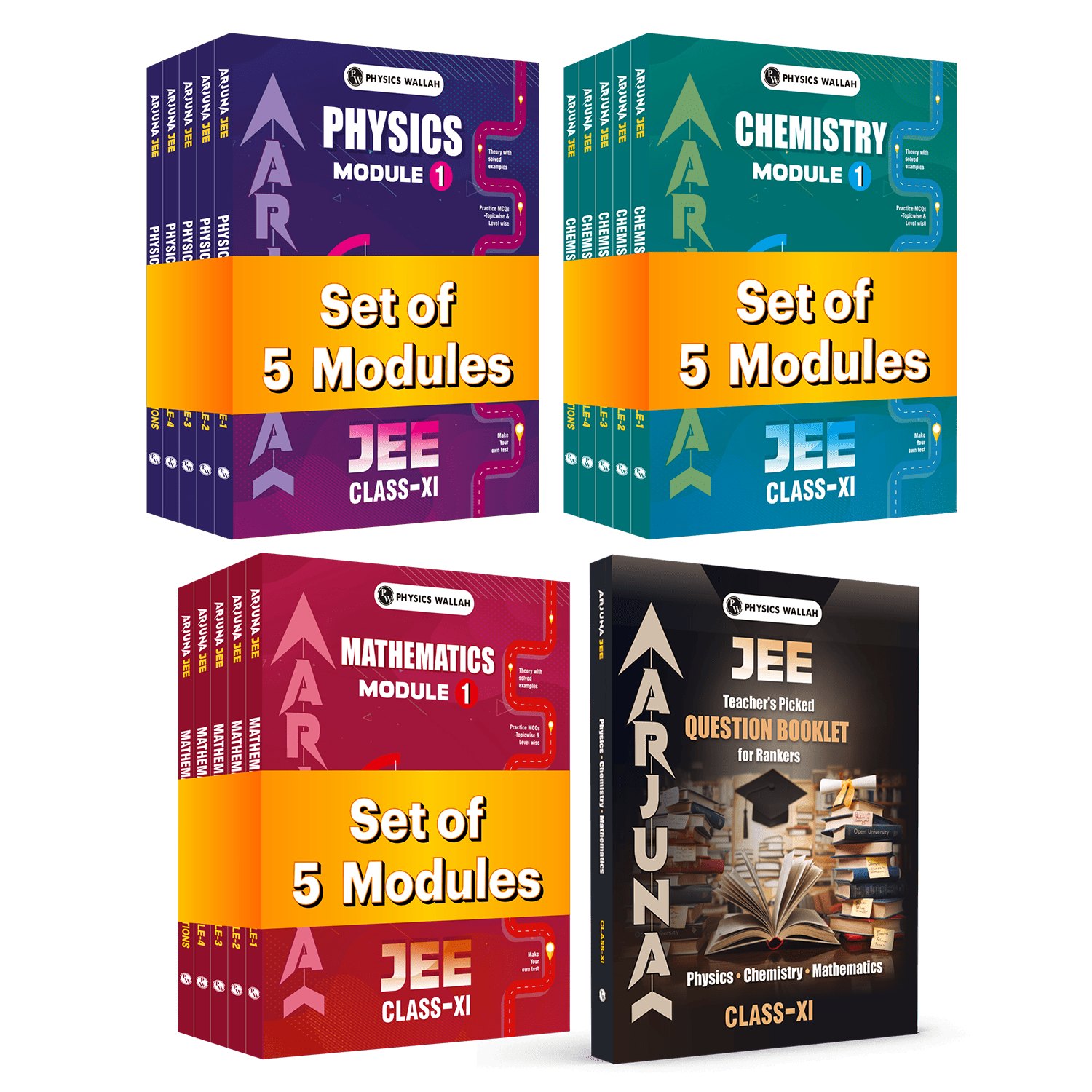
Having a completion date for your core syllabus is how you secure the 99+ percentile in January. To have an adequate level of confidence on exam day, you need to operate along the following specific markers with respect to your timeline. Resources like the Arjuna JEE Class 11 Modules Combo 2026 can help students maintain a structured preparation schedule and complete concepts systematically.
-
The Golden Deadline (October 15 – November 10): You should have completed the entire core question bank for all three subjects during this time. And last, but certainly not least: This is the bottom line of never learning anything new from scratch again.
-
Syllabus Completion Priority: Number of standard problems in your running booklets (do not leave any major chapter untouched).
-
The 60-Day Buffer Rule: If you finish your core material in early November, you'll have a two-month "buffer" before January's exam. Analytics reveal that students who take 20 to 30 full mock tests within this short window increase their final scores by 12% to 20%.
-
The Risk of Late Completion: If your first read takes you to the end of December, you will also lose this most crucial mock-testing stage. This makes you very susceptible to basic time-management misfires on test day.
-
Dedicated Revision Window: The final 60 days must be reserved exclusively for fixing conceptual gaps, maintaining personalized error logs, and refining your question-skipping strategy.
Benefits of Using JEE Modules
Using specialized preparation resources, such as PW modules for JEE, ensures your ecosystem for tackling daily tasks is well-organized and helps you stay productive. Saves you time by not having to cross-reference a ton of giant textbooks.
-
Strict Curricular Alignment: The coach's content completely aligns with the real NTA syllabus. It saves you time by preventing you from studying topics outside the current exam scope.
-
Strategic Pareto Optimization: These books highlight the 20% of the syllabus that is critical to master to achieve at least 80% of the marks historically available in each examination. Utilizing this layout optimizes your study time.
-
Integrated Multi-Concept Problems: The Advanced sections integrate concepts from several chapters together. This approach parallels the jumble of questions often asked in a real exam.
-
Clearly Structured Explanations: Lock-step solution keys aid independent analysis of errors, leading to quicker identification and resolution during self-study.
Month-Wise Study Strategy with JEE Modules
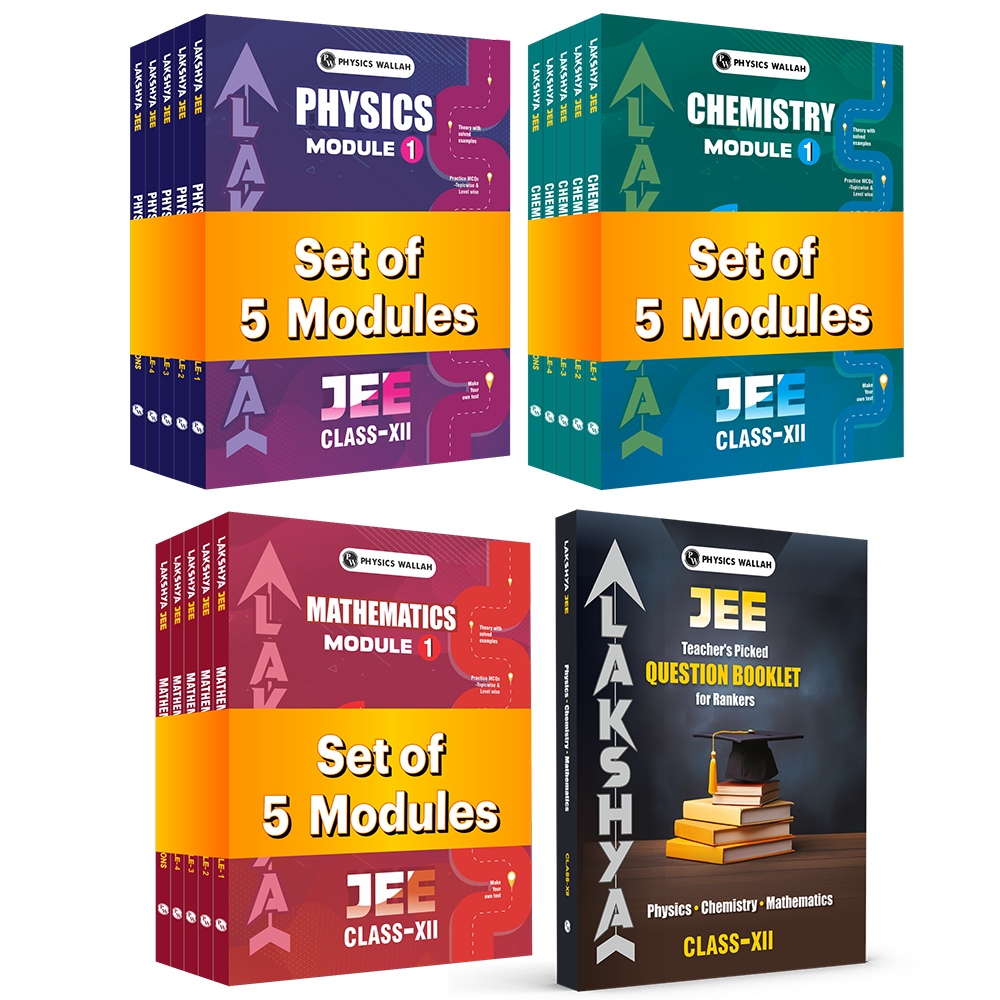
Break your remaining time into separate preparation blocks, with disciplinary actions assigned to ensure you meet the conditions for a perfect score. A well-organized monthly roadmap ensures balance across all subjects. Along with this, the Lakshya JEE Class 12th Combo PCM 2026 can help students maintain structured preparation, systematic revision, and balanced progress across Physics, Chemistry, and Mathematics.
May to August: Foundational Syllabus Tracking
This 4-month time frame is your sun phase for estimating nuts and bolts. While you address any backlogs on the days when Class 11 JEE modules are covered in your timetable, ensure that the currently ongoing and active chapters of Class 12 do not get adversely affected.
-
Daily Question Quota: Aim to answer 50–70 questions from the active chapter booklets for each subject.
-
Class 11 Balance: Devote your weekends predominantly to honing weightage topics, using the Class 11 modules for JEE, and focusing primarily on mechanics (50-75% of your weekend), followed by coordinate geometry (20%) and basic organic chemistry (5%).
-
Tracking Mistakes: Have a notebook specifically for writing down every calculation mistake or misconception that arises while studying on your own.
September to October: High-Weightage Chapters
The closer your deadlines become, the more you should focus on completing the pending class 12 units of JEE. Chapters are divided into two types: high-return chapters dominate the exam pattern, and low-effort ones can be completed in less than 10 days. Make a shift to these chapters.
-
Physics Priorities: Solve all the electrodynamics or ray optics exercises. Approximately 40% of the marks for an active exam are based on these chapters.
-
Mathematics Priorities: Completing Calculus, Vectors, and 3D Geometry using your JEE module class 12 booklets will help at least secure more than 55% of the maths section's questions.
-
Chemistry Deadlines: Finish Chemical Bonding, Coordination Compounds, and Electrochemistry with full-fledged NCERT revision sessions.
November: The Transition Phase
After your baseline text completion is finished, November is the time to move away from regular text and start with timed testing.
-
Block Revision Strategy: Split your entire syllabus into three short conceptual blocks. Review each block as you go through your brief summaries and 50 targeted past-year questions.
-
Error Rectification: Solve again the questions that you marked in your PW modules class 12 JEE sets, but could not answer correctly on the first attempt. Get rid of at least 90% of those nagging mistakes.
-
Baseline Assessments: Take one mini-mock test every 3 days to assess your structural retention in loosely timed conditions.
December to January: Final Study Stage
The last two months are used to simulate an actual exam environment. At this point, do not open any new reference material whatsoever. Instead, focus completely on revision, mock tests, and improving accuracy using your existing resources. Along with this, the Prayas JEE Droppers Modules Combo 2026 can support a structured revision plan by helping students consolidate concepts and maintain consistency during the final phase of preparation.
-
Stamina Scaling: Starting with 2 full mock exams per week is needed to develop a minimum stamina for an exam by writing for weeks, at least from the end of January; you should reach writing anywhere between 4 and 6 mocks every month that passes.
-
The 60-Second Rule: If you can’t find a clear solution path in your head within the first 60 seconds, skip the question immediately!
-
NCERT Drills: Finally, for the last half an hour of every day to be spent on NCERT Inorganic and Organic Chemistry one-liners, so as not to lose your easy marks that are inorganic
Read More - Why PW JEE Modules Are Helpful for Repeaters
JEE Module FAQs
1. Can I crack the January attempt if my JEE module class 11 revision is incomplete?
Yes, you can secure an excellent score by prioritizing the highest-weightage topics in your JEE module class 11 pack. With your limited time, hone in on critical chapters such as mechanics, coordinate geometry, and general organic chemistry. Nailing the basic chapters gives you a big chunk of exam marks.
2. How many questions from the PW modules for JEE should I solve daily?
You must try to solve 50–70 graded questions of each subject every day. Make the questions evenly spaced among basic theory applications, multi-concept exercises, and past-year question sessions to ensure speed in problem-solving.
3. Should I prioritize reference books over my PW JEE modules?
No, you should only have to finalize your first modules. Students who excel in the top 1% opt for a simplified method, as complete modules provide an aggregate of relevant excerpts from multiple reference books in one compact volume. This structured format prevents you from wasting total hours scrolling through irrelevant stuff.
4. What should I do if I cannot finish my PW modules class 12 JEE by November?
Let us assume, though, that you have fallen behind schedule, then immediately switch to a selective study plan. Focus on the exercise portions of the more heavily weighted chapters, and make sure to solve the official question papers from the last ten years in a timely manner.
5. Is solving the past year's questions in the JEE modules enough for the chemistry section?
Although the past-year questions are great for practicing, you must supplement them with a careful, line-by-line reading of your NCERT textbook. Chemistry questions are largely based on statements, so acing the subject is nearly impossible without an incredibly deep familiarity with the textbook.