JEE Advanced Aldehydes and Ketones PYQ Preparation with PW Book
Cracking the organic chemistry section of the Joint Entrance Examination requires more than just memorising name reactions. Many aspirants struggle to bridge the gap between theoretical knowledge and application-intensive problems, especially when tackling complex functional groups.
Practicing JEE Advanced Aldehydes and Ketones PYQ collections helps you understand the exact depth and multi-concept integration demanded by examiners. By shifting focus to previous years' trends, you can streamline your study routine and build genuine problem-solving intuition.
Why JEE Advanced Aldehydes and Ketones PYQ Matter for Aspirants
Organic chemistry frequently tests your ability to connect multiple concepts within a single question. Carbonyl compounds form the backbone of many synthetic pathways, making them a high-weightage topic in the examination. Analysing JEE Advanced Aldehydes and Ketones PYQ exposes you to recurring themes such as nucleophilic addition, acidity of alpha hydrogens, oxidation-reduction reactions, and name reactions like Aldol condensation or Cannizzaro reaction.
When you review past papers, you notice that questions rarely test isolated concepts. Instead, examiners combine stereochemistry, reactive intermediates like carbocations or carbanions, and multi-step synthesis. Relying on standard textbooks alone often leaves students unprepared for the twisting logic applied in the actual test. Working through a dedicated JEE Advanced Chemistry PYQ compilation bridges this gap by presenting authentic challenges.
-
Identifying High-Yield Subtopics: Past papers reveal whether examiners focus more on Grignard reagent additions, qualitative analysis tests like Tollens and Fehling tests, or acidic cleavage.
-
Understanding Question Framing: JEE questions often feature complex phrasing or concealed functional groups that require careful structural decoding.
-
Building Time Management: Regular practice with historical papers trains your brain to parse lengthy reaction sequences swiftly without panicking.
-
Evaluating Conceptual Depth: You quickly realise whether your understanding of resonance and inductive effects is robust enough to predict major products accurately.
Features of a JEE Advanced Aldehydes and Ketones PYQ Book
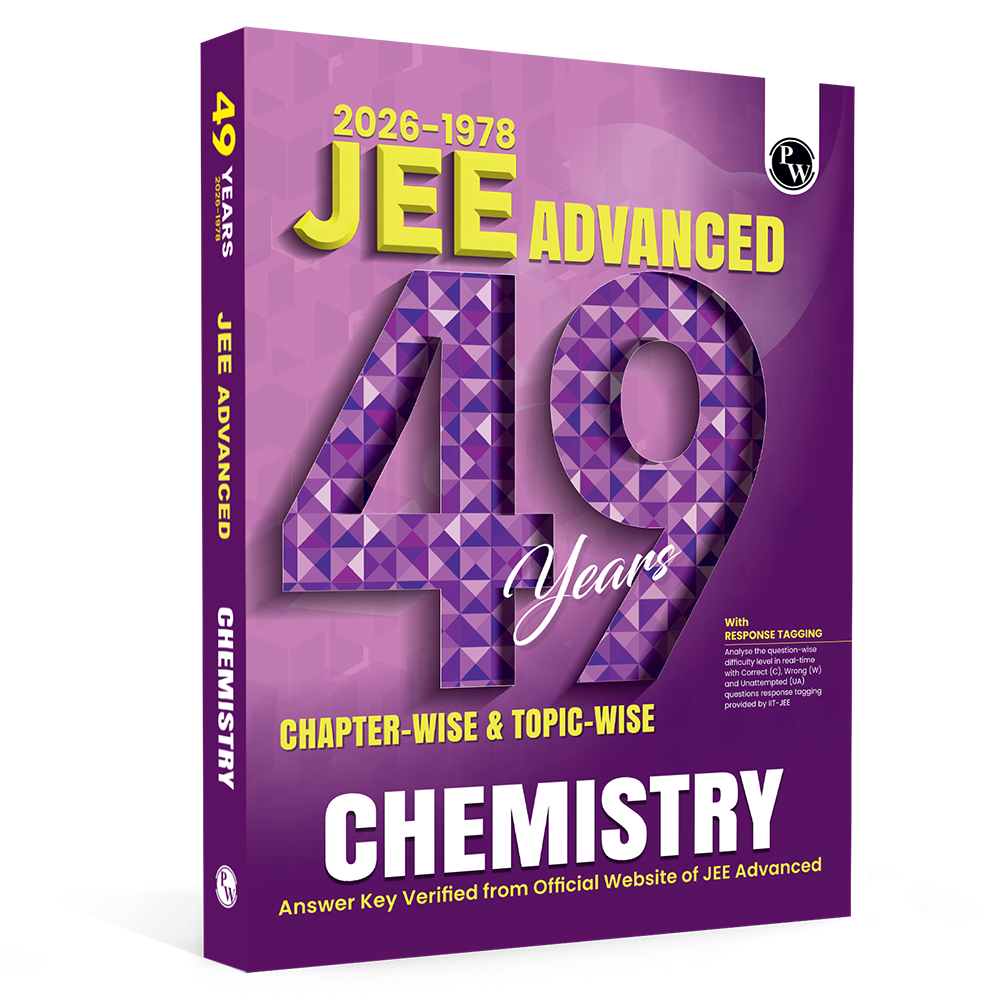
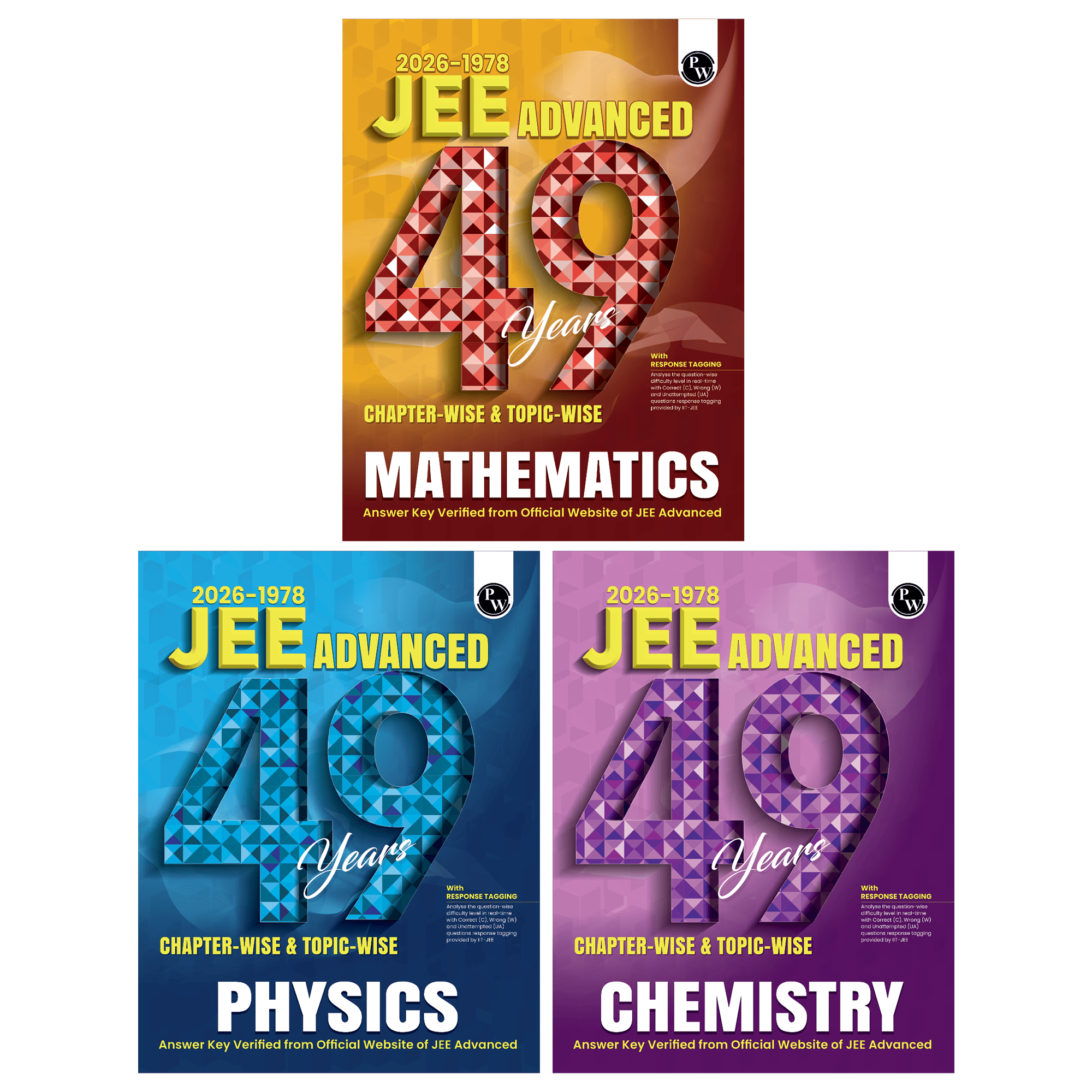
Prepare Chemistry with JEE 49 years of previous year questions, detailed solutions, and useful exam trend analysis.
The book supports concept building, focused practice, revision, and better understanding of the JEE Advanced exam pattern.
-
49 Years of JEE Advanced Chemistry PYQs (1978–2026): Practice questions from 49 years of the IIT JEE Advanced Previous Year Questions. The collection covers important Chemistry topics and different question types for complete practice.
-
Chapterwise & Topicwise Organization: Questions are arranged chapterwise and topicwise to make preparation more focused. This structure helps you learn concepts, revise important areas, and cover the complete JEE Advanced Chemistry syllabus.
-
Detailed Solutions: Understand every answer with clear, step-by-step solutions based on the official JEE Advanced answer keys. This helps improve accuracy and strengthen conceptual understanding.
-
In-Depth Analysis of the Last 7 Years’ Papers: Review the latest seven years of papers to understand JEE Advanced question trends, topic weightage, difficulty levels, and changes in the exam pattern.
-
Performance Data from the Last 14 Papers: Get useful performance insights from the last 14 papers, including correct, incorrect, unattempted, and partially correct responses. This helps you understand mistakes and improve your exam strategy.
-
Trend-Based Learning: Identify important chapters and frequently asked concepts by studying past exam trends. This allows you to focus your time on high-weightage areas during JEE Advanced Chemistry preparation.
-
Comprehensive Revision Resource: Use the book for concept revision, regular practice, self-assessment, and final preparation before the IIT JEE Advanced examination.
How to Analyze JEE Advanced Aldehydes and Ketones PYQ?
Pattern recognition is the secret weapon of top rankers. Instead of solving random problems, successful candidates dissect historical archives to find structural similarities in how questions are set. When evaluating aldehydes and ketones JEE questions, notice how stereo-chemical outcomes are tested through ring-expansion or rearrangement steps.
Consider how carbonyl carbons act as electrophiles. Questions often alter steric hindrance around the carbonyl group to test reaction rates in cyanohydrin formation or bisulphite addition. By categorising problems into distinct tactical buckets, you stop viewing each question as a completely new puzzle.
-
Nucleophilic Addition Pathways: Track how substituents affect the electro-positivity of the carbonyl carbon through electronic effects.
-
Alpha-Hydrogen Acidity: Pay close attention to active methylene compounds and base-catalysed condensations where enolate ion stability dictates the product.
-
Oxidation and Reduction: Master reagents like Jones reagent, PCC, Tollens, LiAlH4, NaBH4, Wolff-Kishner, and Clemmensen reductions by seeing how they appear in sequence problems.
-
Derivative Formation: Analyse how oxones, hydrazones, and semicarbazones are used both for identification and for protecting carbonyl groups during multi-step organic synthesis.
How to Solve JEE Advanced Aldehydes and Ketones PYQ Step by Step?
A structured approach using JEE books transforms raw problem-solving into a skill-building exercise. Simply looking at a solution manual when you get stuck does little to improve your actual exam performance. You need a disciplined protocol to extract maximum value from every single PYQ session.
Begin by setting a realistic timer. Create exam-like conditions by sitting down without distractions, keeping only a rough notebook and pen nearby. Attempt the questions independently, even if it takes ten minutes to break down a difficult reaction mechanism involving cross-aldol condensation or intramolecular rearrangements.
-
Phase One - Independent Attempt: Read the question twice, identify the starting material and reagents, and map out the intermediate steps on paper before writing down the final answer.
-
Phase Two - Detailed Error Logging: If your answer is incorrect, do not just glance at the solution. Write down the exact step where your logic failed. Was it a misjudged steric effect? Did you miss a carbocation rearrangement?
-
Phase Three - Mechanism Re-engineering: Draw out the full electron-pushing mechanism for every incorrect or guessed question. Visualising curly arrows reinforces long-term memory.
-
Phase Four - Revision Cycle: Flag tricky questions and revisit them after one week to ensure the newly acquired problem-solving technique has successfully moved into your permanent knowledge base.
Effective aldehydes and ketones preparation requires this iterative loop of testing, failing, analysing, and re-testing. Without a structured error-logging habit, you risk repeating the same conceptual blunders on test day.
How to Choose a JEE Advanced Aldehydes and Ketones PYQ Book?
Having an authentic, well-structured resource saves countless hours of searching for verified questions and reliable answer keys. A standard jee advanced pyq book should offer more than just raw answer keys; it must contain step-by-step explanatory breakdowns that demystify complex reaction pathways.
When selecting a resource for your chemistry shelf, check for error-free solutions, chapter-wise organisation, and clear demarcation of single-choice, multiple-choice, and integer-type questions. The JEE previous year papers is designed specifically to meet these exact requirements, providing structured archives that align with the latest testing trends.
-
Organised Chapter-Wise Segregation: Look for books that isolate organic chemistry sub-topics so you can practice carbonyl chemistry independently from hydrocarbons or nitrogen compounds.
-
Authentic Past Archives: Ensure the questions reflect actual historical papers without unverified mock questions mixed in arbitrarily.
-
Explanatory Rigour: Solutions should highlight why incorrect options are wrong, which is often more educational than knowing why the correct option is right.
-
Quality of Typography: Chemical structures and reaction mechanisms must be printed clearly to avoid misinterpreting stereochemical dashes and wedges.
Utilising a reliable reference text ensures that your study hours yield measurable improvements in both accuracy and speed.
What Mistakes Should You Avoid in JEE Advanced Aldehydes and Ketones PYQ?
Even diligent students often fall into predictable traps when working through challenging organic chemistry problem sets. Recognising these common mistakes early can save you from losing precious marks during high-stakes testing.
One major trap is relying on rote memorisation of reagents without understanding the underlying electronic environment. For instance, knowing that sodium borohydride reduces aldehydes and ketones to alcohols is helpful, but failing to consider steric hindrance or solvent effects can lead to wrong answers when chemoselectivity is tested.
-
Ignoring Stereochemistry: Many students forget to check whether a chiral centre is created during nucleophilic addition, missing out on optically active product pairs or racemic mixtures.
-
Overlooking Reagent Limitations: Assuming a reagent works under all conditions without checking for acid-base incompatibilities or sensitive functional groups elsewhere in the molecule.
-
Rushing Through Multi-Step Chains: Misinterpreting intermediate products in a three-step sequence guarantees that step two and step three will also yield incorrect outputs.
-
Skipping Qualitative Tests: Neglecting specific chemical tests like the iodoform test or Tollens test, which frequently appear as matching-list type questions in advanced papers.
Focusing intensely on aldehydes and ketones previous year questions helps illuminate these exact pitfalls, training your eyes to spot hidden catches in the question text.
Read More: JEE Advanced Syllabus 2027
JEE Advanced Aldehydes and Ketones PYQ FAQs
What is the best way to start solving JEE Advanced Aldehydes and Ketones PYQ?
Begin by reading your core textbook theory thoroughly to solidify basic mechanisms. Move on to topic-wise archives, starting with single-choice questions before progressing to multi-correct and integer-type problems found in standard practice guides.
Why are aldehydes and ketones important for jee advanced chemistry PYQ practice?
The carbonyl group is extremely versatile in organic synthesis. Examiners test your understanding of nucleophilic addition, acidity of alpha hydrogens, and name reactions by combining them into intricate multi-step reaction sequences.
How many years of aldehydes and ketones previous year questions should I solve?
Aim to cover at least the last ten to twelve years of archives. This window provides an accurate representation of current testing styles, difficulty scaling, and recurring conceptual patterns.
Can I master organic chemistry solely by solving JEE Advanced Aldehydes and Ketones PYQs?
Past papers provide incredible direction, but they must be paired with fundamental theory and regular revision. Use practice archives to test your readiness and uncover weak spots, then return to theory notes to patch those gaps.
What makes the PYQ chemistry book helpful for exam preparation?
It features meticulously organised chapter-wise archives, verified step-by-step explanatory solutions, and clear structural diagrams that help students decode complex reaction mechanisms efficiently.