Using JEE Advanced Physics PYQ Book for Multi-Concept Problem Solving
Facing the final months of your engineering entrance preparation can feel incredibly overwhelming. Many students study hard, memorize formulas perfectly, and yet freeze completely when they open the actual exam paper.
To bridge this gap before your test date, you need a strategy that teaches you how to connect different concepts under pressure. Using a dedicated JEE Advanced PYQ physics book is the most effective way to learn how to break down these complicated questions and build true problem-solving confidence.
What Is JEE Advanced PYQ Physics?
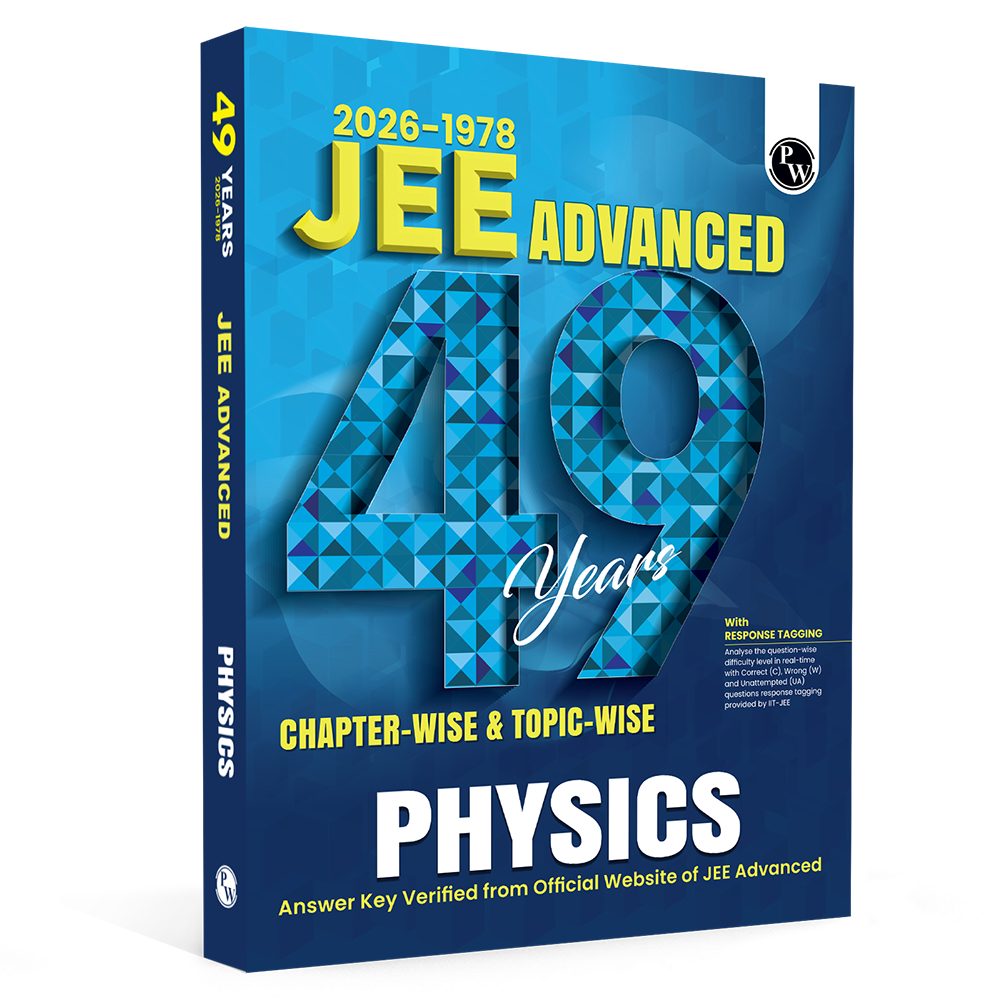
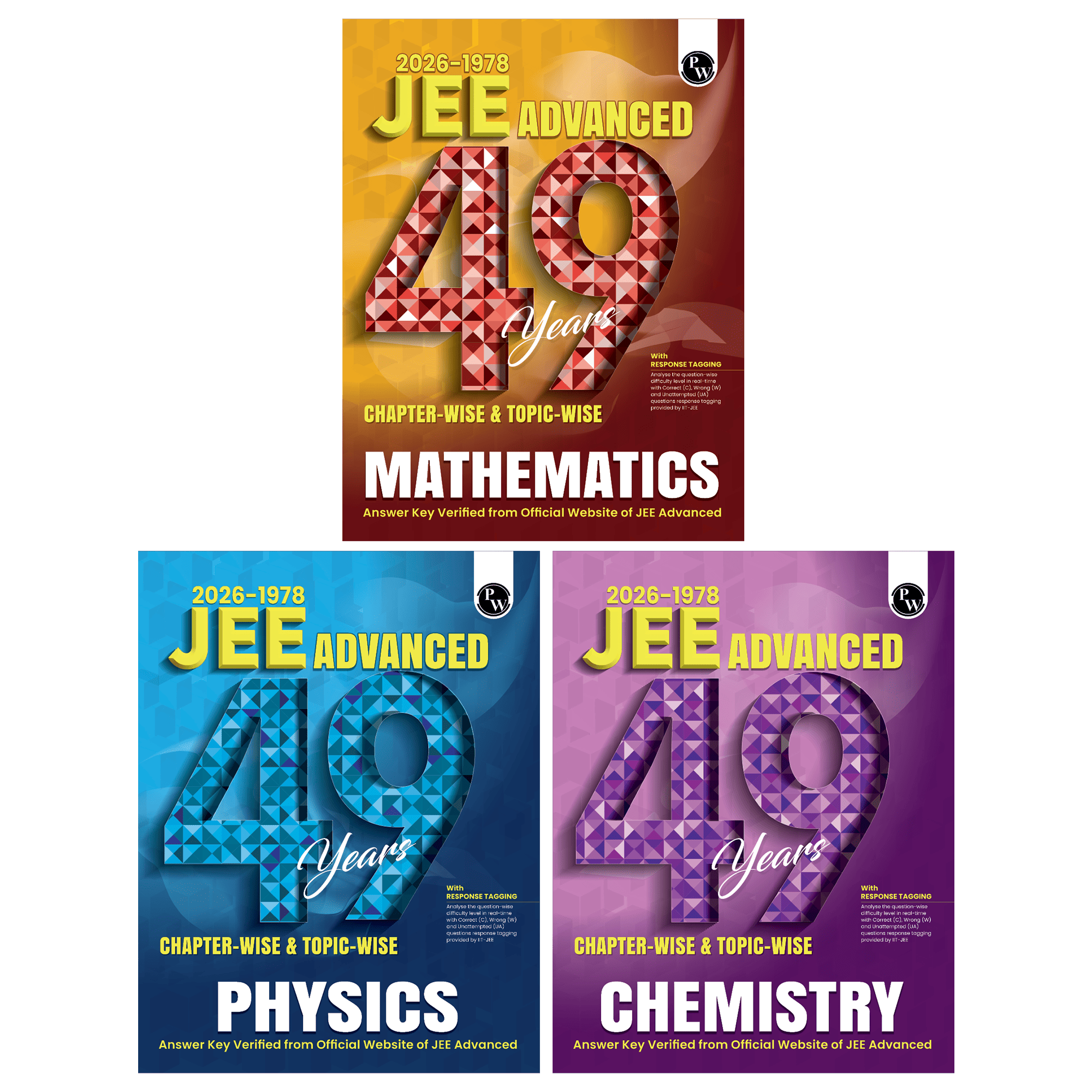
A JEE Advanced PYQ physics book is a structured archive of real questions from past engineering entrance exams spanning from 1978 to 2026. Instead of giving you a random mix of questions.
This comprehensive volume compiles 49 years of authentic papers into a highly organized, user-friendly format. It acts as a direct link between basic theoretical knowledge and the actual difficulty level of the test.
An authentic past year collection includes these essential components:
-
Chapterwise physics organization that allows for targeted revision across the complete current syllabus.
-
Topicwise solved papers that help you strengthen individual concepts step by step.
-
Detailed solutions precisely aligned with the official answer keys to ensure complete conceptual clarity.
-
In-depth analysis of the last 7 years' papers to track evolving exam patterns and difficulty levels.
-
Performance data from the last 14 papers providing insights into student response trends.
Why Is JEE Advanced PYQ Physics Useful for Multi-Concept Questions?
The ultimate engineering screening exam rarely tests a single concept on its own. A single question might require you to use the principles of rotational dynamics alongside electrostatic equations. Utilizing a JEE Advanced PYQ physics book trains your brain to identify and separate these different layers smoothly.
When you practice regularly with genuine JEE Advanced PYQs, you learn to look past the intimidating language of a problem to find the core physical principles underneath. This consistent exposure turns what looks like a completely new problem into a series of familiar, logical steps.
Practicing with multi concept physics questions gives you a significant advantage in several ways:
-
Reveals hidden connections: You learn exactly how examiners combine distinct topics, like merging electromagnetic induction with simple harmonic motion.
-
Improves analytical speed: Working through previous year questions teaches you to recognize the required formulas immediately, saving you valuable time during the test.
-
Builds strategic confidence: Reviewing real trend data helps you see which topic combinations appear most often, taking the guesswork out of your revision.
Important Chapters in JEE Advanced PYQ Physics
To get the most out of your JEE Advanced PYQ physics book, you should prioritize the chapters that carry the most weight. Historical trend analysis charts from the last 7 years show that specific chapters form the foundation for the most complex, multi-layered questions.
Focus your daily physics problem solving practice on these essential syllabus sections:
|
Chapter Group |
Key Sub-Topics Included |
Why It Features In Multi-Concept Questions |
|
Mechanics |
Rotational Motion, Gravitation, Work-Energy |
Forms the structural baseline for almost every multi-stage problem across other topics. |
|
Electrodynamics |
Gauss's Law, Faraday's Law, Alternating Current |
Frequently combined with mechanics or properties of matter to test your deeper understanding. |
|
Thermodynamics |
Kinetic Theory, Calorimetry, Isothermal Shifts |
Commonly linked with mechanical work, volume changes, and energy conservation principles. |
|
Modern Physics |
Photoelectric Effect, Nuclear Decay, Bohr's Model |
Blends theoretical conceptual clarity with precise, multi-stage mathematical execution. |
How to Use JEE Advanced PYQ Physics?
Simply reading through past papers like a textbook will not improve your skills. You need an active, structured method to tackle complex problems. Using your JEE books effectively requires a clear, step-by-step approach to self-assessment.
Follow this regular workflow when working through your past papers:
1. Identify the Separate Concepts
When you start a new question, do not rush to calculate the answer immediately. Read the text carefully, list out the different topics involved, and write down the formulas needed for each section.
2. Solve the Problem Chronologically
Multi-layered questions are designed to be solved in a specific order. Find the initial value using the first topic's rules, then use that result as the starting point for the next part of the problem.
3. Verify with Aligned Detailed Solutions
After finishing your calculation, compare your work with the detailed solutions in your book. Do not just look at the final answer; verify every step of your method against the official answer keys to make sure your logic is perfectly correct.
To strengthen your preparation further, practise regularly with JEE Previous Year Papers. Solving authentic JEE Main and JEE Advanced questions helps you understand the latest exam pattern, identify frequently tested concepts, improve time management, and develop the confidence needed to perform well in the actual examination.
Study Plan for Using JEE Advanced PYQ Physics
To build consistent accuracy, you should follow an organized study plan during your Advanced preparation phase. This timeline helps you move smoothly from basic topic practice to handling full-length exam papers under real test conditions.
Here is a 12-week study plan to structure your final revision:
-
Weeks 1 to 4 (Topic-wise Segregation): Work through your book by selecting specific topics one at a time. Focus entirely on understanding how different concepts connect, without worrying about the clock.
-
Weeks 5 to 8 (Timed Chapterwise Drills): Group your practice by chapter and introduce strict time limits. Use the trend-based learning charts to focus your energy on the highest-weightage areas.
-
Weeks 9 to 12 (Full-Length Simulation): Solve complete past papers from start to finish under real exam conditions. Use the performance data from the last 14 years to identify your weak spots and fine-tune your approach.
Tips to Improve Accuracy with JEE Advanced PYQ Physics
Succeeding in this competitive exam requires both deep conceptual understanding and precise execution. Small calculation mistakes or misreading a question can cost you valuable marks, even if you understand the physics behind the problem.
Use these practical tips during your practice sessions to reduce errors:
-
Write down all your steps clearly: Avoid doing mental math when solving complex problems. Keeping your calculations neatly written out makes it much easier to spot and correct any mistakes.
-
Analyze your errors thoroughly: When you get a question wrong, figure out exactly why. Did you misinterpret the concept, make a calculation error, or simply run out of time?
-
Review difficult questions regularly: Keep a record of the problems you find challenging. Re-visit these specific questions two weeks later to make sure you have truly mastered the concepts.
To strengthen your preparation further, combine PYQ practice with JEE Modules, which provide structured chapter-wise theory, concept-building exercises, and exam-oriented practice questions. Studying from well-designed modules alongside previous year papers helps reinforce fundamentals, improve accuracy, and build confidence for both JEE Main and JEE Advanced.
Read More: How Much Score Is Good in JEE Advanced?
JEE Advanced PYQ Physics FAQs
How do multi concept physics questions help in clearing the engineering cutoff?
These questions carry significant weight in the exam, meaning that learning to solve them reliably gives you a major advantage and helps boost your overall score well above the basic cutoff line.
Why should I choose a chapterwise physics layout over mixed mock tests?
A chapterwise layout allows you to isolate and fix specific weaknesses in your understanding before you try to solve mixed, full-length papers under exam conditions.
Can practicing past papers substitute for reading core theoretical textbooks?
No, practicing past papers works best as a way to apply what you have already learned; you still need a strong foundation from your textbooks to understand the underlying principles.