Why Prayas Modules Are Important for JEE Droppers?

Starting a dropper year feels like standing at a crossroads. You have the ambition and the previous year's experience, but the pressure to perform is higher than ever. Many students struggle with the same old cycle: reading too much theory, practising irrelevant questions, or losing track of the updated exam pattern.
Managing time becomes a nightmare when you have to juggle three subjects and bridge the gaps in your concepts within a few months. The JEE Prayas modules act as a structured roadmap for this intense journey, ensuring you don't just study hard, but study right for the 2026 attempt.
Check Out - JEE Modules
Overview of JEE Prayas Modules for Droppers
The JEE Prayas modules are specifically designed for students who are taking a second chance at the Joint Entrance Examination. Unlike standard school books, these modules recognise that a dropper needs a balance of quick revision and intensive problem-solving.
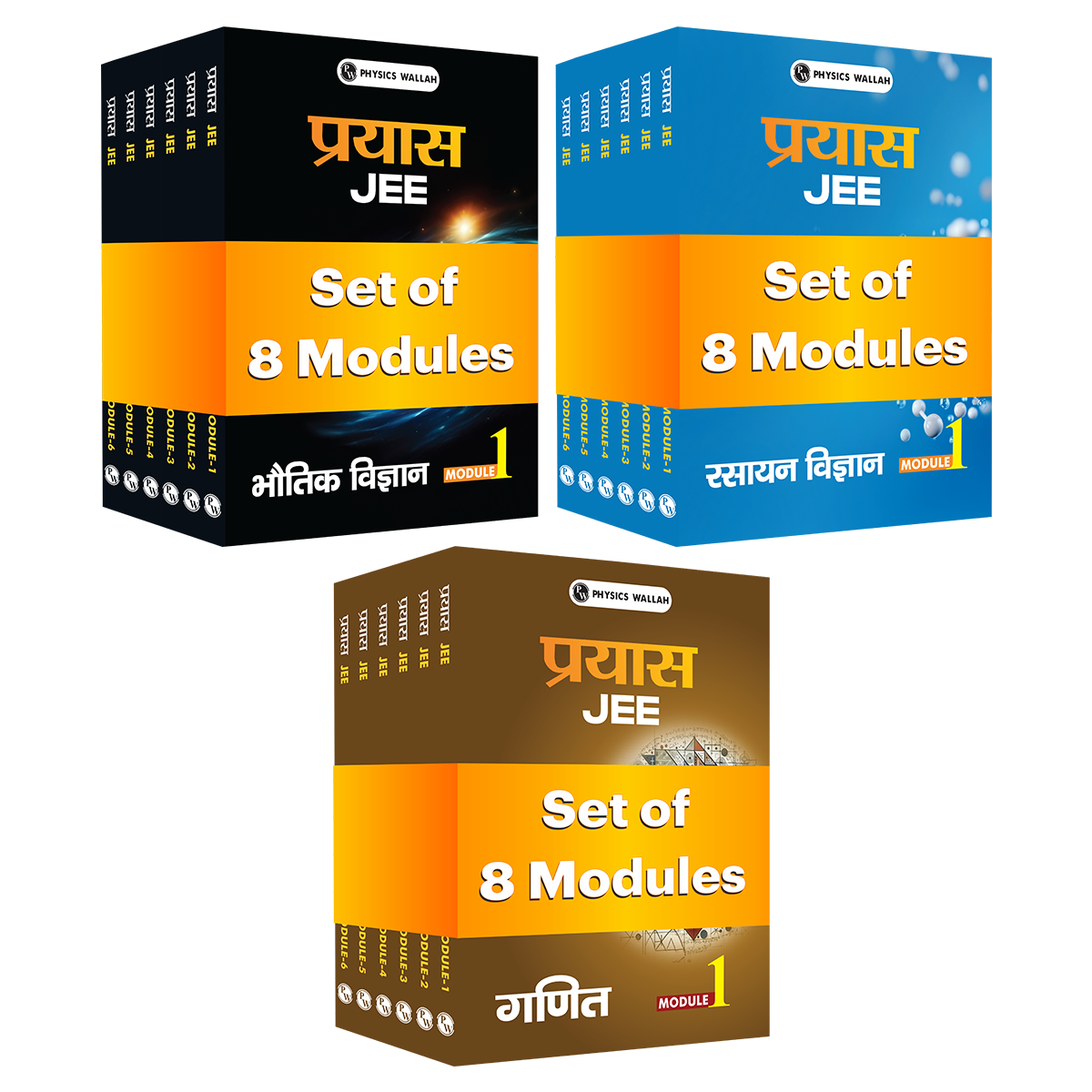
This combo set includes 24 books covering Physics, Chemistry, and Mathematics, providing a comprehensive preparation ecosystem.
Every chapter is broken down into manageable sections that align with the latest JEE Main and Advanced patterns. Whether you are starting from scratch on a weak topic or looking to polish a strong one, the structure of these modules for JEE ensures you stay on the right track.
Features of JEE Prayas Modules
Understanding what is inside your study material helps you utilise it better. These JEE Prayas modules are packed with features that cater to the specific needs of competitive exam aspirants.
-
100% JEE Pattern Coverage: Every topic is mapped according to the current syllabus, ensuring no time is wasted on outdated concepts.
-
Integrated JEE PYQs: Previous Year Questions are embedded within the chapters to show you exactly how a concept is tested.
-
Smart Topic-wise Weightage: The modules highlight which areas carry more marks, helping you prioritise your study hours.
-
QR-Based Custom Tests: You can scan codes to access digital tests, allowing for real-time assessment of your preparation level.
-
Graded Practice Exercises: Questions range from basic conceptual checks to high-level analytical problems.
Components of JEE Prayas Modules
To master a subject, you need more than just a list of formulas. The internal structure of this module follows a pedagogical flow that builds confidence step-by-step.
1. Detailed Theory for Concept Clarity
The theory section is comprehensive yet easy to follow. It focuses on strengthening core concepts while supporting advanced problem-solving techniques. This is crucial for droppers who might have missed the "why" behind certain formulas in their first attempt.
2. Prarambh: Topic-wise Questions
As the name suggests, this is your starting point. These questions are structured topic-wise for focused practice. It helps you master individual concepts gradually before moving to complex mixed-topic problems.
3. Prabal: JEE Main Level Practice
This section focuses on exam-aligned questions that improve your accuracy and speed. Since JEE Main is often a race against time, practising with JEE modules specifically tailored for this level is vital.
4. Parikshit: JEE Advanced Level Questions
For those aiming for the IITs, this section provides high-level problems with varied formats. It is designed to build the analytical depth and exam confidence required to tackle the toughest engineering entrance test in India.
How JEE Prayas Modules Help Students Improve Scores
Using the right PW modules for JEE can be the difference between a stagnant score and a massive jump in your percentile. Droppers often face the "plateau effect" where their marks stop increasing. Here is how these modules help break that barrier.
1. Rebuilding Confidence
The dropper year is mentally taxing. By starting with "Prarambh" and moving to "Prabal," students see tangible progress. This gradual increase in difficulty ensures you don't get discouraged by jumping into hard problems too early.
2. Eliminating Guesswork
With "Smart Topic-wise Weightage," you no longer have to guess which chapters are important. The Prayas JEE 2026 module tells you exactly where the examiners focus their attention, allowing you to spend more time on high-yield topics.
3. Error Analysis through Solutions
The combo includes detailed, step-by-step solutions. Instead of just checking if an answer is right or wrong, you can understand the logic behind the correct choice. This self-evaluation is key to performance improvement.
Check Out: JEE Previous Year Papers
When to Use JEE Prayas Modules for Best Results
Timing is everything in a dropper year. Since you have roughly ten months to finish a two-year syllabus, you must use your JEE Prayas modules strategically.
-
During Live Classes: Keep the module open while attending lectures. Use the theory section to supplement your notes.
-
Immediate Post-Class Practice: Solve the "Prarambh" section the same day a topic is taught to lock in the concept.
-
Weekend Revisions: Use the "Prabal" and "Parikshit" sections during weekends to test your retention of the week’s topics.
-
Mock Test Preparation: Before any major test, go through the "Smart Weightage" and solve the integrated PYQs.
Study Strategy Plan with JEE Prayas Modules
To get the most out of your JEE dropper modules, follow this systematic four-step plan.
Phase 1 : The Foundation
Give lots of attention to the theory part and “Prarambh”. Your main aim is to correct the faults from before and ensure your fundamentals are absolutely clear.
Phase 2: Building Speed
Shift your focus to the "Prabal" section. Start timing yourself while solving questions. Use these modules to identify types of questions that take you the longest and find shorter methods in the solutions provided.
Phase 3: Analytical Depth
This is the time to tackle "Parikshit" and “Challengers." These sections will push your thinking limits. At this stage, you should also be scanning the QR codes to take custom tests that simulate the exam environment.
Phase 4: Final Revision
Focus almost entirely on the Integrated JEE PYQs. Review the smart weightage charts one last time to make sure you haven't missed any high-priority sub-topics.
Check Out: JEE Test series
Tips for JEE Prayas Modules
To see a direct impact on your scorecard, you must engage with the JEE Prayas modules actively rather than passively.
-
Active Recall: After reading a page of theory, close the book and try to write down the three main points.
-
Marking Tough Questions: While solving "Prabal" or "Parikshit," circle the questions you couldn't solve in the first go. Return to these during your monthly revision.
-
Solution Comparison: Even if you get an answer right, look at the provided solution. There might be a faster way to solve it that you hadn't considered.
-
Trend Analysis: Use the PYQ section to notice patterns. For example, if a specific type of projectile motion question appears every two years, make sure you master that specific variety.
Read More: Features of PW JEE Prayas Dropper Modules for Exam Preparation
JEE Prayas Modules FAQs
1. Is this enough for JEE Advanced?
Definitely, as there is one special module called "Parikshit" for advanced-level problems for JEE, and also "Challengers".
2. Are there previous year questions in the Prayas JEE 2026 modules?
There are JEE PYQs embedded in each chapter that will help you to analyse the pattern of exams and also solve previous year questions while preparing.
3. How many books are there in these modules?
It consists of a total of 24 books of Physics, Chemistry, and Mathematics.
4. Can I prepare for JEE from scratch using these modules?
Yes, the "Detailed Theory" and "Prarambh" modules are made for strengthening fundamentals from the very beginning.
5. Are the answers given to these JEE dropper modules?
Yes, as there are complete solutions provided in these modules with answer keys.