PW Modules vs NCERT for JEE: What Should You Follow?
JEE modules are essential for mastering the complex problem-solving and speed required for the exam. For a top rank, use PW JEE modules for intensive practice and advanced application. The problem isn't a lack of resources; it is the "choice paralysis" caused by having too much to study. NCERT provides the basic grammar of science, but JEE is an exam that tests your ability to write complex poetry with those rules. This article breaks down how to balance both resources to maximise your percentile.
Check Out: IIT JEE Books
Why is NCERT important for JEE?
NCERT is the "bible" for many JEE aspirants, particularly for JEE Main. Since the National Testing Agency (NTA) often designs questions directly from the lines of NCERT, ignoring these books is a mistake.
-
Chemistry Supremacy: For inorganic and organic chemistry, NCERT is important. Many questions in the JEE Main paper are picked directly from the "Exercises" or "In-text" questions.
-
Conceptual Clarity: Physics NCERT is excellent for understanding the theory behind laws, though it lacks the variety of numerical problems needed for JEE Advanced.
-
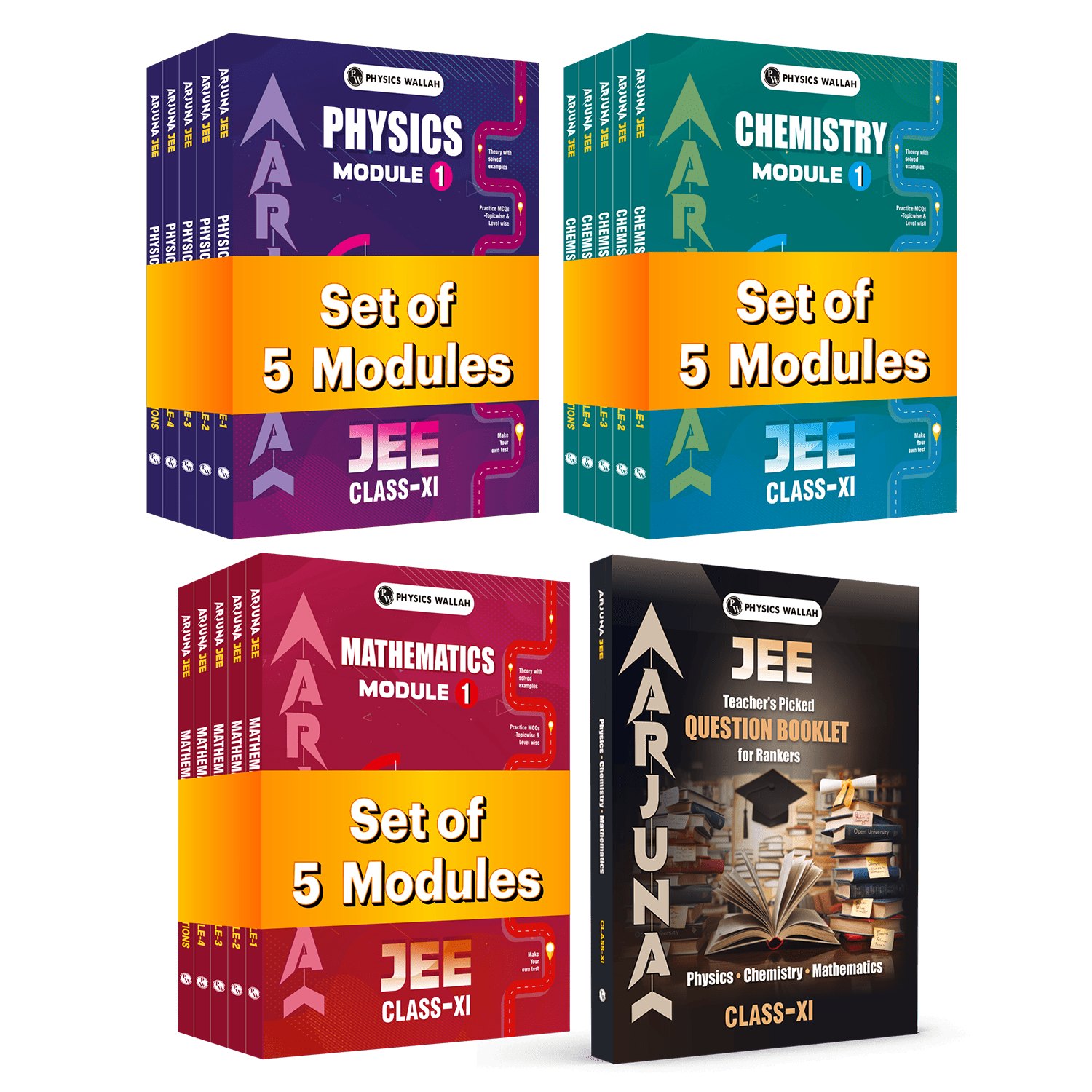
Foundation Building: If you are using an Arjuna JEE module for Class 11, you will notice the language aligns with NCERT, making the transition from boards to competitive exams smoother.
Check Out: School Books
Why are JEE Modules Important for Preparation?
While NCERT covers the "what", modules cover the "how". The competitive nature of the exam requires you to know shortcuts, advanced applications, and multi-concept problems that standard school textbooks simply do not offer.
1. Level-wise Problem Solving
Standard textbooks usually offer a few questions at the end of a chapter. In contrast, PW modules are divided into different "exercises" or Level 1 typically covers basic applications (main level), while Level 2 and Level 3 push you towards the complexity of JEE Advanced.
2. Time-Saving Techniques
A major part of JEE is time management. JEE modules provide "Shortcuts" and "Points to Remember" that help you solve lengthy integration or mechanics problems in seconds.
3. Topic Segregation
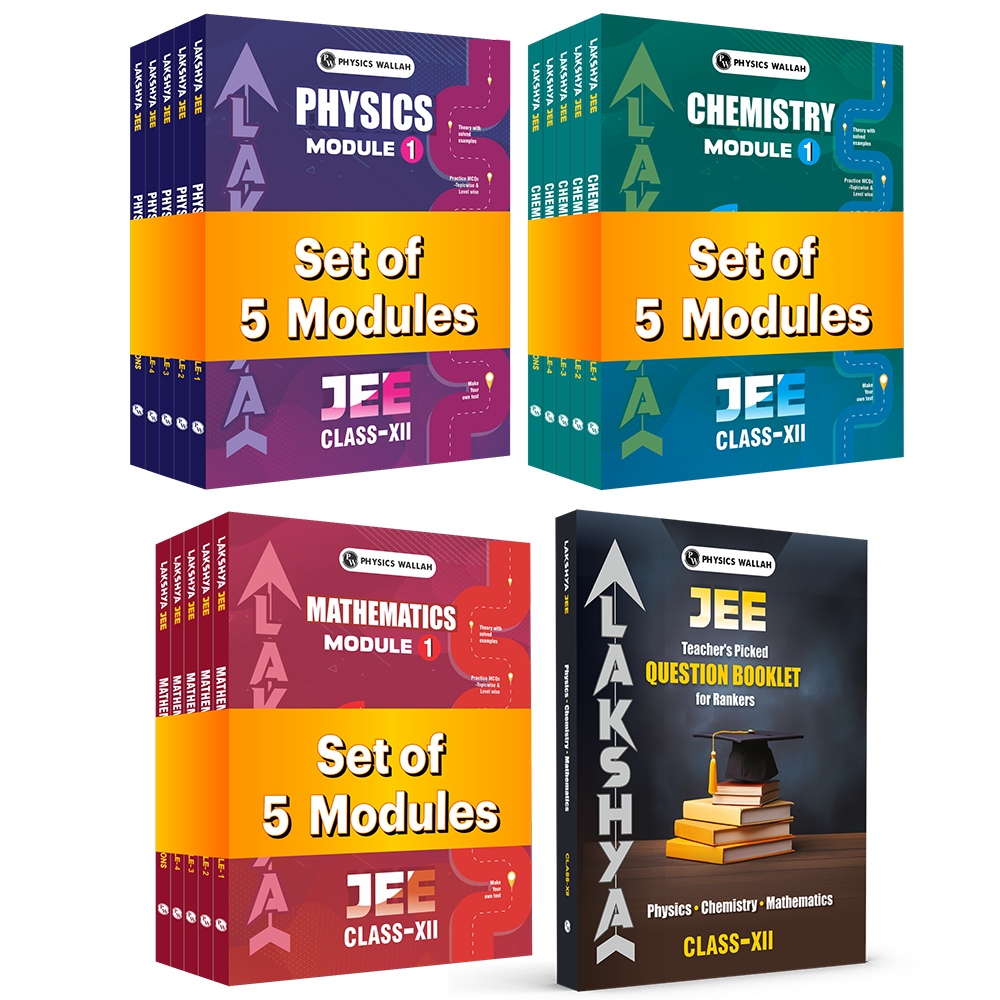
In a standard textbook, topics might be clubbed together. Specialised modules like the Prayas JEE module for droppers or the Lakshya module for Class 12 break down chapters into sub-topics. This allows you to practise "projective motion" specifically before moving on to "relative motion".
Comparison of PW JEE Modules
Physics Wallah offers tailored sets of books based on which stage of the journey you are in. Choosing the right set ensures you aren't overwhelmed by the difficulty level too early or too late.
|
Batch/Module Type |
Target Audience |
Primary Focus |
|
Arjuna JEE 2026 Module |
Class 11 Students |
Building fundamentals and 11th Syllabus depth. |
|
Lakshya JEE 2026 Module |
Class 12 Students |
Advanced application and 12th Board + JEE sync. |
|
Prayas JEE 2026 Module |
Droppers/Repeaters |
High-speed revision and intensive problem-solving. |
Arjuna JEE Module Class 11
The Arjuna JEE module Class 11 is designed for students who are just stepping into the world of competitive exams. It focuses heavily on bridging the gap between Class 10 science and the vast syllabus of Class 11. It includes detailed theory that complements the NCERT but adds the "competitive edge" through solved examples.
Lakshya JEE Module
For those in their final school year, the Lakshya JEE module prioritises the Class 12 syllabus while maintaining a connection to 11th-grade concepts. It is structured to help students balance their board practicals with the rigorous demands of JEE Advanced.
Prayas JEE Module
The Prayas module is built for the "warriors", the droppers. Since these students have already seen the syllabus once, the focus here is less on basic theory and more on diverse problem types and previous year questions (PYQs).
Advantages of PW JEE Modules
Choosing PW modules for JEE from the PW Store provides several strategic advantages that general reference books lack. These books are crafted by experts who analyse the shifting patterns of the NTA.
-
Detailed Explanations: Every question in the module comes with a step-by-step solution, ensuring you don't get stuck at 2 AM while self-studying.
-
Comprehensive PYQs: You get a dedicated section for previous years' questions, categorised by topic. This helps you see how a specific concept like "rotational mechanics" has evolved over the last 10 years.
-
Formula Sheets and Summary: At the end of every chapter, there is a "Concept Map" or summary. This is vital for the last 30 days before the exam when you cannot afford to read 50-page chapters.
-
Match the Difficulty: The modules are updated annually. The Arjuna module and Prayas JEE 2026 module are specifically synced with the latest syllabus changes, ensuring you don't study deleted or irrelevant topics.
PW JEE Modules Overview
PW JEE Modules are designed to make JEE preparation more structured and manageable for aspirants across different stages. They cover Physics, Chemistry, and Mathematics in a format that focuses on concept clarity as well as regular problem practice. The content is organised to help learners move from understanding theory to applying it in exam-style questions without feeling overwhelmed.
Choose the Right PW JEE Module
The right module depends on your preparation stage:
-
Arjuna JEE Module: Best suited for Class 11 students building their base.
-
Lakshya JEE Module: Designed for Class 12 students balancing board exams and JEE.
-
Prayas JEE Module: Meant for droppers who need revision, speed, and deeper practice.
Key Features of PW JEE Modules
PW JEE Modules offer more than plain chapter notes. Some useful features include:
-
clear explanations with examples, diagrams, and topic-wise coverage
-
graded practice questions from basic to advanced level
-
previous years’ question exposure for exam familiarity
-
chapter-wise and topic-wise problem practice
-
step-by-step solutions for better self-study
-
summaries and revision support for quicker recall
How to Prepare With PW JEE Modules
To use these modules well, follow a simple pattern:
-
read the theory carefully before jumping into questions
-
make short notes and mark important formulas
-
solve examples first, then move to exercises
-
practise PYQs to understand question trends
-
revise weak chapters regularly
-
use tests and self-checks to track improvement
Also Check, JEE Test series
PW JEE Modules for Self-Study
These modules can also support self-study because they combine theory, practice, and solutions in one place. With disciplined revision and regular mock practice, they can become a dependable part of a JEE preparation plan.
How to Use NCERT and JEE Modules Together?
To get a rank under 10,000, you cannot choose one over the other. You must use them in tandem. Follow this workflow for every chapter:
-
The Reading Phase: Read the chapter from NCERT first. This sets the stage and ensures your board preparation is handled.
-
The Depth Phase: Open your JEE modules and read the "Extra Edge" topics. These are concepts not in NCERT but frequently asked in JEE.
-
The Practice Phase: Start with the Solved Examples in the module. This teaches you how to apply the theory.
-
The Assessment Phase: Solve Level 1 and Level 2 exercises. If you are preparing for Advanced, move to the multi-correct and matrix-match questions.
-
The Revision Phase: Use the summary notes in the PW modules for weekly revision.
Right Choice for JEE Preparation
If your goal is just to pass or score decent marks in boards, NCERT is enough. However, if your goal is an IIT or NIT, modules are your primary weapon. They provide the rigour, the variety, and the testing framework that NCERT lacks.
The best approach is to treat NCERT as your foundation and the PW modules as your skyscraper. You cannot build the latter without the former, but you cannot live in a foundation alone.
Read More: Features of PW JEE Arjuna Class 11 Modules for Exam Preparation
PW Modules vs NCERT for JEE FAQs
Are PW modules enough for JEE Main and Advanced?
Yes, PW modules for JEE are comprehensive. They cover theory, solved examples, and multiple levels of exercises, including previous years' questions, making them sufficient for both the Main and Advanced levels.
Should I buy the Arjuna JEE module Class 11 if I am starting late?
Absolutely. The Arjuna module is structured to help students catch up by focusing on high-weightage topics and providing clear, simplified explanations for complex concepts.
Is NCERT Chemistry more important than JEE modules?
NCERT is essential for the theoretical part of inorganic and organic chemistry. However, for physical chemistry calculations and advanced organic mechanisms, referring to the JEE modules class 11 is necessary to score high.
What is the difference between the Prayas and Lakshya modules?
The Lakshya module is designed for Class 12 students to balance school and JEE, while the Prayas module is optimised for droppers, focusing on a faster pace and more intensive practice.
Can I rely solely on the Lakshya JEE 2026 module for my boards?
While the Lakshya module covers board-relevant topics, it is recommended to keep the NCERT as a reference for the specific answer-writing format required in board exams.