Which JEE PYQ Years are Most Critical to Solve for 2027 Preparation
Preparing for national-level engineering tests requires balancing a massive syllabus with limited time. If you are a student targeting the 2027 exam cycle, you are likely in the middle of your preparation right now, dealing with complex concept building.
At this mid-term stage, regular practice with real past papers is non-negotiable. However, trying to solve several decades of questions can cause burnout. Knowing which specific JEE PYQ questions to prioritise helps you focus your hard work on the trends that actually mirror the modern engineering entrance system.
Importance of JEE PYQ Papers?
Using past papers as a primary study resource is one of the smartest ways to get ready for your upcoming test. Instead of randomly solving practice sets, focusing on a dedicated JEE PYQ collection keeps your preparation grounded in reality.
Past sets provide insight into standard testing methodologies and ensure you invest your time productively.
-
Understand Question Types: Practising real sets helps you understand the exact type of questions asked, from simple application items to complex multi-concept problems.
-
Grasp the Real Exam Pattern: Working through genuine papers ensures you learn the exam pattern thoroughly, minimizing unexpected surprises when you finally sit for the actual test.
-
Build Realistic Time Management: Solving full-length past tests teaches you how to manage time better under actual test conditions.
-
Track Your Improvement: Measuring your marks against historical cut-offs allows you to test your preparation and improve step by step.
How JEE PYQ Papers Help Understand the Current NTA Pattern?
The National Testing Agency (NTA) has continuously modified the structure, layout, and balance of the engineering entrance exam. Because of these updates, materials like a modern JEE Mains previous year question paper pack hold unique value for matching current testing trends.
-
Changes in Numerical Formats: The introduction of compulsory and optional integer-type or numerical value questions requires extreme arithmetic precision. Recent papers reflect these specific formatting constraints perfectly.
-
Shift in Topic Weightage: Certain chapters that were highly dominant ten years ago are now given less weight, while practical or analytical topics have grown in importance.
-
Tracking Modern Difficulty Levels: NTA has established a unique style for testing basic concepts. Staying updated with the latest trends ensures you always practice with questions matching the contemporary difficulty level.
By sourcing a recent JEE previous year papers PDF, you ensure that your timed practice runs mimic the modern screen presentation and structural logic used by the testing board.
Why Solving JEE PYQ Papers Is Important?
Using past questions is not just about measuring your current knowledge; it serves as an active learning mechanism. Incorporating a dedicated JEE PYQ routine into your regular study calendar shapes your analytical mindset.
1. Spotting Repeated Concepts
While exact phrasing changes, the underlying engineering and mathematical principles rarely do. Consistently studying past papers lets you easily spot frequently asked concepts and chapters, showing you exactly where to focus your revision.
2. Comprehensive Variety Coverage
Quality resources compile every possible testing format into one place. This includes single-correct answers, multiple-correct matrices, paragraph-based comprehensive MCQs, matching-type formats, and precise integer questions.
|
Question Format |
Primary Skills Developed |
Practical Benefits for Students |
|
Single Correct MCQs |
Speed and elimination tactics |
Helps score quickly in foundational sections |
|
Multiple Correct MCQs |
Deep conceptual depth |
Eliminates guesswork by demanding complete accuracy |
|
Comprehension Paragraphs |
Analytical and reading skills |
Enhances processing speed for complex data |
|
Numerical/Integer Value |
Calculation precision |
Eliminates option-dependent reverse engineering |
Which Years Should You Cover Between JEE PYQ for Main and Advanced
Your focus should shift depending on whether you are preparing for the preliminary stage or the final advanced engineering screening. Balancing resources like a JEE Mains PYQ series against a JEE Advanced PYQ plan requires looking at different historical timelines.
-
The Ideal Timeline for Mains
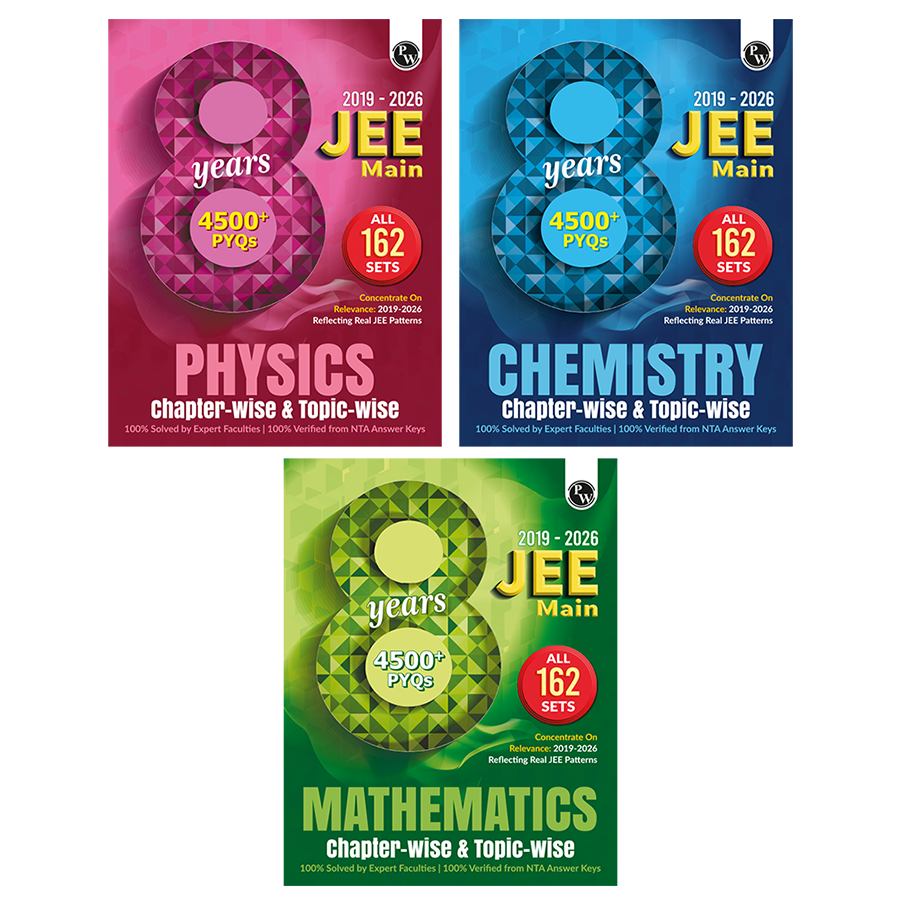
For the Mains format, you should focus heavily on papers from 2019 to 2026. Since NTA conducted multiple sessions and shifts per year during this phase, this 8-year block provides hundreds of distinct question papers. This massive collection gives you an exhaustive database covering every sub-topic in the syllabus.
-
The Ideal Timeline for Advanced
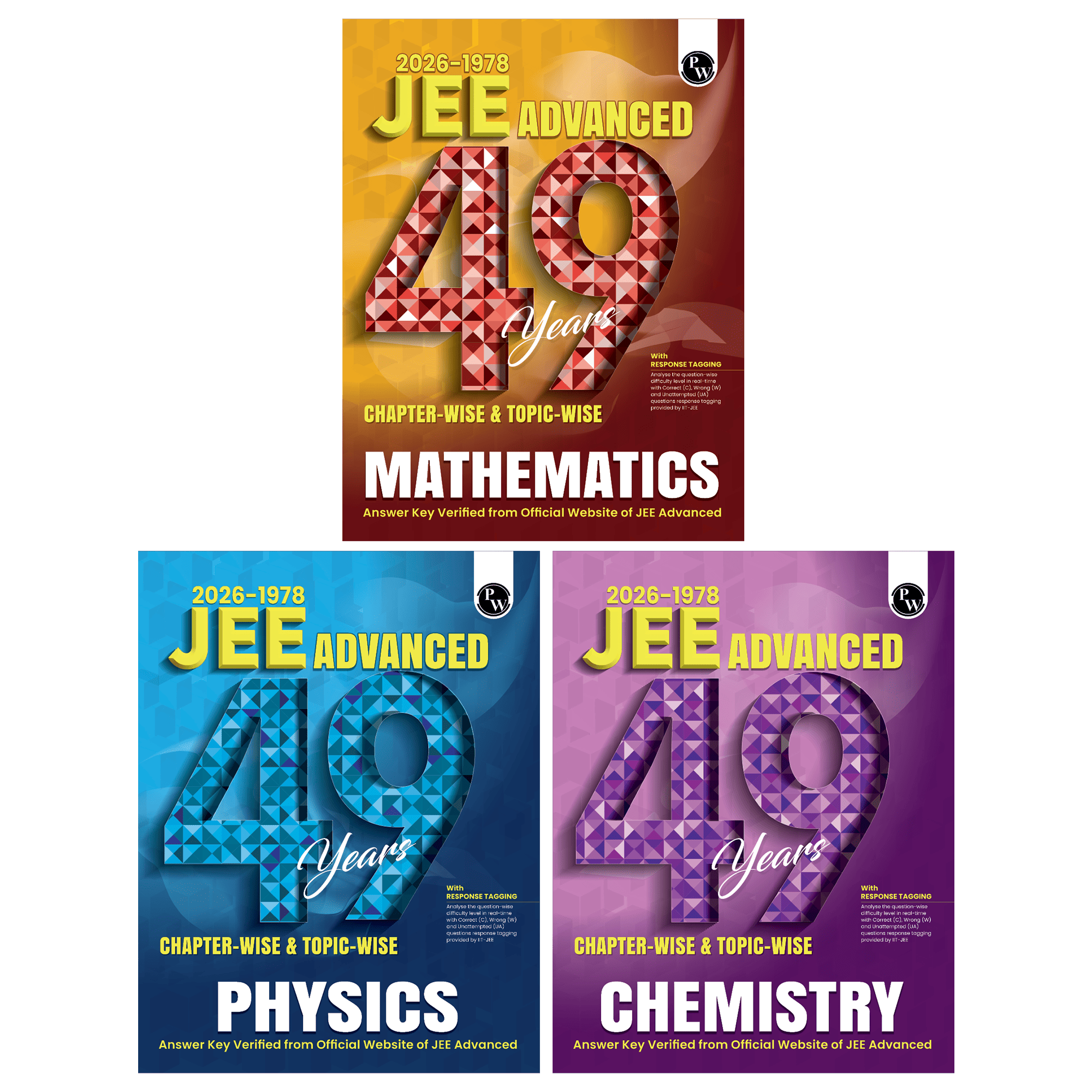
For the Advanced tier, a broader historical perspective is much more beneficial. Using a compilation spanning 49 Years allows you to trace the big conceptual changes in IIT testing since the late 1970s. This long timeline contains the deep, multi-tiered questions necessary for hitting top ranks.
-
Mains Focus: Prioritise an 8-year book or online bank (2019–2026) to align with high-volume shift patterns.
-
Advanced Focus: Utilize a comprehensive 49-year archive to experience complex, multi-layered problems across generations.
-
The Modern Baseline: Ensure you include the latest fully solved papers to learn from real, step-by-step master solutions.
How to Use New and Older JEE PYQ Papers?
Having the right materials, like a comprehensive JEE previous year question paper set, is only half the battle; you also need an effective practice strategy.
Step 1: Start Immediately After Each Chapter
Do not wait until the entire syllabus is finished to open your past papers. Once you finish a specific topic in class, solve related questions from your chapter-wise archive right away. This tests your immediate understanding and helps you spot common question types from that specific chapter.
Step 2: Use Sorted, Chapter-Wise Materials
Working through a chapter-wise compilation makes it much easier to revise with clarity. Instead of getting confused by mixed multi-topic papers early in your prep, focusing on sorted volumes lets you strengthen individual areas where you feel less confident.
Step 3: Shift to Full-Length Timed Papers
As you approach the later stages of your preparation, shift from single chapters to full-length papers. Sit down for a distraction-free three-hour block to build real stamina and adapt to the mental strain of shifting between Physics, Chemistry, and Mathematics.
Step 4: Review Mistakes with Verified Solutions
Never just check your final score and move on. Take the time to understand exactly where you went wrong. Go through faculty-verified, step-by-step explanations to learn better methods, understand the core concepts behind the answer, and avoid repeating the same mistakes on exam day.
Common Mistakes to Avoid While Choosing JEE PYQ
Many engineering aspirants waste valuable study hours by using their past paper archives incorrectly. Combining previous year questions with the right JEE Books helps students build concepts, improve application skills, and understand exam patterns more effectively. Staying aware of these common traps keeps your preparation efficient and ensures that practice translates into measurable score improvement.
-
Ignoring the Latest Papers: Some students save the most recent papers for the very end of their preparation journey. This leaves them out of touch with modern NTA trends until it is too late.
-
Over-relying on Ancient Questions for Mains: Spending weeks solving simple single-line questions from the 1980s will not prepare you for the tricky, multi-session shifts of modern Mains exams.
-
Memorising Answers Instead of Concepts: Rushing through papers just to finish them leads to passive memorisation. If you do not understand the underlying principles behind an expert solution, a slight numbers tweak on exam day will trip you up.
-
Failing to Re-attempt Failed Questions: Marking a mistake without returning to solve that same question blankly a few weeks later guarantees that your weak areas stay weak.
Read More: JEE Important Question Maths With Solutions
JEE PYQ FAQs
Q1: Which years are the most important for a modern JEE PYQ practice schedule?
For the Mains tier, focus on papers from 2019 to 2026, as they match the current multi-shift NTA system. For the Advanced tier, a comprehensive 49-year archive is ideal for building great analytical skills.
Q2: Is a chapter-wise JEE previous year paper compilation better than a year-wise collection?
During your mid-term preparation, a chapter-wise compilation is highly effective because it allows you to practice topics one by one right after learning them. Year-wise papers are best saved for final full-length mock practice.
Q3: How should I analyze my mistakes after solving a JEE Mains previous year question paper?
Do not just look at the correct answer key. Read through the detailed, step-by-step verified solutions to learn faster methods and understand the specific concepts behind the problem.
Q4: Do standard study books combine both Mains and Advanced past papers?
Many comprehensive reference packages offer a targeted mix of both variants. This allows engineering aspirants preparing for either or both tiers to benefit from a single organized resource.