10 Easy Electricity Experiments for Kids Using a Science Kit
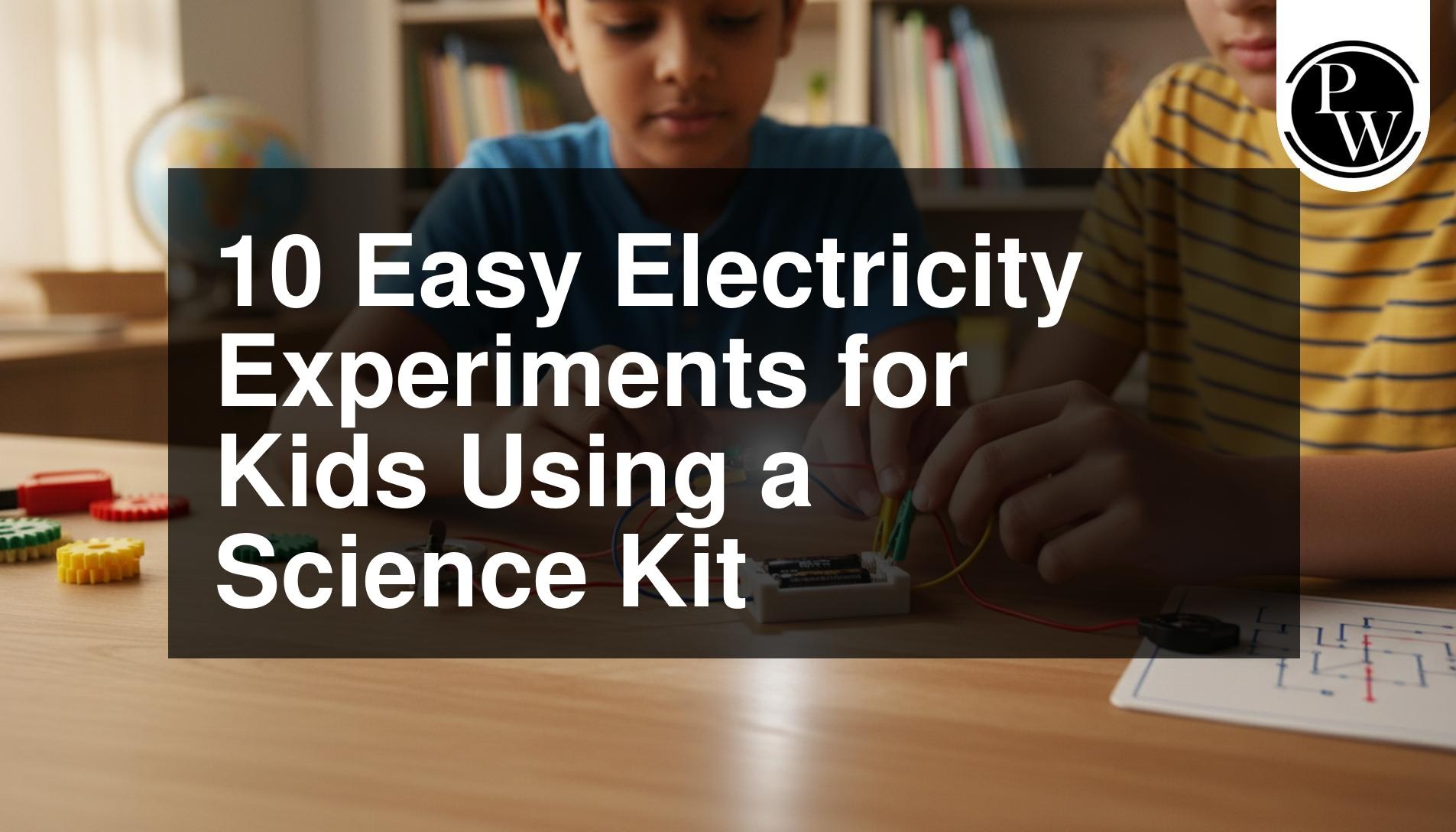
Are you looking for ways to pull your children away from screens and spark their curiosity about science? Finding safe and engaging educational activities can be a real challenge for parents. That is exactly where hands-on STEM learning comes to the rescue. By introducing electricity experiments for kids, you provide a practical, interactive way to understand how the world actually works.
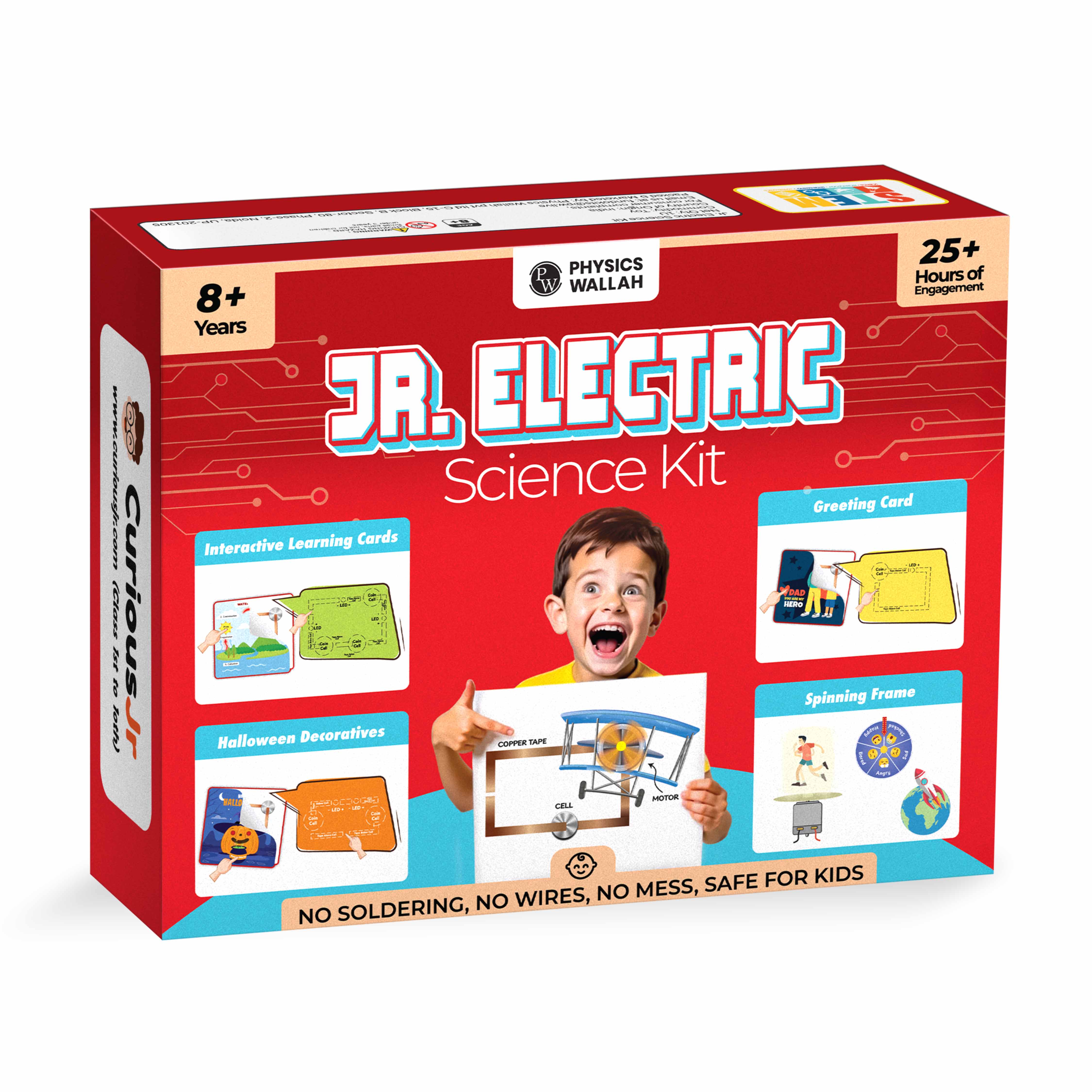
Using the Electric Science Kit, young minds can safely build real circuits. Let us explore some fantastic activities that make learning science accessible, highly engaging, and incredibly fun.
Importance of Electricity Experiments for Kids
Electricity experiments make learning simple, fun, and practical. Instead of only reading about circuits, batteries, switches, and conductors, children can see how electricity works through hands-on activities. These experiments help them understand basic science concepts, improve problem-solving skills, and build interest in STEM learning. They also teach children how everyday electrical devices work while encouraging curiosity and creative thinking.
Features of Electricity Experiments for Kids Kit
Help children discover electricity, circuits, and basic electronics through fun, hands-on activities. Designed for children aged 8 and above, this learning kids experiment kit turns simple science concepts into exciting projects while helping kids build creativity, problem-solving skills, and interest in STEM.
20 Fun Activities: Explore 20 engaging activities such as interactive learning cards, spinning frames, greeting cards, Halloween decorations, and simple circuit projects. Children can learn basic electrical ideas while creating fun projects.
STEM Learning Through Practice: Encourage children to learn by doing. The activities help develop critical thinking, creativity, problem-solving, innovation, and practical learning skills.
Easy Step-by-Step Guide: Follow simple instructions supported by colourful illustrations. The clear guide helps children understand each activity and complete projects with less help.
Safe & Child-Friendly Materials: The kit includes durable, child-friendly, and non-toxic components for a safe and enjoyable learning experience.
Useful for School and Home: Use the activities for STEM projects, science activities, school assignments, DIY crafts, greeting cards, or learning about basic electrical concepts at home.
Fun for Weekends and Holidays: Keep children engaged during weekends, holidays, rainy days, travel, or free time. These screen-free activities encourage children to explore and create.
Learn About Real Circuits: Introduce children to electric circuits, electrical connections, electronics, and basic engineering ideas through practical projects that make learning easier to understand.
A Great Gift for Kids: A useful birthday gift, holiday gift, STEM gift, science kit, educational toy, or activity kit for boys and girls who enjoy science, building, creating, and experimenting.
Learn, Create, and Explore: Give children a fun way to explore Electricity, Electronics, Engineering, and STEM Learning while developing creativity, curiosity, confidence, and problem-solving skills through hands-on activities.
What are the Best Electricity Experiments for Kids?
When exploring the world of STEM, hands-on application is absolutely essential. The Electric Science Kit provides more than 20 exciting activities that simplify complex scientific theories. By combining practical tasks with colourful illustrations, learners independently navigate their scientific journey. Below are ten standout activities derived from the kit that provide hours of screen-free entertainment and vital skill development.
1. The Foundation Circuit-Based Activity
Understanding energy flow is the foundational step for any young inventor. This introductory task entirely eliminates the intimidation often associated with science. Children easily grasp the core concept of a continuous loop by creating a basic circuit.
Why It Matters for Learners
-
Fundamental Knowledge: Introduces the base mechanics of electrical connections.
-
Confidence Building: Quick success encourages further exploration.
-
Safety First: Uses non-toxic components without complex wiring.
The Setup Process
Learners use the provided guide to connect their energy source to an output component. Because the design champions hassle-free learning, children seamlessly snap pieces together. Once completed, they witness immediate results, laying the groundwork for advanced configurations.
2. Interactive Learning Cards
Combining reading comprehension with practical science transforms standard education into a highly engaging experience. The interactive learning cards included in the kit challenge students to answer questions by forming correct electrical connections.
Key Educational Benefits
-
Cognitive Development: Merges logical reasoning with physical tasks.
-
Immediate Feedback: A successful connection yields a tangible reward.
-
Independent Study: Colourful illustrations guide the child perfectly.
How It Works
Kids select a learning card and use the kit’s components to bridge the correct answers. This method reinforces their understanding of the topic while teaching them how circuits operate. It is one of the most effective easy electricity experiments for reinforcing school concepts at home.
3. The Light-Up Greeting Card
Arts and crafts seamlessly blend with engineering in this highly creative task. Building a light-up greeting card allows children to see the aesthetic and practical applications of their new skills. It serves as an ideal weekend activity.
What Makes This Activity Special
-
Creative Expression: Allows children to design their own work.
-
Practical Application: Shows how science operates in everyday objects.
-
Gifting Potential: The finished product acts as a wonderful, personalised gift.
The Assembly Process
Using the step-by-step guide, young engineers integrate safe electronic components into paper designs. The lack of complex wiring means they focus entirely on their artistic vision. This is a brilliant introduction to everyday electricity science projects.
4. Motorised Spinning Frames
Moving beyond static lights, the spinning frame activity introduces kinetic energy and motors. This dynamic project captures attention immediately as stationary parts suddenly come to life through the power of an electric current.
Core Learning Objectives
-
Motion Mechanics: Demonstrates how electrical energy converts into kinetic energy.
-
Component Variety: Introduces new elements beyond basic lights.
-
Problem-Solving: Encourages troubleshooting if the frame stalls.
Executing the Build
Children follow clear instructions to attach the spinning mechanism to their completed circuit. As they close the loop, the frame begins to rotate. This visual movement makes it one of the most thrilling STEM projects in the kids educational kit, deeply engaging natural curiosity.
5. Spooky Halloween Decorations
Seasonal projects add a fantastic layer of thematic excitement to STEM learning. By constructing spooky Halloween decorations, learners apply their technical knowledge to create festive, functional items for their bedroom or living room.
Highlights of the Project
-
Thematic Fun: Keeps children engaged by tying science to exciting holidays.
-
Design and Build: Combines structural assembly with electrical engineering.
-
Display Value: Provides a tangible item they proudly display at home.
Bringing It to Life
Using durable, child-friendly materials, kids assemble the decorative structure. They then integrate the circuitry to add illuminating effects. This activity demonstrates that science has fun, real-world applications that massively enhance our holiday celebrations.
6. The Switch and Control Challenge
Understanding how to control the flow of energy is just as important as generating it. This activity focuses on the mechanics of opening and closing a circuit, teaching children how switches operate daily.
Educational Focus
-
Control Mechanisms: Teaches the precise function of switches.
-
Logic Skills: Helps children understand binary concepts.
-
Real-World Context: Connects the experiment directly to household items.
The Experiment Steps
Learners integrate a breaking point within their circuit setup. By manipulating this control mechanism, they start and stop the energy flow at will. The hassle-free design ensures breaking and reconnecting the circuit remains completely safe for young, inexperienced hands.
7. Conductivity and Material Testing
Testing different components to see what allows energy to flow is a staple of practical science. Using the kit's safe infrastructure, kids explore the basic principles of conductors and insulators without risk.
Why This Matters
-
Scientific Inquiry: Encourages hypothesis testing and keen observation.
-
Material Science: Introduces the specific properties of different substances.
-
Safety Awareness: Helps children understand material safety in real life.
Conducting the Test
By placing various included safe components into an open circuit, learners observe whether the system activates. This hands-on exploration solidifies their understanding of how electrical currents interact with different materials, establishing a strong foundation for simple electricity experiments.
8. The Series Connection Task
Expanding from a single output, this task challenges kids to power multiple components simultaneously. It introduces the vital concept of sharing energy consistently across a continuous, unbroken path.
Learning Outcomes
-
Advanced Planning: Requires forethought to position pieces correctly.
-
Energy Distribution: Visually demonstrates how power is shared.
-
Critical Thinking: Encourages learners to investigate output behaviours.
The Setup
Using the colourful illustrations in the guide, students link several components in a single line. They quickly learn that the circuit must remain completely unbroken for any outputs to function. It is a fantastic way to elevate basic tasks into engaging problem-solving challenges.
9. The Parallel Pathway Build
Building on previous knowledge, this activity involves creating multiple distinct paths for energy to flow. It is a brilliant step up in complexity that drastically improves innovation and structural understanding.
Key Takeaways
-
Complex Circuitry: Introduces independent energy pathways clearly.
-
Troubleshooting: Enhances the ability to isolate specific connection issues.
-
Engineering Principles: Mimics the way modern buildings are wired.
The Building Experience
Children use the hassle-free components to construct branching paths. If one path disconnects, they observe that the other continues functioning perfectly. This visual lesson in redundancy and system design is perfectly tailored as one of the best easy electricity experiments.
10. The Ultimate DIY Craft Circuit
The culmination of the learning journey involves applying all acquired skills to an independent DIY craft. The Electric Science Kit encourages kids to use their imagination to build a unique, personalised project.
Benefits of Independent Play
-
Total Autonomy: Builds deep confidence in scientific capabilities.
-
Creative Innovation: Blends all learned concepts into a cohesive build.
-
Skill Mastery: Proves the child has internalised the step-by-step instructions.
Creating the Masterpiece
Without relying strictly on a template, young inventors use fundamental knowledge to design a custom circuit. Whether heavily modifying a spinning frame or crafting an advanced interactive card, this final stage cements their status as budding engineers.
Also Check - PW Science Kit for School Projects
What is the Educational Value of Electricity Experiments for Kids?
Integrating hands-on science activities into a child’s routine offers immense developmental benefits. Traditional classroom environments rely heavily on theoretical learning, leaving some students feeling entirely disconnected. Physical, interactive tasks bridge this gap by making abstract concepts immediately tangible.
Developing Critical Life Skills
When children engage with these structured activities, they do much more than memorise facts. They actively develop critical thinking and problem-solving abilities. If a circuit does not light up, the child must evaluate their work, identify the error, and implement a direct solution. This iterative process builds true resilience.
Fostering Creativity and Innovation
Science is a deeply creative field. By offering projects like greeting card making, Electric Science Kit proves that engineering and art go hand in hand. Children learn that technology is a powerful tool for self-expression.
Enhancing Independent Learning
The inclusion of a step-by-step guide featuring colourful illustrations allows children to navigate projects confidently. They learn to follow sequential instructions, interpret diagrams, and execute tasks without needing constant adult intervention. This independence fosters a genuine love for lifelong discovery.
Read More: Science Project Kits for School Students
Electricity Experiments for Kids FAQs
Q1: Are electricity experiments for kids safe to do at home?
Yes, they are incredibly safe when using purpose-built educational toys like Electric Science Kit. These sets use non-toxic components and require absolutely zero complex wiring, ensuring a completely secure environment for young learners to explore science safely.
Q2: What age is suitable for electricity experiments for kids?
Most structured science kits are designed for children aged eight and above. At this age, kids possess the fine motor skills and cognitive ability to follow step-by-step instructions, making it the perfect time to introduce basic engineering concepts and hands-on learning.
Q3: Do I need prior knowledge to help my child with easy electricity experiments?
Not at all. High-quality STEM kits include comprehensive guides with colourful illustrations. These resources are specifically designed for independent learning, meaning children can navigate the steps themselves while parents simply supervise the fun and celebrate their scientific achievements.
Q4: How do simple electricity experiments benefit my child's education?
These hands-on activities directly improve critical thinking, problem-solving, and spatial awareness. By actively building circuits and troubleshooting issues, children bridge the gap between theoretical classroom science and practical, real-world application, fostering a deeper understanding of complex STEM subjects.
Q5: Can these kits be used for school electricity science projects?
Absolutely. The activities included in these kits, such as building motorised spinning frames or interactive learning cards, are perfect for school assignments. They provide a practical demonstration of scientific principles, making them ideal for classroom presentations and science fairs.