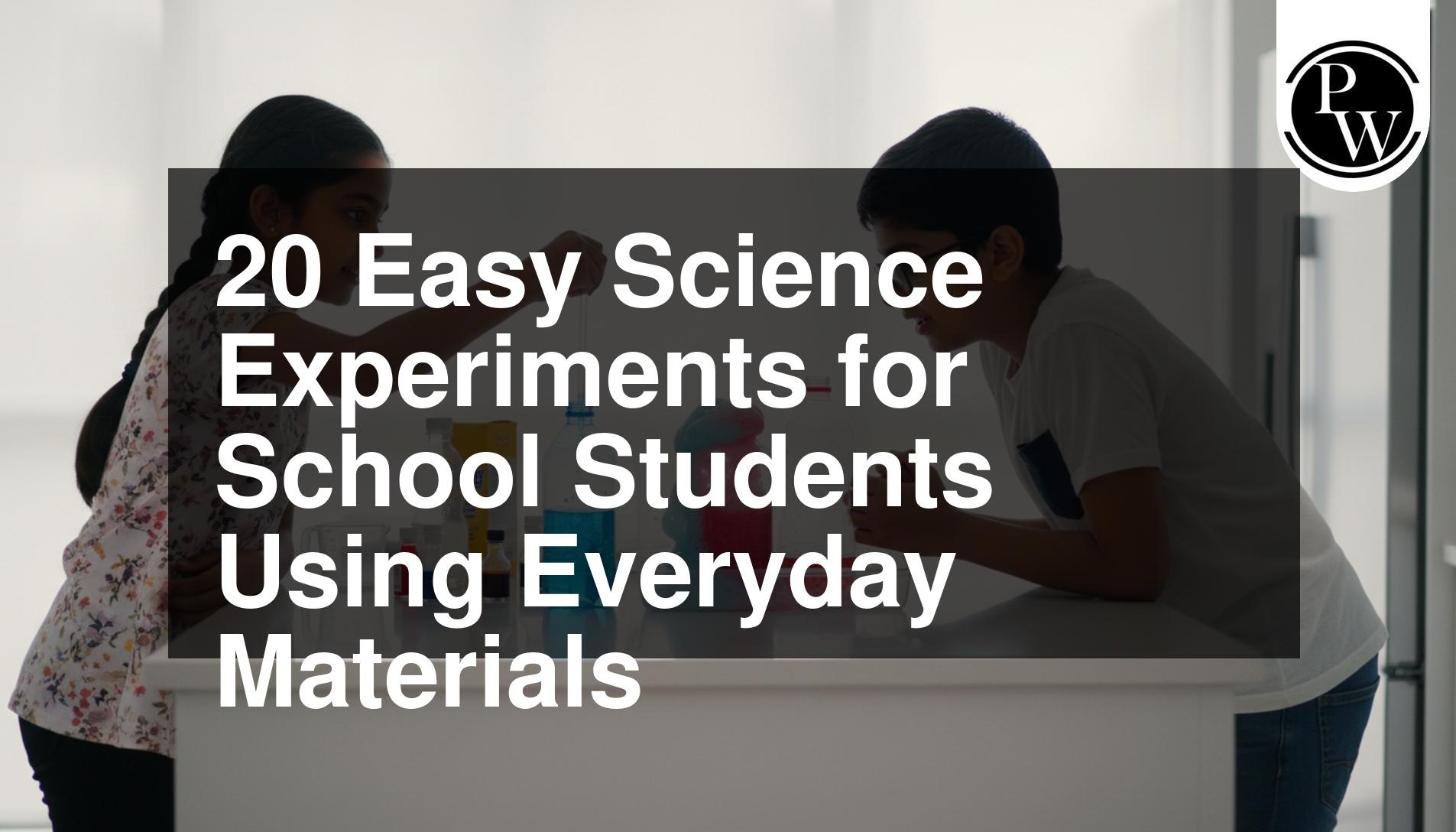
20 Easy Science Experiments for School Students Using Everyday Materials
Students often find science concepts abstract when studying purely from textbooks. Sitting at a desk reading about chemical reactions, density, or surface tension can make complex theories feel distant and challenging to grasp.
Hands-on learning bridges this gap by bringing classroom theories to life. Performing easy science experiments for school helps learners visualize core scientific principles right before their eyes.
Using simple, everyday items turns routine learning into an engaging journey of discovery. Practical testing builds genuine curiosity, strengthens critical thinking, and makes science accessible to young learners of all ages.
What Are Easy Science Experiments for School?
Easy science experiments for school are simple, practical activities designed to demonstrate scientific principles using everyday items. These experiments require minimal setup, offer safe procedures, and yield clear, observable results.
-
Accessibility: They rely on standard household materials rather than specialized laboratory gear.
-
Safety: They use kid-safe materials that make experimentation safe for home or classroom settings.
-
Educational Focus: They focus on core topics such as chemical reactions, color mixing, and fluid mechanics.
-
Engagement: They provide quick, vivid reactions that capture students' attention immediately.
20 Easy Science Experiments for School With Everyday Materials
Hands-on activities turn theoretical lessons into exciting discoveries. Below are 20 straightforward activities using household items, featured in modern learning sets like the Junior Science Kit.
1. Underwater Volcano
-
Materials: Tall glass jar, small glass vial, warm water, cold water, food colouring.
-
Procedure: Fill the tall jar with cold water. Fill the small vial with warm water and mix in a few drops of food colouring. Lower the small vial carefully into the bottom of the tall jar.
-
Observation: The warm, coloured water rises to the top of the cold water, demonstrating convection and density differences.
2. Balloon Inflator
-
Materials: Plastic bottle, balloon, baking soda, vinegar.
-
Procedure: Pour vinegar into the plastic bottle. Add two spoons of baking soda inside the balloon using a funnel. Stretch the neck of the balloon over the bottle opening and tip the baking soda into the liquid.
-
Observation: The mixing creates carbon dioxide gas that rapidly inflates the balloon.
3. Magic Milk
-
Materials: Shallow dish, milk, food colouring, liquid dish soap, cotton swab.
-
Procedure: Pour milk into the dish and add several drops of different food colours near the centre. Dip a cotton swab into dish soap and touch it to the centre of the milk.
-
Observation: The colours swirl away rapidly as the soap breaks the surface tension and reacts with fats in the milk.
4. Exploding Artwork
-
Materials: Paper, watercolour paints or food colouring, baking soda, vinegar, spray bottle.
-
Procedure: Mix baking soda with water and paint a design on paper. Once dry, fill a spray bottle with vinegar mixed with liquid food colour and mist the paper lightly.
-
Observation: The vinegar reacts with the hidden baking soda, creating a fizzing texture across the artwork.
5. Bath Bombs
-
Materials: Baking soda, citric acid, cornstarch, water, essential oils, mold.
-
Procedure: Mix dry ingredients thoroughly in a bowl. Lightly spray small amounts of water until the mixture holds its shape when squeezed. Press firmly into molds and allow to dry.
-
Observation: Dropping the dry bomb into water causes a rapid acid-base reaction that releases carbon dioxide bubbles.
6. Water Firework
-
Materials: Clear glass jar, water, vegetable oil, liquid food colouring.
-
Procedure: Fill the jar three-quarters full with water. Mix a few drops of food colouring into a small cup of oil, then pour the oil mixture onto the water.
-
Observation: The oil floats on top while food colour droplets slowly dissolve downward, creating colourful trails through the water.
7. Bubble Volcano
-
Materials: Container, dish soap, baking soda, vinegar, food colouring.
-
Procedure: Mix baking soda, liquid dish soap, and food colour inside a tall container. Pour vinegar directly into the mixture.
-
Observation: The reaction produces dense, foaming bubbles that overflow the container like lava.
8. Secret Message
-
Materials: Lemon juice, cotton swab, white paper, heat source (lamp bulb).
-
Procedure: Dip a cotton swab into lemon juice and write a hidden note on paper. Allow it to dry completely until invisible. Hold the paper safely near a warm bulb.
-
Observation: Heat oxidizes the organic compounds in lemon juice, turning the invisible writing brown.
9. Soap Boat
-
Materials: Cardboard, scissors, water tray, liquid dish soap.
-
Procedure: Cut a small boat shape out of cardboard with a small notch at the back. Place it floating in a tray of water and apply a tiny drop of dish soap inside the rear notch.
-
Observation: The soap breaks the water’s surface tension behind the boat, propelling it forward instantly.
10. Oobleck
-
Materials: Cornstarch, water, mixing bowl.
-
Procedure: Mix two parts cornstarch with one part water slowly in a bowl until you reach a thick consistency.
-
Observation: The substance acts like a solid under sudden pressure and flows like a liquid when released, demonstrating non-Newtonian fluid behavior.
11. Whisper of the Woods
-
Materials: Paper cups, long string, sharp pin.
-
Procedure: Poke a small hole in the bottom of two paper cups. Thread string through both holes and knot the ends. Pull the string tight between two people and whisper into one cup.
-
Observation: Sound waves travel along the taut string, transmitting clear audio over distance.
12. Sunbeam of Joy
-
Materials: Glass prism or water glass, white paper, direct sunlight.
-
Procedure: Position a glass of water near a sunny window so light passes through it onto a piece of white paper resting on the floor.
-
Observation: Refraction bends light rays, splitting visible light into a spectrum of colours.
13. Royal Imagination (Color Quest)
-
Materials: Primary colour dyes, clear cups, water, paper towels.
-
Procedure: Fill cups with water and add primary dyes. Fold paper towel strips to bridge adjacent cups.
-
Observation: Capillary action draws coloured water along the towels into empty cups, mixing secondary colours.
14. Cool Ocean Breeze
-
Materials: Ice cubes, shallow pan, small desk fan, salt.
-
Procedure: Place a shallow pan filled with ice and salt directly in front of a small fan turned on low speed.
-
Observation: Air passing over the melting ice creates a localized cooling effect through heat transfer.
15. Glow of Creativity
-
Materials: Tonic water, UV light torch, clear container.
-
Procedure: Pour tonic water into a container and shine a UV light torch onto it in a dark room.
-
Observation: Quinine in tonic water absorbs ultraviolet rays and fluoresces brightly under the dark light.
16. Fiz-tastic Fun
-
Materials: Citric acid, baking soda, water, liquid soap, cups.
-
Procedure: Combine equal dry parts citric acid and baking soda in a cup. Add soapy water to trigger the activity.
-
Observation: Safe chemical reactions release carbon dioxide gas that builds foam rapidly.
17. The Big Surprise
-
Materials: Sealed container with mystery activity components.
-
Procedure: Follow provided step-by-step instructions to unbox and combine mystery components safely.
-
Observation: Hands-on combination reveals unexpected visual transformations.
18. Dancing Raisins
-
Materials: Clear soda or sparkling water, fresh raisins, tall glass.
-
Procedure: Fill a glass with fresh sparkling soda and drop five raisins into the liquid.
-
Observation: Bubbles attach to the wrinkled surfaces of the raisins, floating them to the top before popping and causing them to sink again.
19. Walking Water
-
Materials: Glasses, water, food colouring, paper towels.
-
Procedure: Place three glasses side-by-side, filling the outer two with coloured water and leaving the center empty. Connect them with folded paper towels.
-
Observation: Water travels up the paper towels through capillary action to fill the empty glass equally.
20. Layered Density Column
-
Materials: Honey, dish soap, water, vegetable oil, tall clear glass.
-
Procedure: Pour equal amounts of honey, dish soap, coloured water, and oil slowly into the glass one by one.
-
Observation: Liquids settle into separate distinct layers according to their relative densities.
How to Perform Easy Science Experiments for School
To get the best educational value out of easy science experiments for school, structure your activities systematically. Using kids experiment kits can provide suitable materials and make hands-on learning more organized and engaging. Following an organized method guarantees safety and aids understanding.
|
Step Phase |
Focus Area |
Action Required |
|
1. Preparation |
Material Check |
Gather all necessary items and clear a safe workspace. |
|
2. Setup |
Guided Layout |
Arrange containers and measure out ingredients according to step-by-step instructions. |
|
3. Execution |
Observation |
Mix materials carefully, noting physical and chemical changes as they occur. |
|
4. Analysis |
Learning Outcome |
Discuss why the reaction occurred and connect it back to underlying scientific laws. |
When to Try Easy Science Experiments for School
Hands-on science activities fit seamlessly into various routines. Choosing the right moments to perform these activities keeps learning fresh and enjoyable.
-
Classroom Demonstrations: Teachers can introduce new theoretical topics using quick live demonstrations to capture attention.
-
Science Fairs: Students can present simple science projects that explain everyday natural phenomena clearly.
-
Rainy Day Activities: Performing science experiments using household items turns quiet indoor days into productive educational play.
-
Family Fun Nights: Families can share educational excitement by testing mystery activities together at home.
Tips to Make Easy Science Experiments for School Simple and Fun
-
Keep Setup Simple: Choose activities with simple steps using kid-safe materials to avoid unnecessary hassle.
-
Use Clear Indicators: Add food colouring to water solutions to make fluid movements and density layers easier to see.
-
Ask Open Questions: Encourage students to predict outcomes before adding ingredients to build hypothesis-testing skills.
-
Keep an Experiment Log: Have students draw or write down their observations after every test to track their discoveries over time.
Read More: Science Project Kits for School Students
Science Experiments for School FAQs
What are easy science experiments for school?
They are practical activities that explain scientific concepts using safe, everyday items.
Which items work best for household science tasks?
Baking soda, vinegar, dish soap, food colouring, and water are ideal items.
Are school experiments safe for young kids?
Yes, most activities use non-toxic, kid-safe materials with clear guidelines.
How do simple experiments help students learn?
They transform abstract theories into clear visual reactions, boosting engagement and retention.
Can school science projects be done without expensive tools?
Yes, school science projects work effectively using standard kitchen supplies.