Why Space Science Is Important for Children's Learning
Space has always fascinated children. From wondering why the Moon changes shape to dreaming of becoming an astronaut, their curiosity about the universe begins at a young age. Learning about space science not only answers these questions but also helps children develop problem-solving skills, scientific thinking, and creativity.
Space education goes beyond memorising the names of planets. It encourages children to ask questions, explore new ideas, and understand how science and technology shape the world around them. With interactive learning resources and engaging Kids books, children can discover the wonders of the Solar System while building a strong foundation in STEM (Science, Technology, Engineering, and Mathematics).
Why Space Science Is Important for Children's Learning
Children are naturally curious. They ask questions like, "Why do stars shine?", "How do rockets fly?", and "Is there life on other planets?" Introducing them to space science at an early age helps answer these questions while encouraging them to think, explore, and imagine.
Space science is much more than learning the names of planets. It teaches children how the universe works, improves problem-solving skills, and develops a lifelong love for science and discovery.
1. Encourages Curiosity and a Love for Learning
Space is full of mysteries, making it one of the most exciting topics for children. Learning about planets, stars, galaxies, astronauts, and space missions inspires them to ask questions and search for answers. This curiosity builds a strong foundation for lifelong learning.
2. Makes Science Fun and Easy to Understand
Many science concepts can seem difficult at first. However, when children learn through colourful illustrations, interactive activities, and real-life examples from space, these concepts become much easier to understand. They start connecting classroom lessons with the world around them.
3. Develops Critical Thinking Skills
Space science encourages children to observe, compare, predict, and solve problems. They learn why seasons change, how gravity works, why eclipses happen, and how scientists explore space. These activities improve logical thinking and analytical skills.
4. Sparks Interest in STEM Subjects
STEM stands for Science, Technology, Engineering, and Mathematics. Learning about rockets, satellites, astronauts, and space exploration introduces children to STEM kits in an exciting way. It can inspire future careers in engineering, astronomy, robotics, and space research.
5. Expands Imagination and Creativity
The universe is vast and full of possibilities. Thinking about distant planets, black holes, and future space missions encourages children to imagine new ideas, create stories, and dream beyond Earth's boundaries. This strengthens creativity alongside scientific learning.
6. Teaches Real-World Knowledge
Children discover how satellites help us use GPS, predict weather, communicate across the globe, and even watch television. They also learn about important space organisations like NASA and ISRO and understand how space technology impacts our daily lives.
7. Builds Confidence Through Interactive Learning
Hands-on learning helps children remember concepts better than simply reading a textbook. Interactive books, quizzes, games, and 3D experiences keep children actively involved, making learning enjoyable and boosting their confidence.
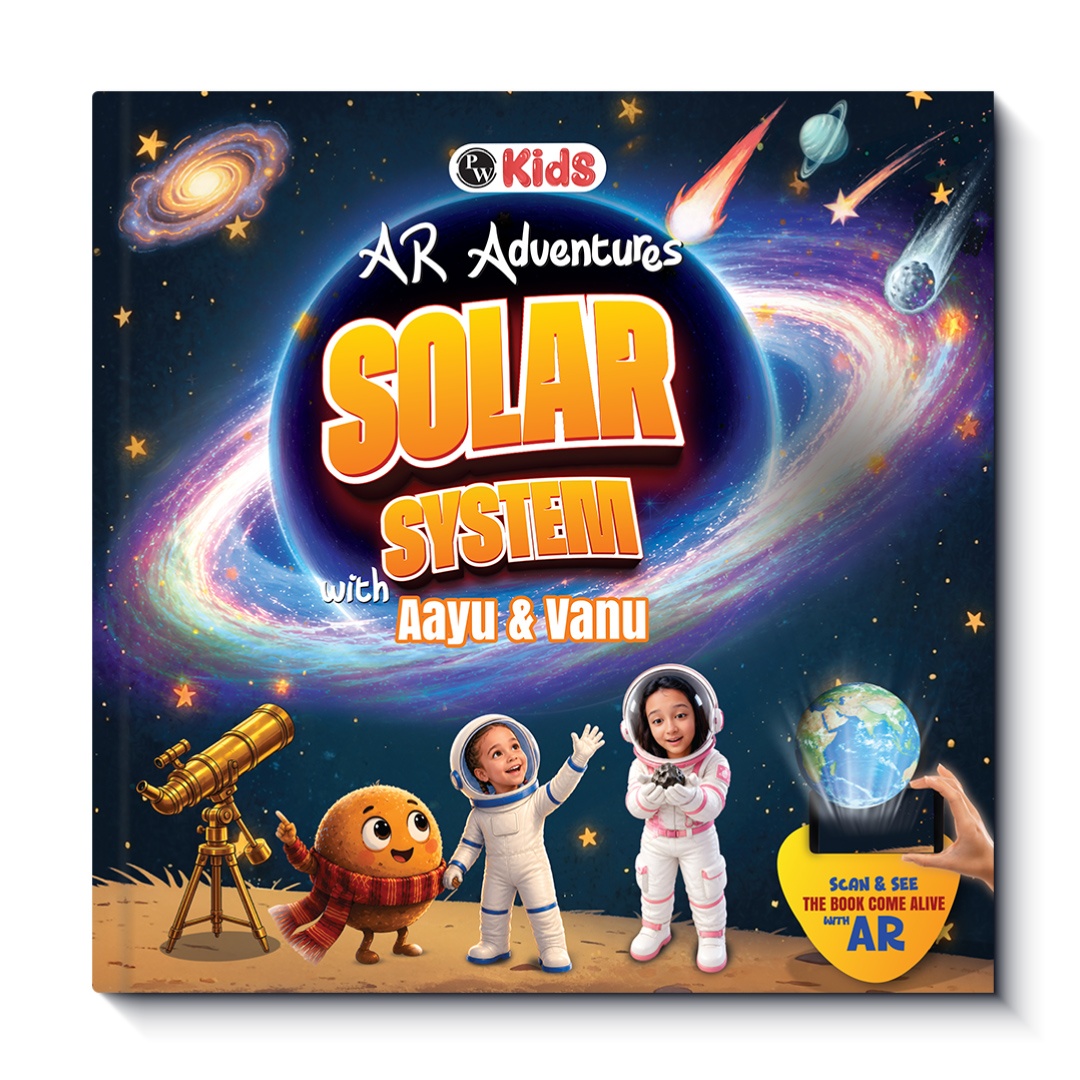
Make Space Learning More Exciting with AR Adventures Solar System with Aayu & Vanu
If you're looking for an engaging way to introduce your child to space science, AR Adventures Solar System with Aayu & Vanu is an excellent choice. This interactive book combines fascinating space facts with immersive Augmented Reality (AR) technology. By scanning the special AR pages, children can watch the Solar System come alive in 3D, making learning both fun and memorable.
The Solar System For Kids book includes:
-
Interactive 3D Augmented Reality experiences
-
Information about all 8 planets and Pluto
-
NASA, ISRO, Chandrayaan, and Mangalyaan missions
-
Rockets, astronauts, and exciting space discoveries
-
Fun quizzes, games, and engaging activities
-
Beautiful full-page illustrations for better understanding
Whether your child is just beginning to explore space or already loves astronomy, this Kids Writing & Pattern books offers an exciting learning experience that combines education with entertainment.
Space science opens a window to endless discovery. It encourages children to ask questions, think critically, solve problems, and dream big. More importantly, it helps them understand that learning is an exciting adventure.
Interactive resources like AR Adventures Solar System with Aayu & Vanu make these lessons even more enjoyable by turning complex space concepts into engaging 3D experiences. For parents and educators, it's a wonderful way to nurture curiosity, build scientific thinking, and inspire the next generation of explorers.
Read More: Learn Planet Names in Solar System for Kids
Why Space Science Is Important for Children's Learning FAQs
1. Why is space science important for children?
Space science encourages children to ask questions, think critically, and explore the world beyond Earth. It helps them understand scientific concepts in a fun way while developing curiosity, creativity, and problem-solving skills.
2. At what age should children start learning about space?
Children can begin learning about space as early as preschool through simple topics like the Sun, Moon, stars, and planets. As they grow older, they can explore more advanced concepts such as gravity, space missions, and the Solar System.
3. How does learning about space improve STEM skills?
Space science introduces children to science, technology, engineering, and mathematics (STEM) through real-world examples like rockets, satellites, astronomy, and space exploration. This makes STEM subjects more interesting and easier to understand.
4. What are the benefits of interactive space learning?
Interactive learning, such as Augmented Reality (AR), games, and quizzes, helps children visualise complex concepts, improves knowledge retention, and keeps them actively engaged throughout the learning process.
5. How can parents make space science fun for kids?
Parents can make space learning enjoyable by reading space-themed books, visiting planetariums, watching educational videos, observing the night sky, and using interactive learning tools like AR books and hands-on activities.
6. Which book is best for introducing children to the Solar System?
AR Adventures Solar System with Aayu & Vanu is a great choice for young learners. It combines Augmented Reality (AR), interactive 3D experiences, fun quizzes, and engaging illustrations to help children learn about the Solar System, astronauts, rockets, and famous space missions in an exciting way.