Why NCERT Punch is Important for NEET Chemistry Prep
Being a NEET aspirant, you may have gone through the agony of sitting through an hour on one page of NCERT Chemistry, pondering about the topic that will come in the form of a four-mark question.
Reactions, the periodic table, and numerical formulas tend to be quite baffling. Many students may mug up everything mentioned in the book, but they end up failing to implement their learning when it comes to tough statement-type questions.
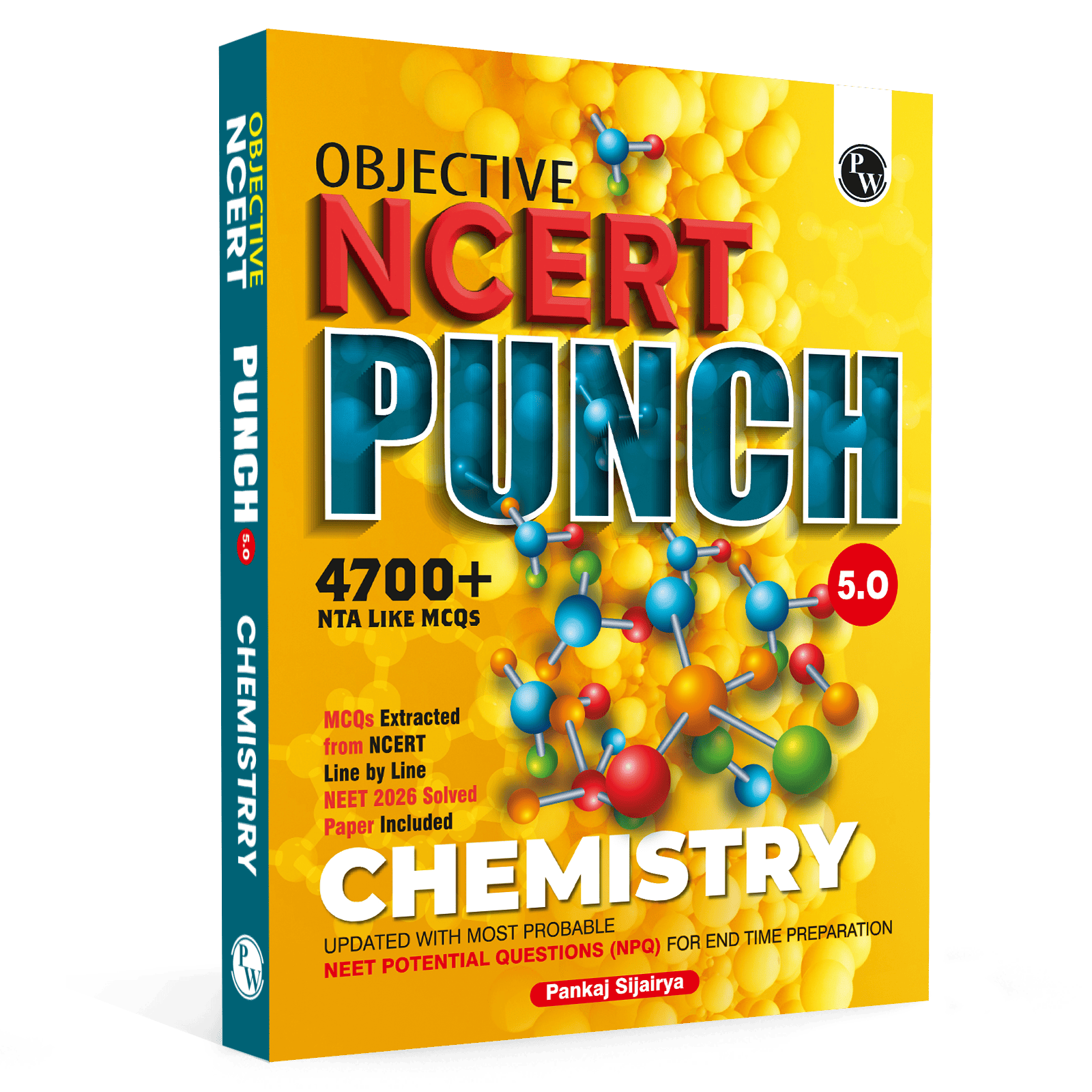
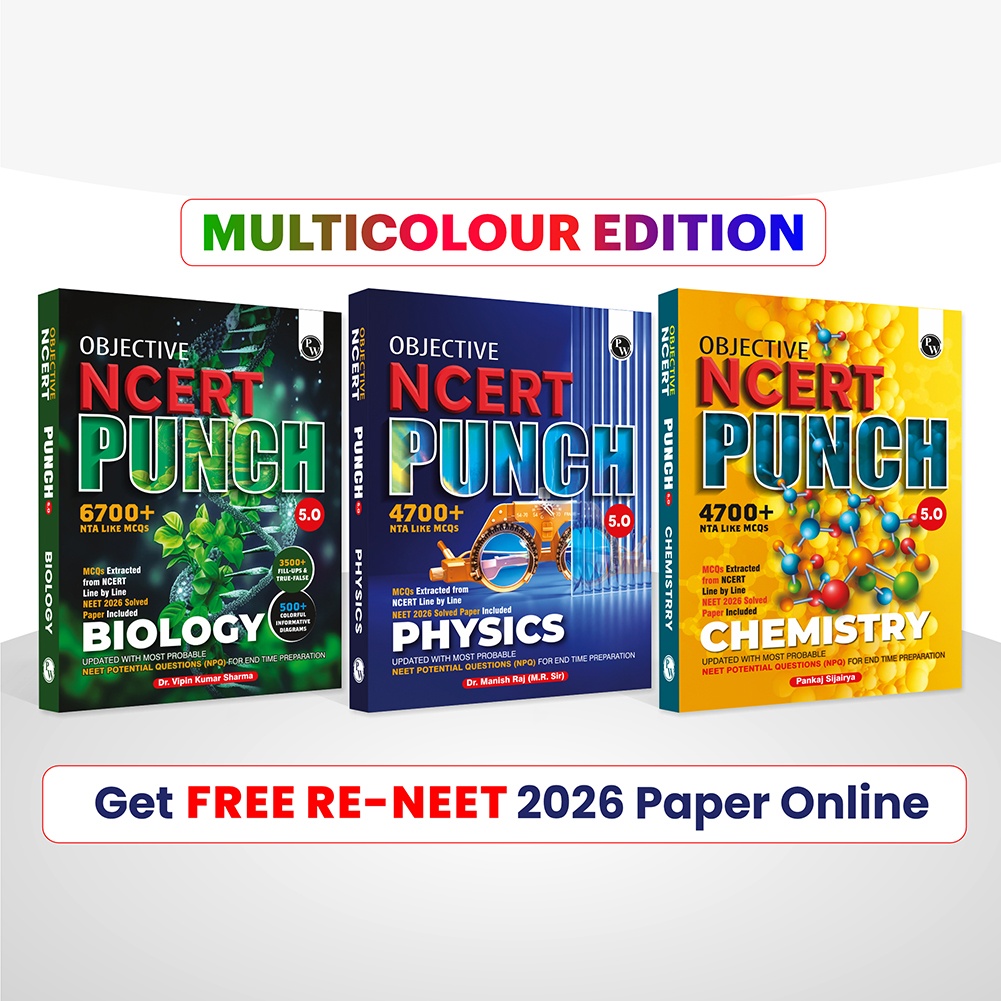
But now, it’s time for you to study with NCERT NEET Punch Chemistry and ensure that no topic baffles you in the exam. This book offers a line-by-line explanation of everything that is covered in the textbook.
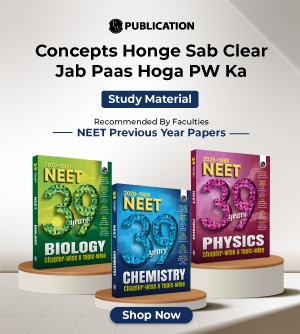
Check Out: PW NEET Books
An Overview of NEET NCERT Punch Chemistry
More than just an online practice portal, the NCERT NEET Punch Chemistry is a well-designed study aid that covers all aspects of the exam pattern, ensuring your time is spent studying the relevant portions of the curriculum.
In essence, the punch acts as a link between theory and practice. With over 1500+ question typologies, it covers every possible angle a paper-setter might take.
Whether you are looking for a PW chemistry book to clarify your basics or a rigorous practice guide for the 2026 session, this resource fits the bill.
Features of NEET NCERT Punch Chemistry for 2026
When choosing a PW NEET NCERT Punch chemistry book, students look for variety and accuracy. This book delivers both through a structured approach to learning.
-
NCERT Line-by-Line Fill-ups: This feature forces you to pay attention to every word in the textbook, which is crucial for the "True or False" and "Assertion & Reason" sections of the exam.
-
1500+ Question Typology: The book includes matching types, statement-based questions, and correct/incorrect identification tasks.
-
High-Order Time Intensive MCQs: These questions are designed to build your stamina and speed, mimicking the pressure of the actual exam hall.
-
NCERT Exemplar Integration: You get access to Exemplar problems with detailed explanations, saving you the trouble of buying multiple books.
-
NEET & AIIMS PYQs: It includes past year questions and even the NEET 2025 paper to give you a clear idea of evolving trends.
How NEET NCERT Punch Chemistry Benefits Aspirants
The primary goal of this book is to remove the "fear of the unknown." Breaking down the syllabus into manageable chunks, it helps in several ways:
1. Simplification of Complex Concepts
Chemistry involves many abstract theories. The "NCERT-Picks" section in this NEET chemistry book provides concise theory, colourful diagrams, and flowcharts. This visual aid helps in better retention of periodic properties and organic reaction mechanisms.
2. Analysis of Exam Trends
The "NEET PYQs Analysis" provides a year-wise and topic-wise breakdown of questions. This tells you exactly which chapters carry the most weight, allowing you to prioritise your study hours effectively.
3. Mastery Over Rationalised Content
With recent changes in the curriculum, many students are confused about what to study. The NCERT Punch Chemistry 2026 highlights the rationalised content, ensuring your preparation is 100% relevant to the current requirements.
How to Use NEET NCERT Punch Chemistry?
A good book on chemistry is important, but learning to utilise it is crucial. In order to get maximum marks, you should adopt this methodical way:
-
Step 1: Study the NCERT Chapter: Begin by reading the chapter from the prescribed textbook.
-
Step 2: Understand NCERT-picks: Use the book’s summary and diagrams to strengthen your understanding of what you've just studied.
-
Step 3: Attempt Topic-based MCQs: Don't waste time waiting until you have completed the entire book. Attempt the questions at once after completing a topic.
-
Step 4: Solve Higher Order MCQs: After you have gained confidence, attempt the difficult problems that take up much of your time.
-
Step 5: Go through the Solutions: You should never ignore the solutions section. Understand the solutions thoroughly for all questions you got wrong.
Check Out: NEET Question Banks
When to Use NEET NCERT Punch Chemistry?
Since this is a mid-term phase, now is the perfect time to use the punch chemistry in your routine.
-
During Initial Learning: Use it as a companion while completing your coaching modules or school lectures.
-
During Weekend Revisions: Chemistry requires constant touch. Use the "Fill-ups" section every weekend to keep the facts fresh in your mind.
-
Three Months Before NEET: This is the time to dive deep into the 1500+ question typologies and the NEET 2025 paper provided in the book.
-
Daily Practice: Dedicate at least 45 minutes a day specifically to this PW NEET chemistry book to build consistency.
Study Plan with NEET NCERT Punch Chemistry
To score 160+ in Chemistry, you need a disciplined plan. Here is how you can map out your journey using this book:
Phase 1: Building the Foundation (Months 1-3)
Focus on Physical Chemistry formulas and Inorganic trends. Use the NCERT Punch Chemistry 2026 to solve NCERT-Picks and topic-wise MCQs. This ensures your base is solid.
Phase 2: Application and Speed (Months 4-6)
Transition to Organic Chemistry. Use the line-by-line fill-ups to memorise reagents and name reactions. Start solving the "High-Order Time Intensive MCQs" to improve your calculation speed in Physical Chemistry.
Phase 3: Solving Mock Scenarios (Months 7+)
Focus entirely on the "NEET & AIIMS PYQs" and the "1500+ Question Typology." Treat these sections as mini-tests. Set a timer and try to finish 50 questions in 45 minutes. This mimics the actual exam environment and builds the mental toughness needed for the big day.
By following this structure with the NEET NCERT punch chemistry, you move from rote memorisation to a logical understanding of the subject. NEET NCERT punch book ensures that when you see a question on the exam paper, you don't just recognise it, you know exactly how to solve it.
Read More; NEET Chemistry Chapter Wise Weightage
NCERT Punch is Important for NEET Chemistry Prep FAQs
1. Is NEET NCERT Punch Chemistry 2026 Updated?
Yes, the 2026 edition is completely updated. It has the NEET 2025 paper and is based only on the Rationalised NCERT syllabus, so students can study in a way that works best for them.
2. Can I study NEET NCERT Punch chemistry on my own?
Yes, the textbook is made for self-study. You can learn chemistry on your own through its theory, "NCERT-Picks," and explanations for every multiple-choice question (MCQ).
3. How many question types are there in the NEET NCERT Punch Chemistry?
There are more than 1500+ question typologies in the book that include matching types, assertion-reason, and statement type questions.
4. Does this chemistry book cover inorganic chemistry well?
Yes, it is very useful for Inorganic Chemistry. The "True or False" and line-by-line fill-in-the-blank sections help you remember the facts and trends that are often asked about in the NCERT textbook.
5. Is the NEET NCERT punch chemistry enough to score high marks?
This NEET chemistry book covers the whole NCERT syllabus and has a lot of practice problems, but you should use it with your regular NCERT textbook for the best results.