Using PW Objective Punch Chemistry Book for Quick Daily Revision
Reading endless paragraphs repeatedly rarely translates to high marks if you cannot apply that knowledge under strict time constraints. The core difficulty lies in transforming passive reading into active recall every single day.
By using the structured layout of the NEET NCERT punch chemistry edition, you can shift your strategy toward systematic question practice, ensuring you retain vital facts and build accurate problem-solving patterns required to succeed.
What is the NEET NCERT Punch Chemistry?
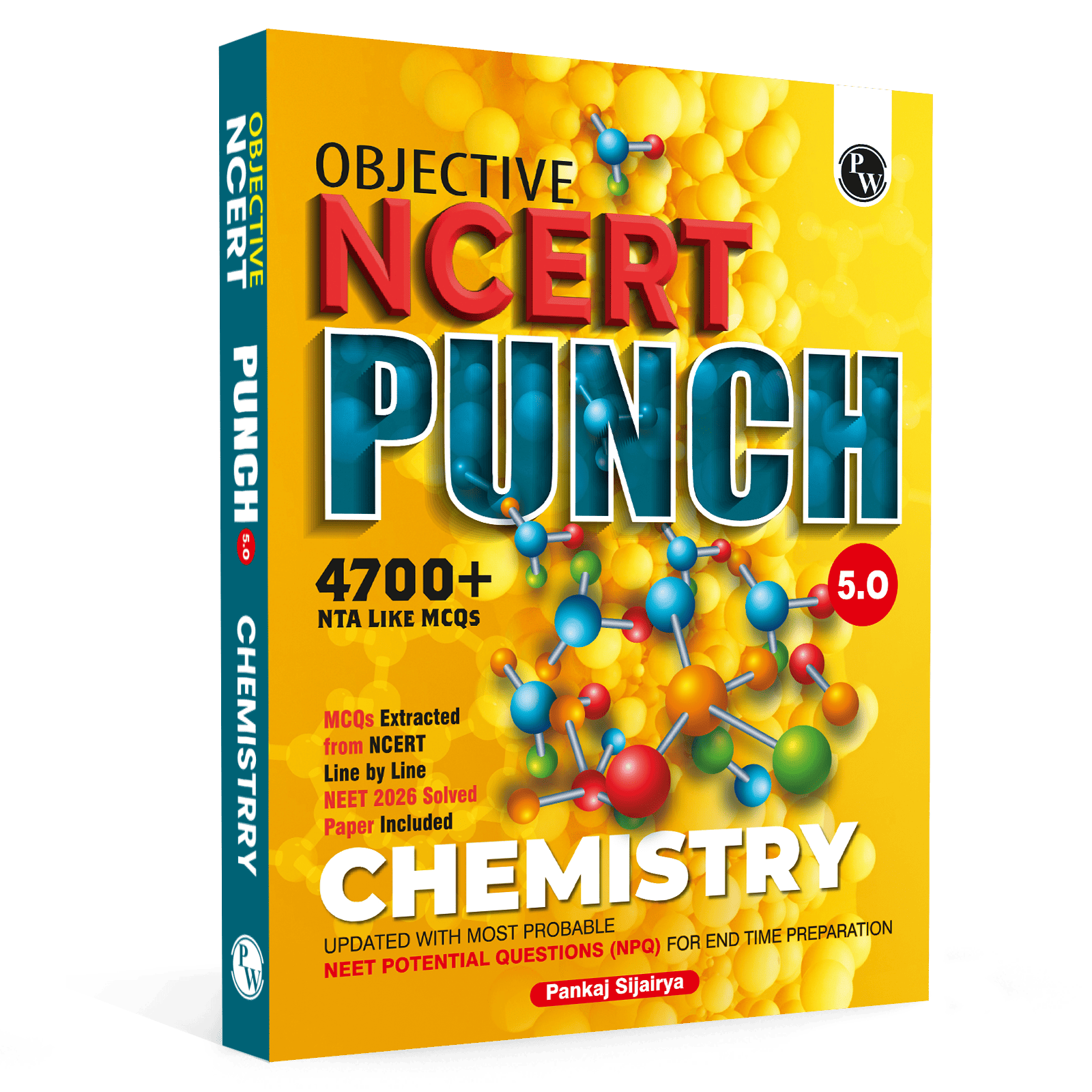
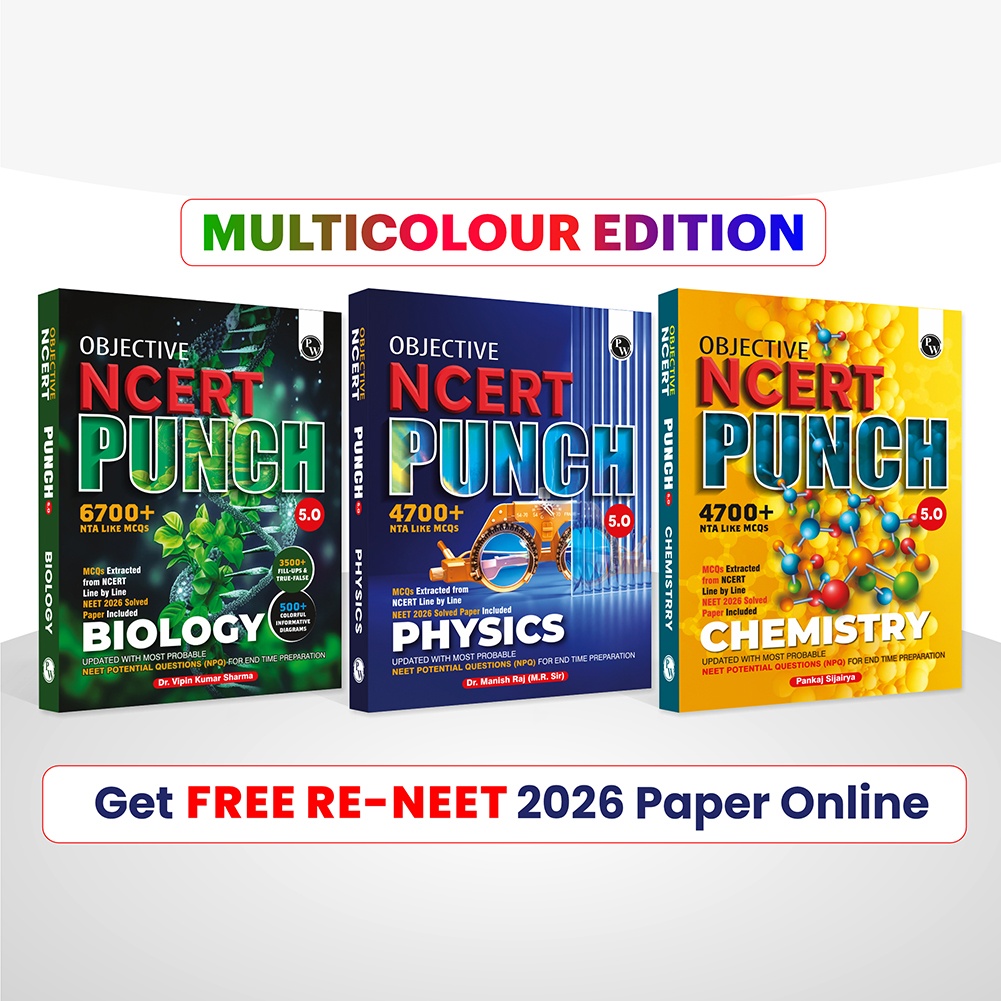
The NEET NCERT punch chemistry modules function as a complete textbook-aligned practice solution specifically mapped to the latest medical entrance exam syllabus. Instead of simple repetitive exercises, this resource provides an expansive collection of over 11,400 NTA-level multiple-choice questions across the core disciplines.
The entire layout targets complete conceptual clarity and thorough text mastery.
The book is organized to help candidates smoothly navigate both Class 11 and Class 12 curricula. The structural elements include:
-
Chapter-Wise Short Summaries: Condensed revision notes placed at the start of topics to trigger immediate memory recall before diving into practice exercises.
-
Visual Data Diagrams: More than 500 colourful structural layout diagrams that simplify complex chemical configurations, industrial cycles, and laboratory mechanisms.
-
Diverse Question Frameworks: Multiple practice formats containing over 240 Match the Column questions, 4,200 Multi-Correct options, and 4,800 Numerical Profile Questions.
-
Foundational Testing Tasks: Over 3500 fill-in-the-blanks and true-or-false sentences designed to verify minute textual facts from the standard curriculum.
How Does NEET NCERT Punch Chemistry Help in Daily Revision?
Consistency forms the foundation of clearing medical entrance tests. Utilizing the NEET NCERT Punch Chemistry structure for daily chemistry revision prevents the forgetting curve from erasing weekly progress. By spending a dedicated window each evening solving targeted exercises, you shift from passive reading to active recall.
The short-form chapter summaries act as immediate mental warm-ups. Instead of spending two hours flipping through extensive theory volumes, you can review the essential principles in just fifteen minutes using the concise notes and colourful charts.
This efficient process leaves ample time to practise with a NEET Question Bank, ensuring you regularly solve application-based questions and strengthen your understanding of high-weightage topics. Topic-wise practice and detailed solutions also help identify weak areas, making revision more focused and exam-oriented.
Daily engagement with high-order, time-intensive problems shapes your natural exam temperament. It trains your mind to manage stress, recognize subtle question traps, and maintain stability when facing complex multi-step numerical calculations, ultimately improving your speed, accuracy, and confidence for the NEET examination.
How to Use NEET NCERT Punch Chemistry for Chapter-Wise Practice?
To get the highest value out of your NEET NCERT punch chemistry resource, your NCERT chemistry MCQs session should follow a systematic, step-by-step approach. Randomly answering questions without structural organization leads to fragmented knowledge.
Step 1: Rapid Conceptual Warm-up
Begin your session by reading the chapter-specific short summaries. Spend time observing the structural flowcharts and colourful diagrams to reactivate spatial memory regarding functional groups or crystal lattices.
Step 2: Establish the Foundation
Move directly to the foundational testing section. Work through the true-false rows and fill-in-the-blanks to ensure you have not overlooked specific exceptions or trends highlighted in the core text.
Step 3: Tackle Advanced Formats
Advance your practice by solving the assertion-reason rows and multiple-correct statements. These specific profiles require a deep understanding of chemical properties and help eliminate common conceptual misunderstandings.
Step 4: Archive and Review Errors
Mark every incorrect response with a red pen. Do not simply look up the right answer; trace the precise calculation mistake or conceptual gap in your notes to ensure you do not repeat it.
What are the Main Benefits of Using the NEET NCERT Punch Chemistry?
Incorporating the NEET NCERT punch chemistry guide into your study schedule directly addresses structural weaknesses in regular preparation. The primary advantage is the extensive exposure to varied difficulty levels, which builds strong confidence for the actual exam day.
1. High-Yield Question Formats
NEET books introduces specialized question patterns that frequently appear in competitive examinations. Students get to solve dedicated assertion-reason and statement-based questions that test deep analytical reasoning rather than simple rote memorisation.
2. Comprehensive Target Coverage
The framework provides holistic coverage across all traditional sections:
-
Physical Chemistry: Heavy focus on formula applications through 4,800 numerical profile challenges.
-
Organic Chemistry: Deep validation of reaction mechanisms via diverse match-the-column settings and multi-correct formats.
-
Inorganic Chemistry: Direct text verification using 3500+ fill-in-the-blanks and true-false testing lines.
3. Last-Minute Exam Readiness
The inclusion of Most Probable Questions (NPQs) ensures that students focus heavily on high-probability target topics during final-stage structural reviews.
Study Plan for Using the NEET NCERT Punch Chemistry
Balancing physical, organic, and inorganic chemistry requires a clear timeline. The matrix below outlines a structured approach to integrating your NEET chemistry practice across a standard six-day study week.
|
Day |
Focus Area |
Resource Tool Included |
Intended Operational Goal |
|
Monday |
Physical Chemistry Numericals |
4,800 Numerical Profiles |
Enhance computational speed and formula accuracy. |
|
Tuesday |
Inorganic Trend Verification |
3500+ Fill-in-the-Blanks |
Lock in specific periodic properties and exceptions. |
|
Wednesday |
Organic Reaction Mechanisms |
240+ Match the Column |
Connect structural reactants with corresponding products. |
|
Thursday |
Logical Analytical Evaluation |
Assertion-Reason Patterns |
Build deep cause-and-effect reasoning for statements. |
|
Friday |
Real Exam Simulation |
Previous Year Questions |
Evaluate performance using actual historical papers. |
|
Saturday |
Final Stage Prediction Review |
Most Probable Questions |
Focus on high-probability exam topics. |
Tips to Revise Faster with NEET NCERT Punch Chemistry
Time management is a critical factor during your chemistry preparation routine. To accelerate your learning and cover more ground each day, apply these practical execution steps:
-
Implement a Strict Countdown: Give yourself exactly 60 seconds per question when working through standard multiple-choice sections to build realistic processing speed.
-
Utilize Visual Anchors: When reviewing complex properties, focus heavily on the 500+ colourful diagrams to quickly reinforce structural layouts without reading heavy paragraphs.
-
Prioritize Historical Papers: Work systematically through the integrated past papers—including the recent 2026 exam—to align your expectations with authentic test trends.
-
Focus on High-Yield Content: If your study time is limited on a busy day, skip the basic exercises and go straight to the Most Probable Questions to review high-probability concepts.
Common Mistakes to Avoid While Using the NEET NCERT Punch Chemistry
Even when using top-tier resources like the NEET NCERT punch books, incorrect study habits can limit your progress. Being aware of these common traps helps ensure your daily efforts translate into actual score improvements.
Glossing Over the Short Summaries
Skipping the introductory summaries and colourful diagrams to jump straight into the questions often leads to unnecessary confusion. Taking a few minutes to anchor your mind saves significant time during the practice session.
Avoiding Complex Question Formats
Many students naturally gravitate toward simple multiple-choice questions while avoiding challenging assertion-reason profiles or intensive numerical sections. Avoiding these sections leaves you unprepared for the varied difficulty levels of the real exam.
Neglecting the Mistakes You Make
Marking an answer as incorrect without finding out why you made the mistake renders the practice ineffective. Your true growth comes from analyzing your errors, adjusting your approach, and updating your notes to prevent making that same mistake again.
Read More: Most Repeated Questions in NEET Exam
NEET NCERT Punch Chemistry FAQs
How does the NEET NCERT punch chemistry book help improve problem-solving speed?
The book includes over 11,400 NTA-level questions and 4,800 specific numerical profiles that train students to execute calculations efficiently. Regular practice with these targeted formats helps build strong exam temperament and sharpens overall real-time decision speed.
Can I rely on this resource for chemistry daily revision during the final months?
Yes, the guide features dedicated chapter summaries, 500+ colourful charts, and specialized Most Probable Questions (NPQs). These features make it an ideal tool for rapid concept building and structured last-minute revision.
Does the Objective Punch Chemistry Edition contain real past papers?
The problem sets include comprehensive NEET Previous Year Questions (PYQs), featuring authentic papers up to the recent 2026 exam cycle. This ensures your practice aligns closely with actual competitive standards.