Why PW Objective Punch Book Is Key for NEET Chemistry 2027
Many medical aspirants spend hours highlighting text, only to find themselves blanking out during mock tests when faced with complex, application-based problems. The real gap lies in shifting from passive reading to active, structured question practice.
This article highlights why the right study companion can bridge that gap, ensuring your NEET NCERT punch chemistry preparation remains highly focused, accurate, and aligned with the latest national evaluation patterns.
Overview of NEET NCERT Punch Chemistry
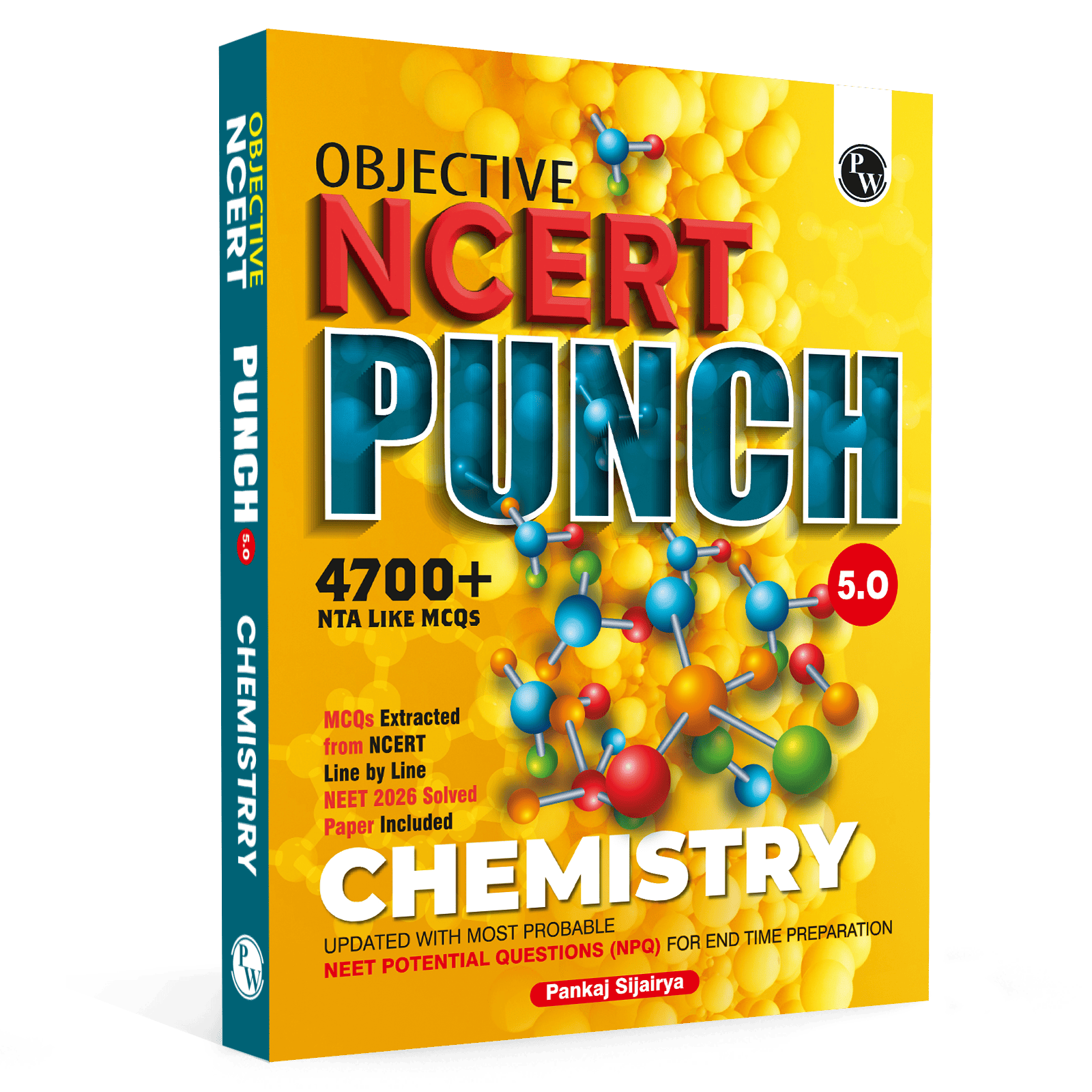
The NEET NCERT punch chemistry suite functions as a structured learning framework built specifically for serious medical aspirants. Designed explicitly around the latest national testing guidelines, it coordinates theoretical knowledge with highly targeted objective question sets.
The comprehensive set addresses the dual requirements of comprehensive subject understanding and fast-paced competitive readiness.
-
Syllabus Alignment: Follows the definitive syllabus layout for national medical entrances.
-
Dual-Class Target: Systematically organises core concepts across both Class 11 and Class 12 segments.
-
Multi-Exam Utility: Serves as a vital asset for board exams, university entrance tests, and national medical selections.
-
Skill Orientation: Focuses entirely on enhancing conceptual clarity, speed tracking, and minimizing negative marking.
Features of NEET NCERT Punch Chemistry
The internal architecture of the NEET NCERT punch chemistry guidebook stands out due to its multi-layered, interactive content style. Rather than relying solely on monotonous question lists, it uses varied objective formats to systematically challenge the brain.
This multi-tiered system ensures that students stay engaged while building their analytical skills step by step.
1. Specialized Objective Formats
-
Fill-in-the-Blanks & True/False: Over 3,500 structured short items designed to verify foundational definitions and core properties.
-
Match the Columns: More than 240 structured matching grids that help students connect reactions, catalysts, and molecular structures efficiently.
-
Multi-Correct MCQs: Offers over 4,200 advanced multi-correct variations to sharpen deep theoretical evaluation.
-
Numerical Profile Exercises: Contains over 4,800 numerical chemistry problems to build mathematical confidence in physical chemistry.
2. Smart Revision Tools
-
Visual Learning Aids: Incorporates more than 500 detailed, colourful diagrams to simplify complex molecular shapes and experimental setups.
-
Chapter Summaries: Bulleted, high-density short notes at the start of every chapter enable fast information recall before tests.
-
Critical Reasonings: A dedicated section for assertion-reason and statement-based questions to tackle the trickiest parts of the exam.
What are the Topics Covered in NEET NCERT Punch Chemistry?
The NEET NCERT Punch Chemistry curriculum divides the vast domain of chemical sciences into easily manageable units. Separating the foundational physical principles from the descriptive natural frameworks provides an organized pathway for complete syllabus mastery. To strengthen preparation further, students should also refer to NEET Books, which offer comprehensive theory, NCERT-based explanations, chapter-wise practice questions, previous year papers, and revision resources. Combining the NEET NCERT Punch Chemistry series with well-structured NEET Books helps build strong conceptual understanding, improve problem-solving skills, and enhance overall performance in the NEET examination.
|
Main Discipline |
Key Target Areas |
Primary Structural Focus |
|
Physical Chemistry |
Atomic Structures, Thermodynamics, Chemical Kinetics, Equilibrium States |
Mathematical accuracy, formula application, and unit conversions |
|
Inorganic Chemistry |
Periodic Tables, Chemical Bonding, Coordination Compounds, Metallurgy |
Trend analysis, structural anomalies, and color-change properties |
|
Organic Chemistry |
Hydrocarbons, Functional Groups, Reaction Mechanisms, Biomolecules |
Named transformations, structural identification, and synthesis paths |
Why NEET NCERT Punch Chemistry Is Best for NEET 2027?
Succeeding in the upcoming NEET 2027 session demands absolute accuracy and deep conceptual familiarity. The NEET NCERT punch chemistry framework eliminates unnecessary guesswork by converting basic text lessons into high-yield evaluation points.
Competitive exams often test the subtle conditions within chemical reactions and principles. This NEET NCERT punch book focuses directly on those high-yield zones.
-
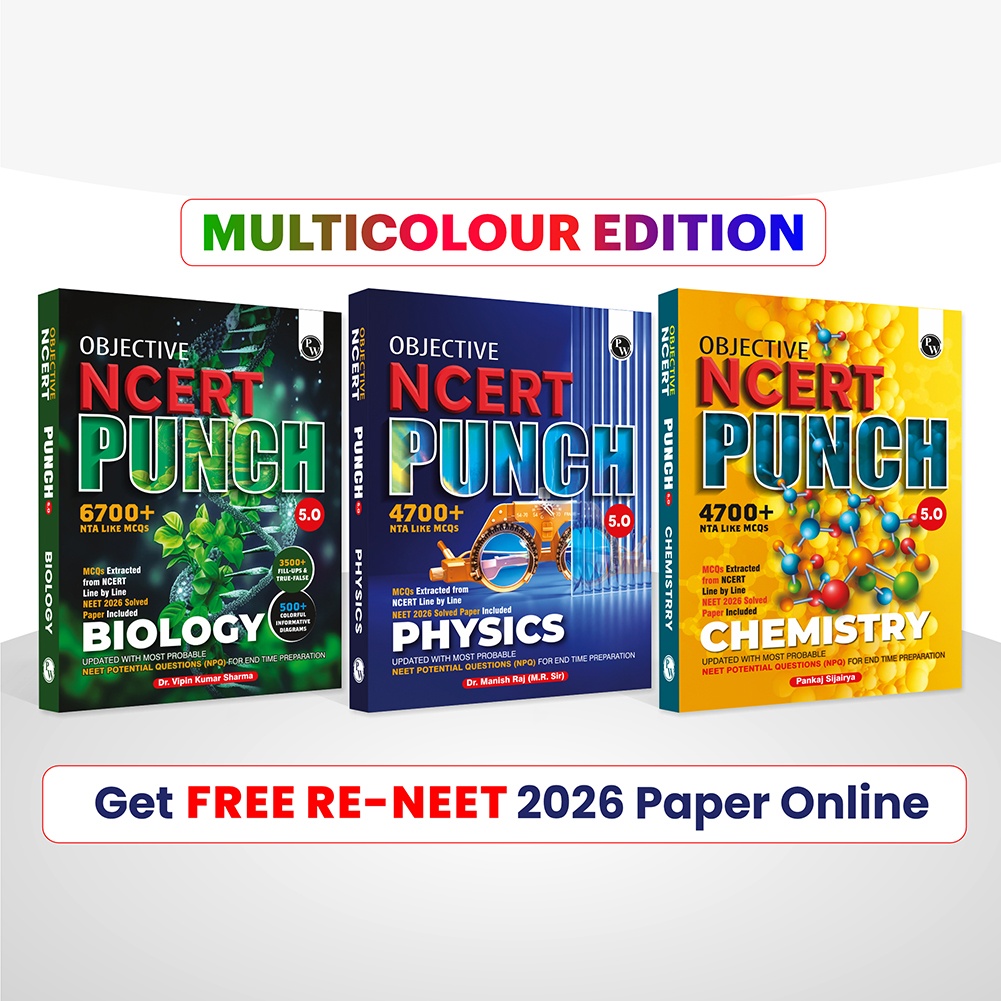
Structured Question Banks: Provide a structured setup containing over 11,400 NTA-level multiple-choice items across the entire combo collection.
-
Updated Trend Analysis: Integrates modern problem formats, including the most recent 2026 examination papers.
-
Expert Architecture: Created by experienced subject specialists to build authentic exam temperament and mental stamina.
-
Targeted Revisions: Perfect for initial topic building as well as high-pressure, end-stage revisions.
How to use NEET NCERT Punch Chemistry?
To get the most out of your objective punch chemistry resource, you need a systematic approach rather than just skimming through random pages. Randomly flipping through chapters leads to fragmented learning and poor retention.
Follow this clear, step-by-step workflow to maximize your study sessions:
-
Read the Core Chapter: Review your primary notes or textbook chapters to establish your baseline understanding.
-
Analyze the Short Notes: Read the book's specialized summary notes and study the colourful diagrams to anchor key facts.
-
Solve the Foundational Tasks: Complete the fill-in-the-blanks and true-false questions to verify basic terms.
-
Tackle the Core Objective Questions: Move on to the standard single-correct items to build consistent momentum.
-
Review Mismatches: Immediately check the provided solutions to understand any errors in your reasoning.
Study Strategy for Using the NEET NCERT Punch Chemistry
A structured routine turns a thick chemistry MCQ book into an achievable, step-by-step roadmap. Dividing your schedule into distinct phases keeps you organized and prevents stress as the exam date approaches.
Phase 1: Foundation Building (Months 1–6)
-
Dedicate your initial study hours to mastering fundamental theories.
-
Solve all basic match-the-column options and basic objective sets.
-
Aim to complete at least 40 regular questions per study session.
Phase 2: Advanced Application (Months 7–9)
-
Shift your focus toward numerical profiles and multi-correct variations.
-
Work heavily on assertion-reason questions to improve your critical thinking.
-
Take timed mini-tests to improve your pacing under pressure.
Phase 3: High-Speed Revision (Months 10–12)
-
Use the short notes and 500+ diagrams for rapid daily check-ins.
-
Solve the included past papers, focusing especially on the recent 2026 patterns.
-
Re-solve any questions you marked as difficult during your first pass.
How to Practicse with NEET NCERT Punch Chemistry?
Regular self-assessment turns passive reading into an active, practical skill. Use this sample tracking blueprint during your chemistry objective practice sessions to monitor your progress across different question formats.
-
Session Goal: Complete a balanced mix of conceptual, analytical, and mathematical questions within a fixed 60-minute window.
-
Target Accuracy: Aim for a minimum accuracy rate of 85% on foundational sets before moving on to higher-tier problems.
-
Tracking Layout: Maintain a dedicated error log structured like the table below to pin down your weak areas.
|
Exercise Format |
Total Items |
Time Allocated |
Recommended Strategy |
|
Basic Text Verification |
20 Questions |
10 Minutes |
Focus on immediate factual recall without second-guessing. |
|
Assertion & Reason |
15 Questions |
15 Minutes |
Carefully verify if the statements are true individually before evaluating the link. |
|
Numerical Calculations |
15 Questions |
25 Minutes |
Write out every step clearly and double-check your units and decimal points. |
|
Match the Grid Options |
10 Questions |
10 Minutes |
Use the elimination method by identifying the most certain pair first. |
Tips to Use the NEET NCERT Punch Chemistry
To stand out in your NEET chemistry preparation journey, you need to combine hard work with a smart strategy. High scores are built on efficient habits and steady, deliberate practice. Along with consistent study, solving a NEET Question Bank regularly helps reinforce concepts, improve problem-solving speed, and familiarise students with the latest exam pattern. Topic-wise practice and detailed solutions also help identify weak areas, making revision more focused and effective for the NEET examination.
-
Avoid Early Guesswork: Skip questions if you cannot find a solid logical reason for your answer, reducing lost marks from random guesses.
-
Use Visuals for Fast Review: Spend 15 minutes checking the colourful diagrams every morning to keep important structural trends fresh in your mind.
-
Time Your Practice Sessions: Always use a stopwatch during your numerical practice to simulate real exam pressure.
-
Keep a Dedicated Error Log: Write down the exact reasons behind your mistakes so you can avoid repeating them later.
Common Mistakes to Avoid While Using NEET NCERT Punch Chemistry
Even the right NCERT chemistry revision resource lose their value if used incorrectly. Recognizing common study pitfalls early on keeps your preparation efficient and on the right track.
-
Skipping the Explanations: Do not just check if your answer is right or wrong. Read the full solution to ensure your reasoning was actually correct.
-
Ignoring the Short Questions: Skipping the true-false or fill-in-the-blank sections misses an excellent opportunity to catch small gaps in your basic knowledge.
-
Rushing Past Numerical Problems: Avoid looking at the solution code before trying to calculate the answer yourself at least twice.
-
Failing to Re-visit Marked Items: Leaving hard questions unreviewed means you risk making the exact same mistakes on the actual exam day.
Read More: NEET Syllabus 2026 with Exam Pattern
NEET NCERT Punch Chemistry FAQs
How does the NEET NCERT punch chemistry book support board exam preparation along with competitive tests?
The book is built entirely on the standard core curriculum guidelines. By providing comprehensive chapter-wise summaries, visual diagrams, and basic objective questions, it reinforces the foundational knowledge needed for school boards while building advanced problem-solving skills for competitive medical selections.
Are the past papers in this textbook series updated with the latest exam changes?
Yes, the series includes authentic previous years' questions, featuring the most recent 2026 papers. This helps students analyze shifting question trends and understand the exact difficulty level they will face in the upcoming exam session.
What makes the numerical section in this manual different from other standard practice books?
This volume includes over 4,800 dedicated numerical profile questions that focus specifically on physical chemistry. The problems are organized step-by-step, helping students build mathematical confidence and calculation speed without relying on external calculators.