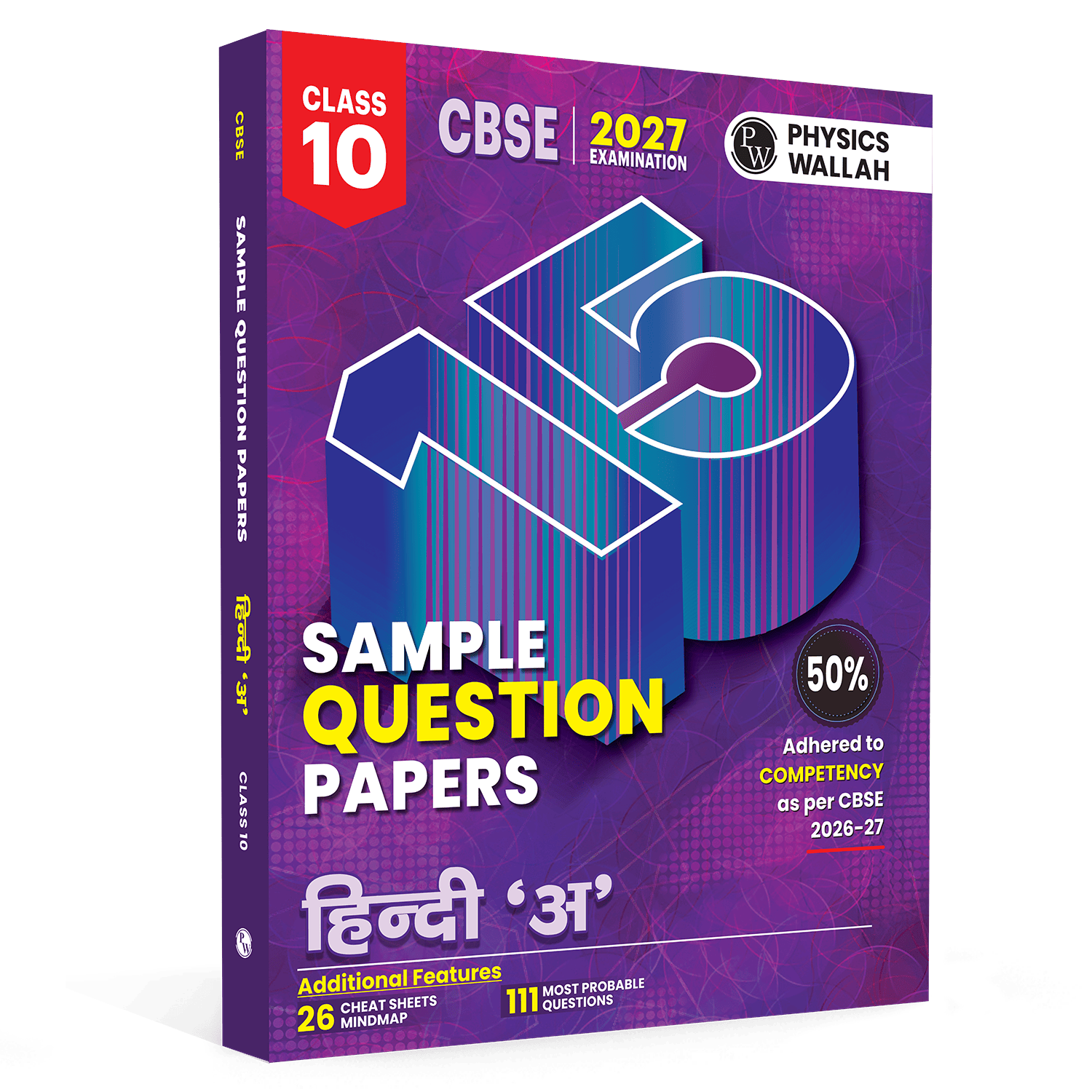
CBSE Class 10 Hindi A Sample Paper: Exam Pattern and Marking Scheme

Scoring well in language papers is not just about memorising answers; it relies heavily on understanding how examiners allocate marks, recognising question structures, and mastering time management inside the examination hall.
When you look at the sheer volume of prose, poetry, writing sections, and grammar rules, having a reliable roadmap is essential for success. This is where practising with CBSE Class 10 Hindi A sample papers transforms your entire preparation journey.
Importance of CBSE Class 10 Hindi A Sample Papers
Before diving into full-length textbook revisions, recognising the specific utility of practice resources helps streamline your entire study schedule. These CBSE Class 10 books bridge the gap between theoretical chapter reading and high-pressure board writing environments.
Working through them consistently eliminates exam-day surprises and builds solid writing stamina.
-
Bridges Textbook Reading and Exam Reality: Transitioning from passive chapter reading to active board exam writing is smoother when structured practice materials are utilised.
-
Builds Stamina for Long Writing Sessions: Regular practice helps train your hand muscles, ensuring writing speed remains consistent throughout the three-hour test window.
-
Familiarises with Board Standards: Working through authentic resources exposes you to the precise difficulty level set by board examiners.
-
Reduces Anxiety Through Simulation: Attempting timed tests removes the fear of the unknown, making the final board examination feel like a familiar routine.
-
Refines Spelling and Vocabulary: Consistent test attempts highlight recurring linguistic errors, allowing you to polish your standard Hindi expression before evaluation day.
-
Improves Time Management Pacing: Practising under strict time limits teaches you how to divide your writing hours across unseen passages, grammar, and literature sections without rushing.
How is the CBSE Class 10 Hindi A Sample Papers Based on the Latest Exam Pattern
Analysing the structural layout of the assessment allows you to divide your revision time logically between different segments. Knowing how objective items contrast with descriptive writing questions ensures you never get caught off-guard during the test. This structural clarity forms the backbone of a high-scoring strategy.
-
Section A Objective Bifurcation: Focuses on multiple-choice questions derived from unseen passages and applied grammar rules.
-
Section B Subjective Framework: Covers descriptive questions from textbooks alongside creative and functional writing tasks.
-
Structural Blueprint Clarity: Mirrors official board guidelines to give students a predictable layout before exam day.
-
Balanced Preparation Focus: Encourages equal attention to objective accuracy and long-form descriptive expression.
-
Predictable Question Weightage: Reveals the exact distribution of marks across reading, writing, grammar, and literature components.
-
Seamless Board Transition: Aligns your practice habits directly with the evaluation framework you will encounter in the examination hall.
For the prescribed syllabus, assessment structure, and examination details, students should refer to the official CBSE Class 10 Hindi A Curriculum 2026–27.
Question Types Covered in CBSE Class 10 Hindi A Sample Papers
Every question format evaluates a distinct cognitive skill, ranging from basic reading comprehension to deep analytical thinking. Reviewing the variety of prompts included in official practice sets prepares you for unexpected twists in the paper. Familiarity with these patterns ensures faster response times on exam day.
-
Comprehension Passages (अपठित गद्यांश और पद्यांश): Tests reading inference through objective and short answer formats.
-
Grammar Application (व्याकरण): Evaluates complex sentence structures, functional grammar, and word usage.
-
Literature Extracts (पठित गद्यांश/पद्यांश): Assesses contextual understanding of prose and poetry chapters.
-
Descriptive and Value-Based Questions: Measures critical thinking, thematic interpretation, and real-world connections.
What is the Marking Scheme to Understand Through CBSE Class 10 Hindi A Sample Papers
Examiners follow strict rubrics where specific points are tied to formatting rules, keywords, and neat presentation. Practising with CBSE Class 10 Sample Papers can help students understand question patterns, improve answer presentation, and become familiar with marking criteria. Knowing what evaluators look for can help you avoid losing easy marks and write stronger answers.
-
Strict Formatting Allocation: Creative writing tasks carry specific point values tied to correct structuring, salutations, and closing lines.
-
Keyword-Driven Evaluation: Literature answers require specific thematic references and key terms to secure full credit.
-
Prevention of Over-Writing: Clear insight into mark distribution stops students from writing overly long essays where short paragraphs suffice.
-
Precision and Neatness Rewards: Evaluators look for clean handwriting, proper spacing, and strict adherence to word counts.
-
Step-Wise Point Breakdown: Helps you understand how partial credit is awarded for structured steps in long descriptive answers.
-
Grammar Accuracy Weightage: Highlights the importance of correct punctuation, spelling, and sentence alignment in objective and subjective sections.
How to Use CBSE Class 10 Hindi A Sample Papers for Exam Practice
Randomly flipping through a practice book yields minimal results unless paired with a disciplined testing methodology. Simulating real exam conditions trains your mind to perform under pressure without panicking. Structured practice turns raw knowledge into polished exam execution.
-
Syllabus Completion First: Finish reading all textbook chapters before attempting full-length timed simulation tests.
-
Strict Timed Environment: Set a three-hour clock, switch off distractions, and attempt the paper under realistic examination conditions.
-
Honest Self-Evaluation: Use the official marking scheme to check your answers and uncover hidden spelling or grammar gaps.
-
Progressive Speed Improvement: Gradually enhance your writing pace and presentation neatness across successive practice sessions.
-
Error Log Maintenance: Keep a dedicated notebook to record recurring grammatical mistakes and difficult vocabulary terms.
-
Targeted Revision Drills: Revisit weak chapters immediately after evaluating each practice test to strengthen your foundation.
Check Out: CBSE Question Bank Class 10 Hindi-A
Study Strategy with CBSE Class 10 Hindi A Sample Papers
Integrating practice sets into a weekly routine prevents last-minute cramming and fosters long-term retention. Keeping a dedicated log for tricky words and grammar rules accelerates your overall learning curve. Consistency remains the ultimate key to conquering language papers.
-
Weekly Routine Integration: Dedicate specific weekdays to writing practice and grammar rules while reserving weekends for full-length tests.
-
Vocabulary Notebook Maintenance: Keep a separate log for difficult terminology, synonyms, and spelling rules encountered during practice.
-
Expert Solution Analysis: Pay close attention to the sentence framing and vocabulary choices used in model answers.
-
Continuous Revision Cycles: Regularly review your vocabulary log and grammar notes to eliminate silly mistakes over time.
-
Peer Discussion Sessions: Compare your descriptive answer structures with classmates to discover alternative ways of framing thematic responses.
-
Active Recall Techniques: Test yourself on formal letter formats and poem summaries without looking at the textbook.
Tips to Improve Your Score Using CBSE Class 10 Hindi A Sample Papers
Small adjustments in presentation and time allocation can push your final percentage into a higher bracket. Mastering these tactical habits ensures your hard work translates directly into stellar board marks. Precision in execution separates average scorers from toppers.
-
Maintain Legible Handwriting: Ensure clear letter spacing and neatness so evaluators can read your long answers smoothly.
-
Strict Word Limit Adherence: Respect prescribed word boundaries for creative writing and literature answers to save time.
-
Strategic Keyword Underlining: Highlight important characters, central themes, and core message words to catch the evaluator's eye.
-
Final Ten-Minute Review: Always reserve the last moments of your exam time to check spellings, punctuation marks, and numbering.
-
Clear Section Labelling: Clearly mark Section A, Section B, and question numbers to avoid confusing the examiner.
-
Balanced Paragraph Division: Break long subjective answers into logical paragraphs to make your response visually appealing.
Read More: CBSE Class 10 Hindi Syllabus
CBSE Class 10 Hindi A Sample Papers FAQs
What makes CBSE class 10 Hindi A sample papers essential for board preparation?
They familiarise students with the official exam pattern, question typologies, and time management strategies required to secure top scores.
How does the Hindi A exam pattern divide the question paper structure?
The assessment splits neatly into Section A for objective multiple-choice questions and Section B for subjective literature and creative writing prompts.
Where can I find a reliable Hindi A marking scheme for self-evaluation?
Quality practice books provide detailed marking schemes and model solutions that outline exact criteria and keyword allocations used by board evaluators.
What topics make up the class 10 Hindi A board exam syllabus?
The curriculum includes unseen comprehension passages, applied grammar, prose and poetry chapters from Kshitij and Kritika, and functional creative writing.
How do I master the Hindi A question paper under strict time limits?
Simulating full-length tests in a three-hour window helps build writing endurance, enhances speed, and improves accuracy across all sections.