CBSE Class 10 Science Sample Paper: What Should You Do After Solving One Paper?
You have put in three hours of effort, recalled key scientific formulas, and attempted every question. However, the true learning process begins only after you finish writing. Simply completing a test is not enough to secure top marks.
Students often struggle to convert their initial practice into real score improvements because they skip the evaluation phase. By taking structured steps immediately after finishing your first practice attempt, you can address CBSE Class 10 Science Sample Papers for knowledge gaps, refine your presentation technique, and build solid confidence for your upcoming mid-term and board examinations.
Importance of CBSE Class 10 Science Sample Papers
Solving structured practice tests gives you a clear understanding of the latest exam format, time allocation, and question design. Evaluating your answer sheet immediately after completing a mock test transforms basic practice into an effective diagnostic tool.
-
Familiarity with Exam Structure: Working through CBSE class 10 science sample papers helps you understand how questions are distributed across Physics, Chemistry, and Biology.
-
Understanding Question Weightage: Exposure to level-wise sample papers allows you to identify high-weightage topics and recurring question patterns.
-
Time Allocation: Completing full-length tests trains you to manage the three-hour time limit effectively so you do not leave high-mark questions unanswered.
-
Self-Assessment: Evaluating your attempt helps you measure your current preparation level objectively rather than relying on guesswork.
How Can CBSE Class 10 Science Sample Papers Help After One Paper
Finishing a single mock paper provides immediate insights into your actual test-taking abilities. Rather than moving straight to the next topic, using your first attempt as a reference point helps shape your study direction for the rest of the academic term.
-
Identifying Immediate Knowledge Gaps: Reviewing your responses reveals specific theoretical concepts or numerical problems that require quick revision.
-
Evaluating Writing Speed: Comparing your completion time against the official duration shows whether your writing speed is adequate for the actual examination.
-
Testing Recall Under Pressure: The first attempt highlights which formulas, equations, and terminology you struggle to recall under timed conditions.
-
Gauging Conceptual Clarity: Using a CBSE class 10 sample paper allows you to test whether you can apply theoretical knowledge to application-based questions accurately.
What to Do After Solving One CBSE Class 10 Science Sample Paper
Once you put your pen down, follow a systematic step-by-step routine to extract maximum learning from your attempt. Skipping evaluation makes solving papers far less effective.
-
Step 1: Take a Short Break: Step away from your desk for 10 to 15 minutes to clear your mind before starting the assessment process.
-
Step 2: Compare with Marking Schemes: Match your written responses line-by-line against official marking guidelines and step-wise marking rules.
-
Step 3: Categorize Your Errors: Separate your mistakes into conceptual errors, calculation slips, incomplete explanations, or misread questions.
-
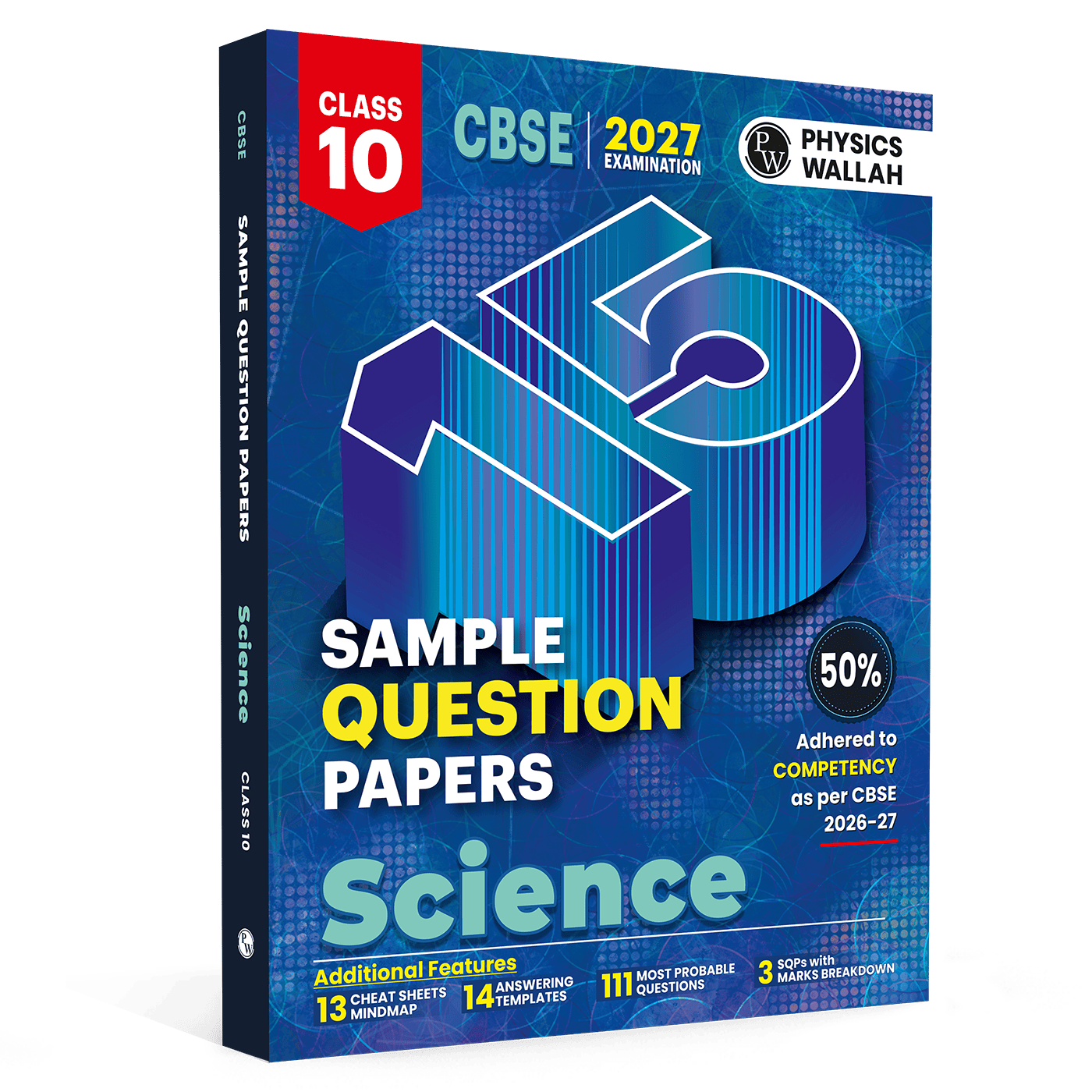
Step 4: Consult Mind Maps and Cheat Sheets: Refer to concise summaries, cheat sheets, and 13 mind maps to refresh weak concepts instantly.
-
Step 5: Record Your Mistakes: Maintain a dedicated notebook to log every error made during the attempt for quick reference before the next test.
Which Answers Should You Check After Solving CBSE Class 10 Science Sample Papers
Evaluating your answer script requires a targeted approach. Using CBSE Class 10 Books alongside practice tests can help strengthen concepts and improve answer-writing skills. Certain types of questions carry specific marking requirements that demand close inspection.
1. Long Answer Questions
Check whether your explanations follow a logical sequence. Ensure key scientific terms are present and that main points stand out clearly.
2. Numerical Problems in Physics
Verify each step of your calculations. Confirm that you wrote the correct initial formulas, substituted values accurately, and included proper SI units in the final statement.
3. Chemical Reactions and Equations
Review all balanced chemical equations. Ensure reactant and product formulas are written correctly along with state symbols where required.
4. Biology Explanations
Examine whether your answers directly address the prompt without unnecessary filler. Check if technical terms are used accurately in your explanations.
5. Application and Case-Based Questions
Analyze how well you applied core scientific principles to real-world scenarios. Cross-check your reasoning against topper explanations and answering templates.
Study Strategy with CBSE Class 10 Science Sample Papers
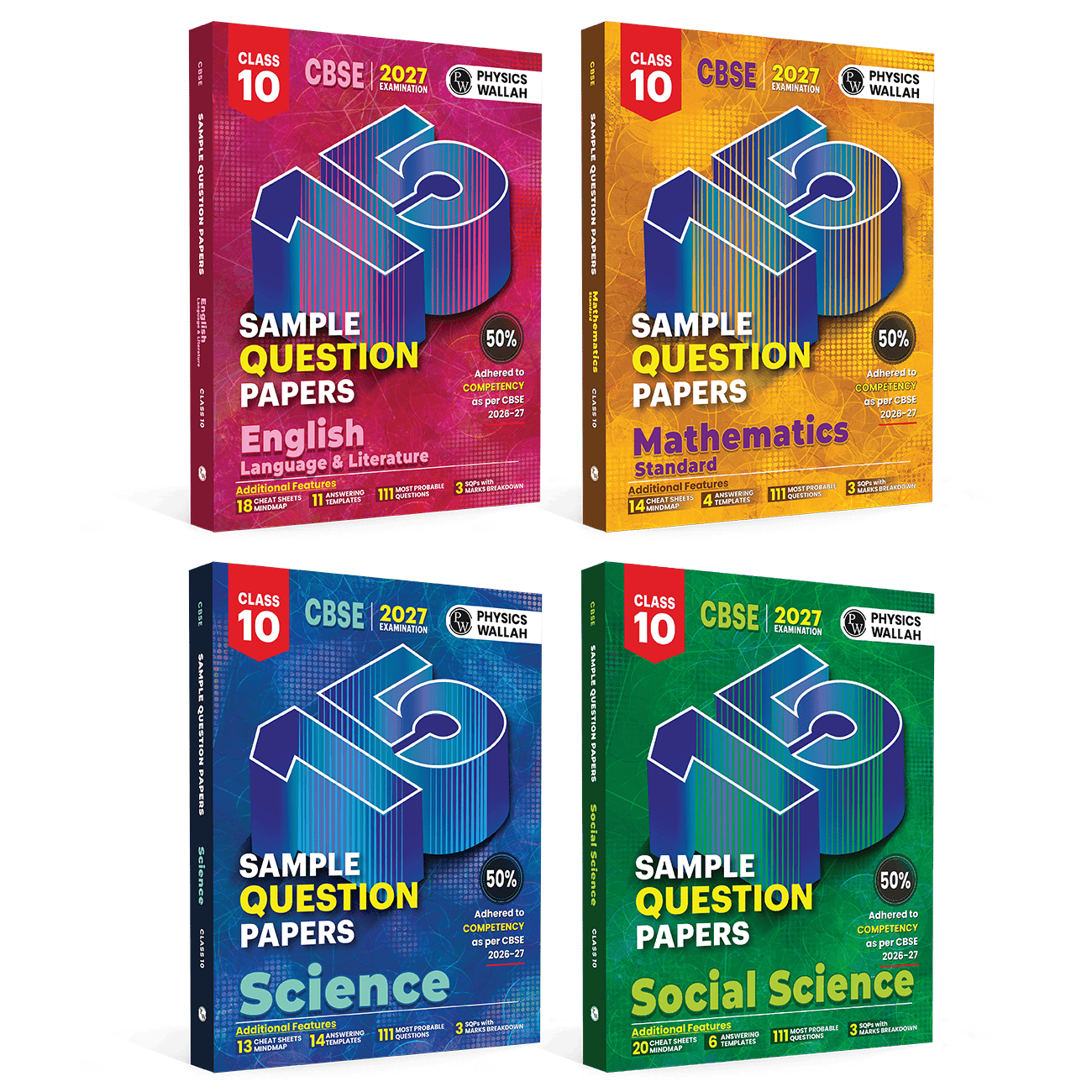
Integrating mock practice into your daily study schedule ensures consistent academic progress throughout the first-term session. A balanced routine using the CBSE Class 10 Sample Papers Combo of 4 Books 2027 combines structured testing with thorough revision.
-
Phase 1: Diagnostic Assessment: Start your CBSE science exam preparation by solving one sample paper under strict exam conditions to establish your baseline score.
-
Phase 2: Targeted Concept Revision: Spend the following two to three days revising chapters where you lost marks, utilizing 111 most probable questions to reinforce key concepts.
-
Phase 3: Skill Refinement: Practice structured answer presentation using 14 answering templates to align your writing style with evaluation standards.
-
Phase 4: Trend Analysis Review: Study past 5 years' trend analysis to focus your attention on frequently tested board topics.
-
Phase 5: Re-Testing: Attempt a fresh mock paper from your set of 15 board-style practice papers to measure score improvements.
Mistakes to Avoid After Solving CBSE Class 10 Science Sample Papers
Many students lower their study efficiency by making critical mistakes after completing a practice test. Avoiding these common traps ensures continuous improvement.
-
Ignoring Minor Errors: Treating small calculation slips or missed units as unimportant leads to repeated mistakes in actual exams.
-
Jumping Straight to the Next Paper: Solving multiple papers without analyzing previous mistakes offers little educational benefit.
-
Overlooking Step Marking: Failing to check step-wise marking guidance prevents you from understanding how partial marks are awarded.
-
Neglecting Presentation Structure: Focusing solely on correctness while ignoring clean formatting and structured layout reduces overall answer quality.
-
Skipping Weak Topics: Delaying the revision of difficult topics highlighted during your test causes knowledge gaps to accumulate over time.
Read More: CBSE Class 10 Science Half Yearly Sample Paper 2026
CBSE Class 10 Science Sample Papers FAQs
How many CBSE class 10 science sample papers should I solve in the first term?
Solving 5 to 8 well-structured papers alongside thorough post-test analysis provides sufficient practice for first-term exams.
What is the best way to evaluate a class 10 science practice paper at home?
Compare your answer script directly against the official marking scheme, checking step-wise marks, scientific terminology, and unit accuracy.
Should I revise the entire syllabus before attempting a CBSE science sample paper?
Completing full syllabus revision is ideal, but attempting papers after completing major chapters helps identify remaining weak areas early.
How does analyzing CBSE science exam preparation papers improve board marks?
Detailed analysis prevents repetitive mistakes, improves answer formatting, and sharpens time management during actual board examinations.
How much time should I spend evaluating a class 10 science revision paper?
Spend at least 45 to 60 minutes thoroughly checking your answers and logging mistakes after completing a 3-hour test.