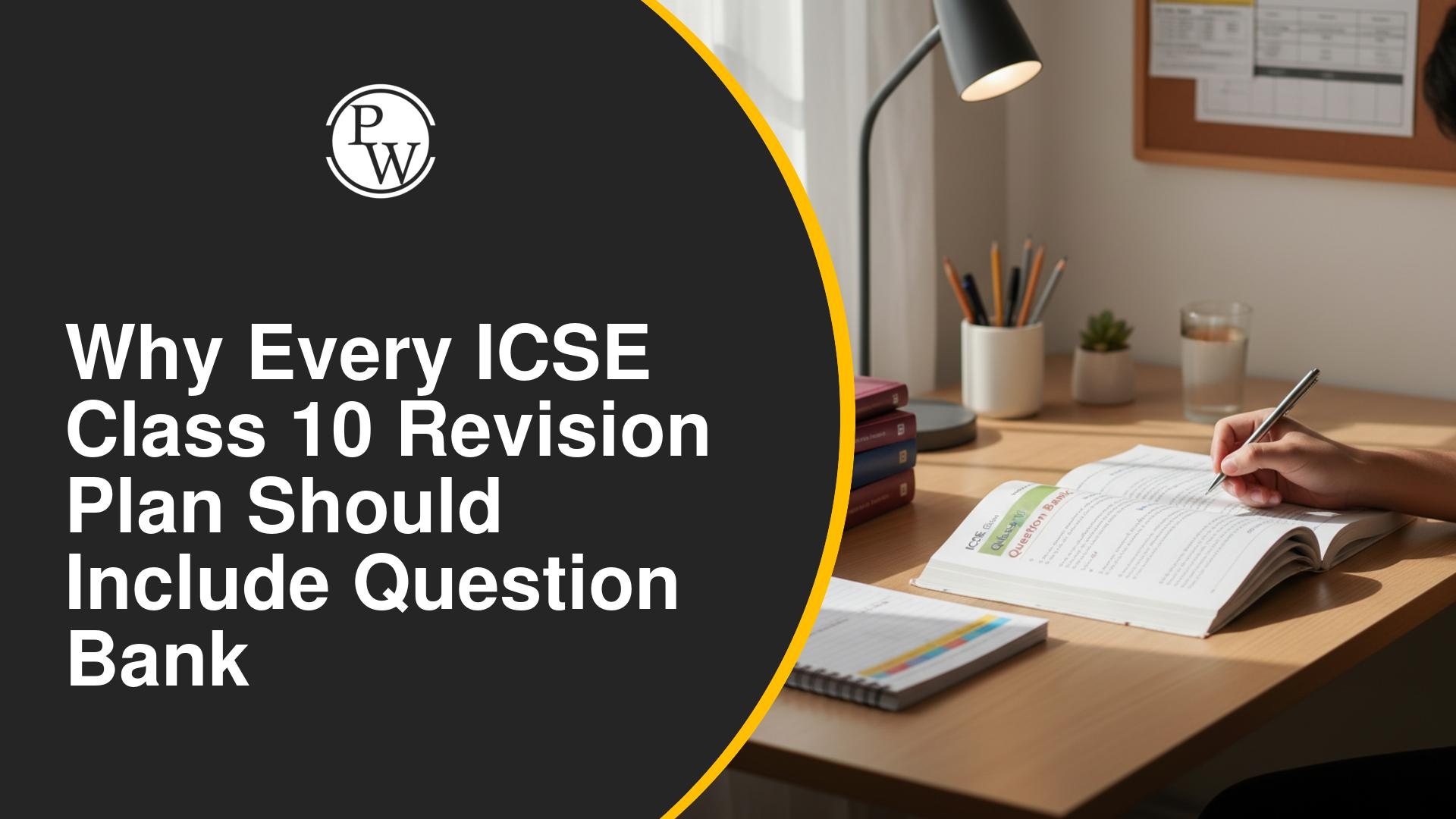
Why Every ICSE Class 10 Revision Plan Should Include Question Bank
While understanding theoretical concepts from standard reference books is essential, many candidates feel overwhelmed when facing complex analytical queries, step-wise marking criteria, and time limits. This gap between theoretical learning and actual exam execution often leads to unnecessary stress and lost marks during board assessments.
Incorporating a dedicated ICSE Class 10 question bank into your daily routine bridges this gap. It turns passive reading into active, output-oriented practice, helping you build exam confidence and achieve academic excellence.
Overview of ICSE Class 10 Question Bank
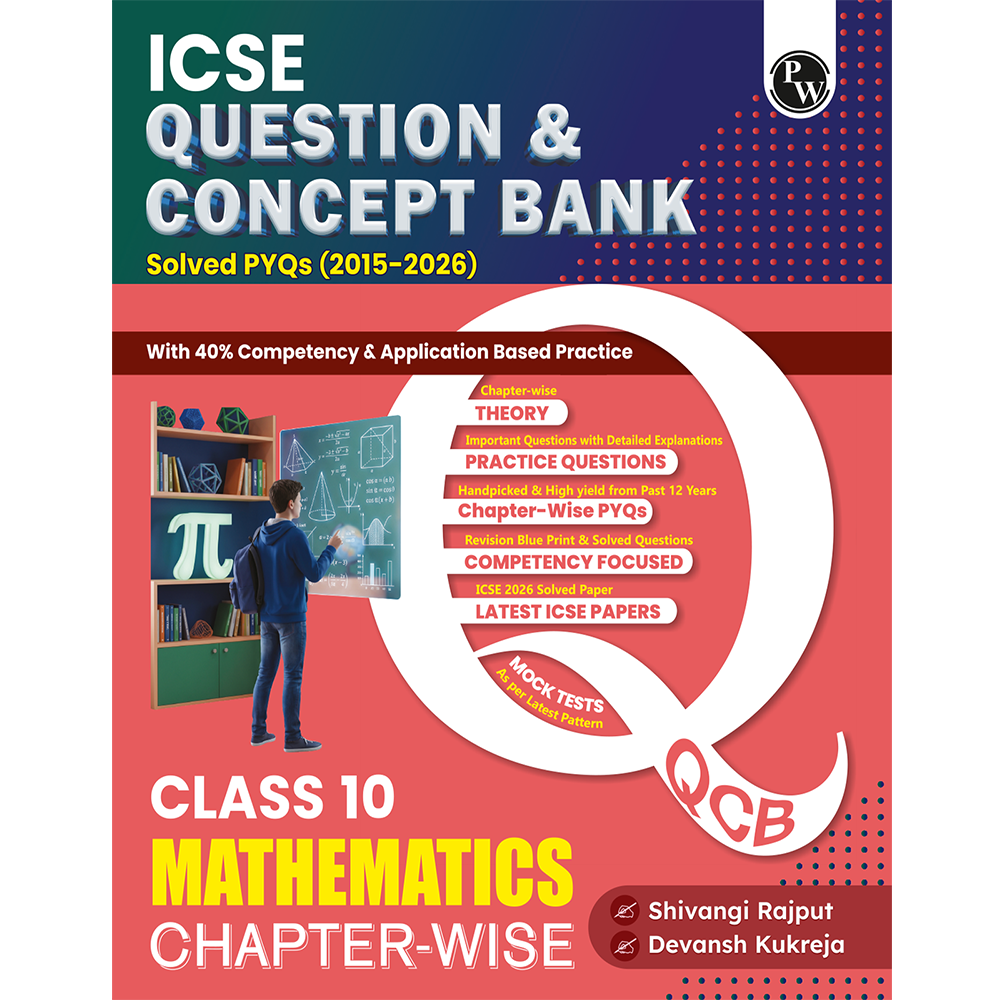
A Class 10 question bank is a useful study resource for students preparing for the ICSE Class 10 board exams. It provides chapter-wise and topic-wise questions that help students practice important concepts and understand different question patterns. It can include ICSE previous year questions, competency-based questions, detailed solutions, mock tests, and revision support.
Regular practice helps students improve answer writing, accuracy, time management, and confidence. By using a class 10 question bank along with textbooks and revision notes, students can strengthen weak topics and prepare more effectively for their board examinations.
Why is an ICSE Class 10 Question Bank Important for Your Exams?
Scoring top marks in the board examinations requires a clear understanding of how answers are evaluated. Standard textbooks present information conceptually, but board examiners look for specific keywords, logical steps, accurate diagrams, and structured explanations. A Class 10 question bank trains your mind to organize thoughts according to official evaluation standards.
Active recall is significantly more effective than re-reading notes multiple times. When you attempt questions without looking at solutions, your brain strengthens memory pathways, making retrieval faster during actual tests. Furthermore, board papers assess candidates across various difficulty levels, ranging from straightforward recall to application-based problems.
|
Study Approach |
Passive Reading |
Active Question Bank Practice |
|
Primary Focus |
Reading chapters and highlighting text |
Applying concepts to exam-style problems |
|
Retention Rate |
Moderate to low over long periods |
High retention through active recall |
|
Exam Familiarity |
Low exposure to actual marking schemes |
High familiarity with marking distribution |
|
Time Management |
Unchecked reading speed |
Practical timed practice per section |
|
Error Identification |
Difficult to spot conceptual gaps |
Immediate clarity on weak topics |
Regular practice with curated questions helps you identify recurring question patterns across subjects like Physics, Mathematics, and Literature. It also reduces exam anxiety by familiarising you with paper formats well in advance.
Features of the ICSE Class 10 Question Bank
Not all practice ICSE Class 10 books offer the same level of utility. High-quality study material must align perfectly with the current council guidelines, providing structured resources that streamline your daily revision.
Chapter-Wise and Topic-Wise Categorisation: Systematic organization allows you to revise specific units immediately after finishing a topic in class, reinforcing learning in real time.
Inclusion of ICSE previous year questions: Solved papers from past years offer direct insights into recurring themes, weightage distribution, and official marking trends.
Competency-Based and High-Order Questions: Modern board papers feature Assertion-Reasoning, Case-Based, and image-based problems that evaluate critical thinking rather than rote learning.
Detailed Step-by-Step Solutions: Comprehensive explanations help you understand the precise steps needed to secure full marks, especially in numerical and descriptive subjects.
Integrated Mock Tests and Blueprint Summaries: Full-length practice papers simulate authentic exam conditions, improving your pacing and time allocation across different sections.
Having access to these features ensures that your preparation remains focused, measurable, and aligned with the official syllabus goals.
How to Use ICSE Class 10 Question Bank for Daily Revision?
Creating an effective study schedule involves balancing fresh chapter learning with continuous testing. Adding practice tools to your daily routine does not mean adding extra hours; it means using your existing study time more efficiently.
Phase 1: Topic-Level Testing Immediately After Reading
When you finish studying a chapter from your primary textbook, avoid moving to the next unit immediately. Allocate 30 to 45 minutes to solve relevant problems from your practice material. This practice reinforces key definitions, formula applications, and historical dates while the information is fresh.
Phase 2: Weekly Revision Using an ICSE revision book
Dedicate weekends to consolidating what you learned during the week. Utilizing an ICSE revision book allows you to review short summary notes, key formulas, and essential diagrams before tackling a mixed set of questions. This dual approach prevents older chapters from being forgotten as you progress through the term.
Phase 3: Simulated Exam Practice with Time Limits
As board examinations approach, transition from untimed practice to full-length timed tests. Select chapter sets or full mock papers and attempt them under strict timer conditions.
-
Set Up a Quiet Environment: Remove all distractions, reference books, and digital devices.
-
Follow the Official Time Limits: Adhere strictly to the allocated time for English, Sciences, and Mathematics papers.
-
Review with Answer Keys: Compare your written answers against provided solutions to evaluate keyword accuracy and step marks.
-
Maintain a Mistakes Log: Record every error, whether caused by conceptual misunderstanding, calculation slips, or poor time allocation.
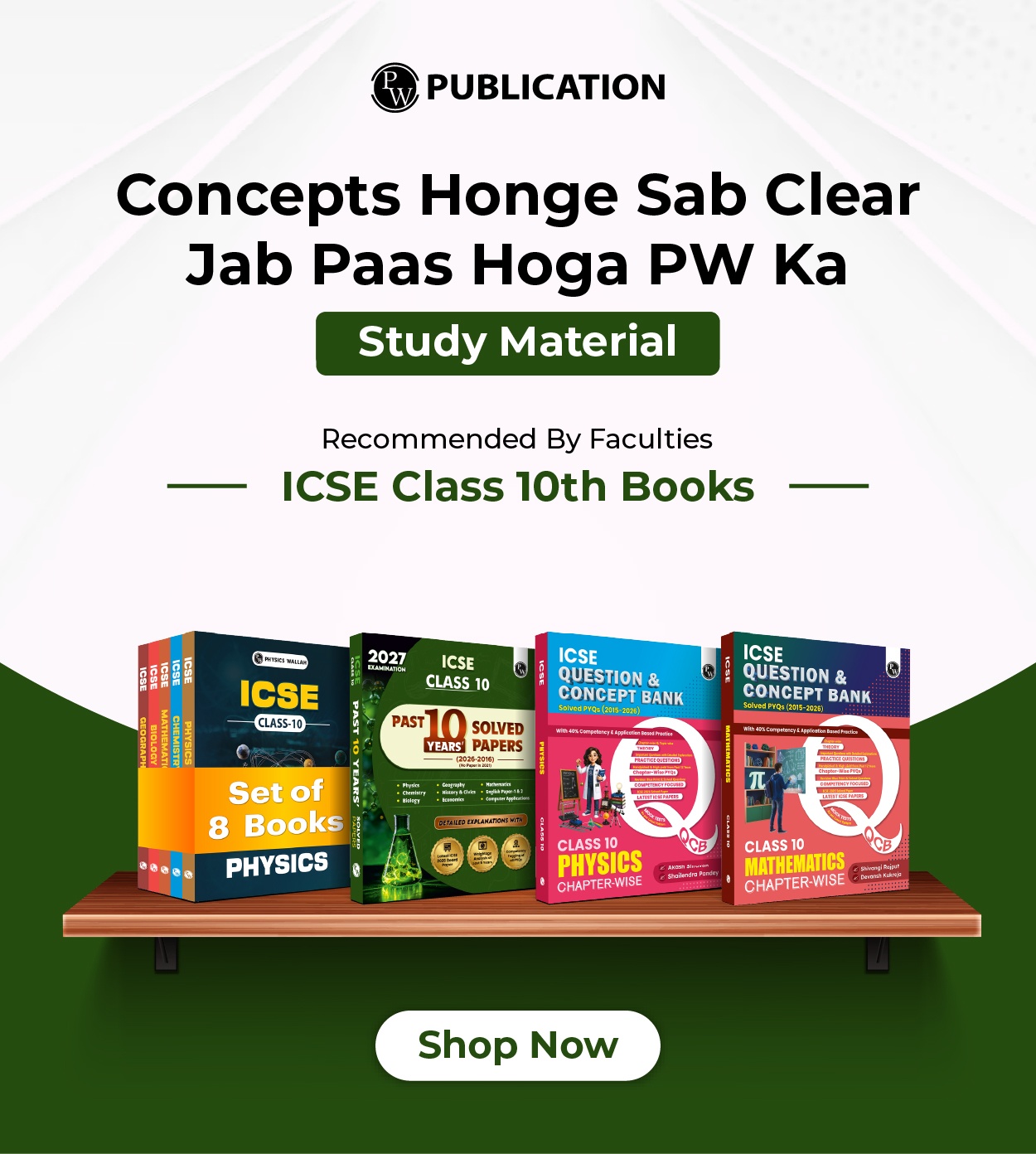
Setting up a structured feedback loop transforms mistakes into valuable learning opportunities long before the final board exams begin. Practising with ICSE Class 10 PYQ 2027 can help students identify recurring mistakes, understand question patterns, assess their preparation, and improve answer-writing skills through regular previous year paper practice.
What are the Benefits of ICSE Class 10 Question Bank for Different Subjects?
Every subject in the Class 10 curriculum presents unique challenges. Science subjects require precision and formula application, Humanities demand structured narrative writing, and Languages test grammatical accuracy and comprehension skills.
Science and Mathematics (Physics, Chemistry, Biology, Mathematics)
Science subjects require clear conceptual understanding and accurate problem-solving. In Mathematics and Physics, solving diverse numerical sets builds familiarity with formula variations and multi-step derivations. Chemistry requires practice in balancing chemical equations, writing IUPAC names, and predicting reaction outcomes. In Biology, practicing labeled diagrams, technical terms, and reason-based queries ensures high-scoring accuracy.
Humanities (History & Civics, Geography)
Humanities require structured answers with key dates, policy details, and geographical explanations. Practicing structured questions helps candidates format long-form answers cleanly. Geography practice ensures thorough preparation for map work, topographical sheet analysis, and climate data interpretation.
Languages and Literature (English Paper 1 and English Paper 2)
Language papers evaluate grammar accuracy, composition structure, and literary analysis. Regular exposure to ICSE practice questions improves essay structure, letter formatting, and comprehension analysis. For Literature, practicing character sketches, theme analysis, and context-based extracts builds confidence in tackling literary questions.
|
Subject Category |
Key Exam Focus Areas |
Recommended Practice Approach |
|
Mathematics |
Theorem proofs, algebraic steps, geometry calculations |
Daily timed solving of step-by-step problems |
|
Sciences |
Chemical equations, physics numericals, biological diagrams |
Focus on reason-based questions and lab processes |
|
Humanities |
Map reading, historical timelines, Civics articles |
Short answer practice using precise technical keywords |
|
Languages |
Functional grammar, essay layouts, literary extracts |
Passage analysis and structured extract practice |
Applying subject-specific practice techniques helps you allocate effort efficiently, improving performance across the entire board curriculum.
How to Choose an ICSE Class 10 Question Bank?
Selecting high-quality preparation material is one of the most important decisions a student makes during Class 10. The right resources offer accurate solutions, aligned content, and clear layout structures that prevent study fatigue.
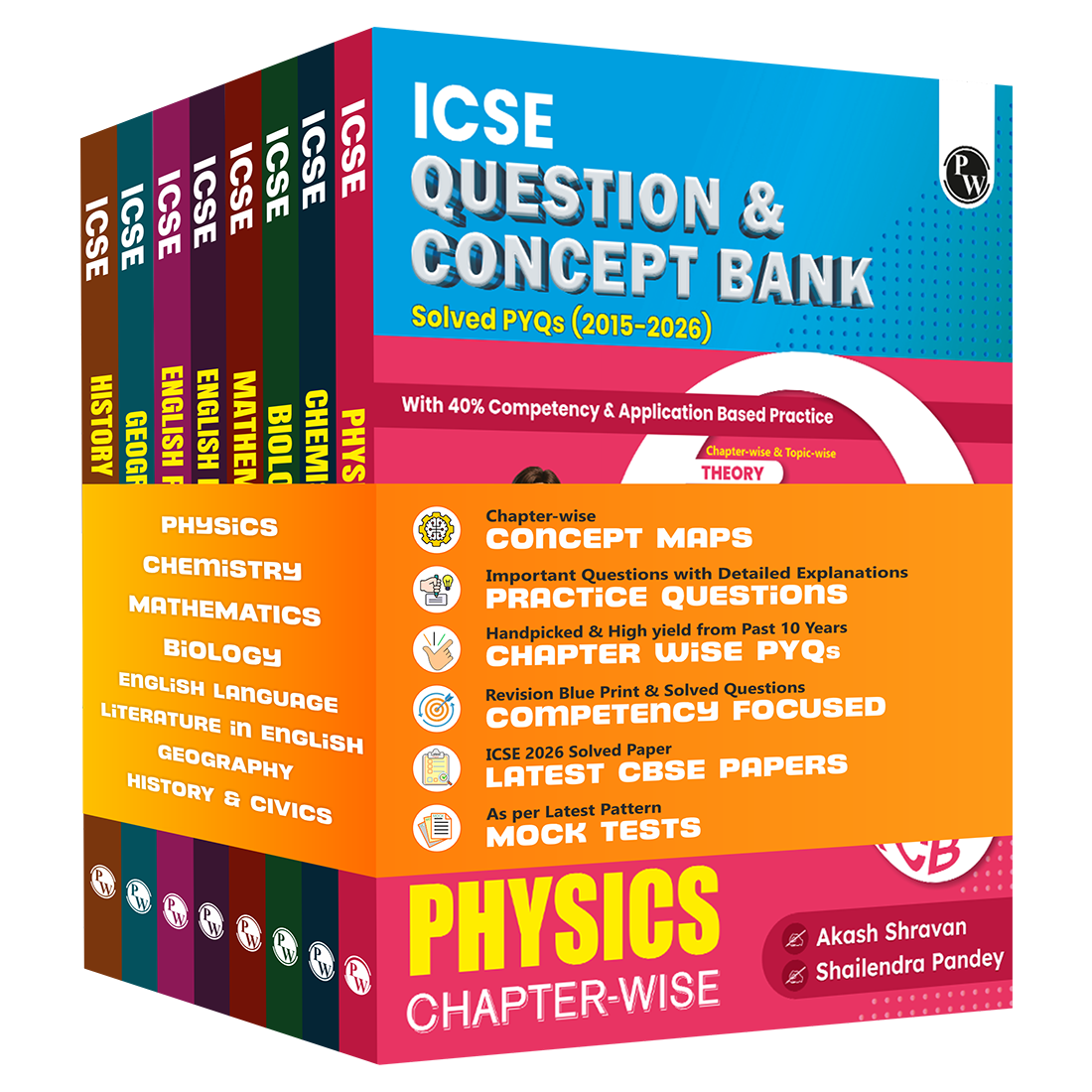
A complete resource designed specifically for comprehensive ICSE board preparation is the PW ICSE question bank. Available as a complete combo set covering eight core subjects—Physics, Chemistry, Mathematics, Biology, English Paper 1, English Paper 2, Geography, and History & Civics—it serves as an all-in-one preparation package.
Key structural advantages of using this resource set include:
-
Complete Subject Coverage: Eliminates the need to buy separate reference guides for different subjects.
-
Rigorous Alignment with Official Patterns: Incorporates recent board exam modifications, including competency-focused queries and objective question formats.
-
Comprehensive Theory and Summaries: Features chapter-wise theory breakdowns alongside detailed answers for fast, effective revision.
-
Exposure to Real Exam Trends: Includes fully solved recent board papers alongside custom mock assessments to build authentic exam readiness.
Equipping yourself with well-designed resources keeps your study plan organized, structured, and focused on target outcomes throughout the academic year.
Read More: ICSE Class 10 Syllabus 2026-27
ICSE Class 10 Question Bank FAQs
Why is a class 10 question bank necessary alongside standard textbooks?
Standard textbooks explain concepts and background theory, whereas the class 10 question bank teaches you how to apply that knowledge to specific exam questions. It provides clear insights into answer formatting, marking schemes, keyword usage, and time management strategies that standard textbooks typically do not emphasize.
How do ICSE previous year questions help in ICSE board preparation?
Practicing ICSE previous year questions helps students recognize high-yield topics, recurring question formats, and variations in difficulty level over time. Analyzing past trends allows candidates to prioritize high-weightage chapters and improve answer precision according to established evaluation standards during their broader ICSE board preparation.
When should students start using an ICSE revision book during the academic year?
It is best to start using an ICSE revision book alongside your regular school curriculum right from the start of the academic year. Integrating revision tools after completing each chapter solidifies understanding early, preventing backlog buildup and avoiding last-minute cramming before pre-board and final examinations.
How does the ICSE question bank assist in solving competency-based questions?
The ICSE question bank includes specialized question types such as Assertion-Reasoning, Case-Based scenarios, and image-focused problems. These structured formats encourage analytical thinking over rote memorisation, fully aligning your preparation with the latest board assessment standards.
What makes ICSE practice questions effective for improving exam speed and accuracy?
Solving ICSE practice questions under timed conditions builds muscle memory and mental stamina. Regular evaluation against provided step-wise solutions highlights recurring calculation errors, formatting mistakes, and pacing issues, directly improving overall speed, accuracy, and confidence on exam day.