Best Study Plan for Class 12 PCB Students to Prepare for Boards

Balancing Biology diagrams, Physics derivations, and Chemistry equations can feel overwhelming. This article offers a structured approach, daily routines, and strategic resources like the CBSE Class 12 PCB PYQ books to help you clear your concepts and score above 95% in your board exams.
Importance of CBSE Class 12 PCB PYQ
Stepping into senior secondary education brings a massive jump in syllabus depth. Without a proper roadmap, students often get lost shifting between subjects, leaving crucial chapters unfinished. A structured approach ensures you allocate equal time to the conceptual demands of Physics, the chemical equations of Chemistry, and the vast theory of Biology.
Managing school practicals, pre-board examinations, and daily revisions requires a balanced routine. A well-structured Class 12 PCB study plan helps you identify your weak areas early, gives you ample time for self-study, and eliminates last-minute exam panic. By mapping out your months in advance, you transform a mountainous syllabus into achievable daily targets.
Board Exam Timetable with CBSE Class 12 PCB PYQ
An effective routine must look realistic. Preparing for three major science subjects alongside English and an elective requires discipline. Instead of studying randomly, breaking your day into focused blocks yields the best results.
Ideal Daily Study Plan
A productive day depends on consistent study intervals. Here is a realistic blueprint for your standard preparation days:
-
06:00 AM – 07:30 AM: Early morning conceptual reading (ideal for Biology theory or complex Physics derivations).
-
08:00 AM – 02:00 PM: School hours and practical sessions.
-
03:30 PM – 05:30 PM: Core study block 1 (Physics numerical problems or Organic Chemistry mechanisms).
-
06:00 PM – 08:00 PM: Core study block 2 (Biology diagrams and writing practice).
-
08:30 PM – 10:00 PM: Solving previous papers using CBSE class 12 PCB PYQ resources.
Weekly Distribution of Subjects
You do not need to study every subject every single day. A smarter method alternates heavy numerical work with theoretical reading. For instance, pair Physics with English on Monday, Chemistry with physical education on Tuesday, and dedicate Wednesday entirely to Biology and quick revisions. This variety keeps your mind alert and prevents academic burnout.
Features of CBSE Class 12 PCB PYQ
-
Exam Trend & Pattern Insights: Get chapter-wise weightage, question patterns, and the latest exam trends based on the last 5 years of CBSE papers to prepare with confidence.
-
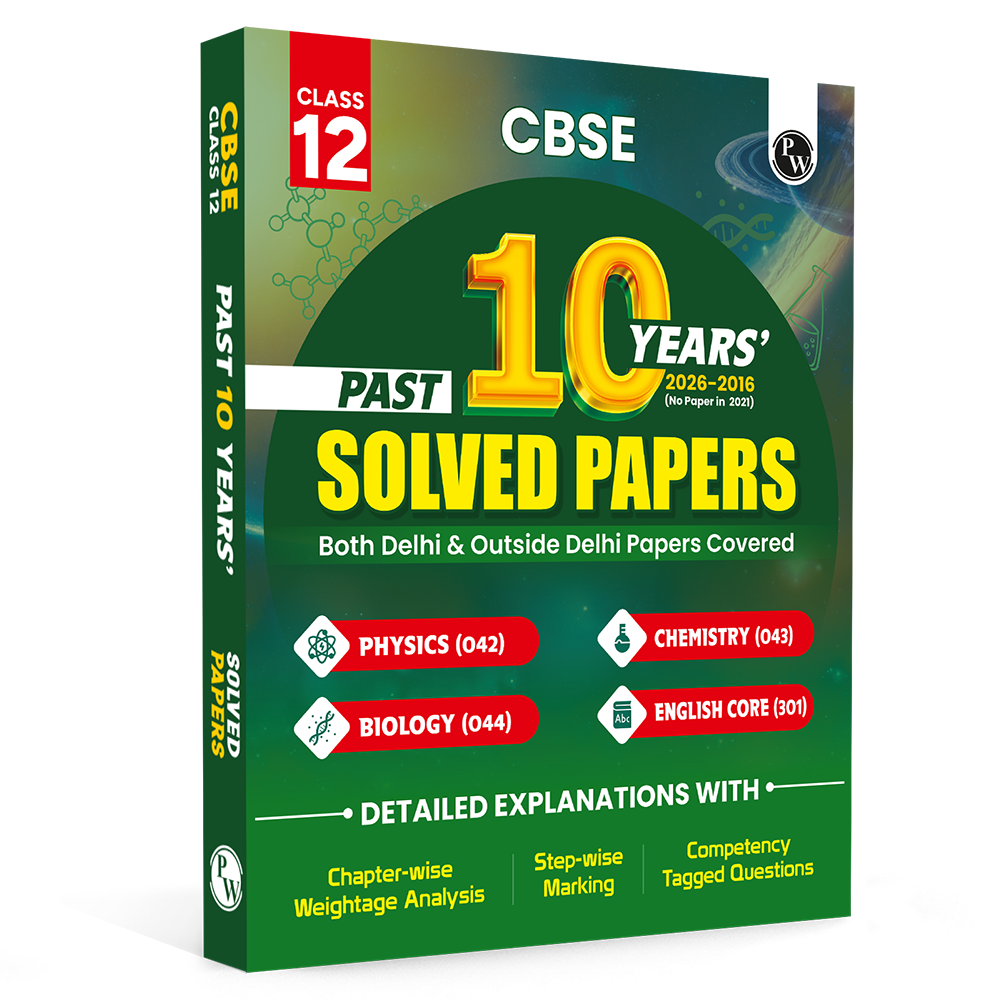
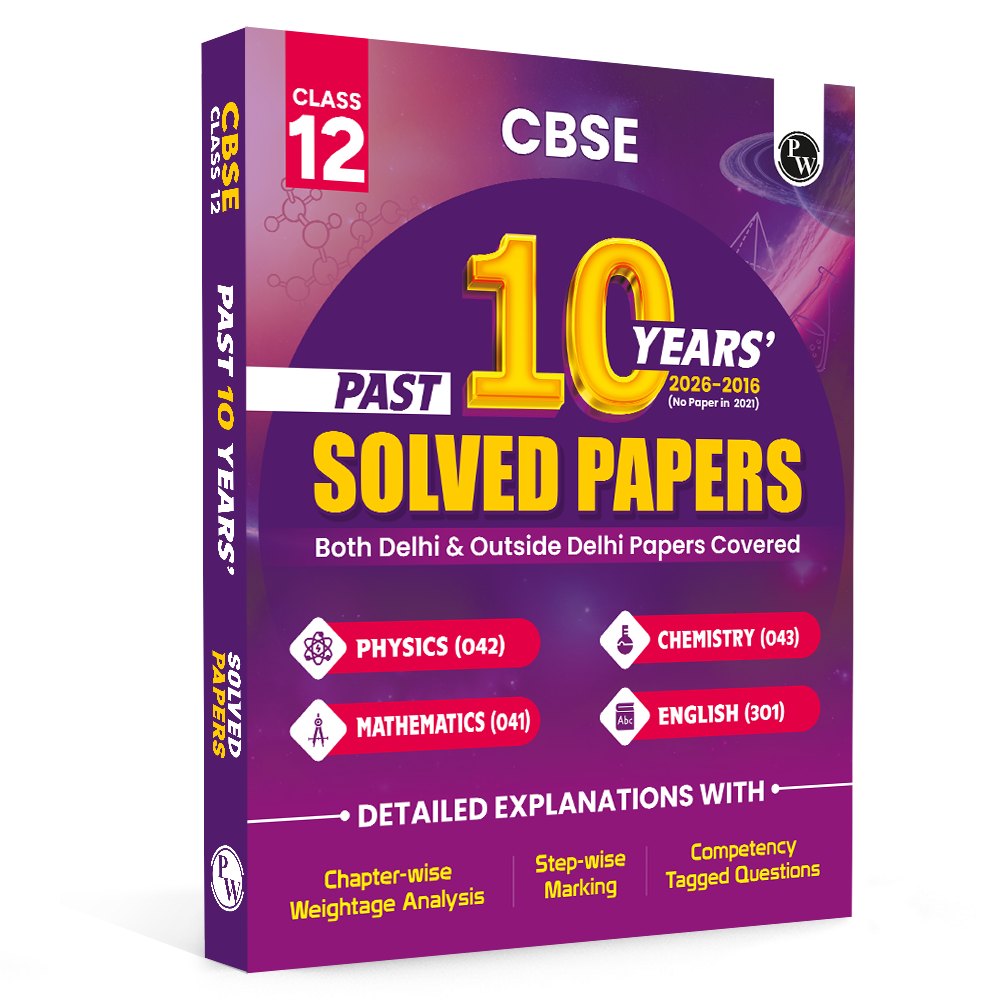
Authentic CBSE Papers Coverage: Practice with 20 original CBSE Delhi and 20 Outside Delhi papers for Physics, Chemistry, Biology, and English to strengthen your exam preparation.
-
Term-wise Paper Inclusion: Revise every subject with both Term-I and Term-II CBSE papers for complete practice.
-
Step-wise Solutions with Marking Scheme: Understand every answer with simple, step-by-step solutions prepared as per the latest CBSE marking scheme.
-
Updated Syllabus Guidance: Study only what matters with rationalised topics clearly marked as Out of the Syllabus (OS) according to the latest CBSE Class 12 syllabus.
-
Competency-based Question Analysis: Improve your preparation with a detailed breakdown of competency-based questions from the past 10 years, including case-based, assertion-reason, and application-based questions.
- Comprehensive CBSE Class 12 PYQ Practice: CBSE Class 12 PYQ books provide extensive previous year questions with detailed solutions, helping students understand recurring question trends, strengthen conceptual clarity, improve answer-writing skills, and build confidence for the CBSE Class 12 Board Examination.
Strategy for CBSE Class 12 PCB PYQ
Every subject in the PCB stream demands a distinct learning mindset. Treating them all the same way is a recipe for average marks.
Physics
Physics requires a blend of deep mathematical logic and clear theoretical understanding.
-
Derivations: Maintain a separate thin notebook exclusively for major derivations like Gauss’s Law, Lens Maker’s Formula, and Biot-Savart Law. Practice writing them without looking.
-
Numerical Problems: Direct formula application is common, but tricky conceptual questions pop up frequently. Solidify your grasp on Electrostatics and Optics early on.
-
Formula Sheets: Create a chapter-wise chart of formulas and constants. Pin it near your study desk for quick morning glances.
Chemistry
Chemistry is divided into three distinct segments, each needing a unique approach.
-
Physical Chemistry: Focus heavily on NCERT numerical exercises from chapters like Electrochemistry and Chemical Kinetics. Learn the units of constants thoroughly.
-
Organic Chemistry: Name reactions are the backbone of this section. Practice conversions regularly and understand the mechanisms of core reactions.
-
Inorganic Chemistry: This requires consistent reading. Focus on d-block and f-block elements, reasoning questions, and coordination compound structures.
Biology
Biology is highly scoring but requires precise terminology and flawless presentations.
-
Diagrams: Do not just look at diagrams; draw them. Label parts clearly using a sharp pencil. Diagrams like the human reproductive system or DNA replication structure carry direct marks.
-
Keywords: CBSE examiners look for specific technical terms. Write answers using correct scientific words rather than casual explanations.
-
Weightage Focus: Give extra attention to high-weightage units like Genetics, Evolution, and Biotechnology.
CBSE Class 12 PCB PYQ Revision Schedule
Learning new chapters is useless if you forget the older ones. Your revision strategy must run parallel to your primary learning.
The 3-Target Revision System
To keep information fresh in your mind, divide your revision into three clear time frames:
|
Revision Type |
Frequency |
Core Activity |
|
Daily Check |
Last 30 minutes of study |
Reviewing the short notes made during the day. |
|
Weekly Deep Dive |
Every Sunday |
Solving a chapter test and re-reading tough topics. |
|
Monthly Sweep |
End of every month |
Practicing complete book questions from a CBSE class 12 PYQ set. |
Active Recall Techniques
Instead of passively reading your textbooks over and over, close CBSE class 10 book and write down everything you remember on a blank sheet. Alternatively, explain a complex topic like the mechanism of nerve impulse conduction out loud as if you are teaching a friend. This forces your brain to retrieve information actively, cementing it in your long-term memory.
How to Use CBSE Class 12 PCB PYQ Books
Solving previous papers is the most critical part of your board preparation. Textbook reading teaches you the content, but past papers teach you how to write answers that score marks.
Importance of Past Papers
Using quality question banks, like the Physics Wallah CBSE Class 12 Last Years Solved Papers, reveals the exact language of the board exam. It shows you which topics repeat year after year and highlights the common traps where students drop easy marks.
How to Practice PYQs
-
Topic-wise Analysis: As soon as you finish a chapter, look up its past ten years' questions. This shows you the specific depth required for that topic.
-
Timed Mock Tests: Sit in a quiet room, set a timer for exactly three hours, and solve a complete PCB PYQ paper. This builds the mental stamina needed for the actual exam day.
-
Analyze the Marking Scheme: Pay close attention to step-by-step solutions. CBSE awards marks for steps, so missing a formula or unit can cost you half a mark even if your final answer is correct.
Check Out: Class 12th Question Banks
CBSE Class 12 PCB PYQ Tips
As the exam dates approach, your focus must shift from acquiring new knowledge to refining your presentation and speed. Following these board exam tips will help you maximise your score and avoid common mistakes.
Answer Presentation Tips
The way you present your answers dictates your final marks.
-
Use Bullet Points: Avoid writing long, dense paragraphs. Break your points into neat bullets with key phrases underlined.
-
Leave Spaces: Draw a neat horizontal line after completing each answer. This keeps your answer sheet clean and readable for the evaluator.
-
Highlight Units: Always enclose final numerical answers in a neat box and mention the correct SI units clearly.
Time Management in the Exam Hall
Utilise the initial 15-minute reading time wisely to pick your optional questions and map out your sequence of answering. As part of your CBSE PCB preparation, start with the long-answer questions (Section 5 marks) when your mind is completely fresh, followed by short answers, and finish with the multiple-choice questions at the end. Keep a strict eye on the clock to save at least 15 minutes for final re-checking.
Read More: CBSE Class 12 Syllabus 2026-27 for All Subjects
CBSE Class 12 PCB PYQ FAQs
How many hours should I dedicate to a daily study plan for Class 12 PCB?
An ideal schedule requires 6 to 7 hours of dedicated self-study apart from regular school hours. Focus on quality and concentration rather than just counting the hours spent at your desk.
When is the best time to start solving the CBSE class 12 PYQ papers?
You should start solving topic-wise questions immediately after finishing each chapter. Full-length previous year papers should be solved regularly during the final three months before the board exams.
How can I manage both board preparation and competitive exams like NEET?
A solid board exam routine forms the foundation for NEET since the NCERT syllabus is common. Focus on descriptive answers and derivations for boards, and practice speed-based multiple-choice questions on weekends.
What is the most effective way to follow a PCB revision schedule?
The best method is to use short hand-written notes, flashcards for chemical formulas, and diagram practice sessions alongside weekly practice of past year papers to keep the concepts active.
Can I score above 95% by just relying on a board exam timetable and NCERT?
Yes, NCERT textbooks are the primary source for CBSE exams. Combining thorough NCERT reading with disciplined scheduling and a reliable CBSE Class 12 PYQ book is fully sufficient for scoring top marks.