Using Prelims Wallah Art & Culture Question Bank for Fast Recall
A major hurdle in civil services preparation is retaining massive amounts of factual details about ancient architecture, classical dances, and traditional paintings. Many candidates read multiple reference textbooks but struggle to recall specific facts during exam conditions. This article shows how a quality UPSC art and culture question bank enables active recall and accelerates your final preparation.
How an UPSC Art and Culture Question Bank Makes Revision Easier
Syllabus coverage for heritage and literature is vast, making regular revision quite difficult. Most candidates read the theoretical chapters repeatedly, but passive reading often fails to build strong memory retention.
Key difficulties faced during art and culture revision include:
-
Remembering intricate details of temple architecture styles like Nagara, Dravida, and Vesara.
-
Distinguishing between various classical and folk dance forms across different regions.
-
Recalling chronological developments of ancient philosophy and literature.
-
Managing a massive volume of factual data under severe exam time constraints.
Without quality practice, candidates often face confusion when eliminating options in the actual exam. Traditional reading methods take too much time and do not test your actual retention levels.
Benefits of Chapter-Wise Learning with an UPSC Art and Culture Question Bank
Shifting from passive textbook reading to active problem-solving drastically improves your memory scores. Using a chapterwise practice format allows you to test your knowledge immediately after studying a specific historical theme or art form.
|
Revision Method |
Retention Level |
Time Efficiency |
Feedback Loop |
|
Passive Reading |
Low to Medium |
Poor (Takes hours) |
None |
|
Random Mock Tests |
Medium |
Moderate |
Delayed |
|
Chapterwise Practice |
Very High |
Excellent |
Immediate |
Dividing the vast syllabus into smaller topics makes your study schedule far more manageable. When you complete a chapter on Mauryan art and immediately solve relevant questions, the concepts stick longer. This systematic approach ensures that no micro-topic is left unexamined before the main exam day.
High-Scoring Topics Covered in an UPSC Art and Culture Question Bank
Exceling at UPSC modules becomes far easier when you understand exactly how the vast syllabus is segmented. Instead of treating the subject as one massive, intimidating block of history, successful candidates isolate high-yield themes to maximize their daily score output.
Focusing on targeted sub-topics guarantees you do not waste hours on low-priority texts during your art and culture revision phases.
-
Architecture and Sculpture: Focus heavily on Indus Valley seals, Mauryan pillars, Gupta cave temples, and the distinct variations between North and South Indian temple designs.
-
Indian Paintings: Track the evolution from prehistoric rock shelters like Bhimbetka to royal Mughal miniatures and localized folk art traditions.
-
Performing Arts: Dedicate specific practice sessions to the eight classical dances, regional martial arts, and major theatrical traditions.
-
Philosophy and Literature: Memorize the core philosophies of the six orthodox schools (Shad-Darshana) and prominent Buddhist or Jain literature.
Why Choose the Prelims Wallah UPSC Art and Culture Question Bank?
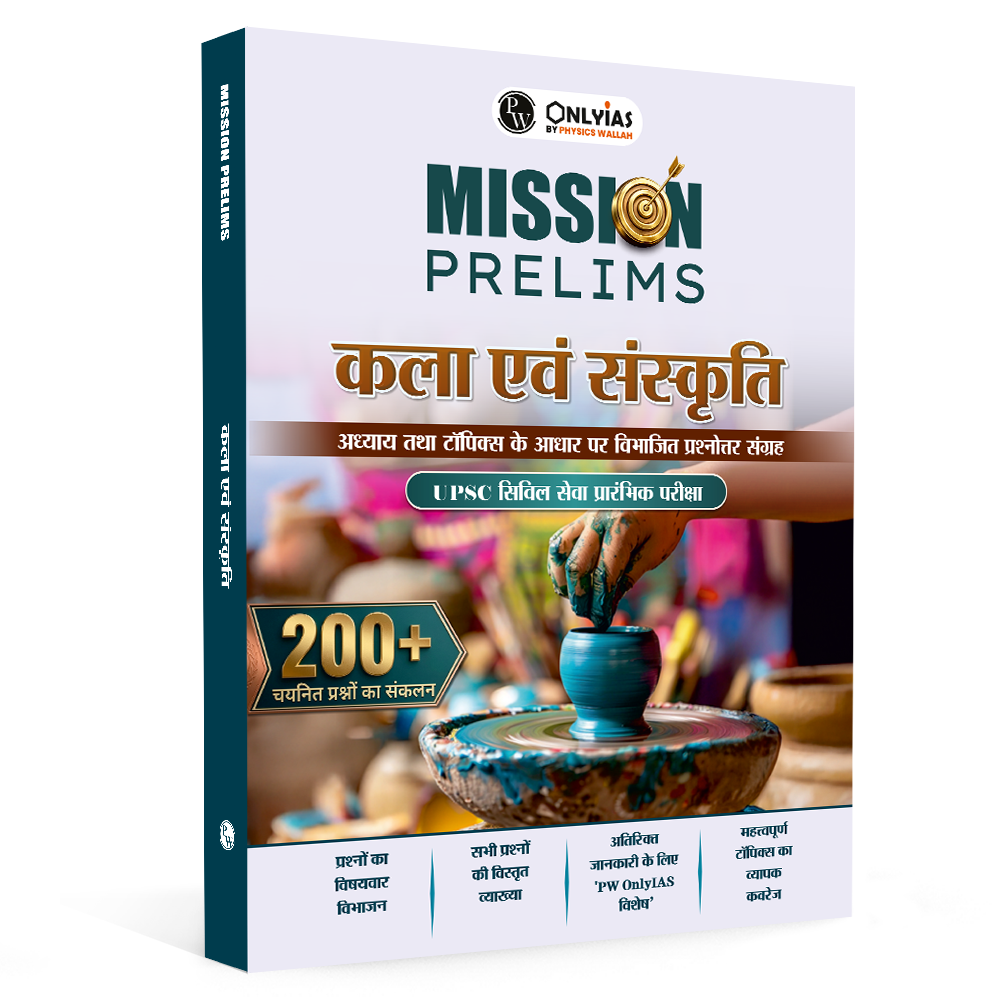
To efficiently excel through the vast syllabus, candidates need resources that closely align with evolving exam trends. The UPSC books serves as a dedicated tool designed to streamline your daily practice sessions.
Key highlights of this resource include:
-
Complete thematic coverage of ancient, medieval, and modern art heritages.
-
High-quality art and culture MCQs designed around real exam parameters.
-
Detailed explanatory answers that serve as quick revision notes.
-
Classification of questions based on difficulty levels and topics.
Using this structured book helps you identify your weak areas instantly. Instead of rereading an entire five-hundred-page book, you can focus purely on the themes where you commit maximum errors.
How to Improve Recall with an UPSC Art and Culture Question Bank
Maximising the utility of a dedicated UPSC question bank requires a planned, tactical approach rather than random guessing.
Follow this step-by-step strategy to boost your recall speed:
-
Study the Core Chapter: Spend around sixty minutes reading your primary notes on a theme, such as UNESCO world heritage sites in India.
-
Solve Questions Immediately: Open your UPSC question bank and solve approximately fifteen to twenty relevant questions without looking at the solutions.
-
Analyse the Explanations: Read the detailed explanations for every wrong answer to correct your conceptual conceptual understanding.
-
Mark Difficult Questions: Highlight the trickiest problems so you can return to them during your final week of UPSC quick revision.
-
Repeat Periodically: Re-solve the marked questions after a gap of roughly two weeks to ensure the data is stored in your long-term memory.
This cycle transforms your preparation from a stressful memorization task into an analytical exercise. Active recall forces your brain to retrieve information, which strengthens neural pathways and ensures you do not panic in the exam hall.
How an UPSC Art and Culture Question Bank Improves Memory Retention
The human brain is naturally wired to forget highly factual data within forty-eight hours of reading it unless that data is actively challenged. This memory decay is the biggest obstacle candidates face during their long-term UPSC preparation cycles.
Using a structured workbook introduces an element of psychological resistance that forces the brain to anchor volatile historical details into its deep long-term storage.
-
Immediate Testing: Solving chapter-specific MCQs right after reading creates an instant feedback loop, exposing immediate gaps in comprehension.
-
Spaced Repetition intervals: Re-visiting marked questions at intervals of seven, fifteen, and thirty days completely halts memory decay.
-
Error Tracking: Keeping a dedicated log of your incorrect attempts prevents you from making the exact same mistakes on the official exam day.
To maximise the benefits of revision, complement your preparation with an UPSC PYQ Book, which provides authentic previous year questions with detailed explanations and topic-wise analysis. Practising PYQs regularly helps reinforce memory, familiarise you with the UPSC question pattern, and improve recall of important Art and Culture topics during the examination.
Revision Tips Using an UPSC Art and Culture Question Bank
As the exam approaches, your primary focus must shift from learning new topics to consolidating what you have already read. Speed and accuracy become the deciding factors during the final weeks of UPSC preparation.
Consider these quick tips to streamline your final run:
-
Use flashcards alongside your question bank for highly volatile facts like traditional puppets or GI tags.
-
Set a strict timer while solving questions to simulate real exam pressure.
-
Focus heavily on trends from the last decade to understand the focus areas of examiners.
-
Avoid changing your primary sources at the last moment; rely on practice to fill the gaps.
Read More: Structured Notes for Ancient & Medieval History UPSC Exam
UPSC Art and Culture Question Bank FAQs
How does a dedicated UPSC art and culture question bank improve final exam scores?
It helps candidates move from passive reading to active application. By solving targeted questions, you learn how to eliminate close options and retain complex historical facts much better under actual exam pressure.
Can I rely entirely on art and culture MCQs for my preparation?
No, MCQs should complement your standard textbooks and notes. Use the questions to test your knowledge, fill visual gaps, and learn the art of option elimination after completing your basic syllabus readings.
How many questions should I practice daily to effectively revise art and culture?
Practicing approximately twenty to thirty high-quality questions daily is highly effective. Consistency matters more than volume, as it keeps the factual details fresh in your mind throughout your preparation journey.
What makes the prelims wallah book different from general guidebooks?
This book provides a structured, chapterwise breakdown of the syllabus. It allows candidates to systematically test micro-topics right after reading them, rather than overwhelming them with full-length random tests too early.
When is the best time to start using the UPSC quick revision techniques?
You should start integrating quick revision practices at least three to four months before the preliminary exam. This gives you ample time to identify weak areas, re-solve tricky questions, and build high speed and accuracy.